A mini excavator is the one class of construction plant from British auctions that sensibly travels in groupage. It stays within normal dimensions, weighs little enough not to force a low loader, and leaves deck space for attachments or other cargo. So with this machine the question of price is really a question of how much deck it takes and whether it can wait for a scheduled line departure.
Why groupage rather than a truck of your own
A dedicated vehicle for one small machine means the buyer pays for the whole run out and back. A consolidated vehicle splits that cost between several loads and waits for the next scheduled line departure, so the price difference is usually large while the difference in timing is counted in days, not weeks. It is the same model we use for groupage on the Poland to United Kingdom lane, except the line on the manifest is a machine rather than a pallet. The boundary between groupage and a full truck runs roughly where a load takes a third of the trailer, around twelve pallets; a mini excavator normally sits well below that.
The groupage price has a condition, though: the machine must be able to stand beside other goods without putting them at risk. A weeping ram, tracks caked in mud and loose attachments are exactly why a machine drops out of groupage and ends up on its own vehicle. Washing it on the yard before collection is therefore a pricing decision, not a cosmetic one.
Transport dimensions of a mini excavator
Makers publish separate transport dimensions for this class: boom lowered, blade folded and, on machines with variable undercarriage, the tracks retracted. That last point matters most. A retractable undercarriage can change the width of the machine by a tenth or more, and the difference decides how many such machines stand side by side on the deck. Retracting takes a moment and is done on the yard, not on the road.
The second variable is the cab or the roll bar. Machines with a full cab are taller than canopy versions, and on some designs the bar folds. The third is attachments: a breaker, an auger or a grading bucket taken off the dipper and laid beside the machine reduce its outline and tidy up the loading list. Dimensions come from the record of that unit, not from the general spec of the series.
Loading and lashing
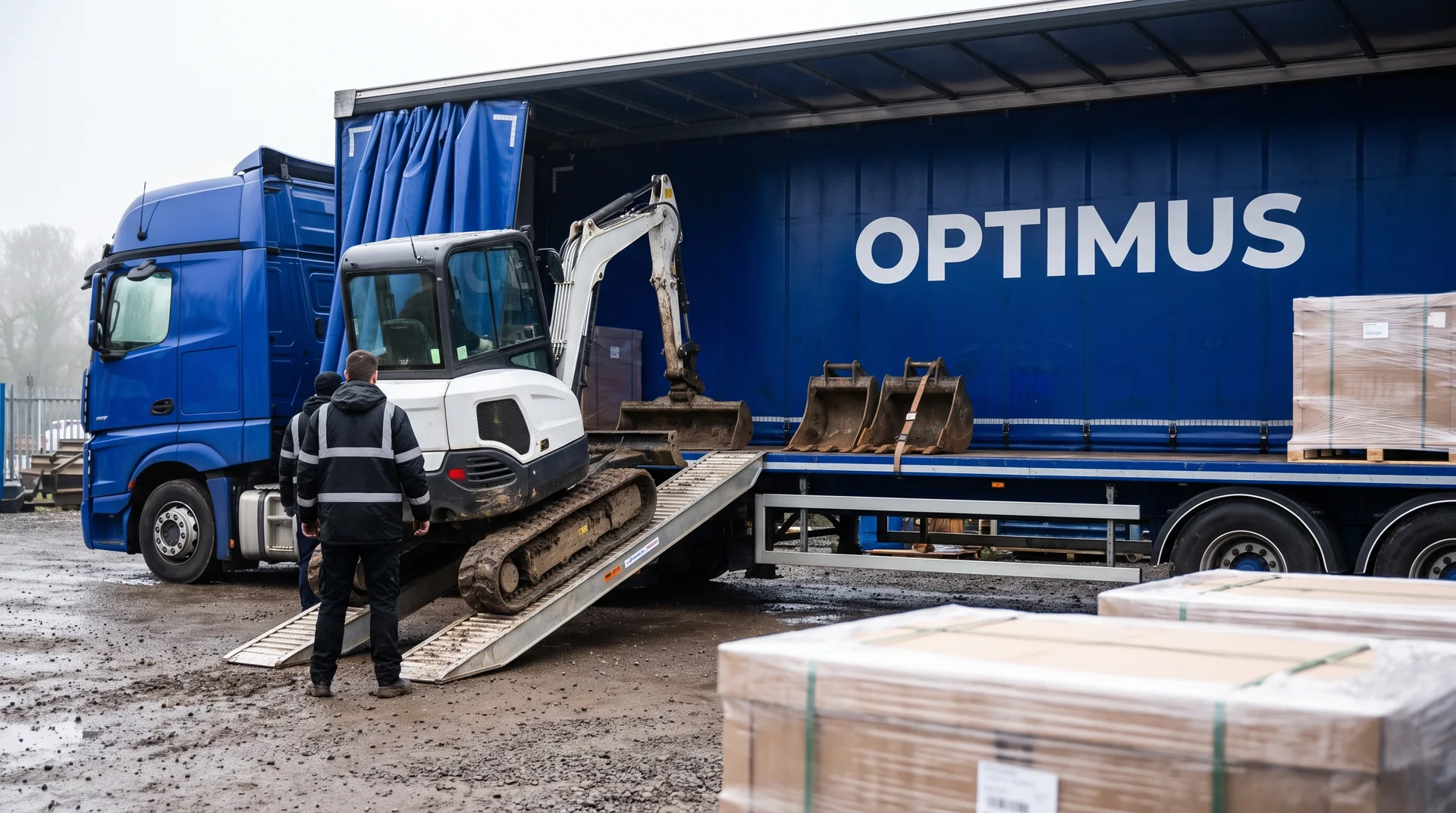
- A working mini excavator climbs ramps or goes onto a beavertail with a tilting deck, which gives a gentler approach angle. A dead one goes on the winch, and that has to be declared before the vehicle is despatched.
- Rubber tracks grip the deck better than steel, but chocks are still mandatory: the strap tensions, the chock blocks, and those are two different jobs.
- The dipper lies along the machine, the bucket rests on the deck, the blade is lowered and supported. Nothing is left hanging on rams.
- The slew is locked mechanically where the machine has a lock; on zero tail swing machines it is still worth squaring the upper structure to the tracks.
- Straps go into the lashing points marked by the maker. Hooking onto the track frame at a random spot bends metal that nobody straightens afterwards.
How lashings are chosen and forces calculated is collected in our piece on cargo securing under EN 12195, and the ways of getting a machine aboard in the article on loading a machine at the auction yard.
Fluids, fuel and battery
On a machine travelling beside someone else goods, tightness stops being the owner problem and becomes the problem of the whole load. So before loading we check rams, hoses and drain plugs, and a machine with a visible leak goes on a separate vehicle or into a drip tray. The fuel level is agreed before collection, because the fuel type and tank construction decide whether the movement falls under dangerous goods rules. The battery is disconnected, the terminals protected, and the keys travel with the paperwork.
Soil in the tracks and the border
A mini excavator works in soil by definition, so it brings soil in the tracks, behind the guards and in the blade. If the machine has been used for agricultural or forestry purposes, bringing it into the Union means meeting the phytosanitary conditions: a notification in TRACES NT and a CHED-PP certificate, with the importer entered in the register kept by the Polish plant health service. We break the procedure down under farm machinery auctions in the UK. In groupage there is a second reason to wash the machine: mud falls off the tracks onto the deck and onto the neighbouring load for the whole journey.
What to load alongside, and what not to
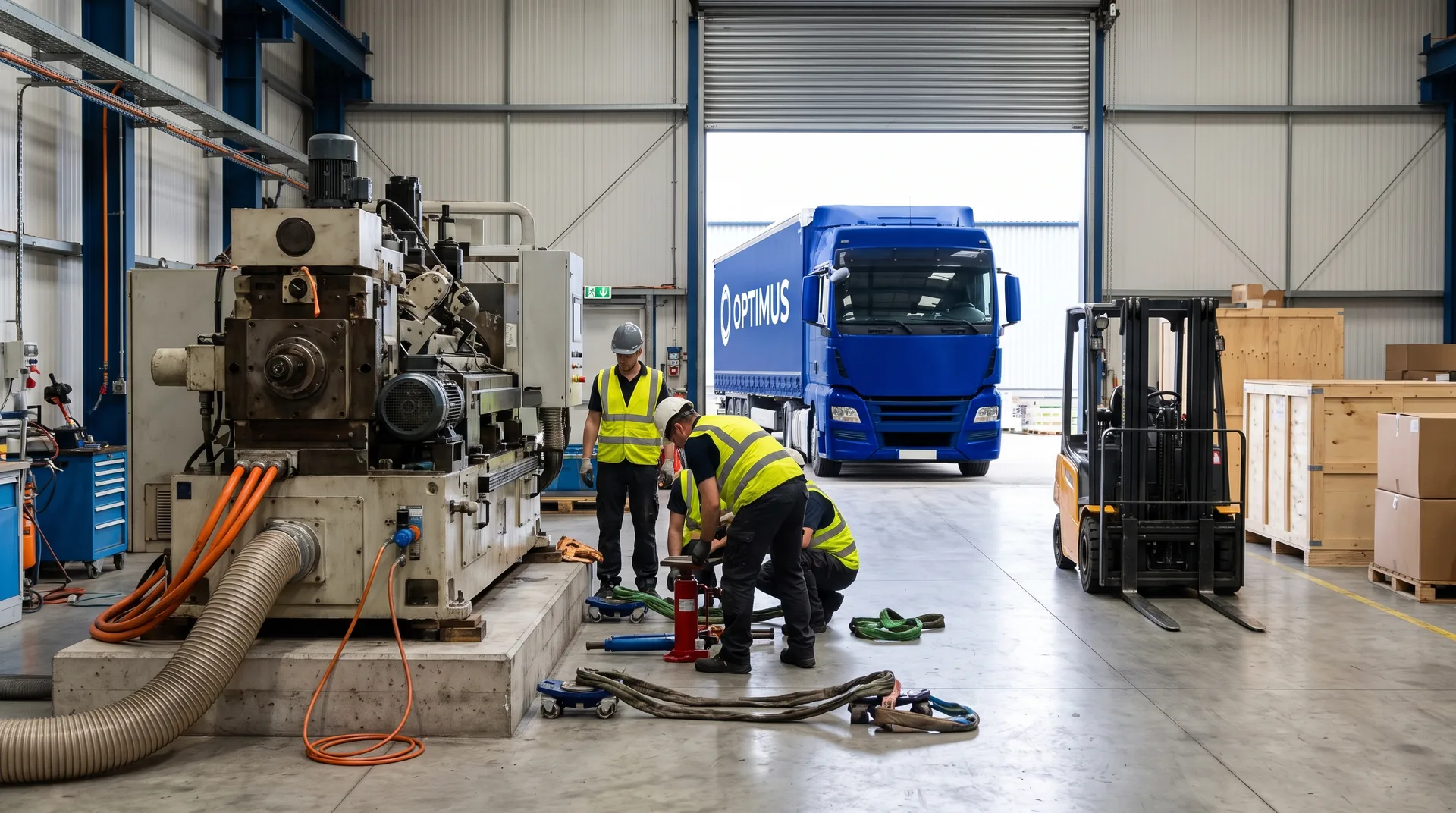
The best company for a mini excavator is equipment from the same sale: spare attachments, a compactor, a generator, a lighting tower. All of it leaves the yard in the same collection window, so the vehicle calls once. A worse idea is pairing the machine with goods sensitive to dirt, or with cargo that must arrive on a fixed date, because groupage by definition waits for the set to fill. Receipt and release run through our Milton Keynes warehouse and the Kielce transhipment base with its ramp, lorry-mounted crane and forklifts rated to five tonnes, so unloading is predictable even when the consignee has nothing to lift the machine off with.
Sources
- GOV.UK: securing loads on HGVs and goods vehicles
- DVSA: load securing guidance for vehicle operators
- PIORiN: phytosanitary conditions for machinery used for agricultural or forestry purposes
Buying a mini excavator and want to know whether it fits the next consolidated run? Send the model, the dimensions from its record and the yard address through the quote form. See also groupage LTL and our guide to UK machinery auctions. From the same category: a backhoe loader from a UK auction.