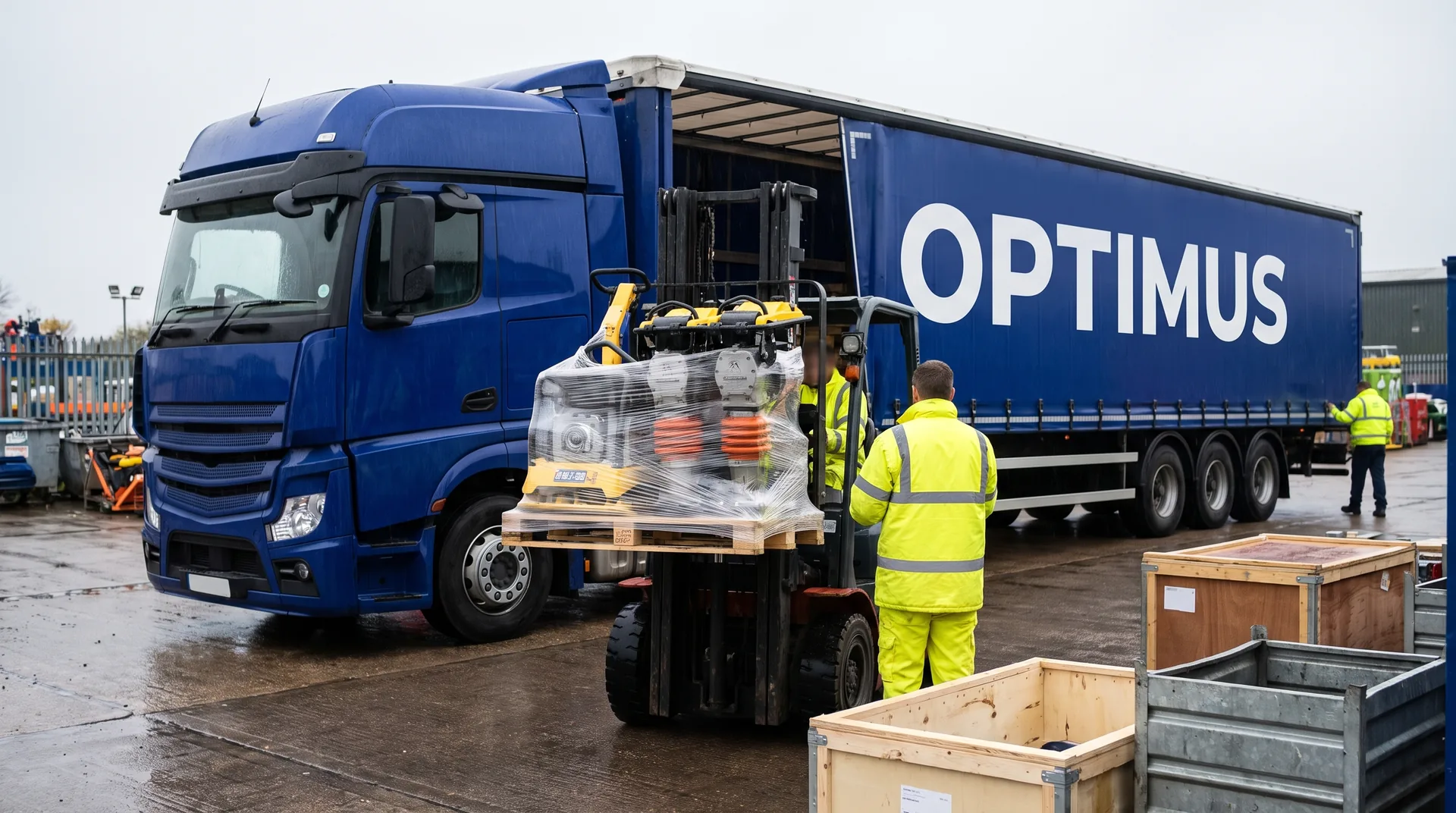
A plate compactor, a trench rammer and a jumping jack are small enough that a single unit never justifies a vehicle of its own. There is one sensible option: adding it to a bigger machine from the same yard, or a batch of a dozen or more after a hire fleet disposal, palletised and sent as groupage. With this class of equipment the quote follows weight and space, not distance.
When it pays
Hire fleet disposal auctions list this equipment in runs, because rental firms replace fleets wholesale. For a buyer in Poland that means a single unit is rarely worth its own journey while a dozen or more is. The boundary between groupage and a full truck runs roughly where a load occupies a third of the trailer, about twelve pallets. Below that threshold the equipment travels on a consolidated vehicle waiting for the next scheduled line departure; above it a dedicated run comes into consideration. We set the groupage model out at greater length under small plant groupage from UK auctions.
The second option is adding a compactor to a machine that is travelling anyway: an excavator, a loader or a dumper from the same sale. The vehicle calls once, the collection window is shared, and the small plant occupies space that would otherwise stay empty.
Packing and palletising
- Plate compactors stand on a pallet plate down, on a bearer, and are bolted or banded to it. A loose machine slides across the pallet at the first braking.
- Rammers and jumping jacks have a high centre of gravity on a narrow foot, so they travel laid on their side or in a stillage, never standing loose.
- Folding handles and tow bars are locked, because on the road they unfold and catch the neighbouring load.
- Equipment is laid so that the filler cap and the tank breather face upward.
- Wooden pallets and stillages used for carriage fall under the requirements for wood packaging material; we describe them in the piece on the ISPM 15 standard.
Fuel and oils in small plant
On a large machine the fuel tank is one topic among many. On a compactor it is the main topic, because the equipment is small, there are a dozen tanks on a pallet, and tilting during loading spills fuel straight onto the deck. So before collection we tell the auction yard whether the equipment is to be drained and how the filler caps are secured. Whether the movement falls under dangerous goods rules depends on the fuel type, the tank construction and its contents; the answer comes from the regulations, not from the fact that the device is small. Sump tightness is checked separately, because in a batch of a dozen one leaking unit is enough to soil the whole pallet.
Lashing in groupage
Palletised small plant is secured like any other pallet: a mechanical block by standing it against a headboard or adjacent loads, with lashings as a supplement. The problem specific to this category is uneven mass: a pallet with four compactors weighs about as much as a pallet of tiles, but the weight is concentrated high and acts as a lever under braking. So the heavier units go at the bottom and the stack rises no higher than stability allows. The rules for choosing lashings are described in the article on cargo securing under EN 12195.
Declaration and value
A batch of equipment from one sale is not one line on the declaration. Each type of device carries its own description and quantity, and the customs value rests on the price actually paid, apportioned between the lines in a way the auction documents can justify. On serial purchases this is the commonest place where the declaration parts company with the contents of the trailer. How value is established is described in the piece on the customs value of a used auction machine, and declarations are filed by the regular customs agencies we work with on both sides of the Channel.
Cleaning
Compactor plates and rammer feet are caked with soil, and a hire fleet batch often carries concrete and emulsion as well. Washing before packing is the condition for entering groupage, because the equipment travels beside someone else goods. For devices used for agricultural or forestry purposes, the phytosanitary conditions may apply on entry into the Union, with a notification in TRACES NT and a CHED-PP certificate and the importer entered in the register kept by the Polish plant health service; we describe the procedure under farm machinery auctions in the UK.
Sources
- GOV.UK: moving dangerous goods
- IPPC: ISPM standards, including ISPM 15 for wood packaging
- GOV.UK: securing loads on HGVs and goods vehicles
Bought a hire fleet batch and want it brought over on one vehicle? Send the lot listings, weights and yard address through the quote form. See also groupage LTL and customs clearance. From the same category: a road milling machine from the UK.