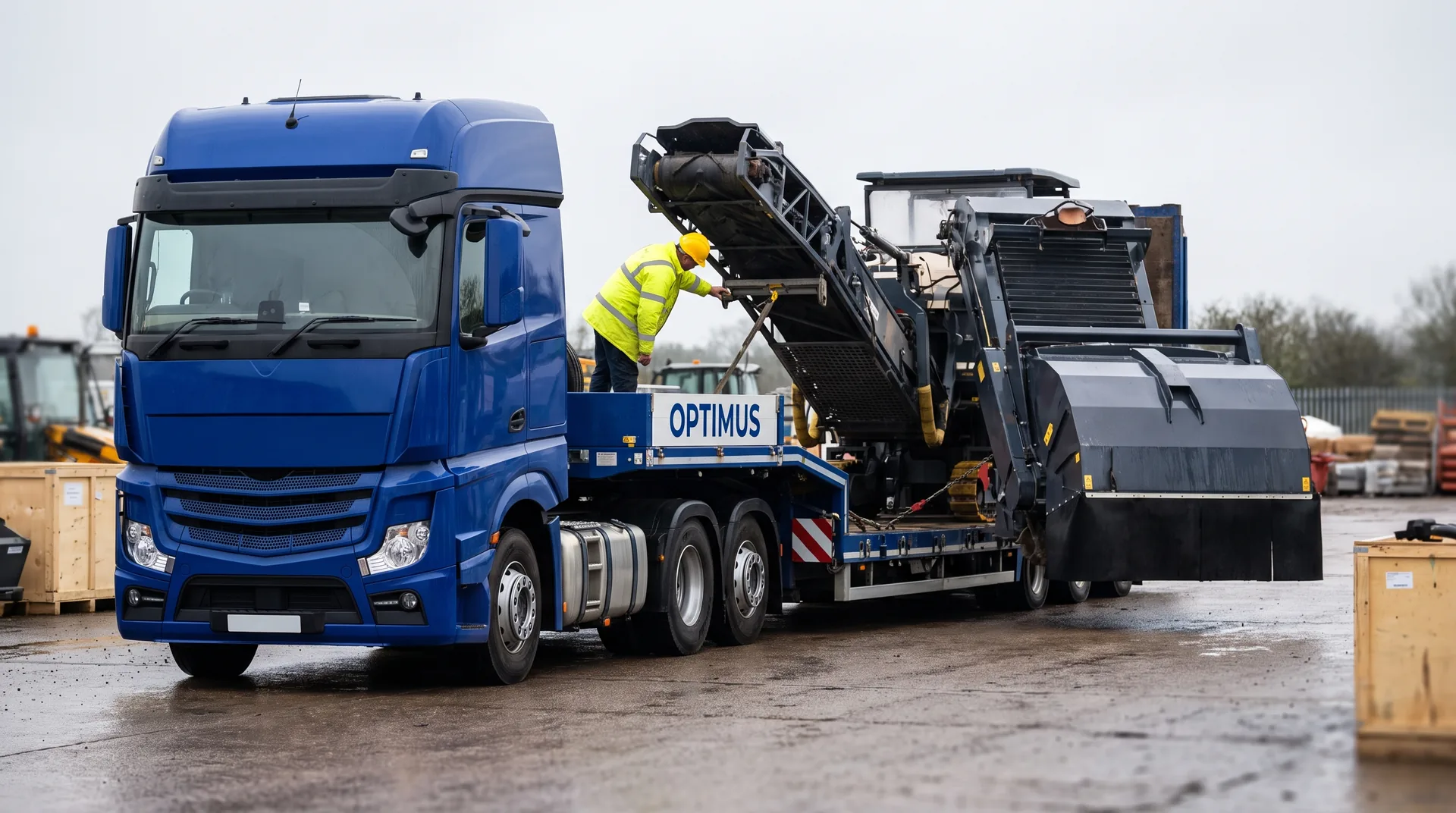
A road milling machine travels with its discharge conveyor folded or removed, because in the working position it reaches far beyond the outline of the machine. The milling drum with its housing, in turn, sets the width and height of the load. Both jobs are the buyer responsibility and have to be agreed with the auction yard before the vehicle is despatched, because they need equipment, space and time the collection window does not always allow.
What folds and what has to come off
A miller is designed to have its conveyor folded for transport and that is the basic option: the belt lifts and lies along the machine or swings into line. A mechanical lock is mandatory here, because the ram holding the conveyor is not a restraint for the road. On larger machines and on two section conveyors, removal is the commoner answer: the conveyor travels separately, on the same deck or on another vehicle, and then becomes a further line on the loading list and the customs declaration.
The milling drum stays in the machine, but its housing and side plates project on width. Some of them can be taken off, and on machines with a wide cutting width that is sometimes the difference between a normal movement and a permit application. How we handle dimensions is set out under excavators and loaders from UK auctions.
Agreeing with the yard before the vehicle arrives
An auction yard releases a machine as it stands and has no duty to prepare it for carriage. If conveyor removal has not been agreed in advance, the vehicle waits idle or leaves empty, and with a collection window counted in days that ends in the storage charges we cover under collection deadlines at the auction yard. There are three questions for the yard: is the machine serviceable and startable, who will do the removal, and is there lifting equipment on site for the detached conveyor.
Loading and lashing
- Tracked millers climb the ramps slowly, on plates that spread the load; rubber tracks grip better than steel but still need chocking.
- The column jacks the machine rides on are set to the transport position described in the manual and secured against creeping.
- The drum is locked against rotation, and housings and access flaps are latched.
- A removed conveyor travels flat, supported along its whole length, secured with its own set of lashings.
- Lashings go into the points the maker specifies; on this machine it is tempting to strap through the conveyor frame, which is not built for it.
The rules for choosing lashings are described in the article on cargo securing under EN 12195, and the ways of getting aboard in the piece on loading a machine at the auction yard.
Fluids, water and battery
A miller has a drum spray system, so before the road we drain the pipework and the tank: it is weight nobody counted, and in frost it splits the lines. We check the column jack rams and the hoses routed along the conveyor for tightness. The fuel level is agreed with the yard before collection, because fuel type and tank construction decide whether the movement falls under dangerous goods rules. The battery is disconnected, the terminals protected, and keys and remotes travel with the paperwork.
Cleaning and border formalities
The drum chamber and the conveyors are full of milled material that spills out on the road. Emptying and washing out the chamber before loading is part of preparation, not cosmetics, because a load shedding planings onto the road is a transport problem. If the machine has worked on agricultural or forestry ground, the phytosanitary conditions may apply on entry into the Union, with a notification in TRACES NT and a CHED-PP certificate and the importer entered in the register kept by the Polish plant health service; we describe the procedure under farm machinery auctions in the UK.
Sources
- GDDKiA: permits for abnormal vehicle movements
- GOV.UK: ESDAL and notifying abnormal loads
- HSE: workplace transport safety on yards and sites
Buying a road machine and want the removal arranged with the collection? Send the model, dimensions and yard address through the quote form. See also oversized loads and inspecting a machine before collection. See also: an asphalt paver from the UK.