A well-built export pallet has four traits: the goods sit inside the pallet footprint, heavier items are at the bottom, the stretch film binds the load to the pallet itself, and the labels are readable from the side. Such a unit survives transhipment, stacking and inspection undamaged, and the carrier has no grounds to clause the consignment note.
Step one: choosing the pallet
The European standard is 1200 by 800 millimetres, but trade with the United Kingdom also involves industrial pallets and receiver-specific formats. The pallet must be dry, with no protruding nails, broken boards or cracked bearers. Wooden pallets used in export packaging fall under plant health rules: the timber must be treated and marked to the ISPM 15 standard. Format differences are covered in the EUR and EPAL pallet and euro versus industrial pallets.
Step two: building the load
- Heavy at the bottom, light on top; keep the centre of gravity as low as possible.
- Even layers, no steps or protruding items; cross-tying cartons adds stability.
- Goods inside the footprint, no overhang; if the carton is bigger than the pallet, change the pallet format.
- Cardboard interlayers between tiers where goods are prone to sliding.
- A flat top surface if the pallet is to be stacked; a peak or an uneven top rules out a second tier.
Step three: stretch film and straps
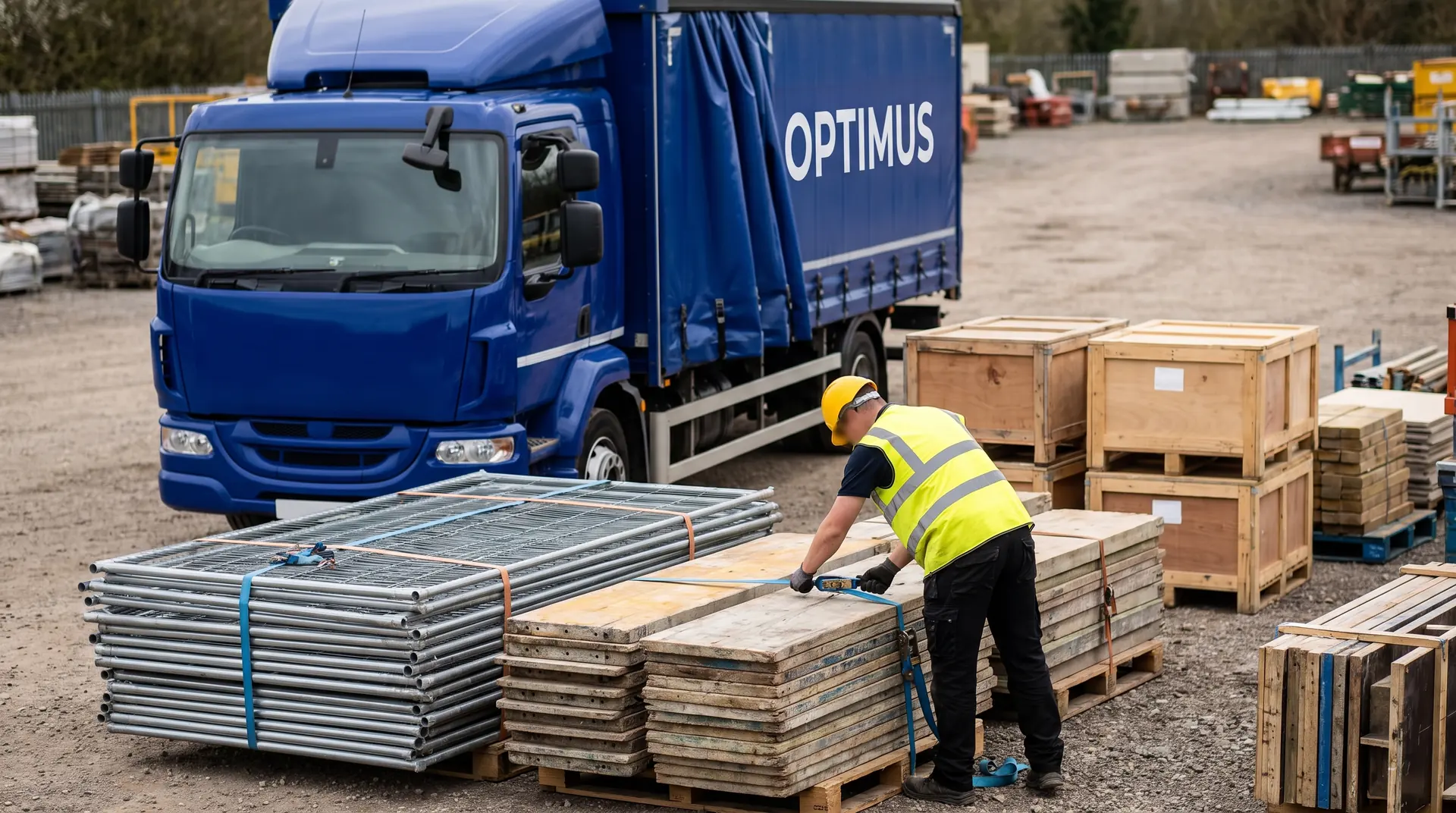
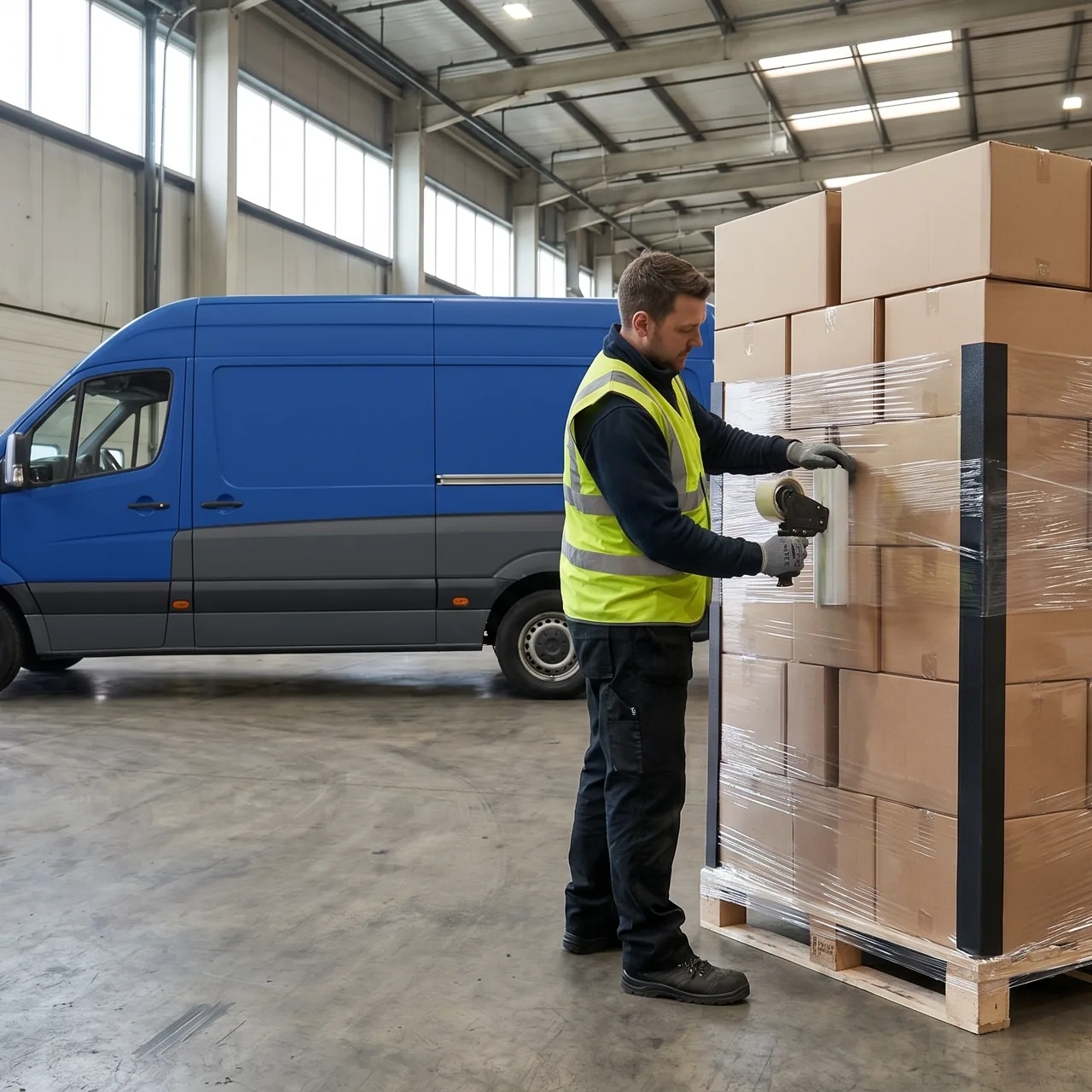
Wrapping starts at the base: several turns binding the bottom carton layer to the pallet blocks, and only then the film climbs with an overlap. Film around the goods alone, unattached to the pallet, achieves nothing: under braking the load slides off as if from a tray. Tension should be firm but not crushing; on delicate cartons, board or plastic edge protectors spread the pressure. Strapping is used on tall loads and on items the film alone will not hold. Securing on the trailer is covered in cargo securing to EN 12195.
Step four: marking
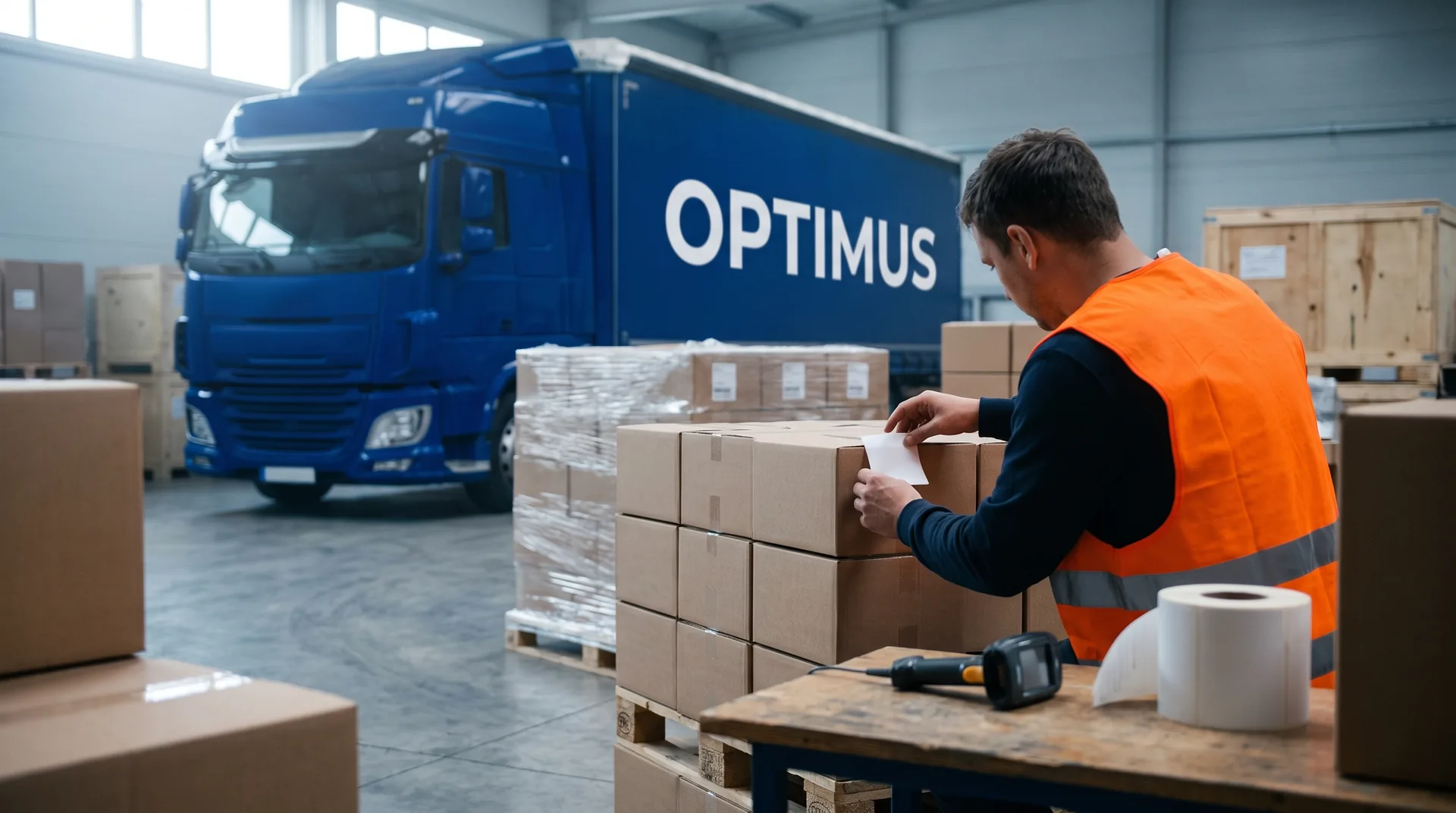
The label should be legible on at least two sides and must not be covered by film if it has to be scanned. The minimum is: shipper, consignee with address and postcode, consignment or order reference, and the pallet count in a "1 of 3" format. Deliveries to retail chains and Amazon warehouses carry additional label and barcode standards, described in UK retail pallet requirements and Amazon UK pallet requirements.
Height and stacking: where the money is
Pallet height decides how many units fit on a trailer, and therefore the freight cost directly. A stackable pallet, flat on top and stable, can travel in a second tier. An irregular pallet occupies the full height and is charged as if it were two. How to calculate trailer space is explained in how many pallets fit on a trailer.
The mistakes that end in a claim
- Film wrapped around the goods only, without binding to the pallet.
- A heavy carton set on light, crushable packaging.
- Mixing consignments for different receivers on one pallet without clear separation.
- A label on the top of the pallet, invisible once the unit is placed in a row.
- No protection under the film at sharp edges, which cut through the wrap in transit.
Why this is a commercial matter, not a technical one
Defective packing by the sender is one of the circumstances that limit carrier liability for damage. In other words, a badly wrapped pallet is not only a risk to the goods but a risk that nobody will cover the loss. The practical consequences are described in the scope of carrier liability, and the requirements specific to the British lane in how to prepare a pallet for the UK.
Sources
Not sure your pallets will survive transhipment? Send photographs and dimensions through the quote form and we will tell you what to fix before loading. We also make corrections at the hub as part of groupage LTL.