On the UK route you choose between three covered trailer types: a standard tautliner with internal height up to about 2.7 m, a mega with around 3 m on a lowered chassis, and a curtainsider with sliding sides for fast loading. The choice depends on cargo height, the loading method and whether volume or weight fills the vehicle first.
What separates the tautliner, the mega and the curtainsider?
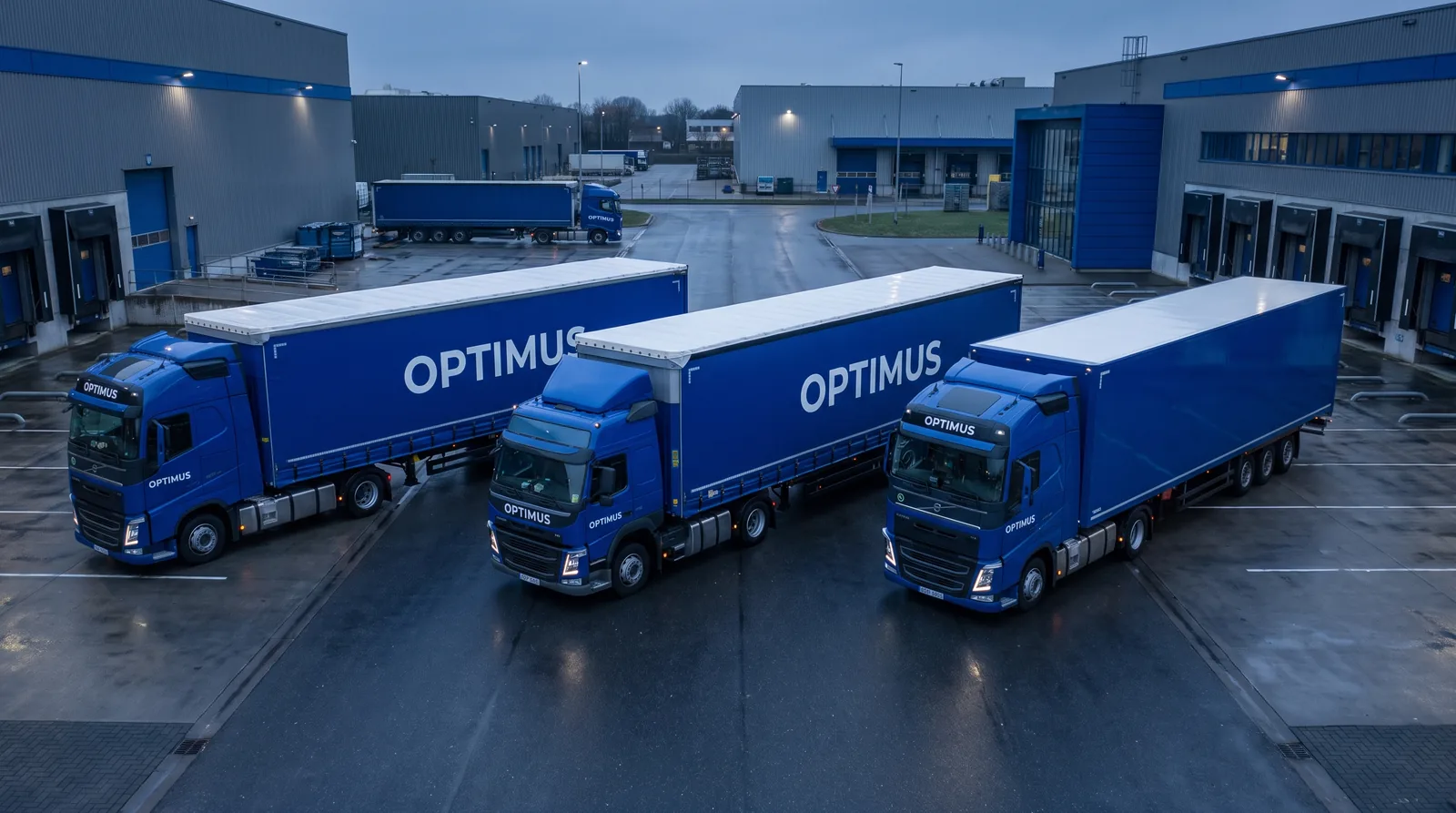
All three are trailers covered with textile sheeting, but their construction differs. A standard tautliner has a classic chassis and internal height usually between 2.6 and 2.75 m. A mega rides on a lowered chassis and smaller wheels, so the interior reaches about 3 m within the same overall vehicle height. A curtainsider is the variant with sides that slide open like a curtain: forklift loading from the side takes minutes and needs no head-on ramp. In our fleet the line-haul vehicles carry reinforced tarpaulins that resist slashing at parking stops; why that matters is explained in our piece on protecting cargo to the UK.
Trailer type comparison
| Parameter | Standard tautliner | Mega | Curtainsider |
|---|---|---|---|
| Load space length | 13.6 m | 13.6 m | 13.6 m |
| Internal height | approx. 2.6 to 2.75 m | approx. 3.0 m | approx. 2.6 to 2.75 m |
| Loading | rear, side after removing boards | rear, side, often top | side in minutes, rear |
| Typical cargo | pallets, mixed goods | volume, tall, automotive | pallets with frequent stops |
| Limitations | cargo height | lower ground clearance | as standard |
When is a mega worth booking?
The mega wins wherever cargo is light but tall or bulky: cartons stacked to the roof, upholstered furniture, plastic products, packaging, automotive components on racks. Three metres of internal height take a second layer of goods that a standard trailer cannot, so the trip cost spreads across more units. A practical caveat: the lowered chassis means less ground clearance, which matters on unpaved construction sites; there the standard trailer proves safer.
How do you work out which type pays off?
- Measure the cargo's highest point together with the pallet; the mega's break-even starts where the standard trailer runs out of centimetres.
- Check whether the goods fill the vehicle by volume before they exhaust the weight limit; the conversions are shown in our article on how many pallets fit on a trailer.
- Review the loading conditions: no head-on ramp argues for a curtainsider or side loading.
- Decide between groupage and a full vehicle; the boundary is drawn in FTL or LTL.
What about cargo that fits none of them?
When a load exceeds the dimensions of a regular trailer, it enters the abnormal transport regime: notifications, permits and often an escort. The UK thresholds and procedures are described in our article on oversized transport to the UK, and the service scope on our oversized loads page. For consignments smaller than a trailer we run vans up to 2.5 tonnes in express transport: less space, but transit from 24 hours.
Trailer versus vans: the full capacity ladder
The trailer type is only the top of the ladder a load climbs. Below stand rigid trucks and vans, each rung with its use. A van up to 2.5 tonnes payload takes a few pallets and wins on time: it runs tachograph-free, so two drivers alternate without forced pauses. A rigid truck covers consignments too big for a van and too small for a trailer, common in furniture and construction trade. The trailer closes the ladder with capacity and the lowest unit cost on large consignments. In line practice all rungs work together: vans carry urgent parts and local collections, trailers pull the main flow across the Channel. When choosing, remember the mundane too: the yard must fit a sixteen-metre combination, a mega loaded to the roof may not clear a warehouse gate, and a private address in England can rule out a trailer entirely, with a smaller vehicle doing the last leg. We collect these details at quoting, because fixing them on loading day costs the most; if you are still designing your export logistics, our guide transport to England step by step helps.
Not sure which trailer type suits your goods? Give the dimensions and weight in the quote form and we will match the vehicle to the cargo, not the other way round.