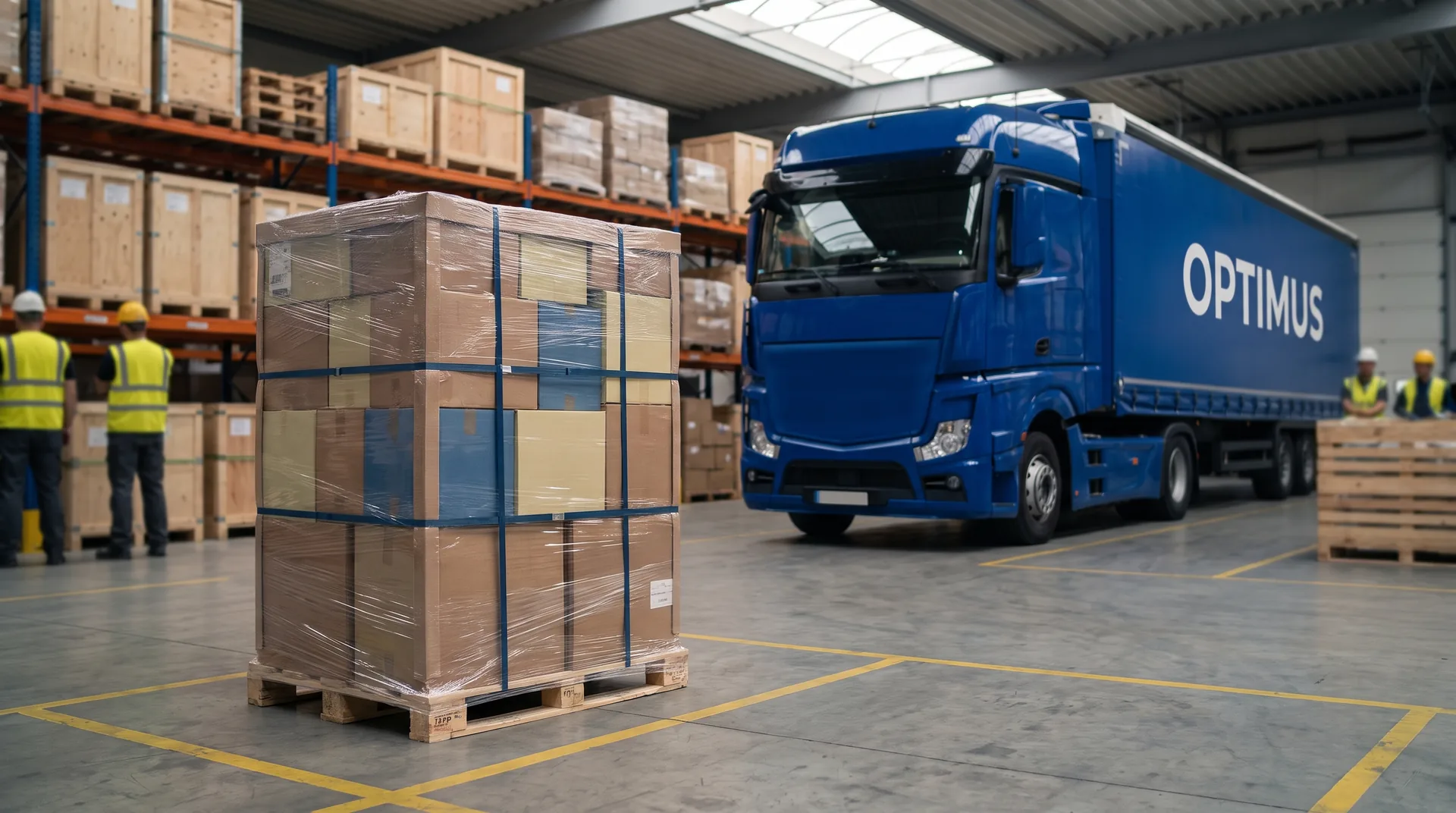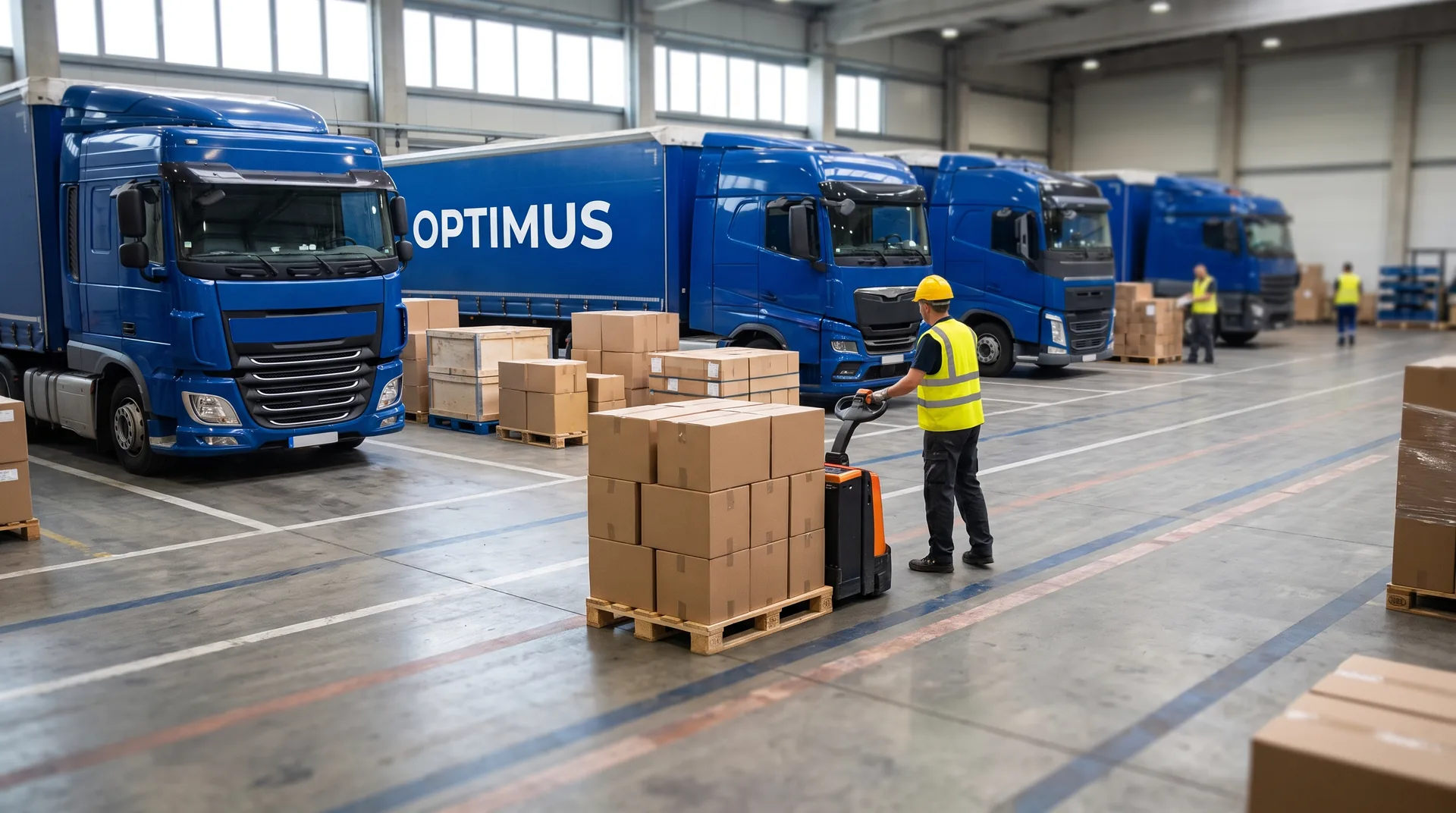
Pallets are split by destination site at the Polish hub, before loading, because Amazon unloads from the rear of the trailer only. Freight for the first drop has to stand by the doors and freight for the last against the headboard. Sorting on arrival would mean shuffling pallets on the dock, and a delivery appointment leaves neither the room nor the time for that.
Why in Poland rather than in England
Three reasons, hardest first. The technical one: unloading at an Amazon site happens from the rear, with no side unloading, so the order cannot be changed there. The timing one: a delivery appointment is the window in which the vehicle is received, not a window in which it can rearrange freight. The cost one: every operation performed in the UK costs more than the same operation at a hub in Poland.
There is a fourth, less obvious reason. At the hub the pallets stand on a floor, under lights, next to a scale, with someone who can lift a carton and read the label. On a dock in England that option does not exist. Anything that can be checked in Poland gets checked in Poland.
How the blocks are built
We start from confirmed appointments, not from a map. Only once the time at each site is known does the drop order exist, and from it the reverse loading order. The pallets then go to staging lanes, one lane per destination site. A block is loaded whole, never interleaved with its neighbour, and it comes off later as a whole.
- First block by the doors — the freight for the first drop, always nearest the exit.
- Short side to the rear — Amazon requires pallets set that way, and the opposite appears on its list of rejection reasons.
- Thirty centimetres of clearance — above the load and behind the last pallet, so the dock leveller and the truck fit.
- No pallets straddling blocks — one unit cannot carry goods from two shipments bound for two sites.
How the unit itself is built is covered in the article on mixed pallets for Amazon, and the mechanics of the whole run in the piece on one collection and several Amazon warehouses.
The marks we add ourselves
Blocks are marked for transport purposes: drop number, destination site name as it appears in the shipping plan, number of pallets in the block. That is a transport marking and it does not replace Amazon labels, it sits alongside them. The labels Amazon requires, including the pallet label carrying the shipment number, follow their own rules and have their own place on the unit, which we set out in the article on Amazon pallet labels.
A photograph of every block goes into the job file before the trailer is closed. In any later dispute about pallet counts or wrapping condition, that is the only material created before departure rather than after the event. How we document operations of this kind is collected in the article on the repacking record.
When the shipping plan changes after loading
It happens, and that is the moment when sorting shows either its value or its cost. If the pallet count for one site changes, we correct the booking, because Amazon requires delivery of exactly the quantity the carrier entered. If the destination site itself changes, the block has to come out, which means rebuilding the load, so we do it before departure or at our warehouse in Milton Keynes, never at the gate.
On a groupage run from several senders the same rule applies with one addition: the consolidated vehicle waits for the next scheduled line departure, so sorting follows the rhythm of those departures rather than of individual orders. How that flow works is described in the articles on LTL groupage and on consolidation via the Polish hub.
Sources
- Amazon Seller Central: vehicle loading, clearances and reasons for delivery rejection
- Amazon Seller Central UK: pallet and carton counts in the appointment request
One collection point and several destination sites? Describe the shipment in our quote form and we will prepare the sorting plan together with the drop order. The scope is on our Amazon UK deliveries page.