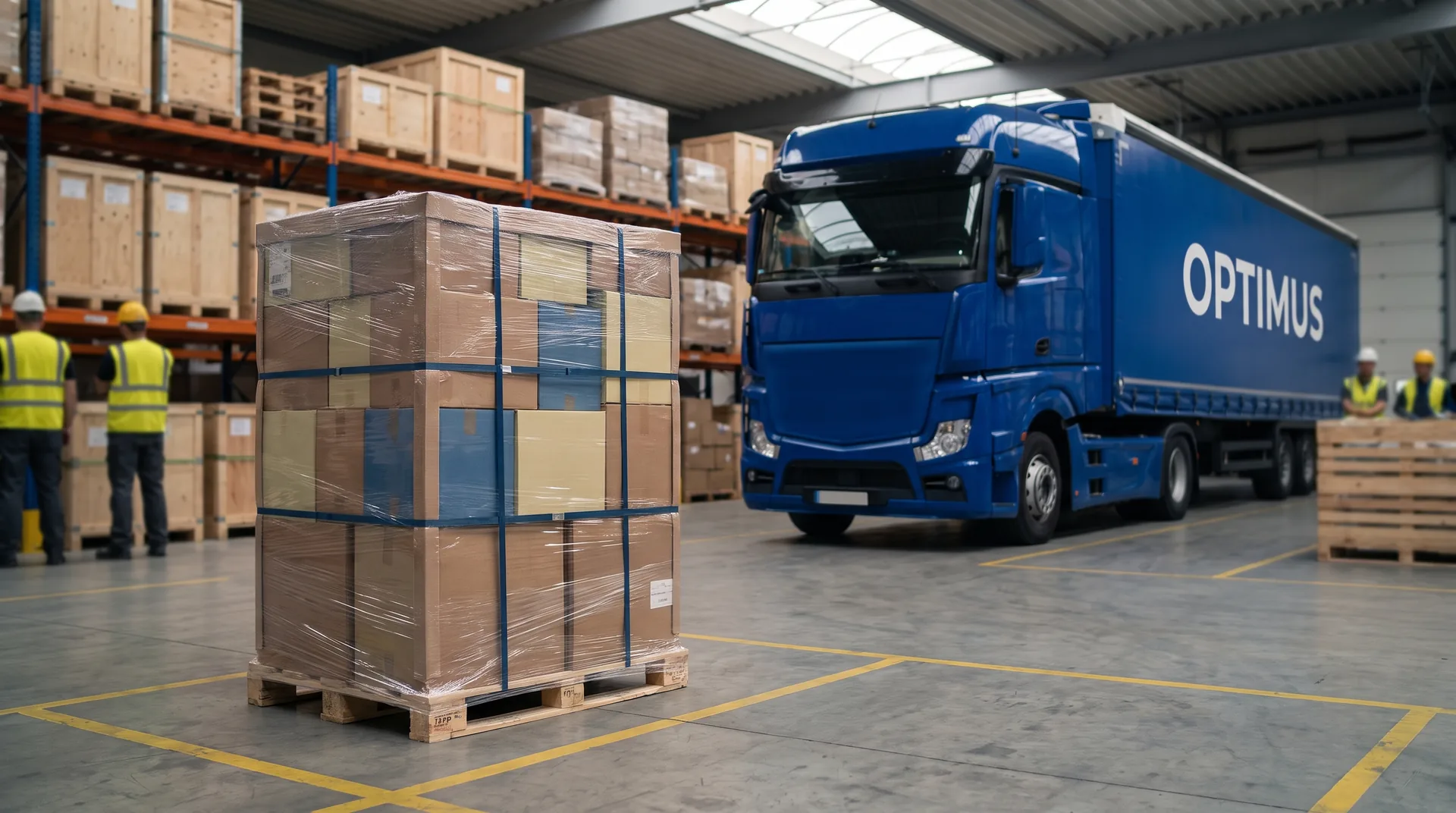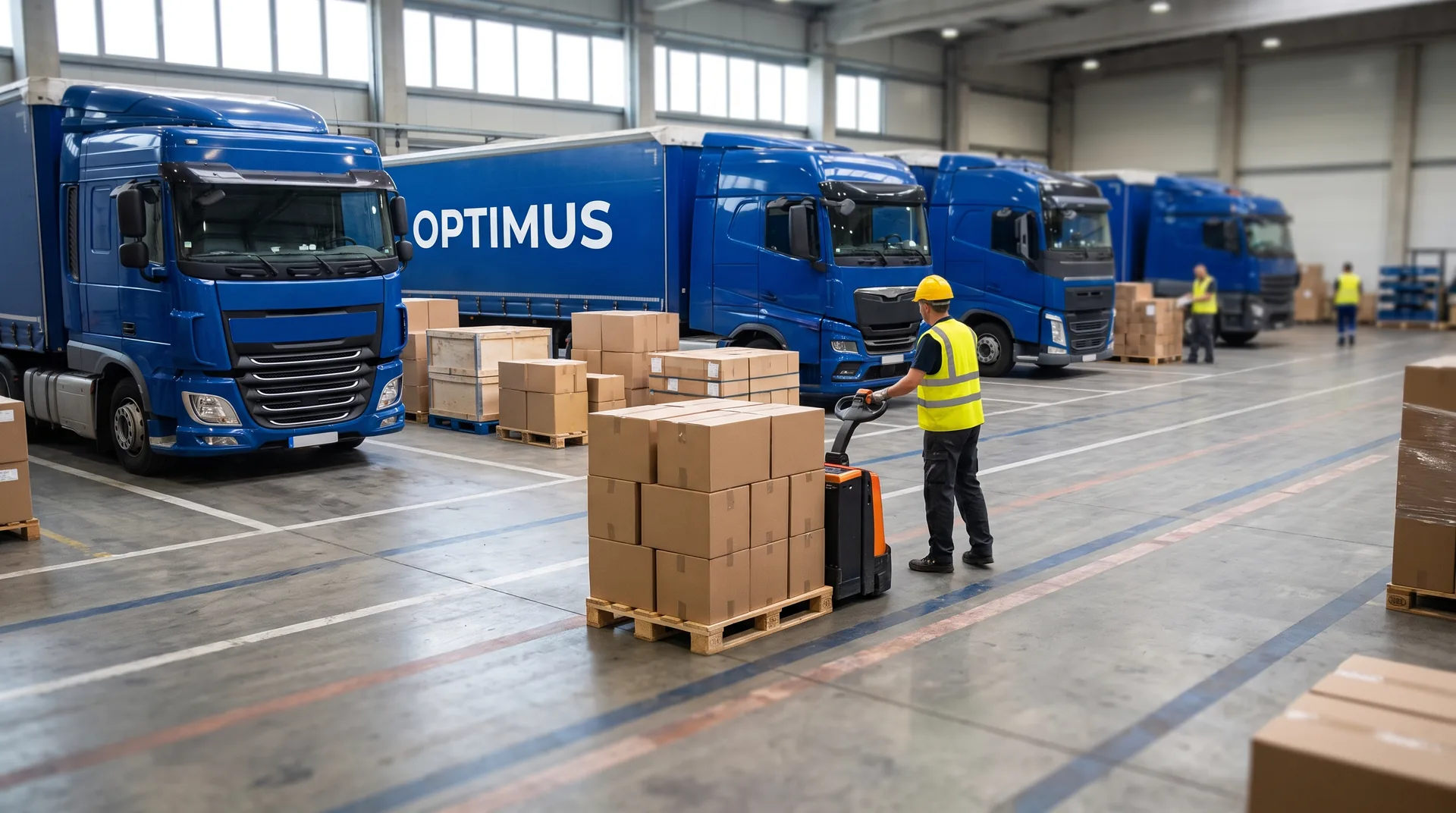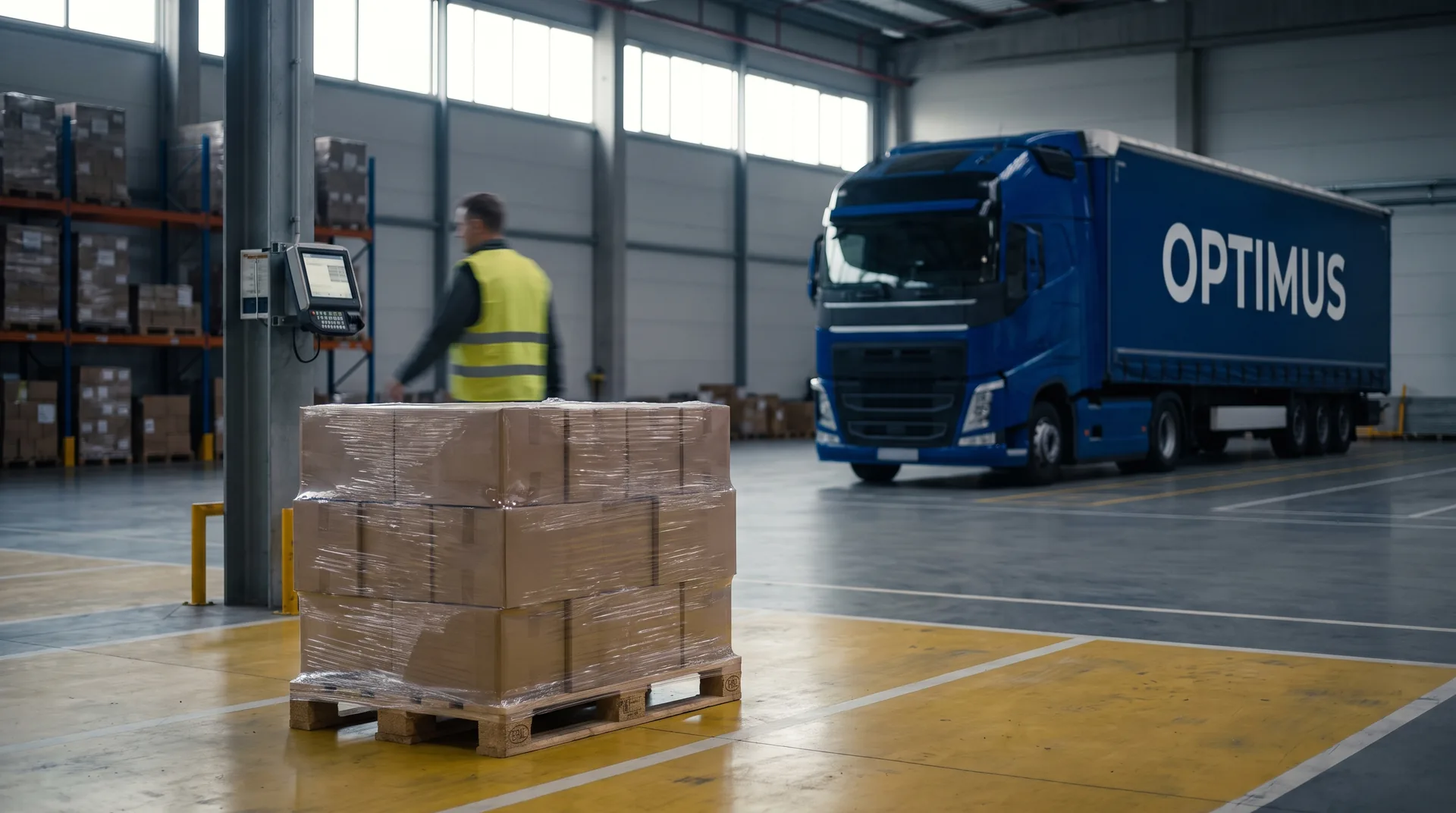
Goods without a pallet can travel in a groupage vehicle provided they are stable, can be secured and do not block the loading of other shipments. We charge them by the space occupied, not by the number of pieces. For unusual cargo we confirm the carriage and preparation method before booking.
Will we take goods without a pallet into groupage?
Yes, but not unconditionally. A groupage vehicle carries cargo for many shippers, and each piece must be safe to stow and secure next to the others. A piece that topples under braking, protrudes into the aisle or offers no lashing points endangers more than itself. So when a non-palletised shipment is booked we ask about things that are obvious with a normal pallet: how the goods stand, where they can be gripped, whether they will survive transhipment, whether the edges are protected. The answers decide whether the shipment travels in groupage or needs another solution.
How is a shipment without a pallet charged?
By footprint, that is by how much space it really blocks in the trailer, converted into loading metres. A bundle of pipes several metres long occupies a strip far longer than its cross-section suggests, because nothing else fits in that place. An irregular crate takes the rectangle drawn around it, not its own volume. We break the calculation down in how many pallets to the UK and how to count LDM, and the boundaries at which a shipment falls outside standard in pallet weight and height in groupage.
Four typical cases
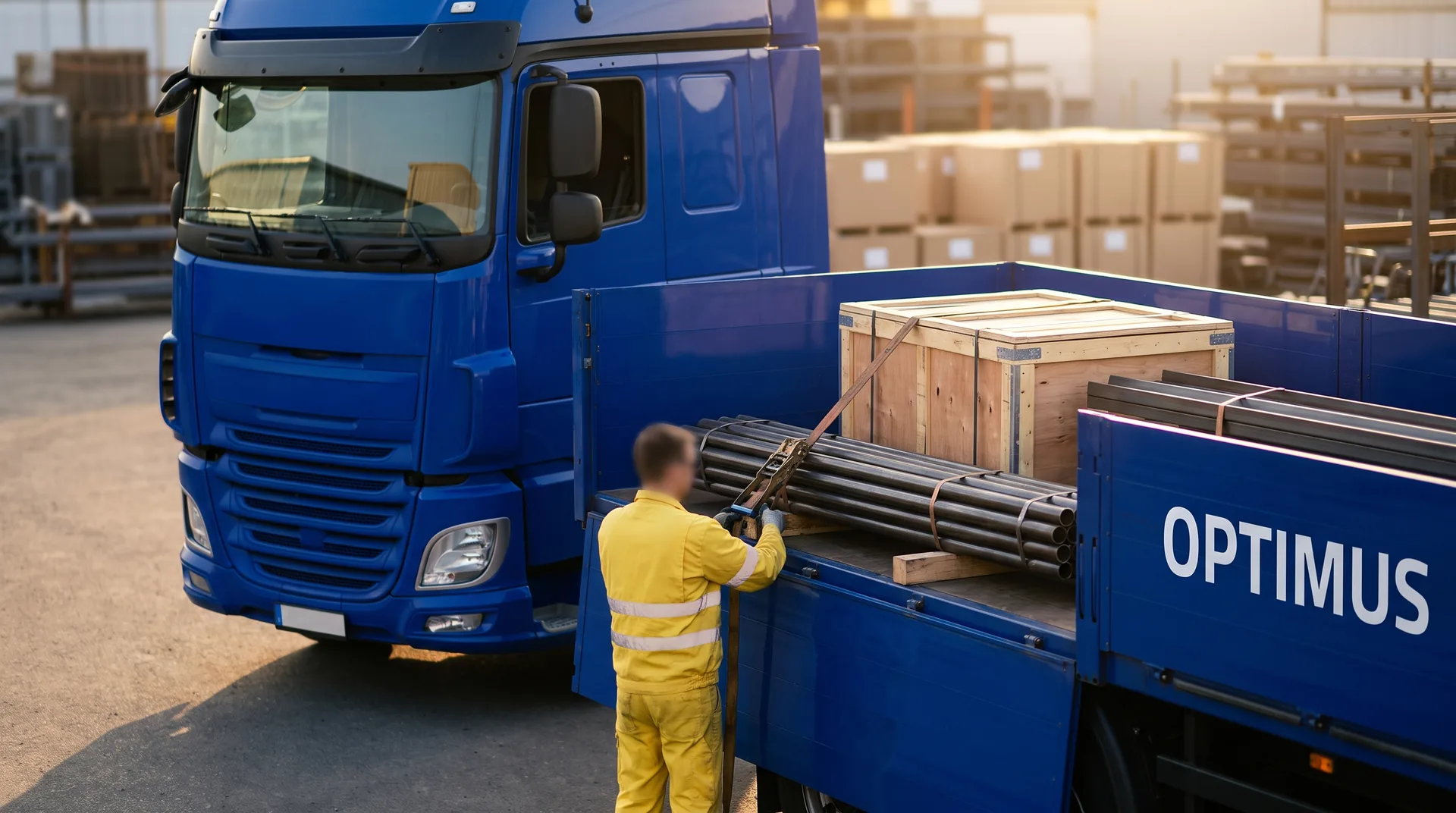
- Wooden crates - the easiest, because they are rigid and usually have bearers for tines. The trouble is often a missing top marking and no lifting points, so the load is handled blind.
- Bundles of profiles, pipes and bars - they need banding into a stable package and dunnage so they can be lifted. Loose elements will not travel; a package that can be moved as one will.
- Long loads - length against the load area decides, along with the ability to lay the piece lengthwise. An element longer than the trailer does not fit groupage at all and needs oversized carriage.
- Single machines and frames - stability on their own feet and lashing points decide. A machine standing on feet without a base usually needs bolting to a transport frame.
Metal cargo has its own weight characteristics, described in the article on metal products and steel to the UK. Furniture and bulky goods from a single piece follow the rules in furniture and oversized goods to the UK.
Do I have to prepare the goods for carriage myself?
Preparing cargo for safe carriage sits with the shipper - that is a rule, not a carrier whim. In practice it means banding the package, protecting sharp edges, providing lifting points and marking the pieces. The driver is responsible for stowing and securing the load in the trailer under the rules described in cargo securing under EN 12195, but will not build a package out of loose elements at the ramp. If you have neither the equipment nor the materials, say so at booking - some of that work can be done at the hub.
When is it better to palletise before collection?
When the shipment consists of many small pieces, when the route includes transhipment, when the UK consignee unloads with a forklift, or when the goods then enter a warehouse system that counts pallets. Palletising costs some work upfront but shortens every later stage and markedly cuts the risk of damage. How to build a pallet that survives groupage is covered in the guide how to secure a pallet for export, and the choice of carrier in EUR versus industrial pallet.
Palletising at the Polish hub
If the goods leave the shipper loose, we can prepare them at our base: place them on a carrier, band, wrap and mark them before loading for the UK. We have the facilities for that in Kielce and in Legnica. We confirm the scope and availability of this work for a specific load at booking, because not everything can be palletised sensibly - a long element stays long whatever we put underneath it.
What to include when booking non-palletised cargo
Dimensions of each piece in three axes, the weight, the packaging material, the banding method, the lifting points and whether the piece stands stable unsupported. Photographs help - one picture saves a quarter of an hour of correspondence and lets us judge immediately whether the load fits groupage. For genuinely unusual cargo see the description of project cargo, where we gather cases beyond the standard.
Have a crate, a bundle or a long element bound for the United Kingdom? Send dimensions and a photo through the quote form and we will say whether it travels in groupage and how to prepare it. The carriage model is described on the groupage LTL page.