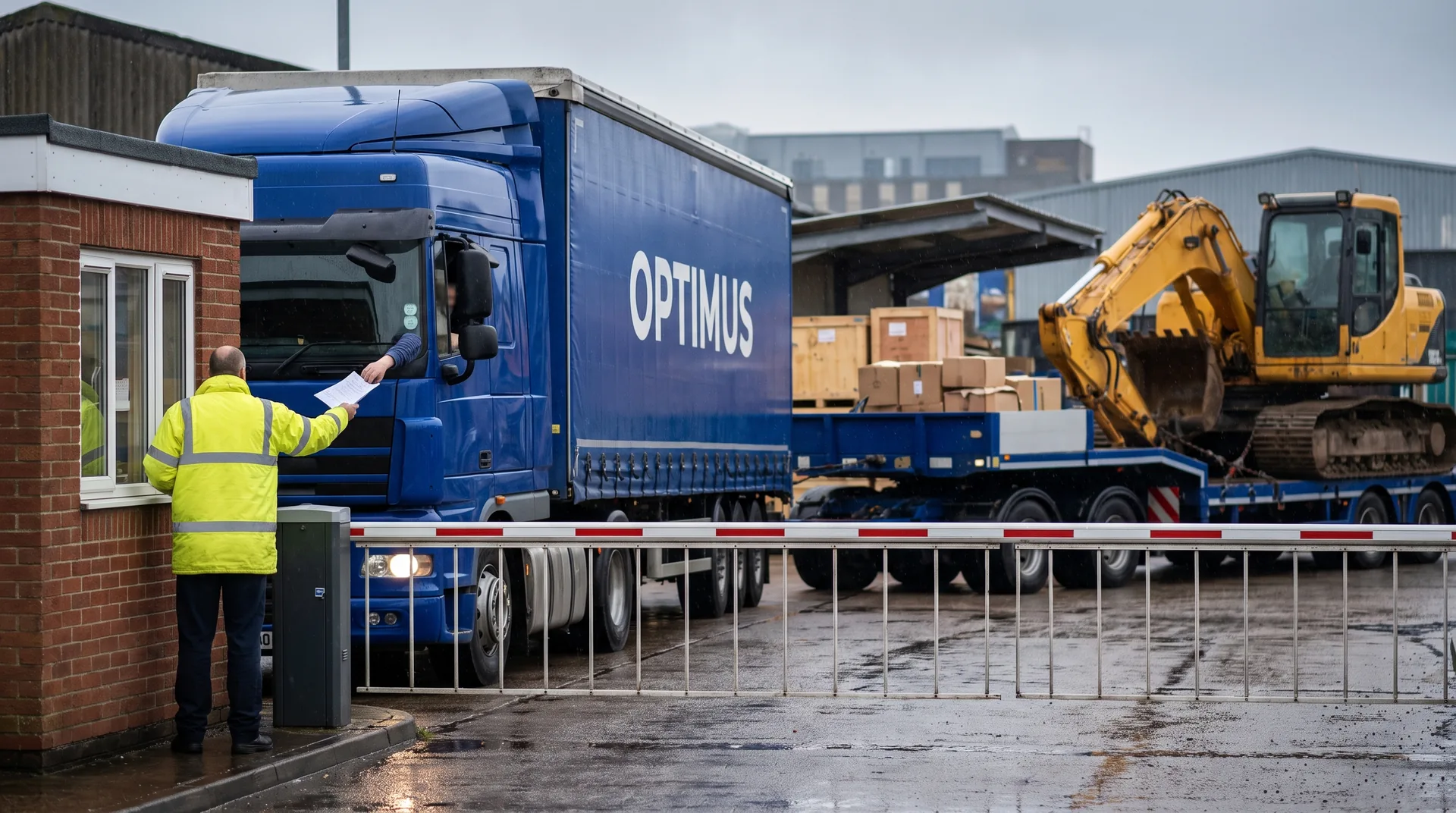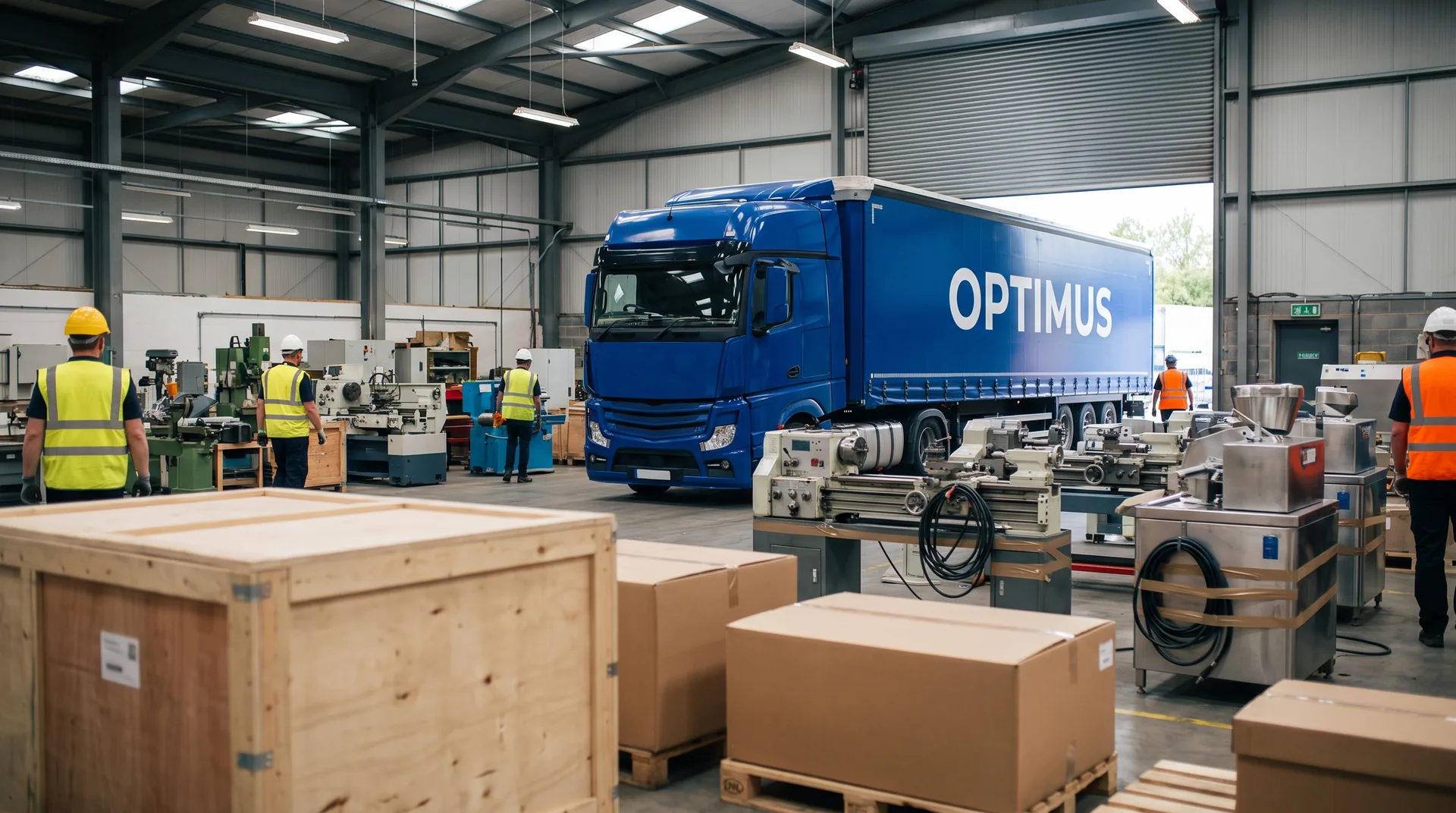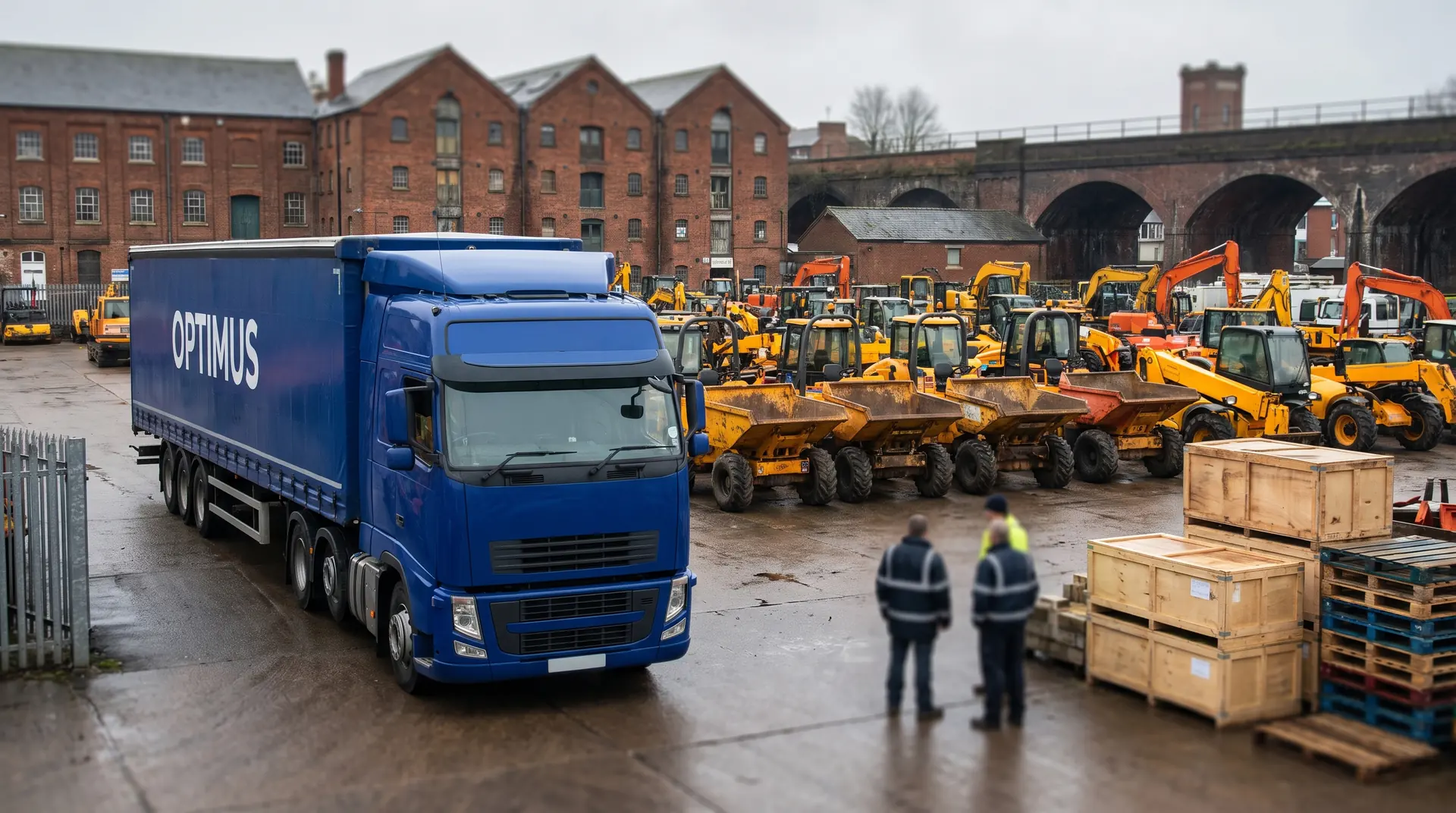
Thimbleby & Shorland runs its sales at Reading Auction Market on Great Knollys Street in Reading, Berkshire. It sells plant, vehicles, farm and vintage machinery, carriages and assets from insolvency proceedings, and part of its calendar takes place not on the yard but at vendor premises. The location is an advantage here: Reading sits close to the Channel port corridor, so a collection is easy to tie to a crossing.
Two different collection points in one calendar
The auction house gives its address as 31 Great Knollys Street, Reading, Berkshire, RG1 7HU, and describes on-site sales as taking place at Reading Auction Market at that address. Alongside that it runs dispersal and reduction sales at vendor locations nationwide, and the calendar shows sales whose venue is a farm or an estate rather than the Reading yard. Those are two different transport operations. The yard has hard standing and permanent staff; a vendor site can mean a track, no loading equipment and a deadline after which nobody is there. We covered that second scenario separately in our article on machinery sold in situ.
What the conditions settle about removal
The published conditions of sale say several things at once. No lot may leave the premises before it is paid for. At the fall of the hammer the lot is considered delivered and stands at the absolute risk of the purchaser, taken with all faults or errors of description. Removal is at the purchaser expense. And the sentence that matters most to anyone planning transport: no undertaking by the auctioneers or their employees to take charge of any lots after the sale, or to forward them to their destination, imposes any legal obligation on them. Which means arranging the removal is entirely a matter for the buyer and the buyer carrier. Sales run on a trade basis, with consumer protections excluded.
Reading and the port corridor
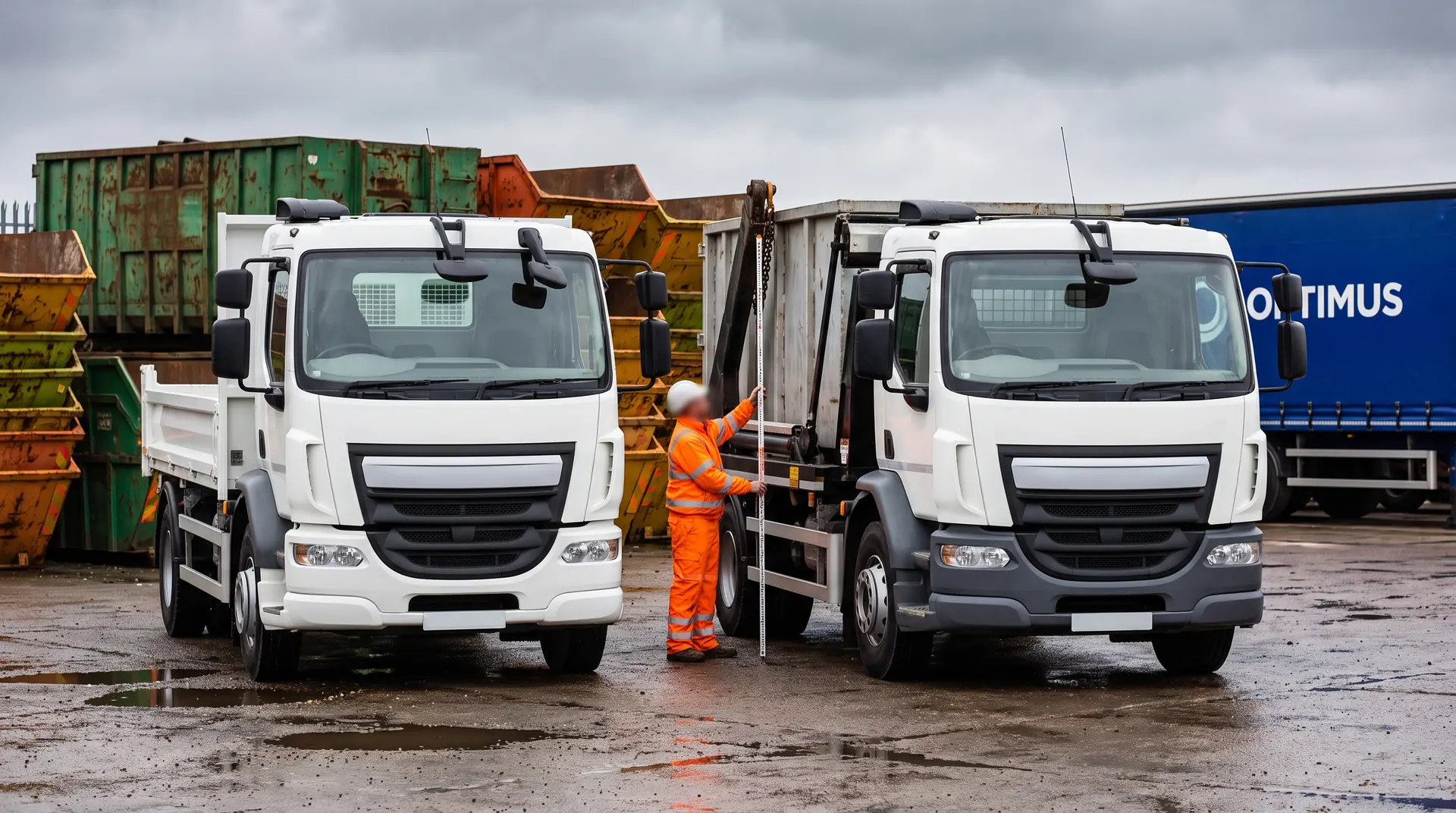
From Reading the run to the Channel ports goes down the M4, then the M25 and the M20 or M2. In practice a machine collected in the morning can usually be tied to a crossing the same day or the next, without a night in the middle of England. On oversize equipment the arithmetic changes, because permits and route restrictions enter the picture, and we cover those in our article on oversize transport. The equipment listed by the plant department, meaning excavators and loading shovels, forklifts, telehandlers, dumpers, trailers, mixers, rollers and compressors, mostly fits within normal dimensions, but the measurement is checked before bidding, not after.
Clearing through France and the smart border
Since the route runs through the Channel ports anyway, it is worth considering clearance on the French side rather than hauling an uncleared machine across half of Europe. The French smart border works by completing customs formalities before arriving at the border, with the driver carrying the barcode of the declaration. The vehicle registration plate is paired electronically with the customs documents, and the outcome is decided during the crossing: on leaving the port the vehicle is sent to the green lane and drives on, or to the orange lane and into an inspection area. From 20 April 2026 French customs requires, on ro-ro movements with the United Kingdom, presentation of the mandatory logistics envelope, the ELO, which groups the whole set of border information and formalities under a single barcode. We go into it further in our article on clearing through France.
When France, when the Netherlands
France wins where the route runs through Calais or the tunnel anyway and where tax handling on that side is in place. The Netherlands wins where the buyer has a tax representative there or a deferment licence for import VAT. In both cases customs procedure 42 can be used, under which the tax is not paid at the border but accounted for in the country of destination; the conditions are a VAT number in the country of clearance or the number of a tax representative, the customer VAT number in the destination country and evidence that the goods are moving, plus listing the supply in a recapitulative statement. We set this out in our article on customs procedure 42. Clearing in Poland stays a sensible option where the buyer has nothing set up abroad and is moving one machine.
What we could not confirm
We could not confirm whether the yard provides loading, or with what equipment; the conditions are silent, and silence is not consent. We ask before sending a vehicle. We do not quote premiums, removal deadlines or storage charges, because the conditions of the particular sale set them. We are not a representative of this auction house; we act for the buyer.
Sources
- Thimbleby & Shorland: the Great Knollys Street address in Reading
- Thimbleby & Shorland: conditions of sale
- Thimbleby & Shorland: plant department and dispersal sales at vendor premises
- French customs: the smart border, pairing the declaration with the vehicle registration
- French customs: the mandatory logistics envelope, ELO, from 20 April 2026
Buying at Reading or at a dispersal sale on a vendor site? Send the address, the dimensions and the removal date through the quote form. See also customs clearance.