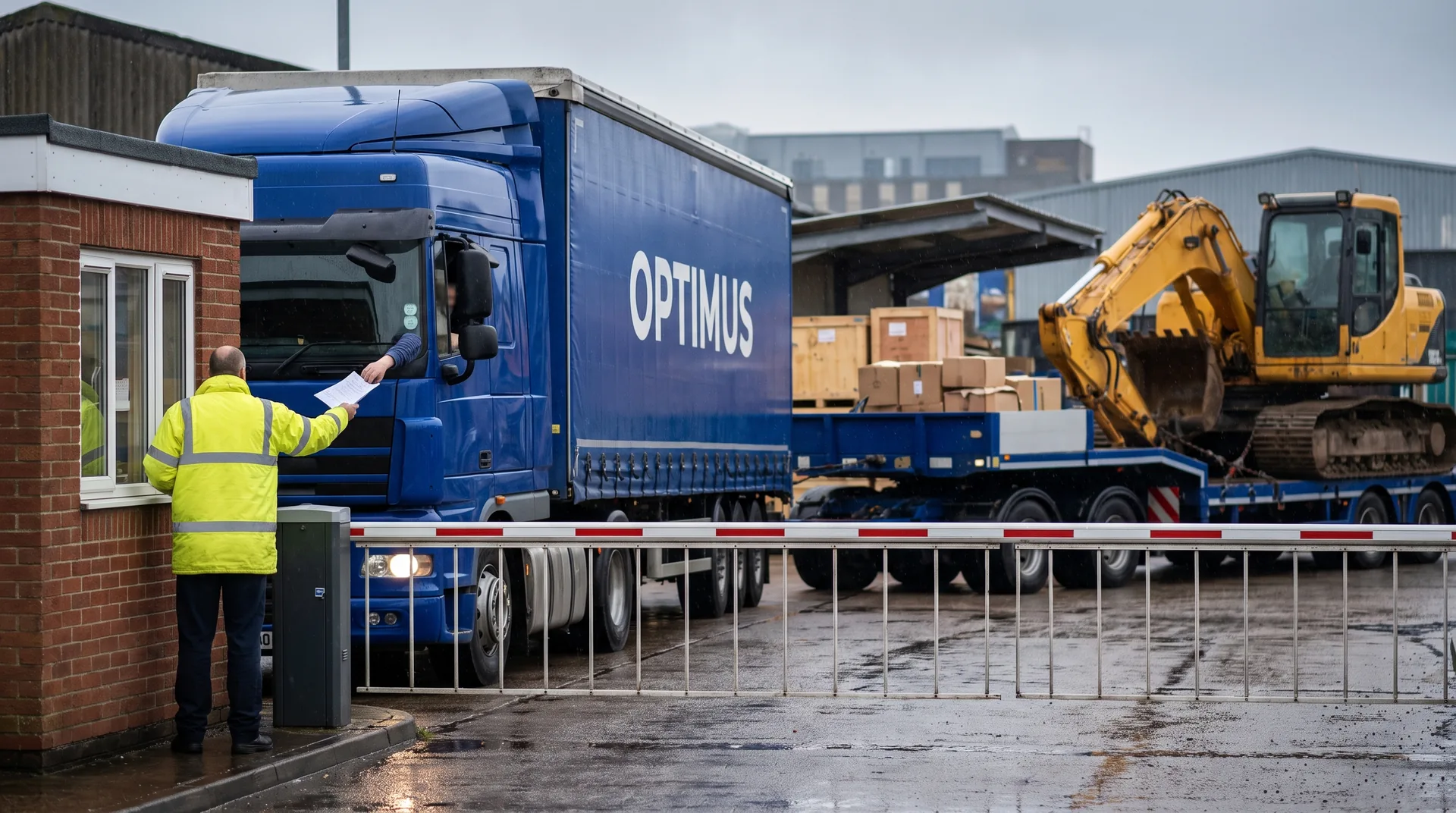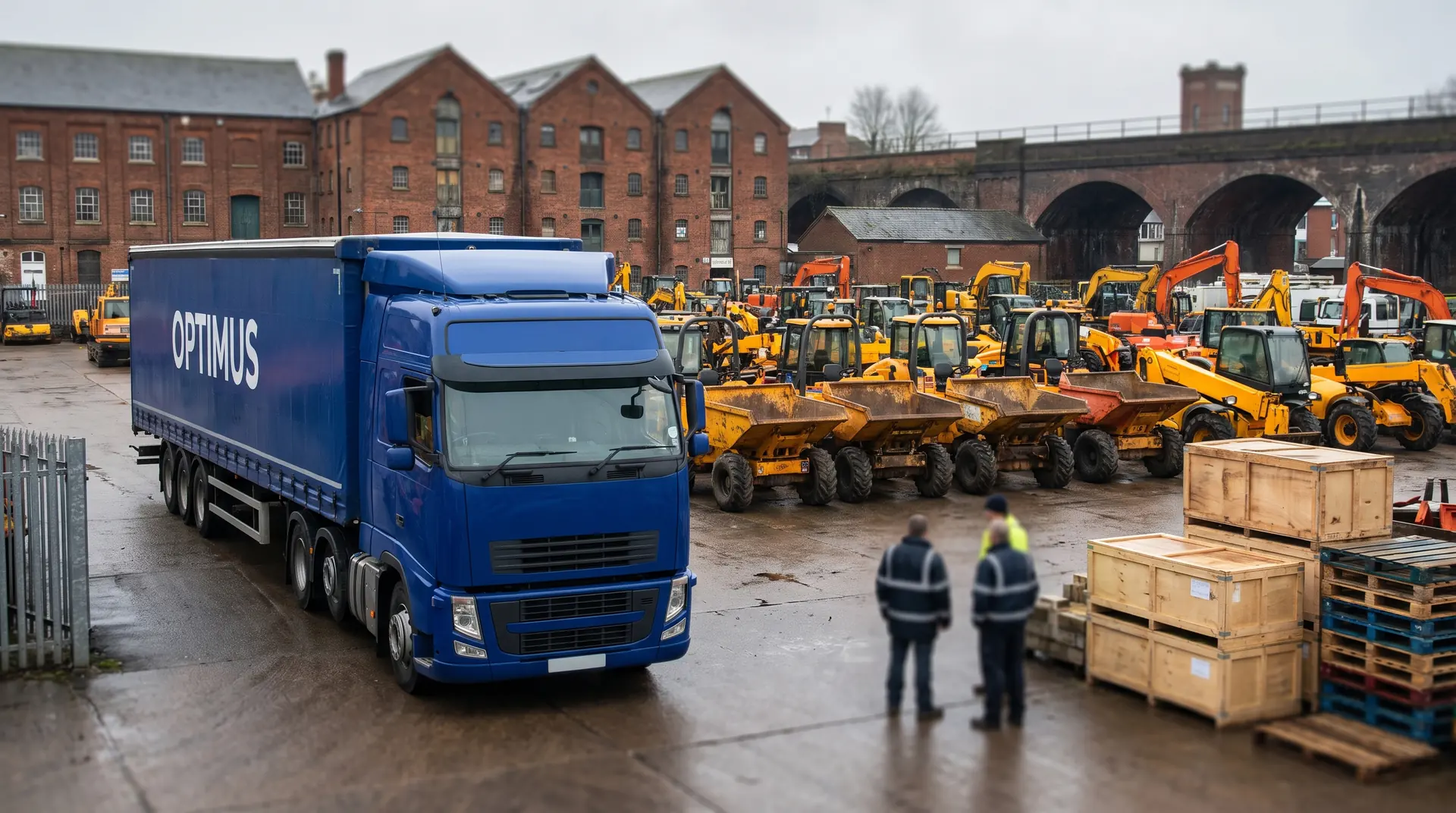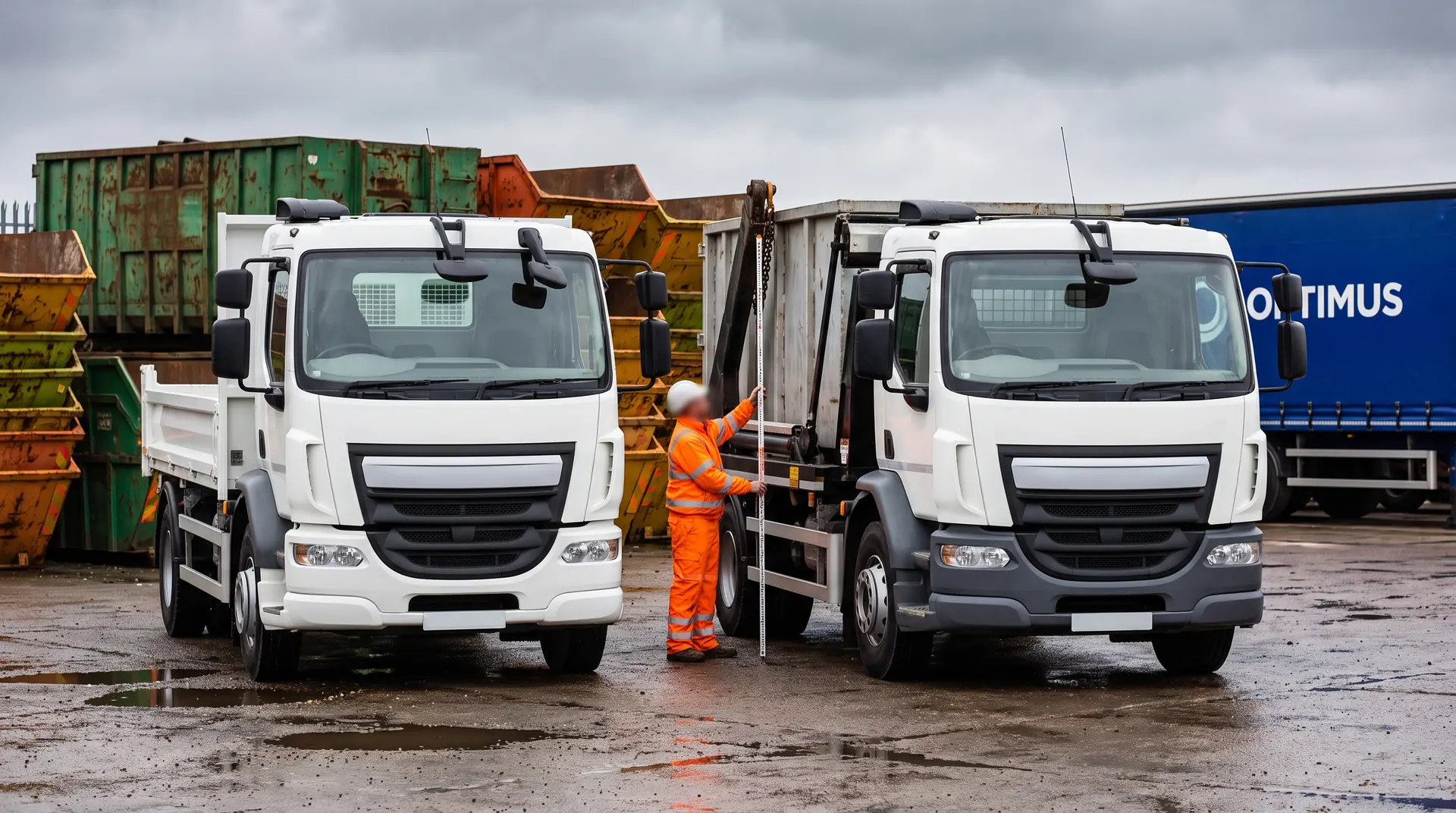
Tippers and hook loaders sell at British auctions as complete vehicles with their bodies fitted, while containers and hook bins usually go as separate lots in the same sale. Body height settles the movement: it decides whether the vehicle fits on a transporter at all, or has to cover the route on its own wheels, which the buyer arranges without us.
Three body types, three different headaches
A rear tipper is the simplest arrangement: a rigid body raised by one ram and discharged to the rear. A three-way tipper has drop sides on three sides and gear allowing the body to tilt sideways, which means more hinges, catches and latches that may be worn. Hook and skip loaders carry no fixed body at all, only a subframe with gear on it, and that changes both weight distribution and how the vehicle is lashed.
Each of these bodies is auctioned together with the chassis, so you buy one item and in practice move two: the vehicle and the structure on it. That second part is rarely described in enough detail to judge from the catalogue how high it reaches. You know a similar problem from site plant with excavators and loaders from UK auctions, except a boom can be lowered and a body cannot.
Body height decides everything
A truck chassis is tall to begin with; a tipper adds sides and body structure, a hook loader adds an arm parked above the frame. Then comes the transporter deck, which has to carry the weight of a truck and is therefore not thin. Those three figures added together close off the ordinary outfit very quickly and leave two routes: a low deck trailer, or a permit for an abnormal movement.
So with these vehicles the first question is not what it weighs but how high the topmost point of the body reaches. The answer has to be found before the sale, from side photographs and the chassis datasheet, because after collection it is usually too late to change the plan. When the height allowance disappears, you are into the route described in oversized transport, permits and escort.
Hook arm, tipping ram and locks
A hook arm has a travelling position and it must be locked into it, not merely lowered. Its own weight will not hold it, because once the vehicle is shut down the hydraulic system loses pressure and the arm starts to move on every jolt. The lock may be a pin or a catch, and on older machines it is sometimes a workshop addition, in which case you have to judge whether it works at all.
We treat a tipping ram the same way. The body must sit fully down on the frame and be restrained against lifting, because on the road every centimetre of free play turns into metal striking metal. Control valves and levers are locked off and the system is left without pressure. Add the side latches, the rear door catches, and the roll-over sheet above the body, which is rolled up and tied so it cannot flap.
- side latches closed and additionally secured where a catch is worn;
- roll-over sheet rolled up, the winding handle immobilised;
- steps, ladders and side guards folded where the design allows;
- mirrors and mirror arms folded inside the outline of the vehicle.
The body must be empty and swept
Vehicles of this kind reach auction straight from work, and there is almost always something loose left in the body: aggregate in the corners, a layer of rubble against the tailgate, dried mud on the floor. This is not a cosmetic detail. Loose material in a slightly raised body shifts under braking, escapes through a poorly sealing tailgate onto the carriageway, and changes weight distribution on the transporter.
We sweep and wash the body out in the yard, and the residue leaves with the yard waste rather than with the vehicle. While the floor is clear it is worth looking at it, because that is where wear and welded repairs show, and those never appear in catalogue photographs. How to plan that check before collection is set out in inspecting a machine before collection from the auction yard.
The container is a separate load and a separate line
Bins and containers for hook loaders normally sell as their own lots, often several at once, because they come from the same fleet. If you buy both the vehicle and the containers, plan it as two different movements combined into one collection: the vehicle goes its own way, and the containers travel as a separate load that stacks and rides alongside other goods. On the declaration they are also a separate line with their own description and classification, which is covered in the CN and HS customs tariff code and how to find it.
Empty containers and load bodies behave nothing like the vehicle in transit: they are light for their volume, they stack, and they fill out a shared load neatly. They travel much like site containers, generators and compressors from UK auctions, with transhipment at the Milton Keynes warehouse and the Kielce base.
When a transporter simply does not pay
With tippers and hook loaders, more often than with vans, it turns out that carrying the vehicle makes no financial sense. The reason is simple: the vehicle is heavy and tall at the same time, so it needs equipment that carries one item and still runs close to the height limits. The cost of such a movement can approach the hammer price, particularly for older vehicles bought from disposals of the kind described in John Pye Auctions and equipment from insolvency disposals.
The honest answer then is that a sound vehicle with a valid test will cover the distance more cheaply on its own wheels. We do not offer that driven delivery and the buyer organises it independently; what we do is say where the line of viability runs, and carry the vehicle when driving is ruled out. Containers, ancillary gear and parts from the same sale come with us as cargo in the meantime.
Sources
- GDDKiA: abnormal load movements and permit conditions in Poland
- GOV.UK: securing loads on HGVs and goods vehicles
- GOV.UK: the trade tariff lookup tool
Send side photographs of the vehicle and the lot numbers of the containers, and we will price the collection as a single operation. Start with a quote for haulage from the United Kingdom, ask the detail through the operations team, and we will set the declarations on both sides alongside customs clearance.