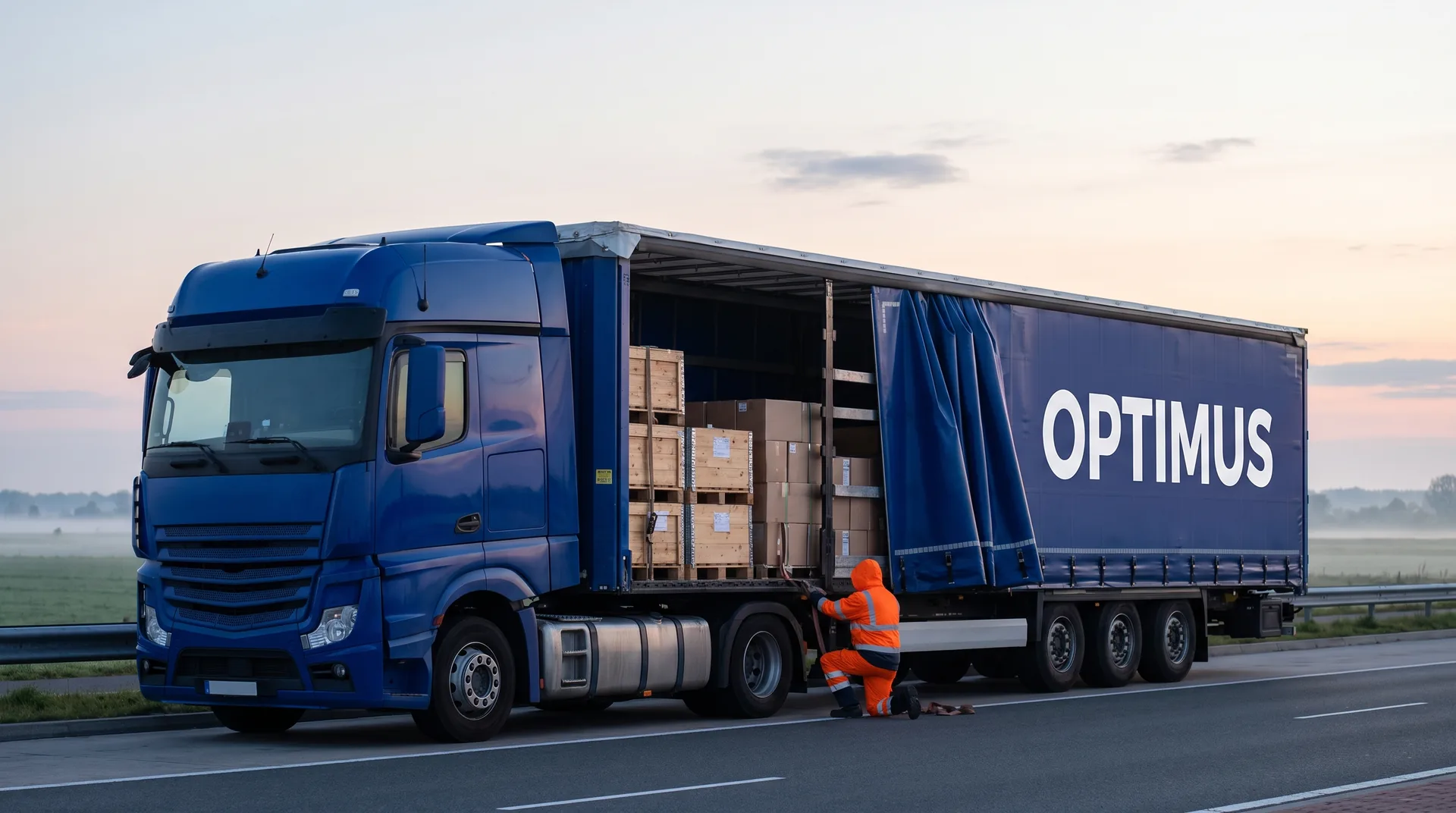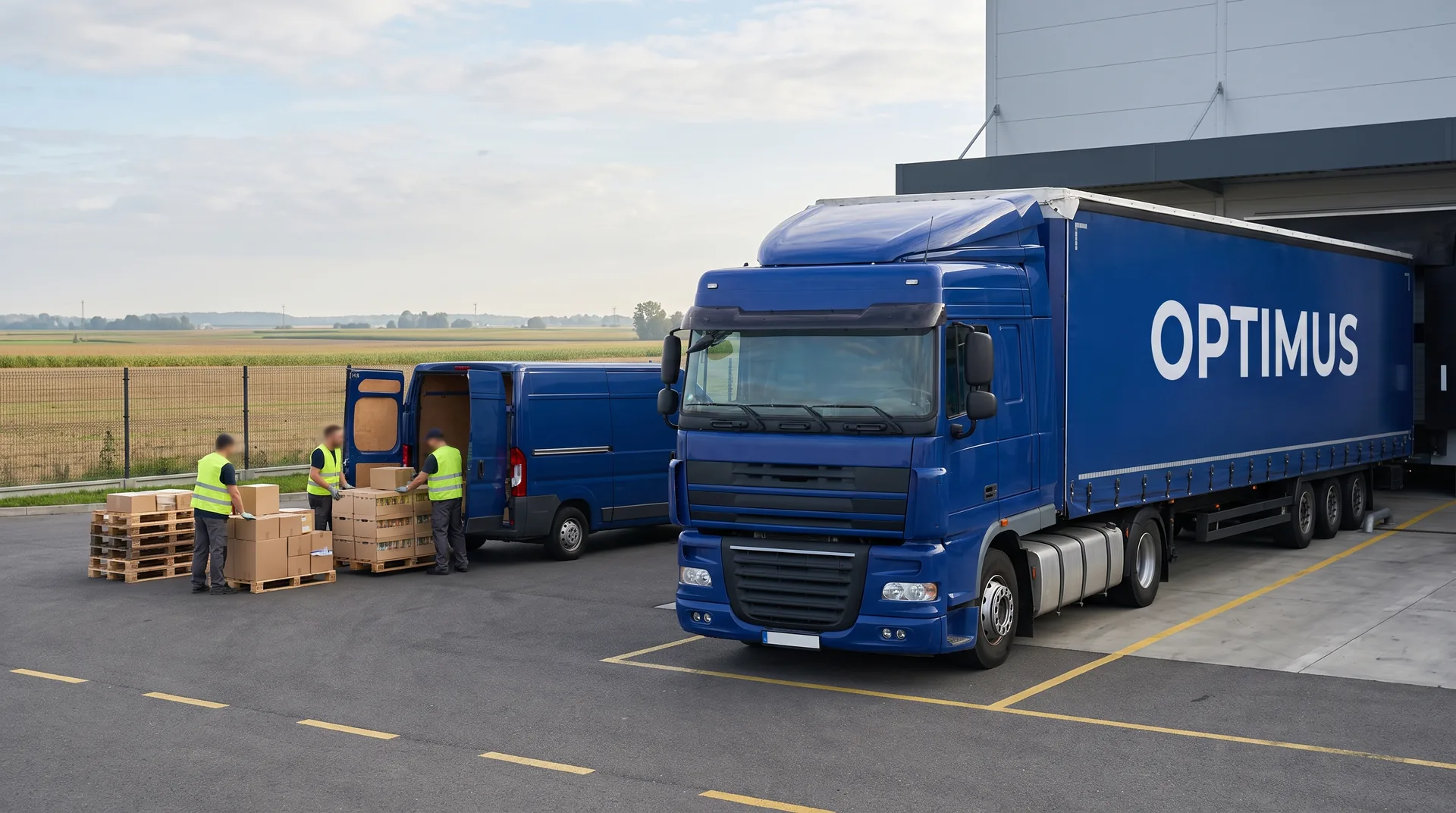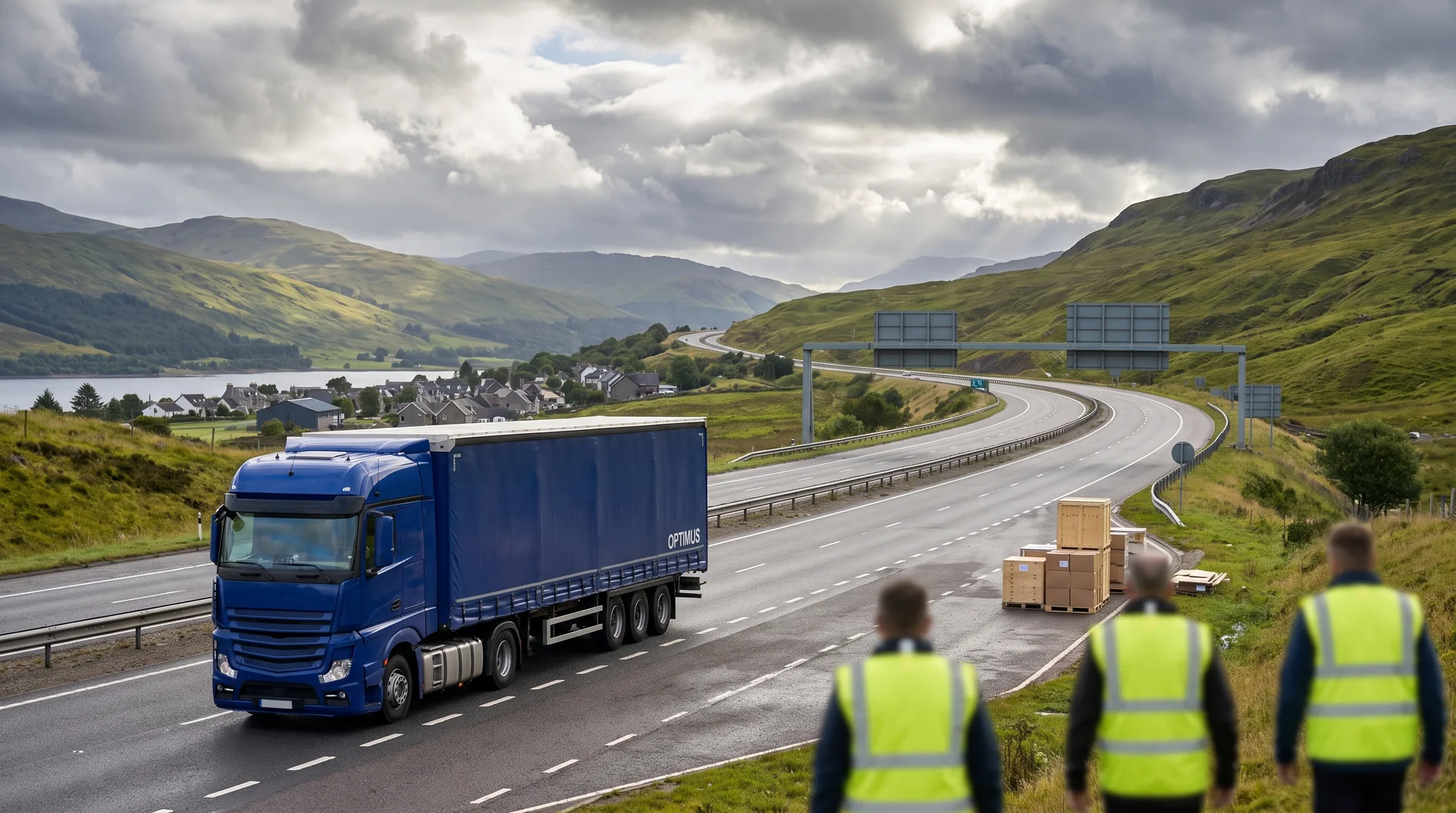
Getting to a trade fair in Scotland differs from getting to one in England in two ways. First the length of the British leg: from the crossing, Glasgow and Edinburgh are further than Birmingham, and Aberdeen is further still. Second the Scottish low emission zones, which carry no daily charge: either the vehicle meets the standard or it gets a penalty. Customs formalities, by contrast, are identical to England's, because Scotland is part of Great Britain.
Where the variance in this route sits
An exhibitor usually looks at the whole run as one figure in kilometres. For planning it matters more that it consists of legs with wildly different predictability. The continental drive is the longest but the most regular. The Channel crossing has its own rhythm and is the first point at which half a day can disappear. The British leg is shorter than the continental one, but it decides the hour of arrival, because it runs on the island's busiest motorways, and north of Glasgow weather and terrain join in.
So for Scottish shows the reserve is not added to the whole journey as a flat figure but to the two legs where the risk actually lives. Do it any other way and you pad the part that does not need it while running short on the part that does. The method for planning backwards from the build-up window is in the article on the build-up and breakdown calendar.
Four zones, one set of rules
Scotland has four low emission zones: Aberdeen, Dundee, Edinburgh and Glasgow. All operate 24 hours a day, seven days a week, and compliance is checked by number plate recognition cameras. Enforcement began in Glasgow on 1 June 2023 and in Edinburgh on 1 June 2024. The area covered differs by city and generally means the central core, so the boundary is checked on the relevant council's map rather than guessed.
What standard a vehicle has to meet
The requirements are the same in all four cities: Euro 6 for diesel cars and vans, Euro VI for diesel buses, coaches and HGVs, Euro 4 for petrol cars and vans and Euro IV for petrol buses, coaches and HGVs. Motorcycles and mopeds are not covered by the zones.
One detail matters for a Polish exhibitor and is easy to miss. The online compliance checker run by the Scottish administration does not handle vehicles not registered in the UK: with foreign plates you have to confirm the standard from the vehicle documents, the manufacturer or the national vehicle authority. In other words, no result in the checker is not an exemption. Our vehicles meet Euro VI, so on our deliveries the question does not come back; it appears when an exhibitor brings part of the kit in their own van or books a local carrier at short notice.
Penalties: how much and how they grow
The penalty is £60, reduced to £30 if paid within 14 days. A further breach of the same zone within 90 days doubles the amount. Ninety days after the last penalty the counter resets to £60. The ceiling is £480 for cars and light goods vehicles and £960 for minibuses, buses, coaches and HGVs. On a show delivery, where a vehicle enters the centre several times during build-up week, that mechanism adds up faster than a single rate suggests. The wider picture of British zones, including the English charging schemes, is in the article on UK clean air zones.
Customs: Scotland is Great Britain
There is no separate Scottish border. The full export route on the EU side and import route on the British side apply, with a GMR for the crossing, which we cover in the article on the GMR. Exhibits returning as a complete set can travel on an ATA carnet; giveaways and goods sold on site need an ordinary commercial clearance. We separate the two at packing, because splitting them on the stand is awkward. The consequences of a document left open are in the piece on an undischarged ATA carnet. Clearances are handled in cooperation with the customs agencies we work with regularly.
Which venues, and how they differ
- The Scottish Event Campus in Glasgow: several buildings at one address, city fabric on the river, approach from the M8.
- The Royal Highland Centre at Ingliston: open ground by the airport, ground-level unloading, a surface that depends on the weather.
- The EICC in Edinburgh: the city core, one loading bay, a narrow receiving window.
- P&J Live outside Aberdeen: pillar-free halls, five by five metre doors, the longest run.
Groupage or a dedicated vehicle
Single pallets and small stands travel as groupage: the load waits for the next scheduled line departure and passes through two handling points, the Polish hub and the cross-dock in Milton Keynes. Above roughly twelve pallets, about a third of a trailer, a dedicated vehicle usually wins. Scotland adds an argument England does not have: the longer the British leg, the more every extra handling step costs, and the sooner it pays to travel without a change.
What we do
We collect in Poland and in Czechia, Slovakia, Austria and Hungary, consolidate at our Kielce base, prepare the paperwork with the customs agency and deliver to the venue gate at an agreed hour, after a stop in Milton Keynes where that helps. We commit to an hour at the gate, not an hour of unloading. After breakdown we collect the set and arrange the return or storage until the next show. The wider view of the destination is in the article on transport to Scotland.
Venues beyond Glasgow and Edinburgh
Outside the two largest cities there are venues with an entirely different profile. In Perth an ice hall takes exhibitions only outside the ice season, which we cover in the article on the Dewars Centre in Perth. In Inverness the largest conference venue in the north publishes its door dimensions and dock height, which we unpack in the piece on Eden Court in Inverness. Neither Perth nor Inverness has a low emission zone, so the constraint there is the geometry of the approach rather than an emission standard.
Sources
- mygov.scot: Scotland's low emission zones
- mygov.scot: emission standards required in a LEZ
- mygov.scot: LEZ penalty charges
- City of Edinburgh Council: low emission zone
Planning a Scottish show? Send the venue and build-up window through the quotation form and we will work out the route with its reserve. See also exhibition logistics and the United Kingdom destination.