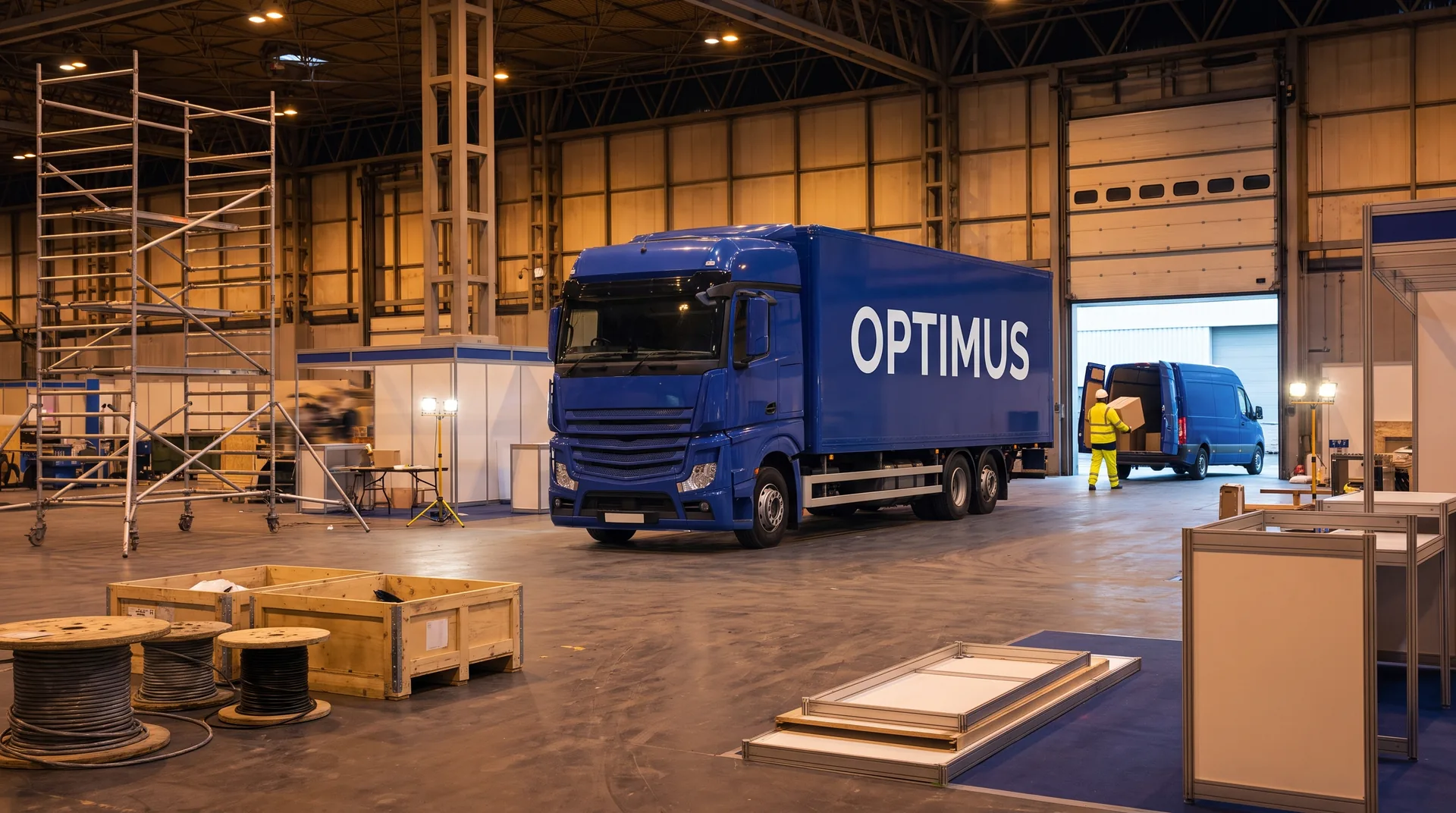
Delivery to the NEC Birmingham rests on three things: booking a build-up window in line with the venue and organiser rules, a complete customs file with a GMR for the crossing, and the decision whether exhibits travel on an ATA carnet or go through normal import clearance. We carry stands and exhibits to Birmingham shows and bring them back after breakdown.
Why the NEC is harder than an ordinary delivery
The NEC Birmingham sits at the M42 and M6 junction, next to the airport and Birmingham International station, and its halls host events on a scale where hundreds of vehicles enter within the same window. This is not a warehouse that takes a lorry whenever it turns up. Traffic is controlled: allocated windows, designated gates, marshalling areas and vehicle passes. On top of that comes something Polish exhibitors usually learn too late: unloading onto the stand is often not done by the driver but by the organiser's appointed on-floor handling contractor, whose services must be ordered in advance. So when we plan transport, we plan not only the route but what happens between the gate and the stand. The season changes the arithmetic of time as well: the February date of Spring Fair means planning the run in mid-winter, with a buffer for weather and the crossing, which we set out in transport to Spring Fair at the NEC Birmingham.
A schedule that actually works
We work backwards from the opening hour of the show. First the build-up window allocated to your stand, then the unloading day, then the departure day from Poland, and only last the loading day at your premises. In that order the buffers and clashes become visible. Stand construction usually travels earlier than exhibits, because somebody has to build it before equipment stands on it. Marketing material, samples and goods meant to be handed out or sold form a separate category, because their customs status differs from exhibits returning complete. The whole planning scheme is set out in our article on planning UK fairs for Polish exhibitors.
Customs and the border: what must be ready before departure
A trip to a UK trade fair is a full export and import procedure, regardless of the goods coming back. You need data for the EU export declaration, a UK import declaration or an ATA carnet, a safety declaration and a GMR tying the declarations to a specific movement. Without a GMR the vehicle will not be allowed onto the crossing. We describe the mechanics in articles on the GMR and on the GVMS system. With exhibition freight we watch goods descriptions especially closely: vague wording such as "exhibition material" tends to be rejected in safety data, which we cover under unacceptable goods descriptions.
ATA carnet or normal clearance
An ATA carnet pays off when exhibits return in the same condition and complete: machines, demonstration equipment, display elements, audio and video kit. It does not cover goods staying in the UK, consumed promotional material or samples given away to visitors. In practice one vehicle carries both categories, so the paperwork runs in parallel: a carnet for the returning part and a normal declaration for the rest. How to arrange it is explained in our texts on the ATA carnet step by step and on goods sold at the fair.
What we drive onto the site, and why it is not always a trailer
Articulated vehicles do enter NEC halls, but not to every stand and not in every window. For small stands and light construction a van or a tail-lift vehicle often makes more sense, because manoeuvring a trailer down a build aisle ends with blocking your neighbours. With machinery, mass and height decide: some exhibits need a low-loader and a forklift of the right capacity on the venue side. We settle the vehicle choice together with the exhibit list and the stand drawing, not after the fact. More on this in our article on exhibition transport from vans to oversized. The reverse happens too: with furniture displays volume grows faster than weight, so the vehicle is chosen for load space rather than tonnage, as with furniture transport to the January Furniture Show.
Breakdown and the return leg, where things usually fall apart
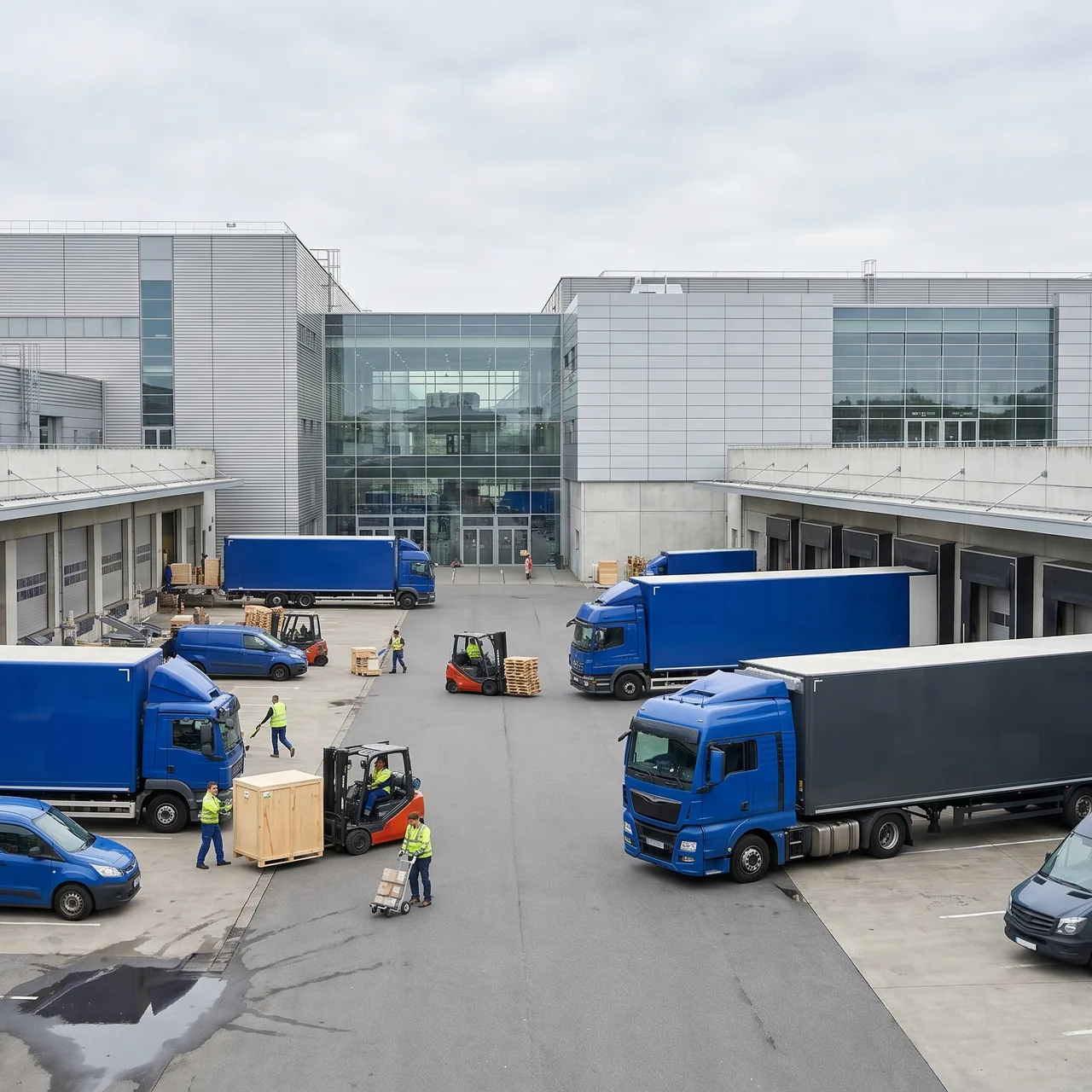
Once the show closes the site gets tight, because everyone wants to leave at once. We position the vehicle in the breakdown window and make sure exhibits go back in exactly the set they arrived in, because the ATA carnet discharge depends on it. Empty packaging, which has to sit somewhere throughout the event, is a separate subject covered in our text on empty packaging during UK fairs. If part of the goods stays in the United Kingdom, for example with a customer after a deal struck on the stand, it has to be handled in customs terms rather than simply left behind. The return of exhibits is described in our article on post-show logistics.
What to send us so the quote and plan are realistic
Give the event name and dates, the stand number and hall, the allocated build-up window, an exhibit list with dimensions and weights, the loading address in Poland and whether you need an ATA carnet. Add whether handling equipment is ordered on site and whether the stand construction travels separately. For heavy exhibits a stand layout marking where the machine sits is useful. On that basis we choose the vehicle, build the schedule and prepare documents. Loads from Czechia, Slovakia, Austria and Hungary are consolidated through Poland, described in our text on exhibits from CZ, SK, AT and HU.
Sources
Exhibiting at the NEC Birmingham and need transport with customs and a managed return? Send your exhibit list and dates through the quote form and we will come back with a delivery and documents plan. Our exhibition work is described on the exhibition logistics page, and the route on transport to the United Kingdom.