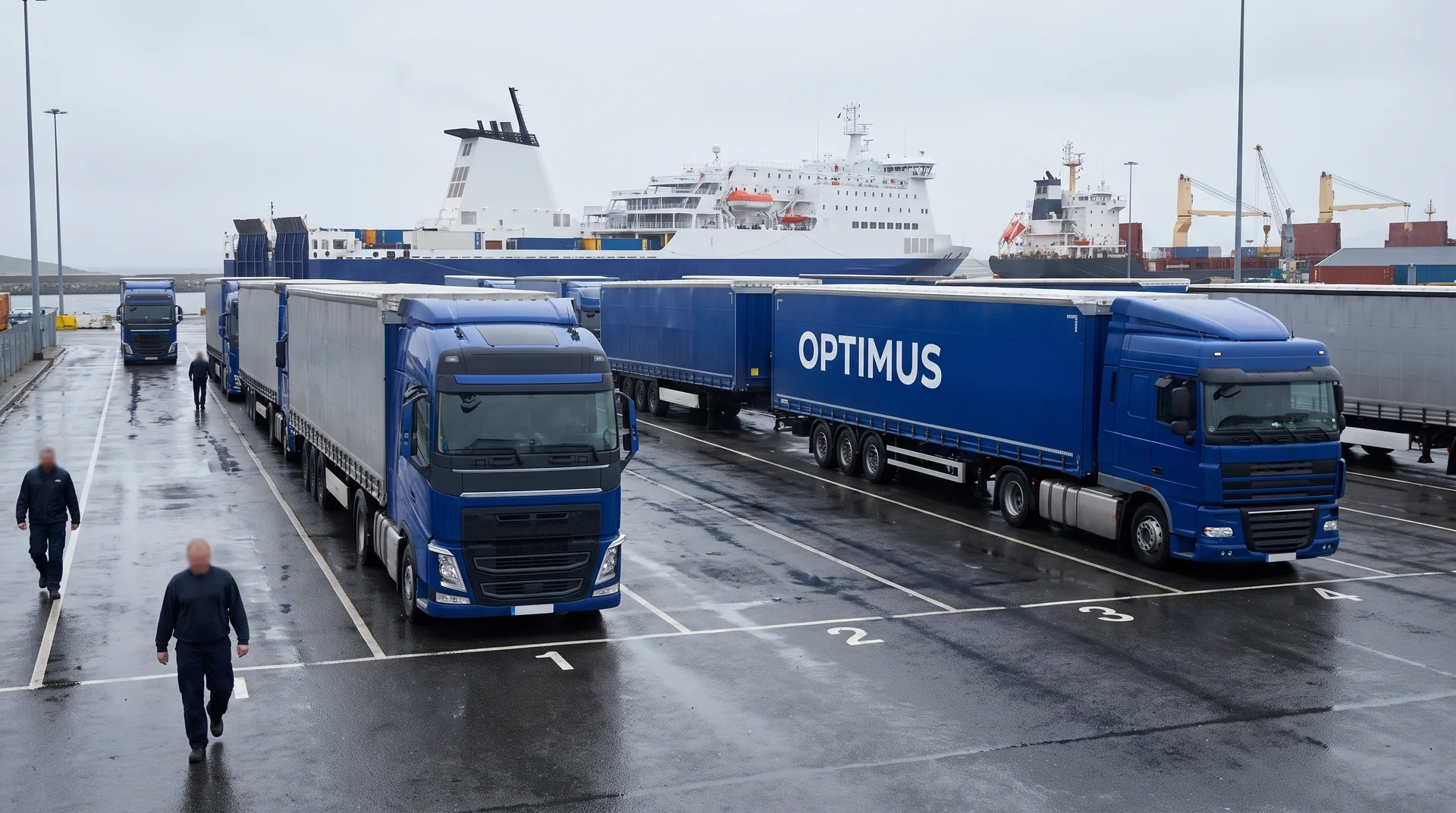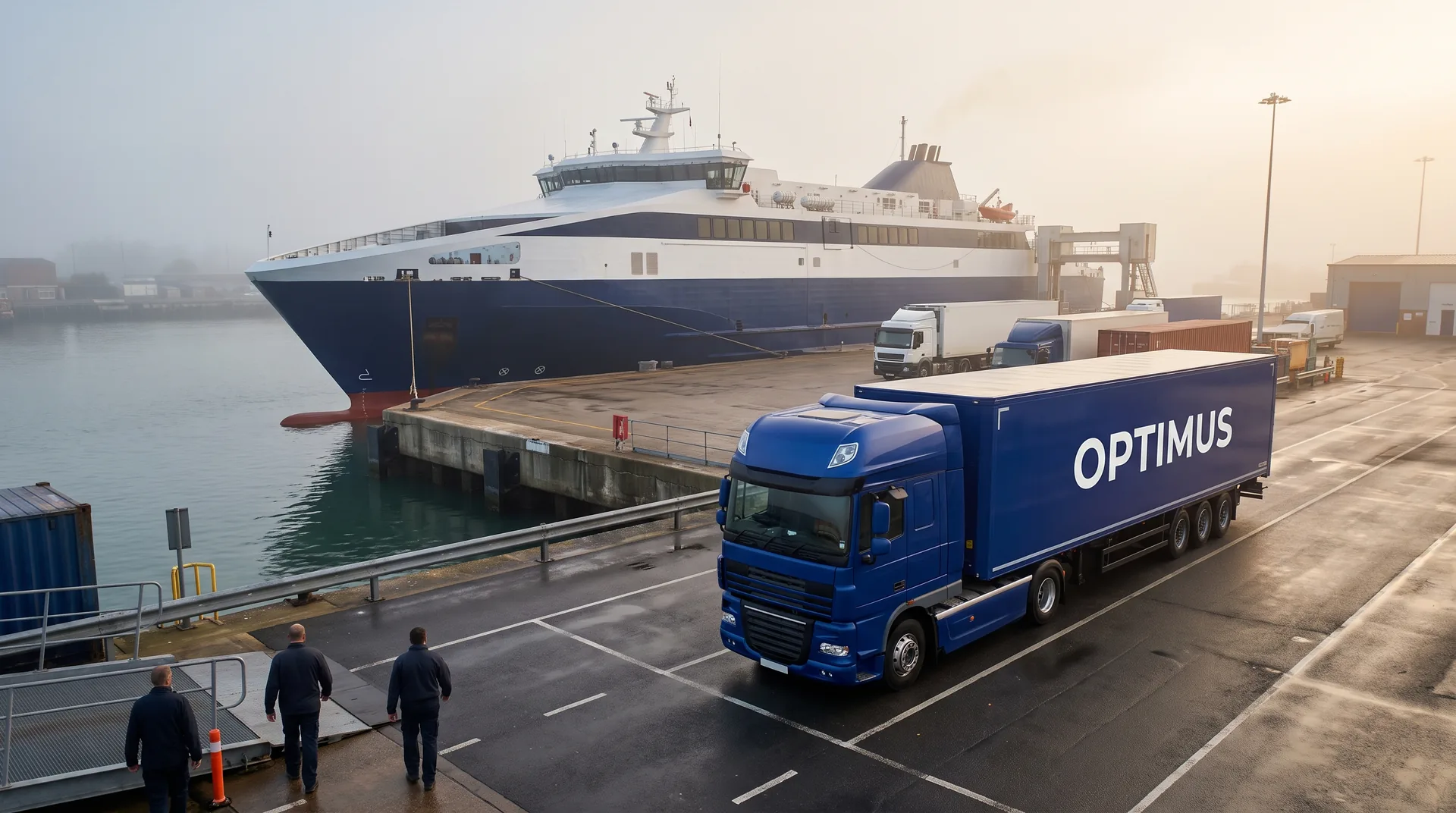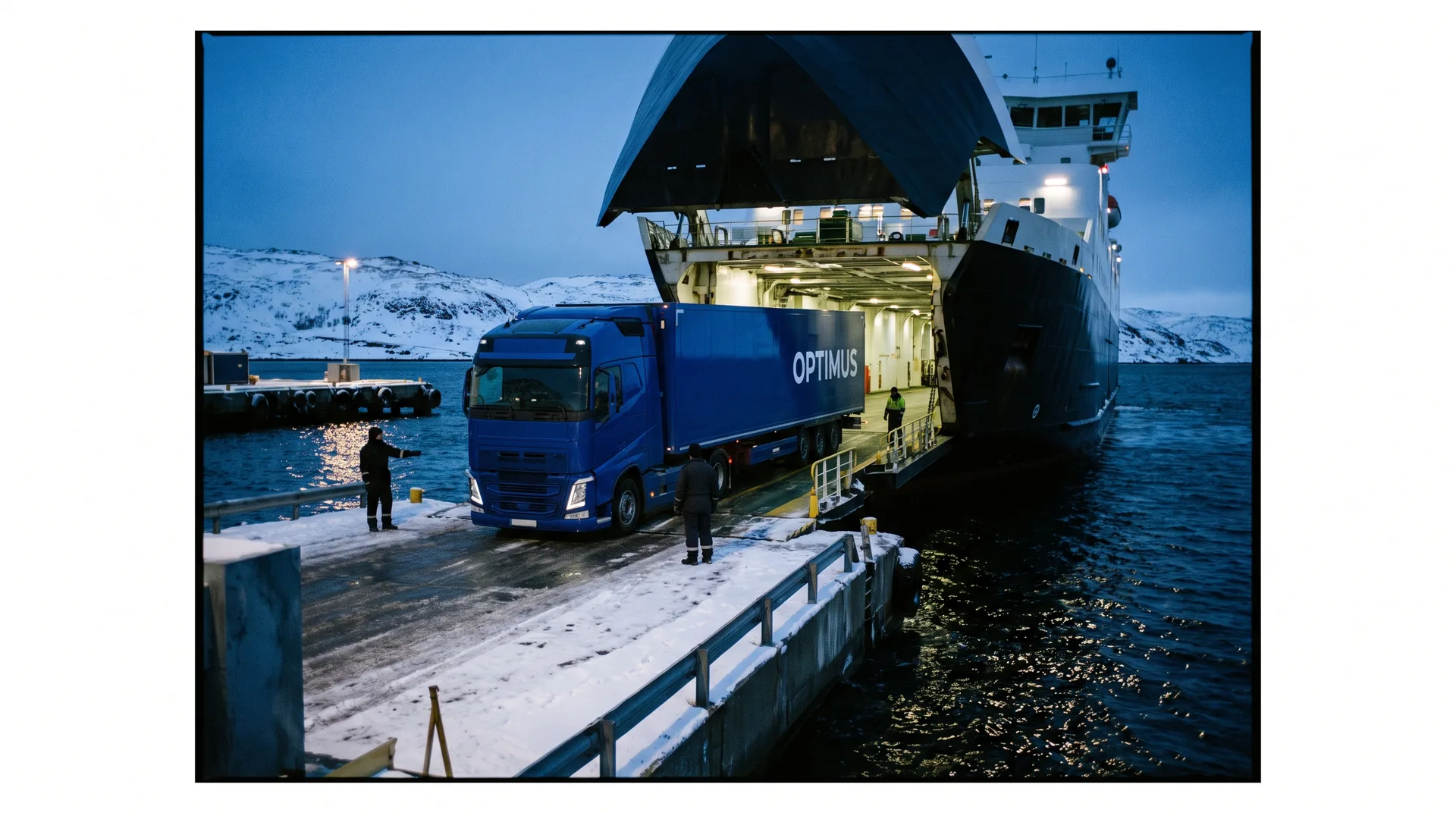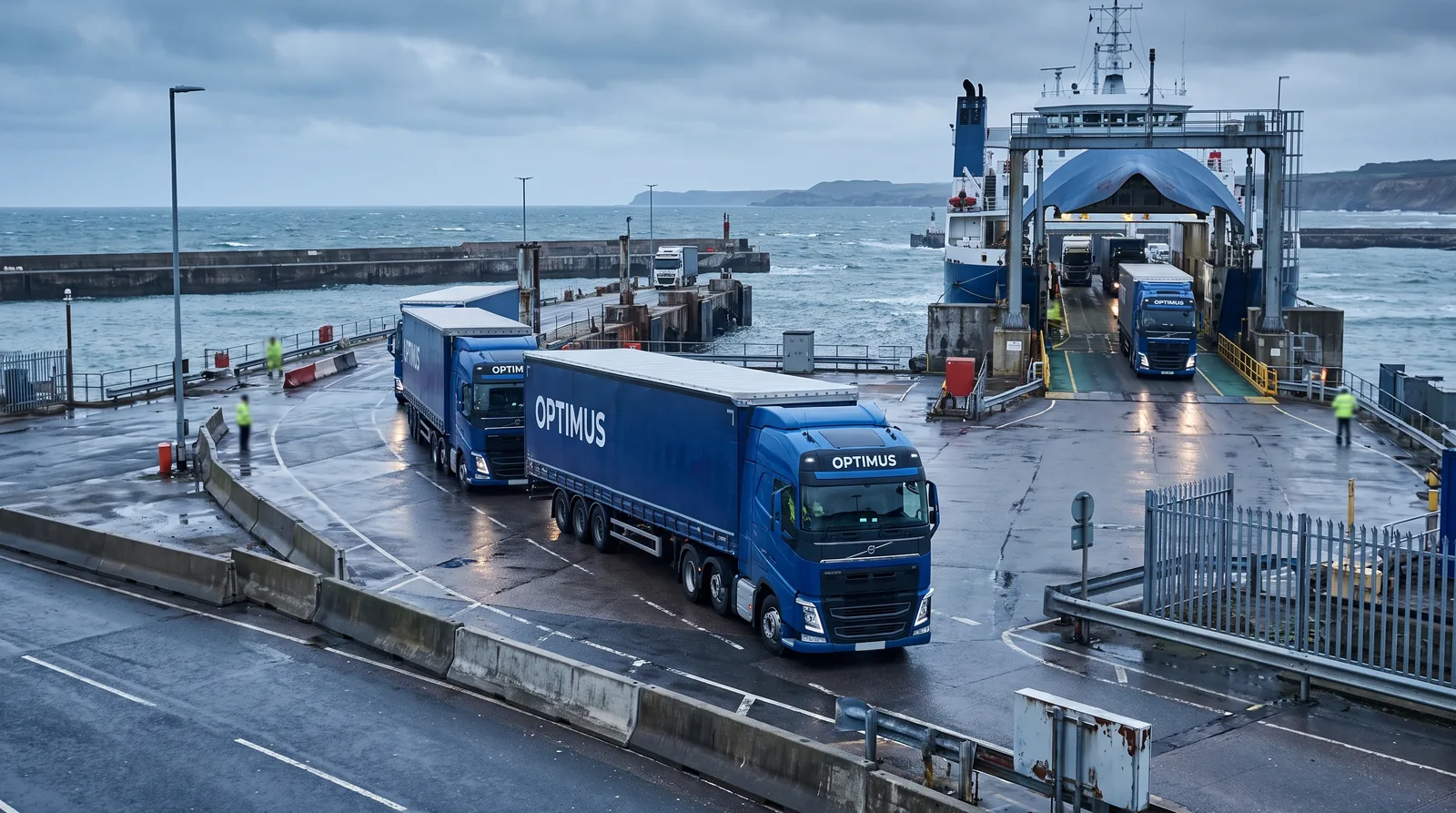
We deliver loads from Poland to Hull, Immingham, Grimsby and Scunthorpe by land through the Channel: groupage usually arrives within 2-3 working days of loading. Freight ferries from continental Europe do call at the Humber ports directly, but for pallets and part loads the land route over the short crossing stays faster and more predictable.
If ferries sail from the continent, why do we drive?
Because the time arithmetic favours the road. A North Sea ferry sails for over twelve hours and runs once a day, and an unaccompanied trailer waits for loading and handling at both terminals. The short Channel crossing takes ninety minutes to two hours, departs dozens of times a day and ties the vehicle to no timetable: the driver crosses with the load and rolls on immediately. For groupage and part loads, where the consolidation rhythm matters, that flexibility settles it. How we choose the crossing is covered in ferry or Eurotunnel.
When does an eastern port still matter?
In three situations. First, unaccompanied trailers: some shippers send trailers alone by ferry from Rotterdam or Zeebrugge, with collection on the English side at Killingholme or Immingham. Second, cargo from the Benelux and northern Germany, for which the run to an eastern port can be shorter than the detour via Calais. Third, when the receiver sits in the port belt itself: then a delivery from Poland ends by the Humber anyway, it just arrives by land. We understand both models and can deliver goods to a ferry terminal exactly for a trailer's loading window.
What do we carry to the Humber?
The region lives on heavy industry and energy. Saltend near Hull hosts a chemical cluster, Scunthorpe steelmaking, and Hull itself a wind turbine blade factory serving the North Sea offshore farms. Grimsby remains the centre of fish processing and frozen food: deliveries there also run as refrigerated transport. From Poland the flow includes industrial components, steel structures, machine parts and packaging, with finished goods the other way. No city in the region charges trucks for entry.
What do the route and delivery look like?
From the crossing the truck runs north on the M1 or A1(M), then the M18 and M180 towards the Humber estuary; the Humber Bridge links the two banks. Single pallets travel as groupage LTL through our Milton Keynes warehouse, and full vehicles run FTL straight to the unloading point. Neighbouring Yorkshire is covered in transport to Liverpool, Leeds and Yorkshire: Leeds and Sheffield lie an hour from Hull, so routes often combine. North of the Humber estuary the same A1 carries on towards Tyneside, whose deliveries are covered in transport to Newcastle and north-east England.
Chemical plant and steelworks deliveries: entry regime
The Saltend cluster and the Scunthorpe works receive vehicles under an industrial regime: passes ordered in advance, a safety induction before the first entry, hi-vis and safety boots mandatory, and unloading only in designated areas. Some chemical loads fall under ADR rules, so we prepare the classification and documents before loading in Poland. We give the receiver the driver and vehicle details at the booking stage; that turns a gate that can hold an unprepared truck for an hour into a stop of minutes.
Return loads from the Humber
The port region ships as much as it receives: chemical products, steel, processed food and offshore components. The truck finishing its drops in Hull or Immingham picks up a collection from the same area and returns to Poland full, and through our consolidation the goods continue to Czechia, Slovakia, Austria and Hungary. For Humber shippers that means regular collections without hunting for a carrier; for Polish importers a lower cost. Both directions are best declared in one quote enquiry.
Clients also often ask about split deliveries: part of the goods to a warehouse by the port, part further inland. We solve it with one route: the truck unloads the port positions in Immingham or Hull and carries the rest on to Leeds, Sheffield or Manchester. For the shipper that means one loading, one set of documents and one quote instead of splitting the shipment into two orders.
Sources
Need a delivery to Hull, Immingham or Grimsby? Use the quote form and we will propose a date and route. The whole direction is on the transport to the United Kingdom page.