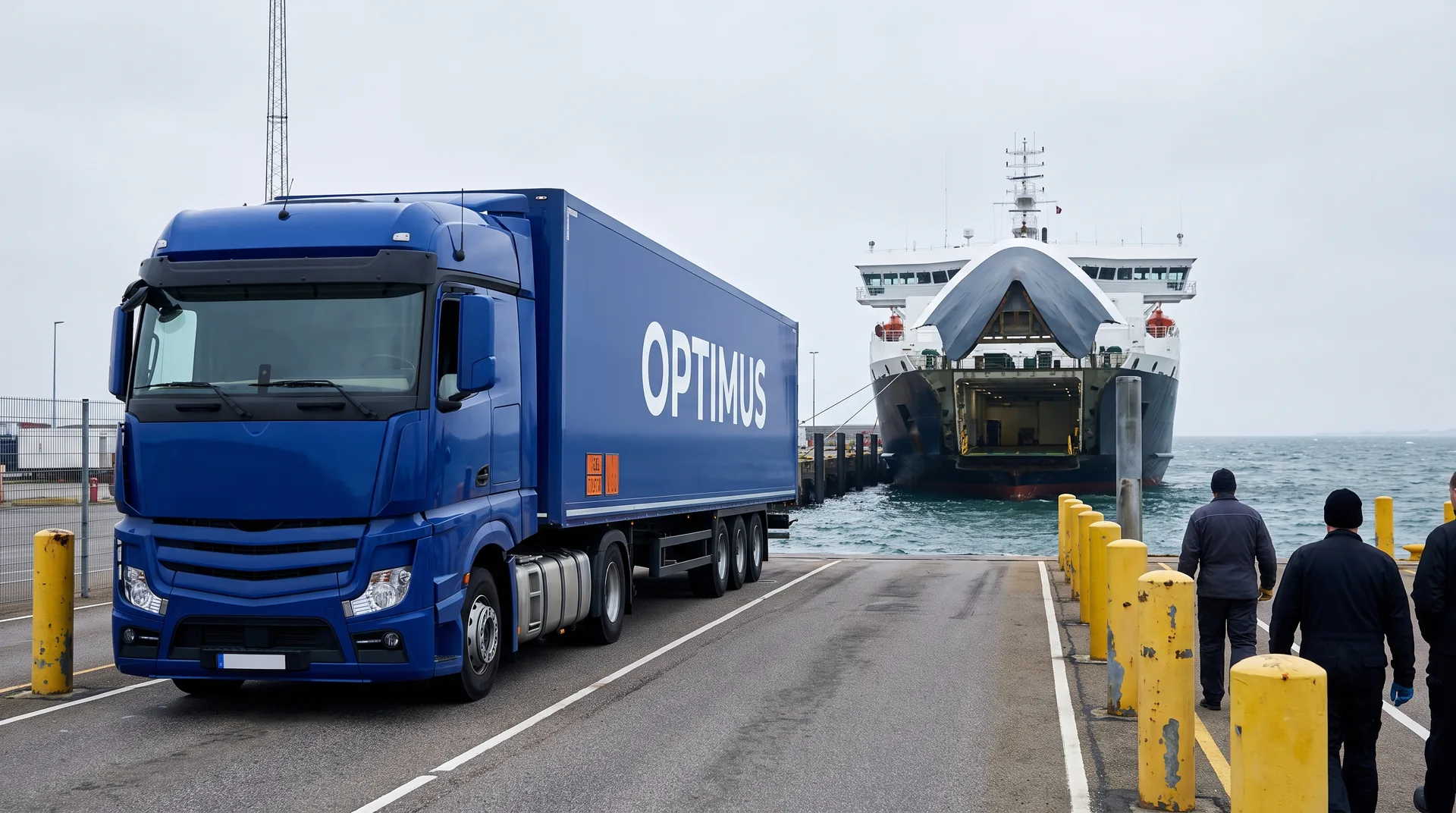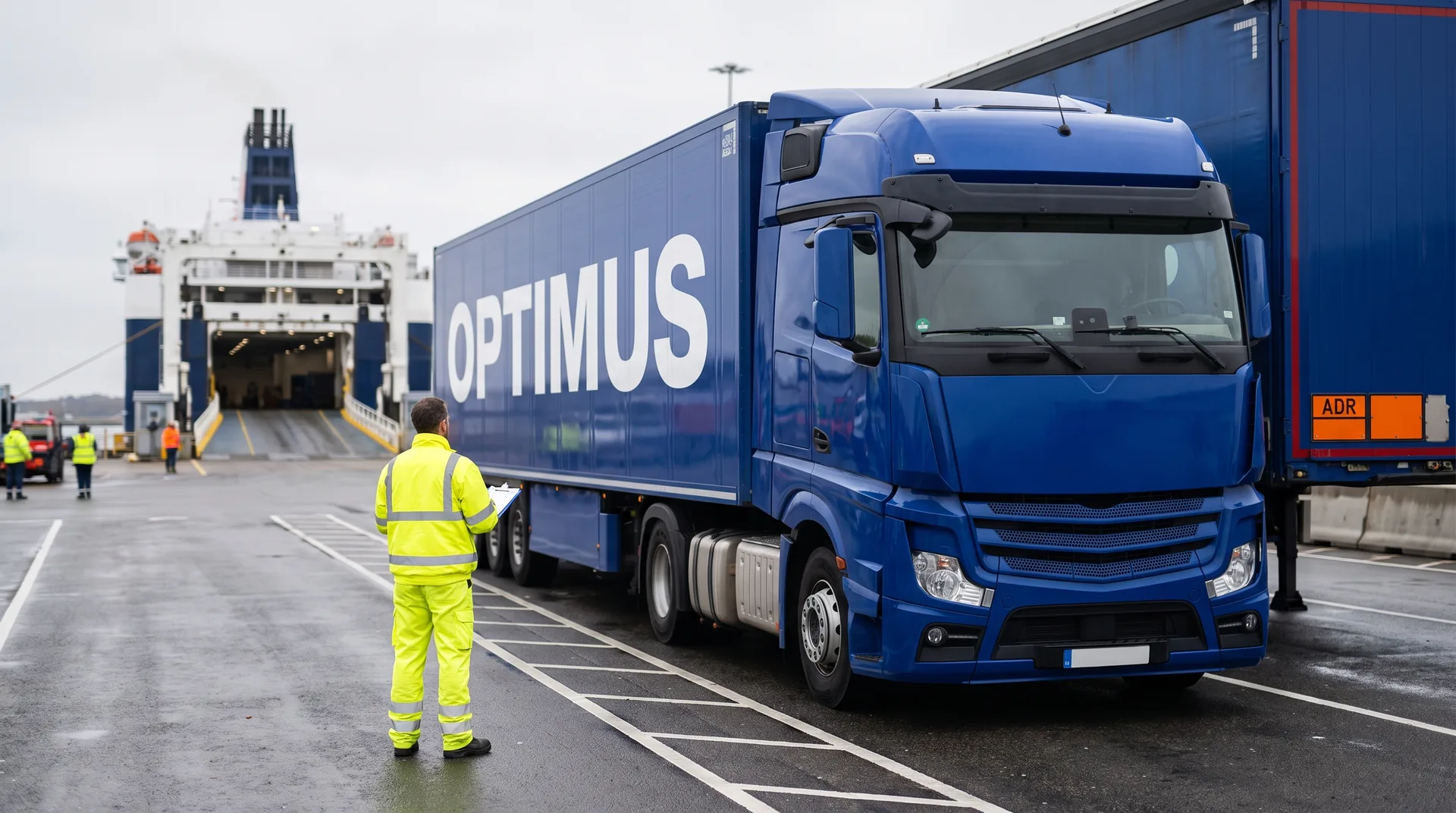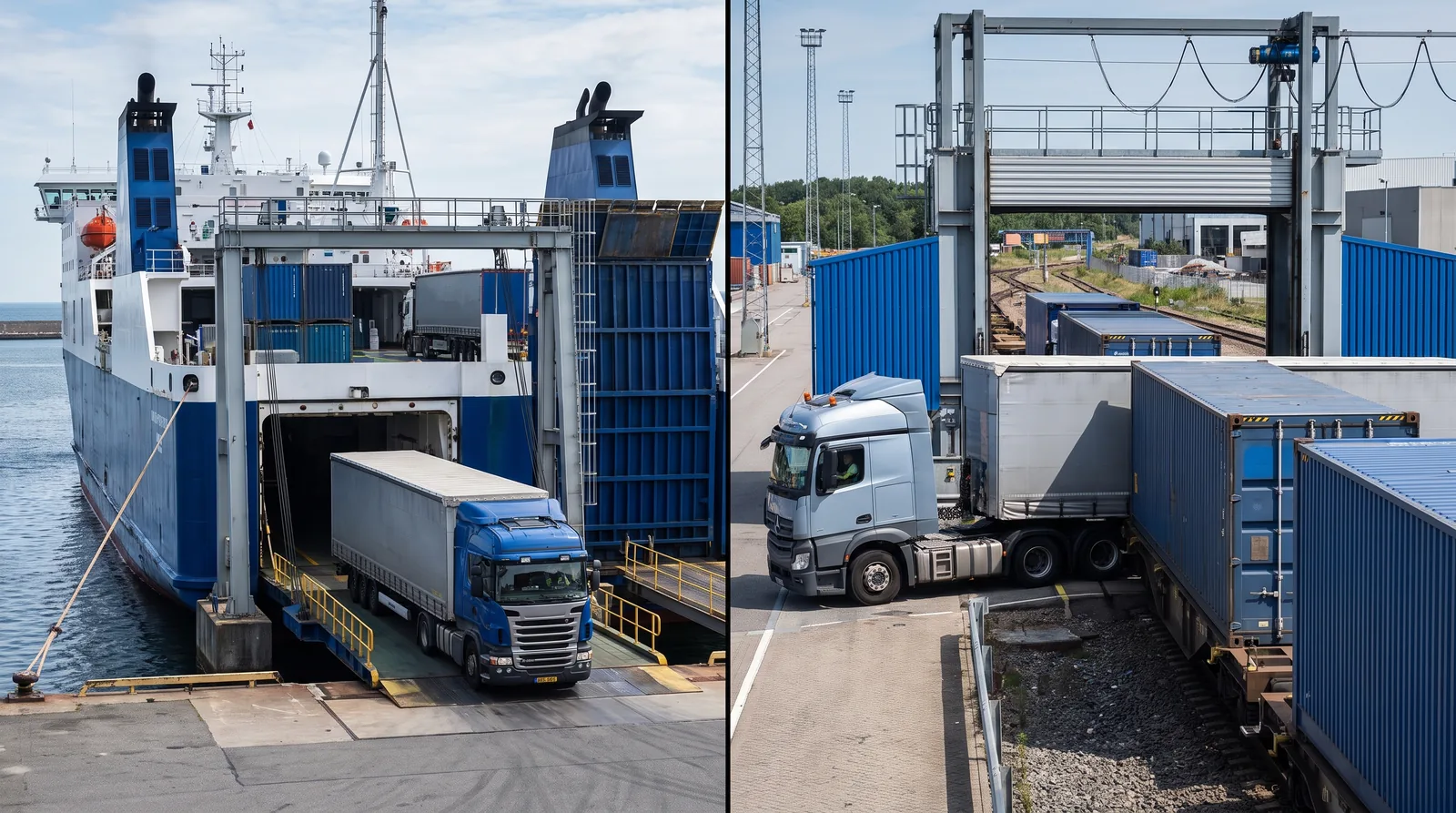
The Dover-Calais ferry and the tunnel shuttle between Folkestone and Coquelles serve the same corridor, but they are not interchangeable. Three things decide the choice: the type of cargo, because the tunnel excludes some dangerous goods, how weather-sensitive the deadline is, and space availability on the day.
The same border, two different crossings
The tunnel transit is shorter than the sailing, but real delivery time is set by the whole chain: the approach, clearance, the terminal queue and the available departure. So we compare time from loading ramp to delivery ramp, not the Channel leg alone. On a quiet day the difference is smaller than the map suggests, because both options run many times a day. On a disrupted day the difference can be dramatic, and that is when the choice matters.
Excluded cargo: ADR in the tunnel
The hardest filter is dangerous goods. Carriage through the tunnel is subject to separate, stricter rules than carriage by ferry: some classes and quantities are not permitted or come with conditions, and the crossing operator publishes the list of restrictions. The ferry has its own requirements too, including a dangerous goods declaration before sailing, but the range of acceptable cargo is wider. So with ADR the decision is taken before the vehicle moves: we declare the cargo at booking and choose the crossing that will accept it. Details in ADR by ferry and Eurotunnel.
Weather: the one variable nobody can forecast away
A storm in the Channel can suspend sailings, and a queue then builds for hours. The tunnel shuttle does not depend on the state of the sea, so for weather-sensitive deadlines in winter it can be worth its price even when the ferry quotes lower. What happens to cargo when a crossing is cancelled is described in a storm and a cancelled crossing. Bear in mind the tunnel has disruptions too, simply for reasons other than wind.
Not only Dover: alternative corridors
The Dover-Calais corridor is the shortest but not the only one. Sailings from Dunkirk, described in the Dunkirk-Dover crossing, can suit routes running through Belgium, and the east coast ports, discussed in east coast ports, shorten the final leg on northbound deliveries. On longer sailings the driver takes a rest period on board, which can be a real time saving on the route even though the crossing itself takes longer.
Booking and crossing paperwork
At booking we supply vehicle and cargo details, and for entry to the United Kingdom we tie the customs declarations into one movement reference, without which the vehicle enters neither the port nor the tunnel terminal. The mechanism is explained in the GMR. What the booking itself contains and why its content matters when plans change is described in what a freight ferry booking includes. Booking is handled by the forwarder rather than the driver at the barrier: that is not an organisational detail but the condition for being able to rebook anything when the situation shifts.
How the decision looks in practice
The stake is simple: a lost crossing slot means, in practice, a day of delay, because the unloading window at the consignee moves with it. So we book the crossing with a plan B and watch it as closely as the customs entry. For ordinary cargo with a flexible date the cheaper option usually wins. For critical deadlines, sensitive cargo and winter weather we more often take the surer one. The client is told which crossing their goods use, because that is part of the plan rather than our internal business.
Sources
- Eurotunnel Le Shuttle Freight: carriage rules and restrictions
- DFDS: freight sailings across the Channel
Not sure which crossing your load should use? Describe the cargo and the deadline through the quote form and we will match the corridor together with a fallback. The whole lane is described on the transport to the United Kingdom page.