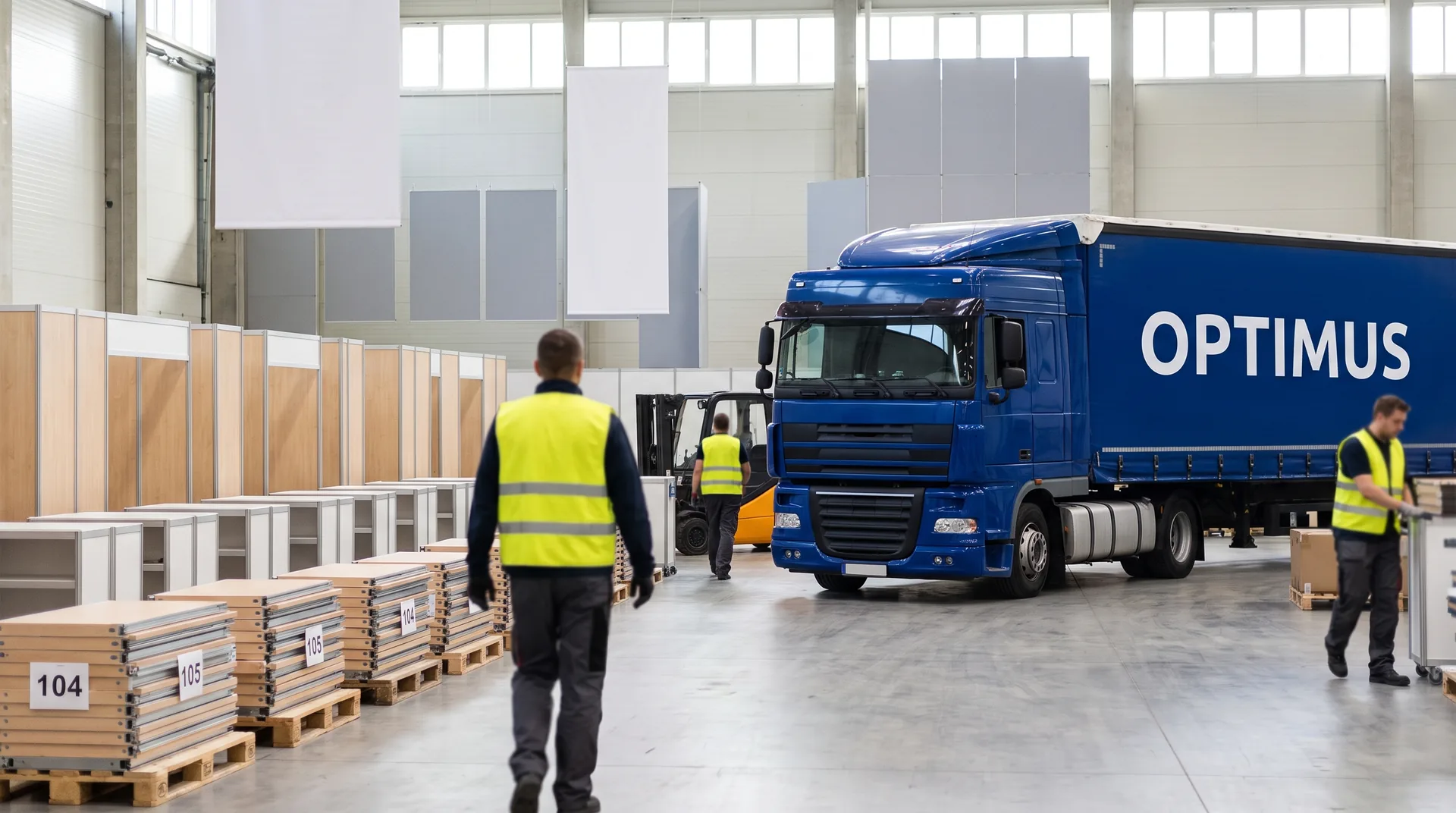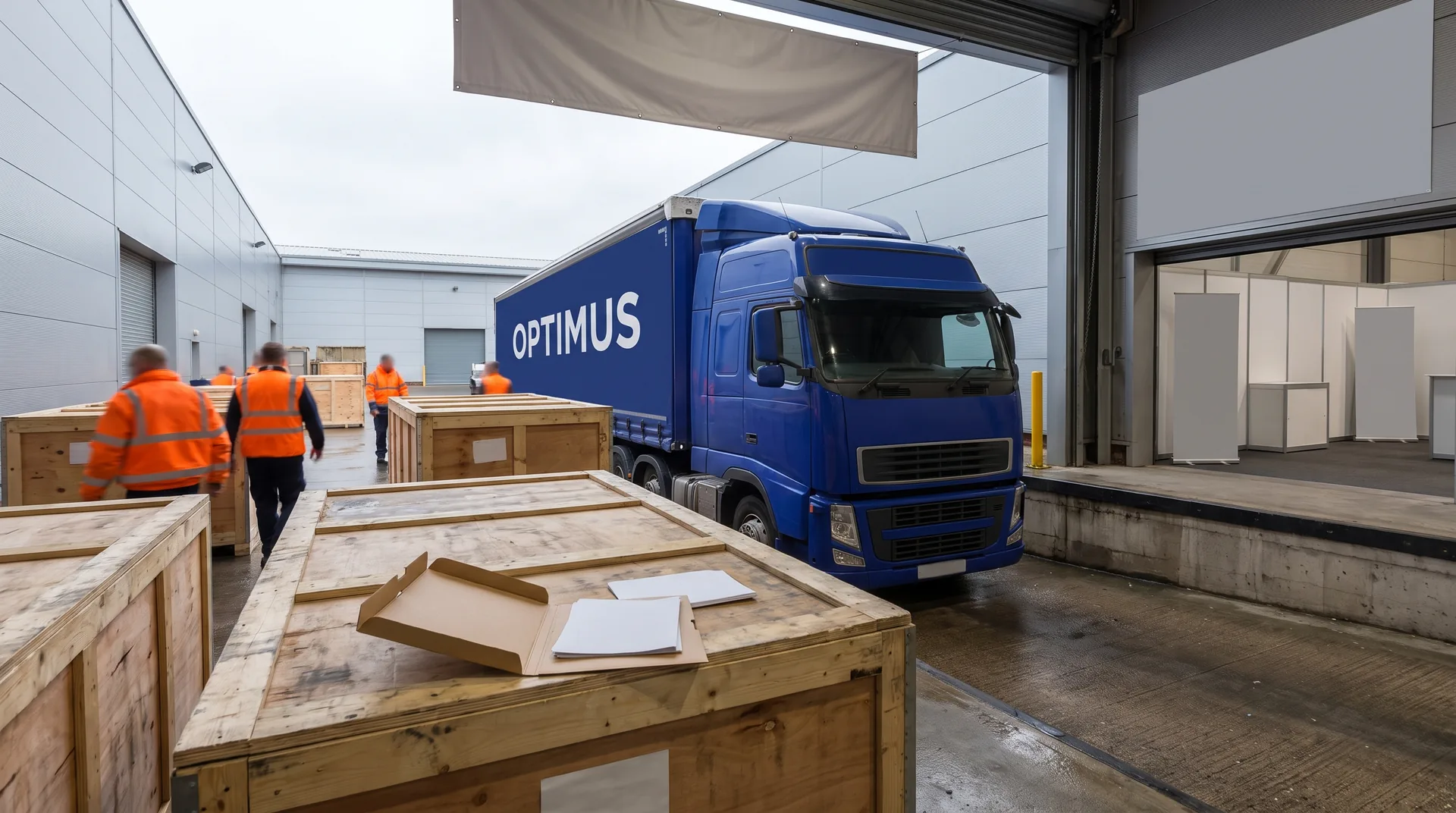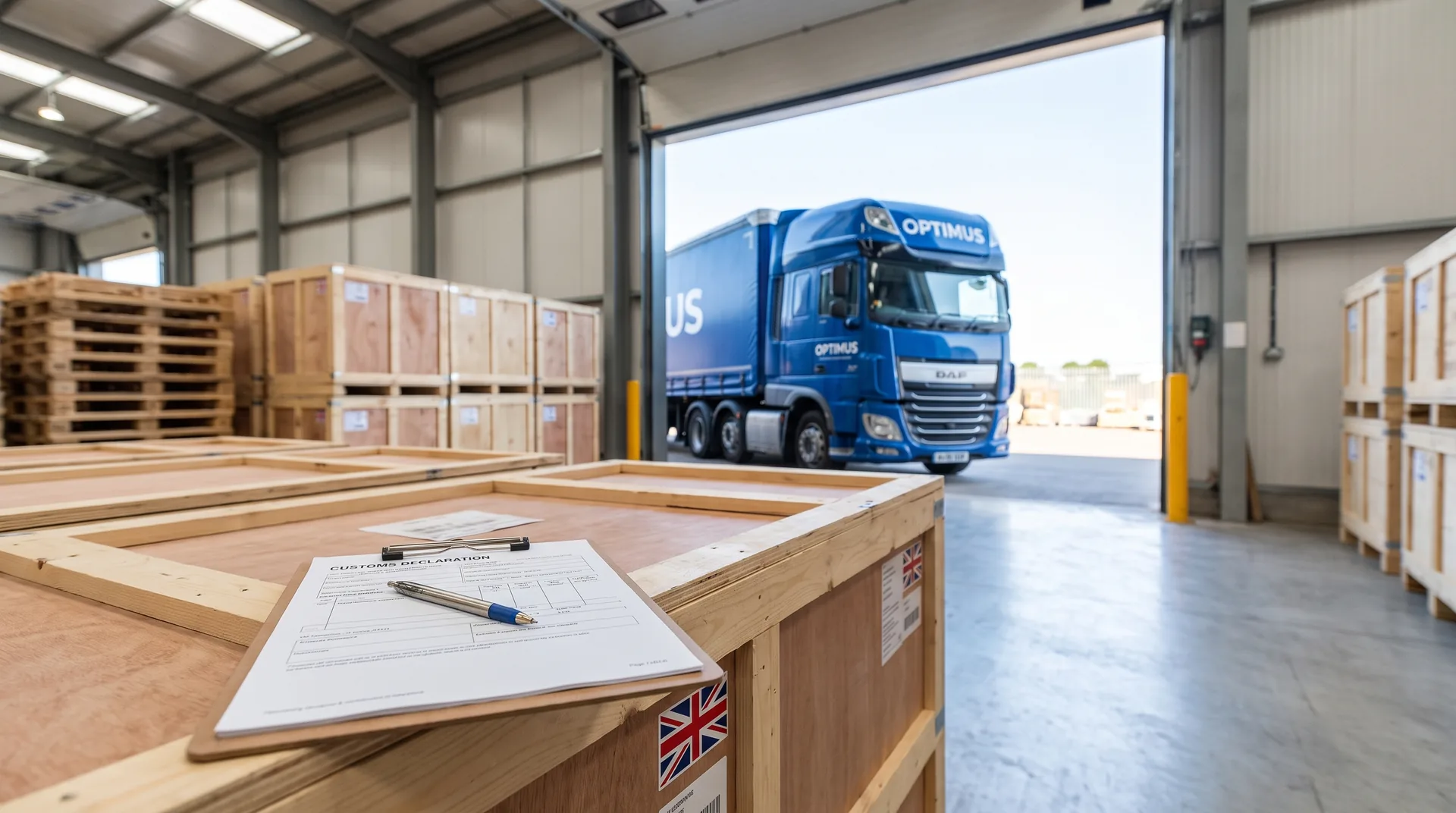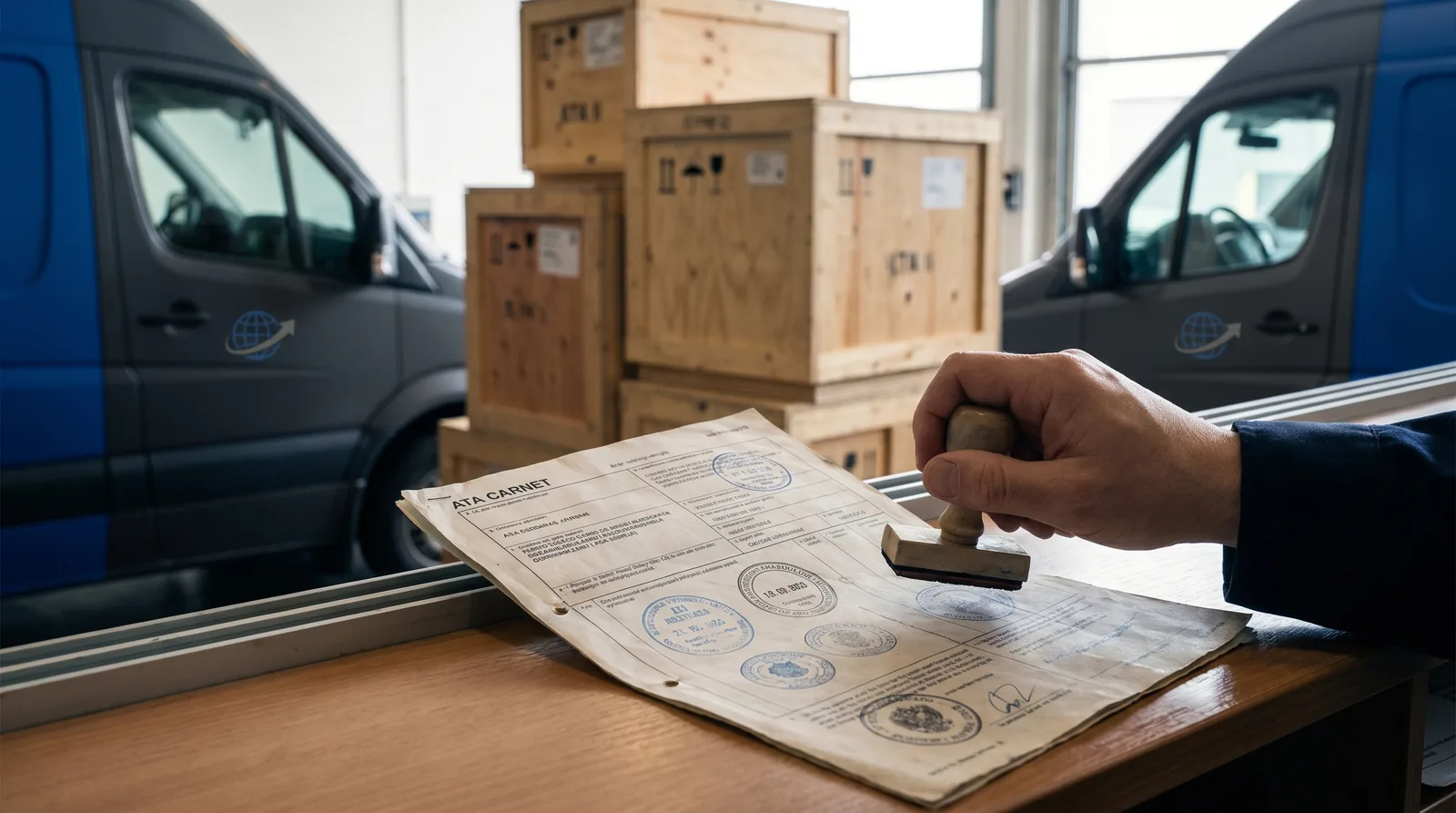
An ATA carnet is an international temporary admission document that lets exhibits, professional equipment and commercial samples enter the United Kingdom free of duty and VAT provided they return unchanged. In Poland carnets are issued by the Polish Chamber of Commerce, and at every border crossing customs detach the relevant voucher.
What it suits, and what it does not
The carnet covers three categories: goods for exhibitions and fairs, professional equipment and commercial samples. In practice that means exhibits, demonstration machines, audio and video kit, measuring instruments, musical instruments, film equipment and display elements. It does not cover goods intended for sale, consumables, giveaways handed to visitors, catalogues, or anything meant to stay in the United Kingdom. Where both categories travel on one vehicle, you prepare two sets of documents rather than trying to squeeze everything onto the carnet. The alternatives are covered in our text on the carnet against temporary admission.
Step one: the general list
The whole procedure rests on the general list, the schedule of items covered by the carnet. Every line needs a description allowing the item to be identified, a piece count, weight and value. Serial numbers go in wherever they exist, because they decide whether identity can be shown on the return. A list prepared casually takes its revenge at the port: an officer is entitled to check that exactly the same items are leaving as arrived. How to build one is set out in our text on how to get an ATA carnet.
Step two: the application and the guarantee
The application goes to the issuing chamber, in Poland the Polish Chamber of Commerce, together with the general list, the applicant's details and the countries the goods will visit. Issuing a carnet involves lodging a guarantee whose form and amount depend on the value of the goods and the destination country. The guarantee stays live until the carnet is discharged, that is until the chamber confirms every item returned correctly. Confirm conditions and fees with the issuing chamber, since it sets them.
Step three: leaving the EU and entering the United Kingdom
On leaving the EU a customs office detaches the exportation voucher and endorses the counterfoil. On entering the United Kingdom the temporary importation voucher is taken and the officer enters the date by which the goods must leave the country. That date is often shorter than the carnet's own validity and it is the one that binds on the ground. At the same time the vehicle goes through the normal border procedure: a GMR is required and the movement must be registered in the system, covered in our texts on the GMR and on border procedures. A carnet replaces the customs declaration for the goods, not the transport formalities.
Step four: the stay, and what may be done with the goods
Goods under temporary admission must be used for their intended purpose and returned unchanged. They may be displayed, demonstrated and used professionally. They may not be sold, permanently hired out, processed or consumed without regularising the customs position. The practical consequence: if a visitor buys the machine on your stand, the sale is possible but requires release for free circulation and payment of charges. We cover this in our text on selling goods at a fair.
Step five: return and discharge
On leaving the United Kingdom the re-exportation voucher is detached, and on entering the EU the re-importation voucher. Once the journey ends the carnet returns to the issuing chamber, which checks the endorsements, discharges the document and releases the guarantee. Gaps trigger an enquiry procedure and can end in a claim for customs charges. We describe this stage in detail in our texts on carnet return and discharge and on an undischarged carnet.
The mistakes we see most often
- A vague list with no serial numbers and no proper line breakdown.
- Putting consumables and giveaways on the carnet when they will not return.
- Ignoring the deadline entered by customs on entry.
- Leaving through a different office than planned, without checking a carnet can be handled there.
- Not counting items while packing after dismantling the stand.
- Assuming the carnet also covers the transport side, including the GMR.
How we run it in practice
On exhibition work we agree the scope of the carnet with the exhibitor at planning stage, because the list has to exist before loading. The driver receives clear instructions on where and which vouchers are to be detached, and on the return we count items while packing rather than at the port. Transport and documents run in one process, so the exhibitor does not have to coordinate two suppliers. Loads from Czechia, Slovakia, Austria and Hungary are consolidated through Poland, covered in our text on exhibits from CZ, SK, AT and HU. This is general information rather than customs advice.
Sources
- International Chamber of Commerce: the ATA carnet system
- Polish Chamber of Commerce: issuing ATA carnets
- GOV.UK: ATA carnets and temporary admission
Taking exhibits to a UK trade fair? Send your item list and dates through the quote form and we will arrange transport together with carnet handling and the return. Our exhibition work is on the exhibition logistics page.