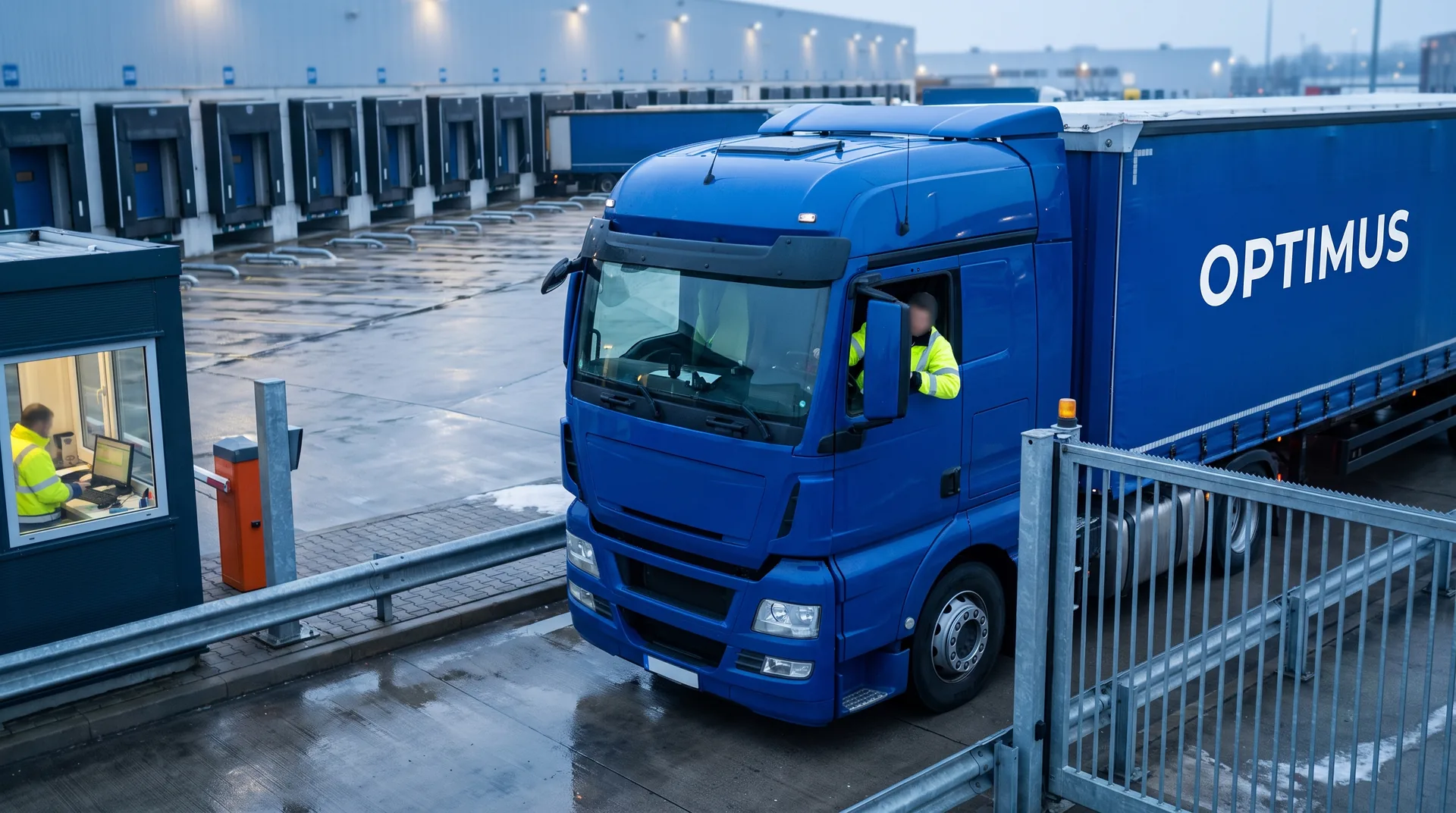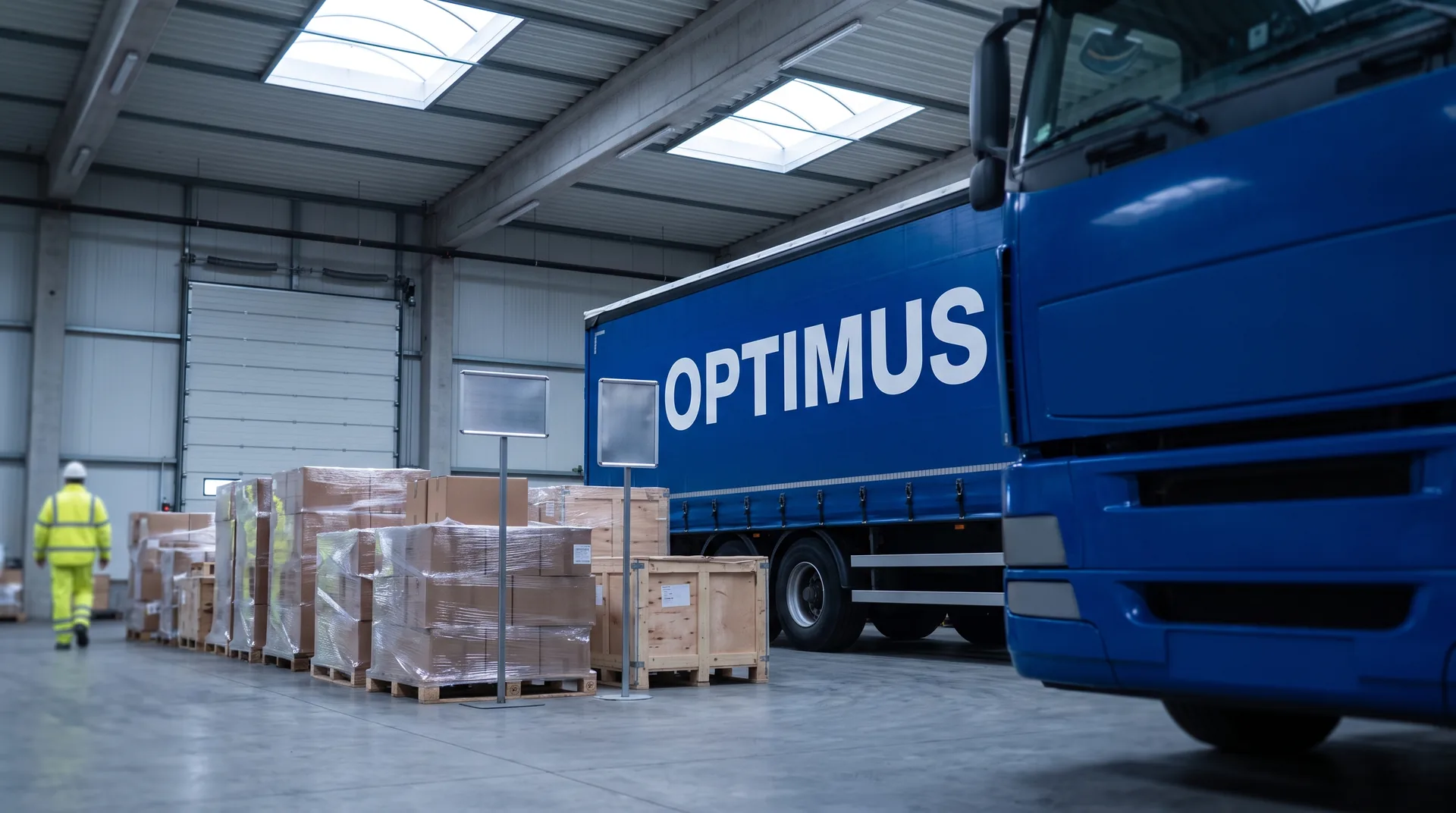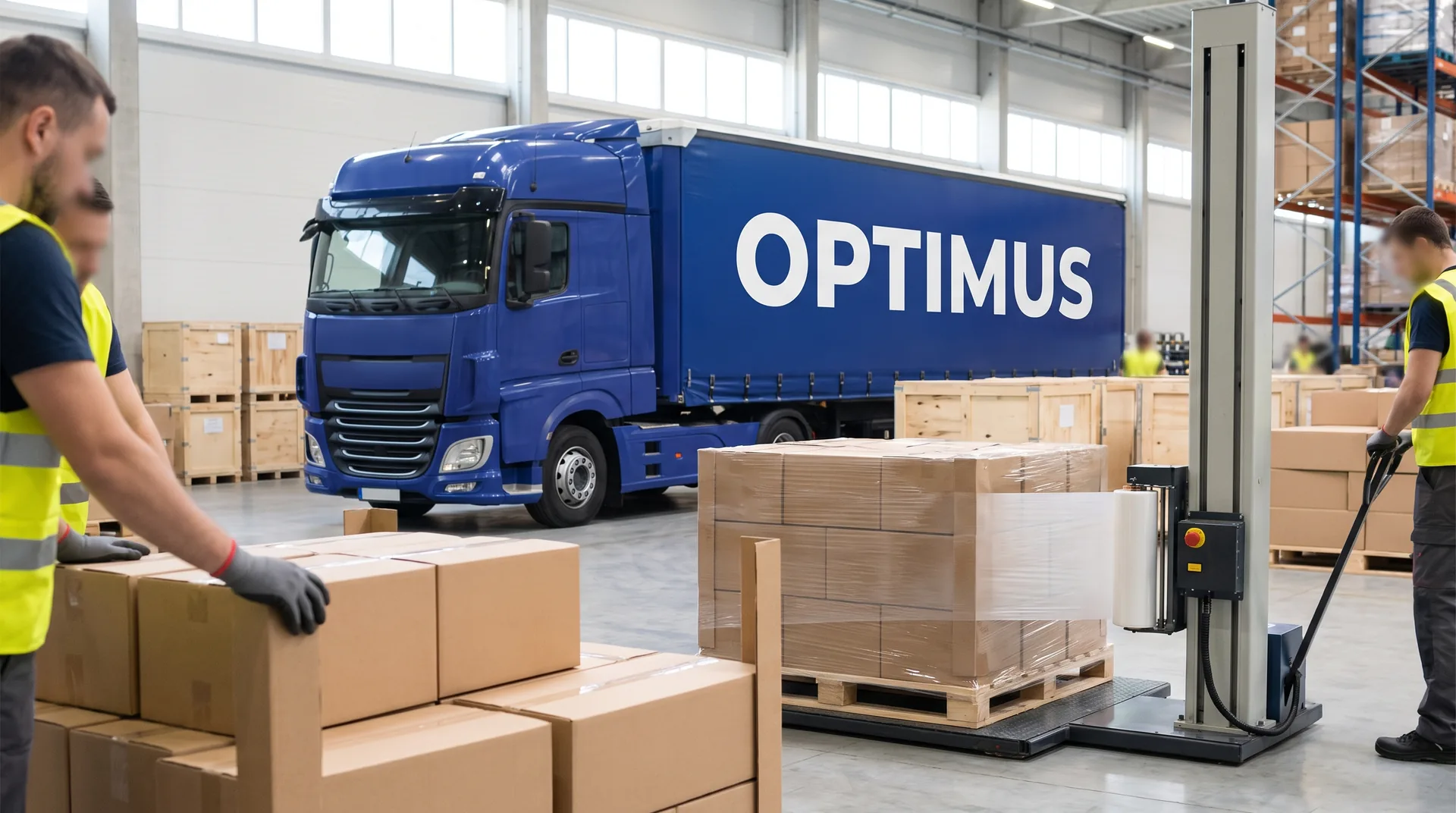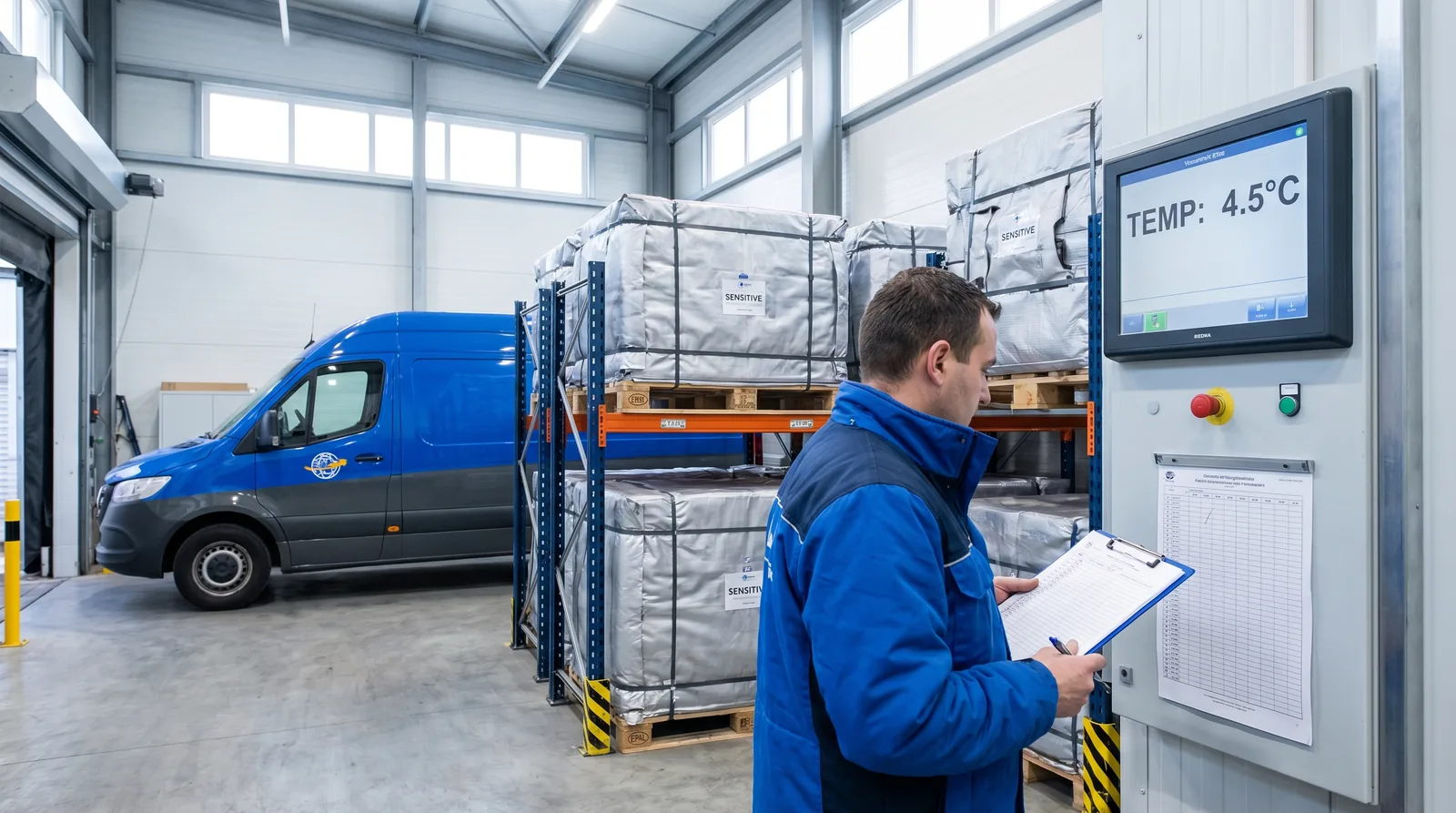
Our Milton Keynes warehouse has chilled and frozen zones where we handle temperature-sensitive cargo. Goods can be received, restacked and released without leaving the required range, and for damaged or held consignments we run recovery under controlled temperature together with photographic documentation.
Why a UK warehouse matters when the truck is already refrigerated
A reefer trailer solves the problem only while the transport runs without disruption. Trouble starts the moment something breaks the chain: the consignee refuses the delivery, the warehouse closes its gate, an inspection holds the vehicle, the driver runs out of hours. A trailer is not a place where goods can sit for days, because it is needed for the next job and a unit running on standby is both a cost and a risk. Hence the point of a temperature-controlled site on the British side: the load comes off the vehicle, conditions hold, and the decision about the goods is taken without the pressure of minutes.
What we do with sensitive cargo in Milton Keynes
- Receipt and release of pallets in the appropriate zone, chilled or frozen.
- Restacking and rebuilding pallets when the carrier or the layer pattern is no longer fit to travel.
- Inspection of the goods with a report and photographic documentation.
- Recovery under controlled temperature, meaning work on a damaged batch without breaking the cold chain.
- Filtering the load: separating sound units from unsound ones instead of rejecting a whole pallet.
- Disposal with confirmation where the goods cannot return to trade.
The remaining warehouse services are described in multi-temperature storage and in food-safe storage and handling.
A broken cold chain: what can be saved
A break in the chain does not automatically send the whole batch for disposal. What matters is how long the goods were outside the range, what the goods are and whether it can be documented. So the first action after receiving such a consignment is measurement and a description of the actual state, and only then a decision. Part of the pallets often remain fit for distribution, part for processing, and only the remainder for withdrawal. That split has real value, because it limits the loss to the part actually affected. We develop the subject in a broken cold chain.
The documentation that matters in a claim
An insurer does not assess goods, it assesses evidence. An inspection report drawn up at the warehouse contains the circumstances, batch identification, photographs before and after the work, a description of what was done and a conclusion on fitness. That set is produced before the load disperses, because once pallets go out for distribution the actual state can no longer be reconstructed. How such a document is built is described in the inspection report for the insurer.
UV inspection and decontamination
A separate group of cases involves cargo where the problem is not temperature but surface contamination of the packaging. At the warehouse we run UV inspection and decontamination, so part of a batch queried over packaging condition returns to trade instead of going to waste. The procedure is described separately in UV inspection and decontamination. The effect shows in the numbers: the recovery rate, counted in units of goods actually put through filtering after an incident, exceeds 92 per cent.
Transport and warehouse as one process
Most trouble comes from split responsibility: the carrier owns the road leg, the warehouse owns storage, and between them sits a gap where nobody owns anything. We run both stages within one job, so a load that left Poland under refrigerated transport arrives on the British side at our own facility rather than at a random operator. With fresh food there is an additional layer of border controls, described in chilled fresh food transport.
What to prepare before sending sensitive cargo
- The required temperature range stated as numbers, not as a description.
- Whether the goods tolerate brief excursions or none at all.
- The batch shelf life, because it decides whether any rescue plan makes sense.
- A contact who can decide the fate of the goods outside office hours.
Sources
- EUR-Lex: Regulation (EC) No 178/2002 on general food law
- Food Standards Agency: food requirements in the United Kingdom
Have a load that will not survive a few hours outside range? Describe the goods, the temperature range and the route through the quote form and we will propose a transport plan together with the British-side facility. The site itself is described on the Milton Keynes warehouse page.