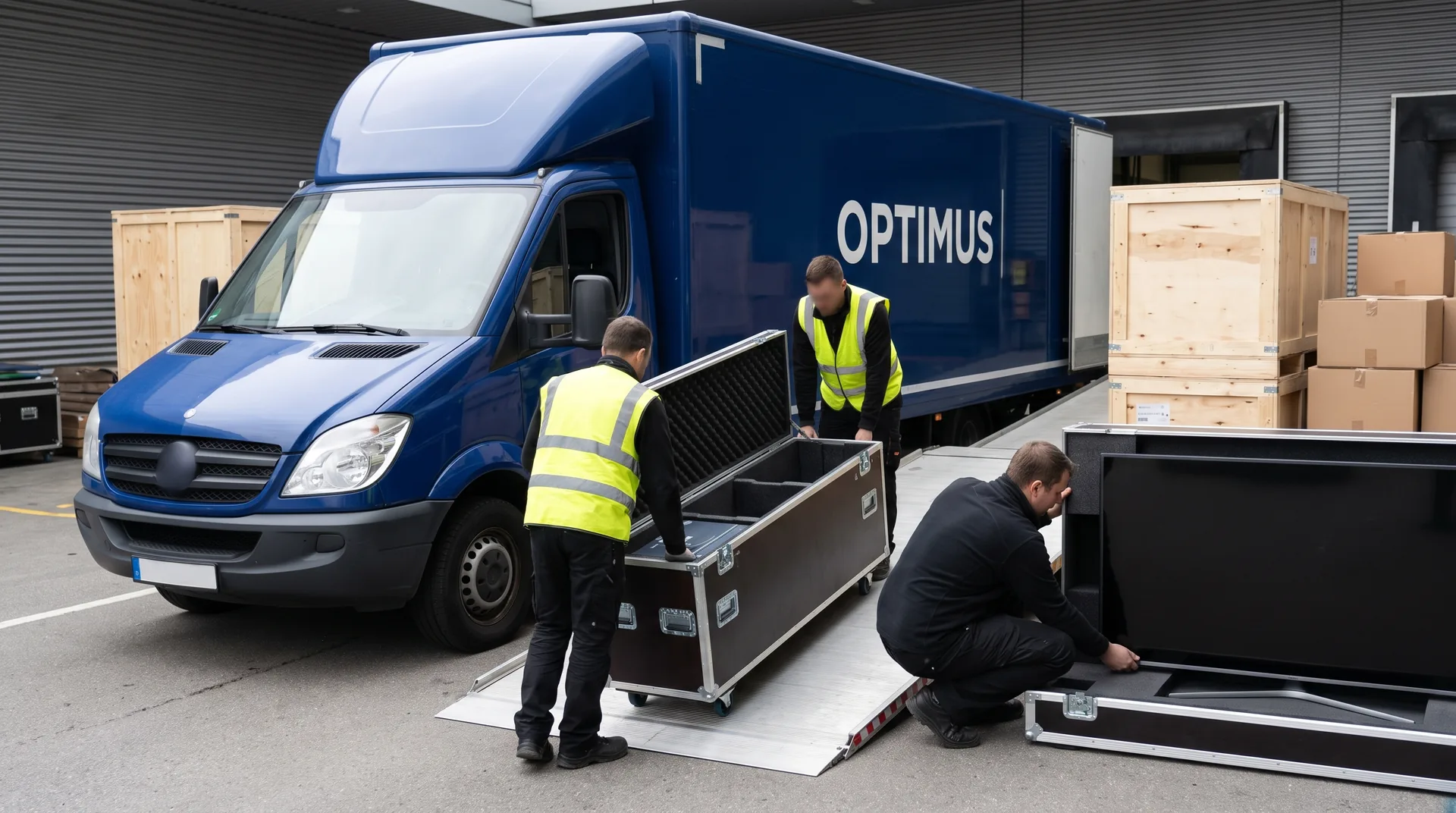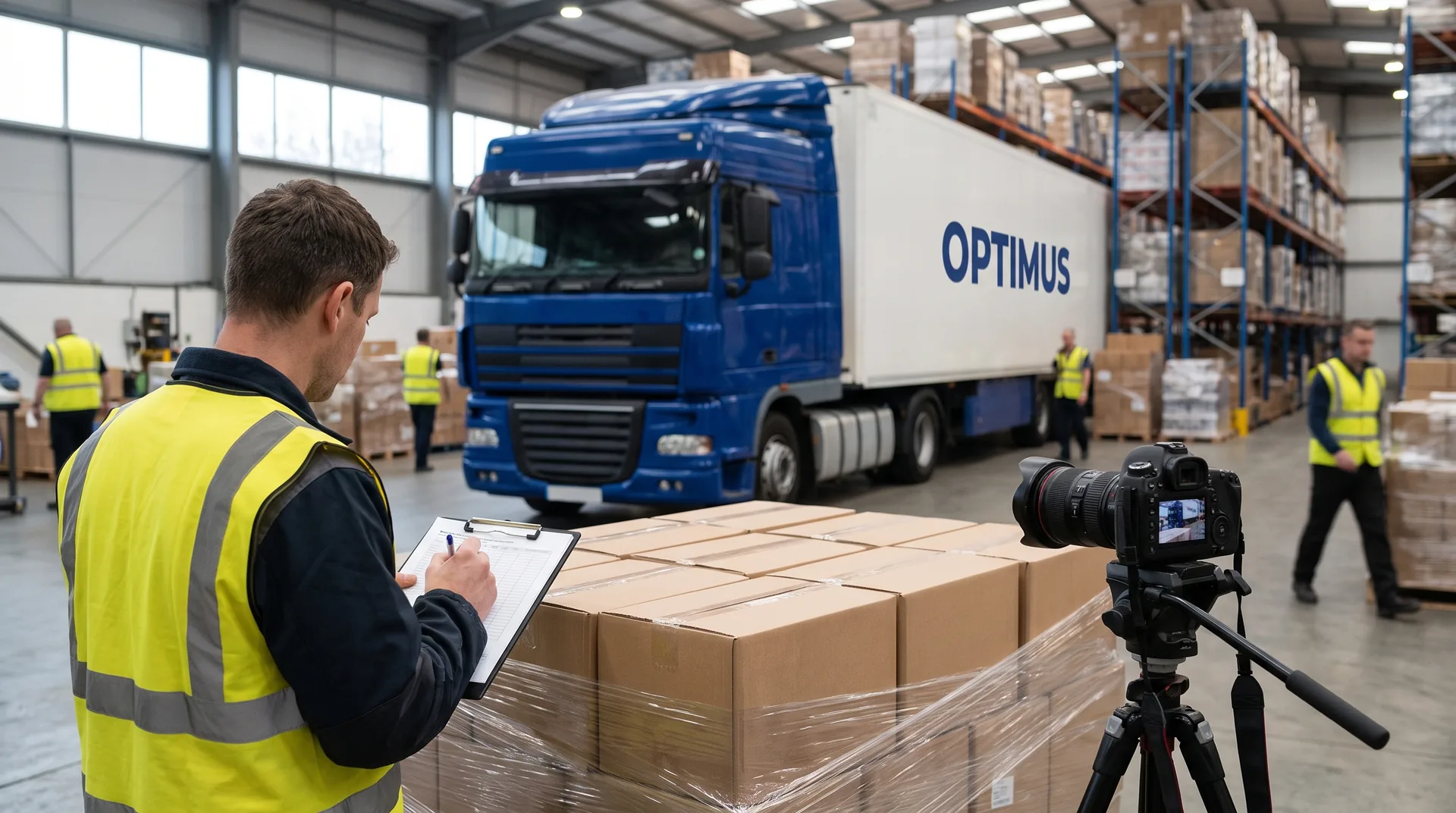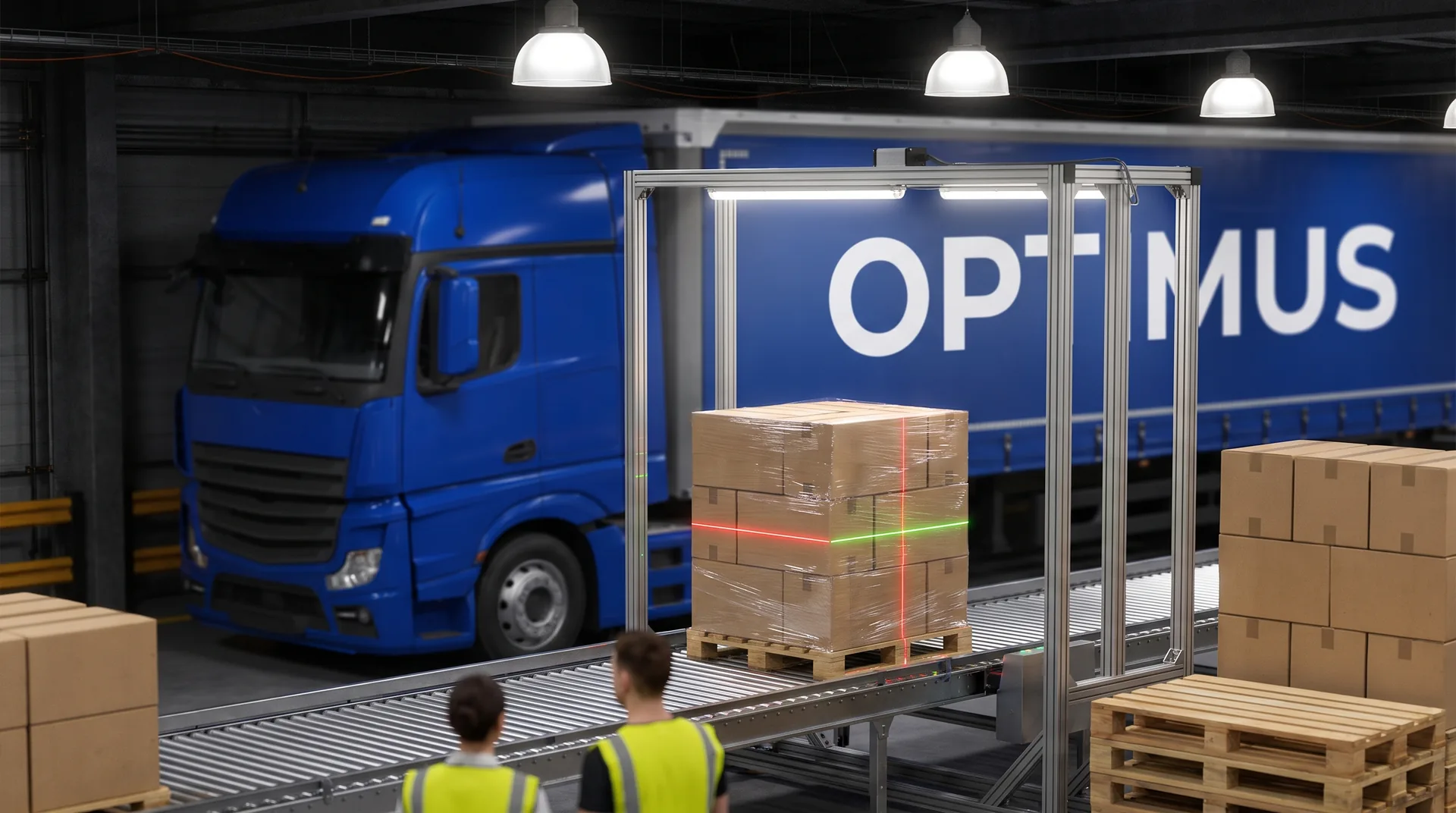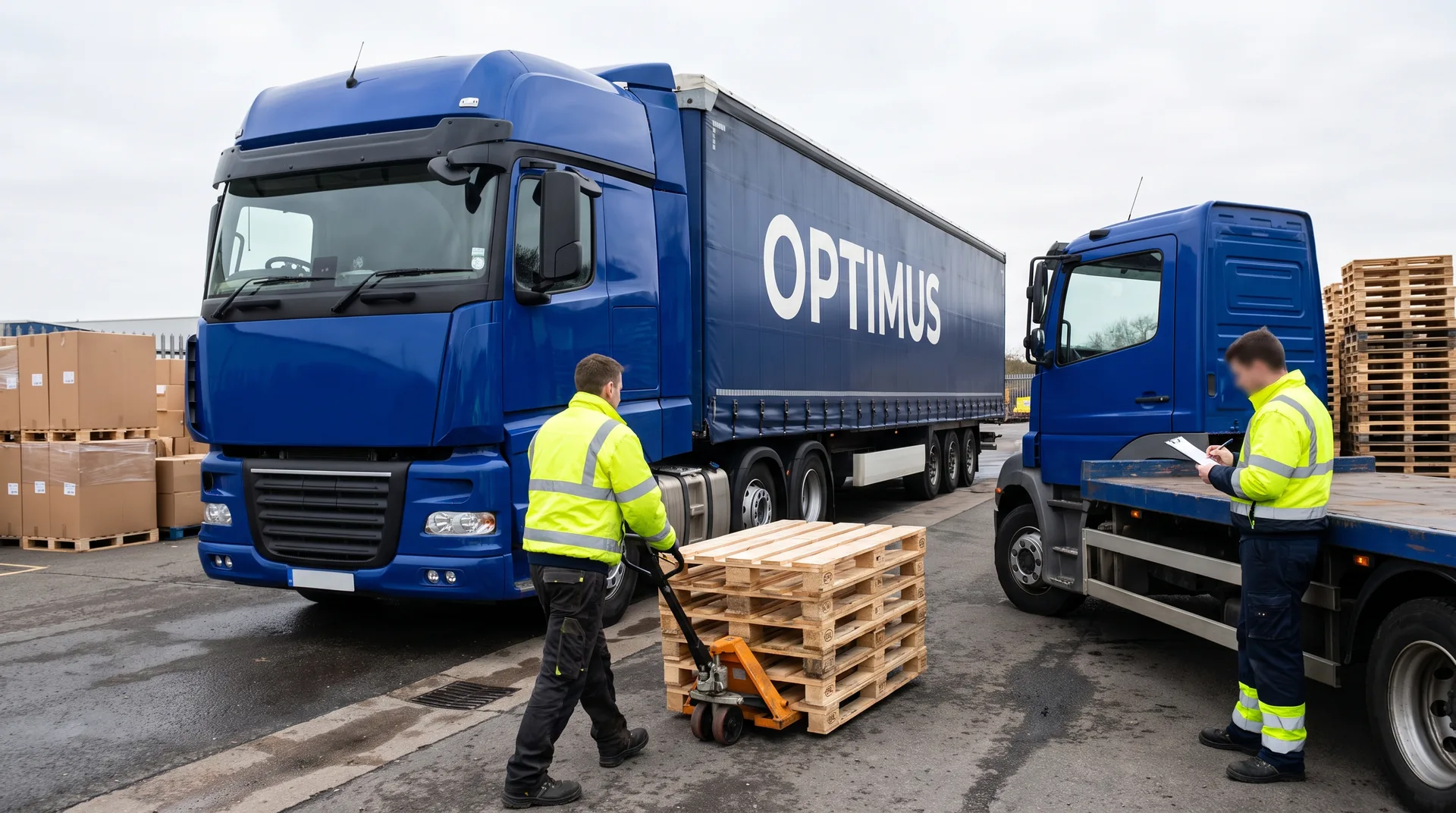
Stretch film provides containment force, pressing the load onto its carrier. It provides no vertical strength, no edge protection and no resistance to layers sliding across each other. Those three jobs belong to corner boards, strapping and anti-slip interlayers — and which of them you need depends on the load type.
Four cases, four different kits
Heavy and narrow. Typically: metal products, tiles, liquids in jerrycans, fasteners. The centre of gravity is low but point pressure is high. Kit: a solid base with an interlayer spreading pressure across the deck boards, strapping run through the pallet, between the blocks rather than only around the load, and corner boards wherever strapping meets an edge. Metal loads are covered separately in metal products and steel to the UK.
Tall and light. Typically: packaging, plastic goods, textiles, high-cube cartons. The unit sways with every forklift move, and film alone will not stop the swing. Kit: four full-height corner boards, two or three horizontal straps (low, at the centre of gravity, and just under the top edge) and interlayers so layers do not slide on each other. If it still sways, the right answer is to build it lower, not to add straps.
Sharp-edged. Typically: profiles, sheet metal parts, furniture with hard corners, pallets of crates. Film cuts through on the edge within tens of kilometres. Kit: corner boards or protectors on every sharp edge, with film applied over them; for particularly aggressive edges, fabric or board beneath the film as well. The corner board plays a double role here: it protects the film from the load and the load from the strap.
Pressure-sensitive. Typically: electronics, cosmetics in light cartons, food in thin packaging. Kit: a top frame or cap spreading pressure, straps running over the frame rather than directly over the product, moderate film tension and an absolute ban on stacking without a load-bearing deck. With such loads, more film means more damage, not less.
What corner boards are actually for
Three functions at once, worth separating because each justifies the purchase on its own. First: they spread strap pressure across a width instead of letting it cut into the edge. Second: they stiffen the unit vertically, taking part of the load off compressed cartons. Third: they protect against mechanical damage in transit and during forklift handling. In practice their greatest value is on stacked units and on loads with layers of differing height — the stacking mechanism is set out in pallet stacking in the UK.
Do interlayers between layers help?
They do, in two quite different roles. A levelling interlayer — plain board — spreads pressure where layers have different modules and upper cartons stand over voids below. An anti-slip interlayer, paper or with a friction coating, raises the friction coefficient between layers, and that is its entire value: a load that does not slide on itself needs less containment force. Friction coefficient is one of the inputs to securing calculations under the standard, which we expand on in cargo securing to EN 12195.
Strapping: PET or PP, and how to route it
Polypropylene (PP) strapping is cheap, elastic and suits light units with little settling. Polyester (PET) strapping has far higher strength and less creep over time, so it holds heavy units better across several days. The decisive factor, though, is not the polymer but the routing: strapping run only around the load binds layers to each other but not to the carrier. Only strapping passing through the pallet openings or under its top boards fastens the load to the unit. Without that, the load still slides off the pallet — just in one piece.
Tension is matched to the load: too loose does nothing, too tight crushes the corners and damages what it was meant to protect. Which is why, on pressure-sensitive loads, corner boards are not an option but a precondition for sensible strapping.
What film will never do
It will not stiffen a unit vertically — that is what corner boards are for. It will not stop water: water enters between overlaps and stays inside, as covered in stretch wrapping to DC requirements. It will not fix overhang beyond the footprint — tensioned film only crushes the corners. And it will not replace securing inside the vehicle: a unit can be wrapped perfectly and still topple in a trailer if it was not blocked with straps and bars.
Choosing the kit without guessing
Four questions before packing. Will the unit be double stacked? If so, you need corner boards or a top frame. Is the height to shortest base side ratio clearly above two? If so, you need straps and corner boards regardless of weight. Does the load have edges capable of cutting film? If so, you need protection under the film. Is the product sensitive to point pressure? If so, you need load spreading, not tighter film. The basics of unit preparation are collected in how to secure a pallet for export, and the UK-specific requirements in how to prepare a pallet for the UK.
Sources
- DVSA / GOV.UK: methods and equipment for securing loads, load stabilisation
- EPAL: euro pallet construction and the openings strapping runs through
Not sure your unit will survive a Channel crossing? Describe the load in the quote form — we will select the protection and, if needed, correct it at the hub. The lane is described on our transport to the United Kingdom page.