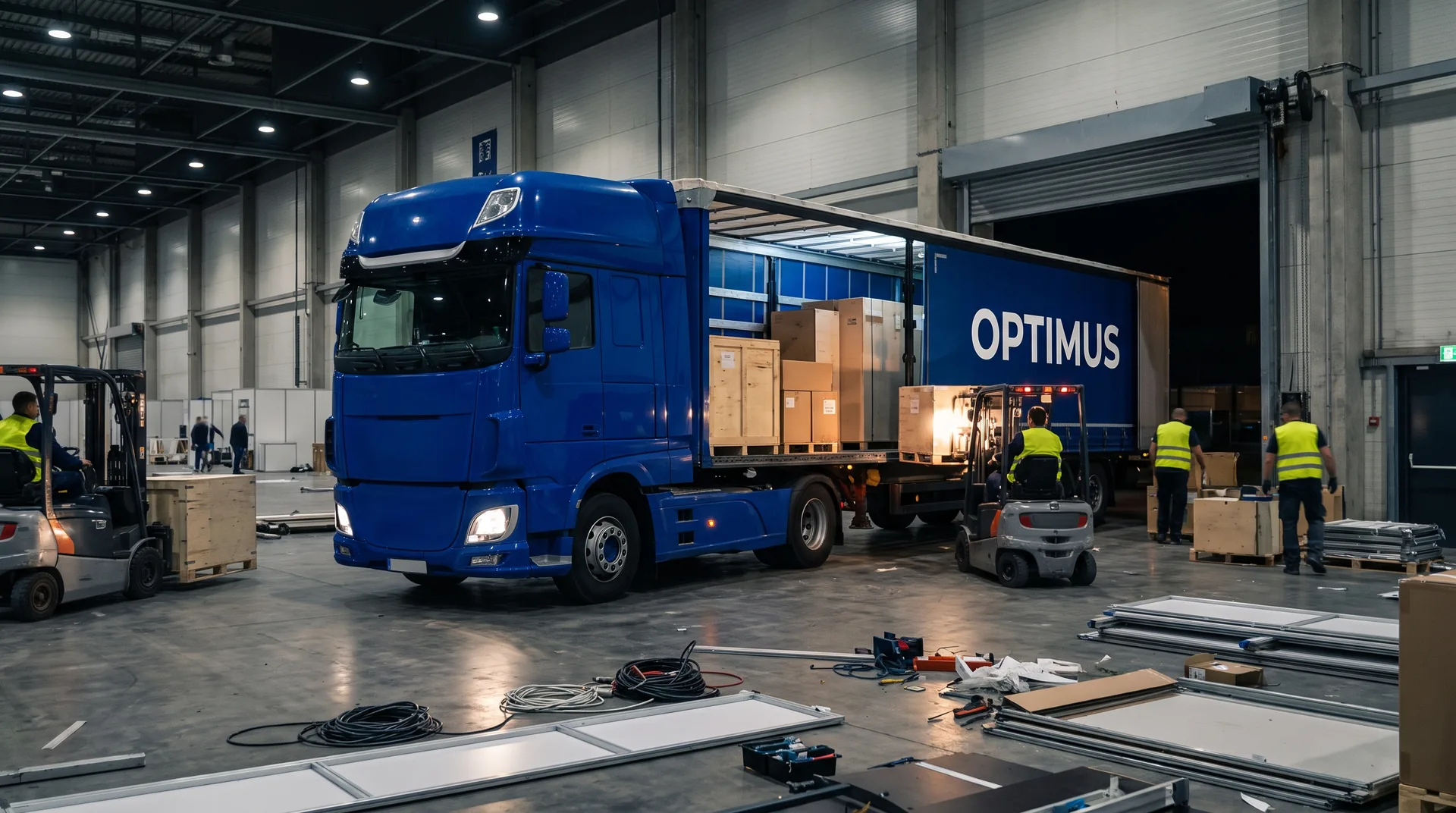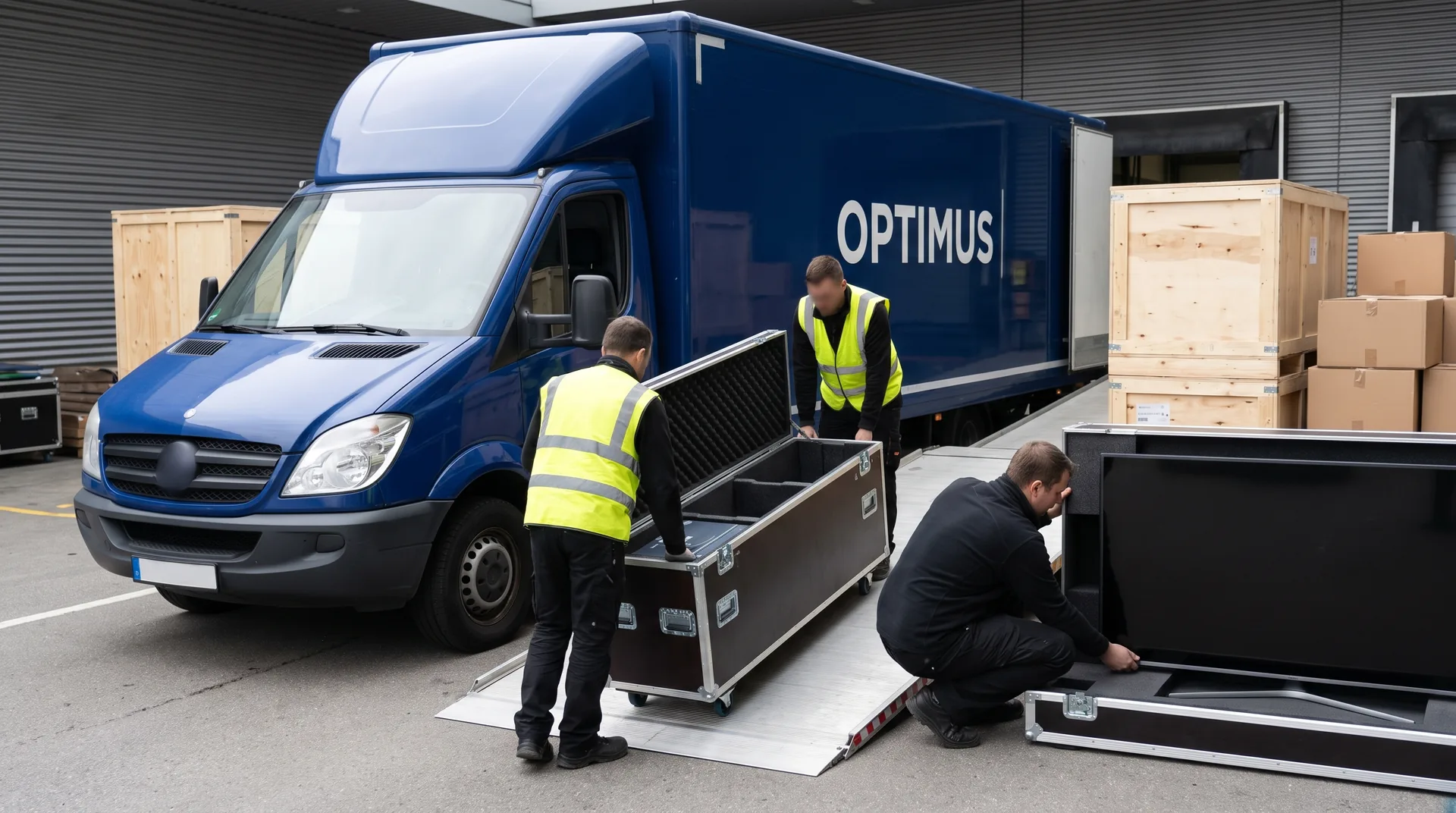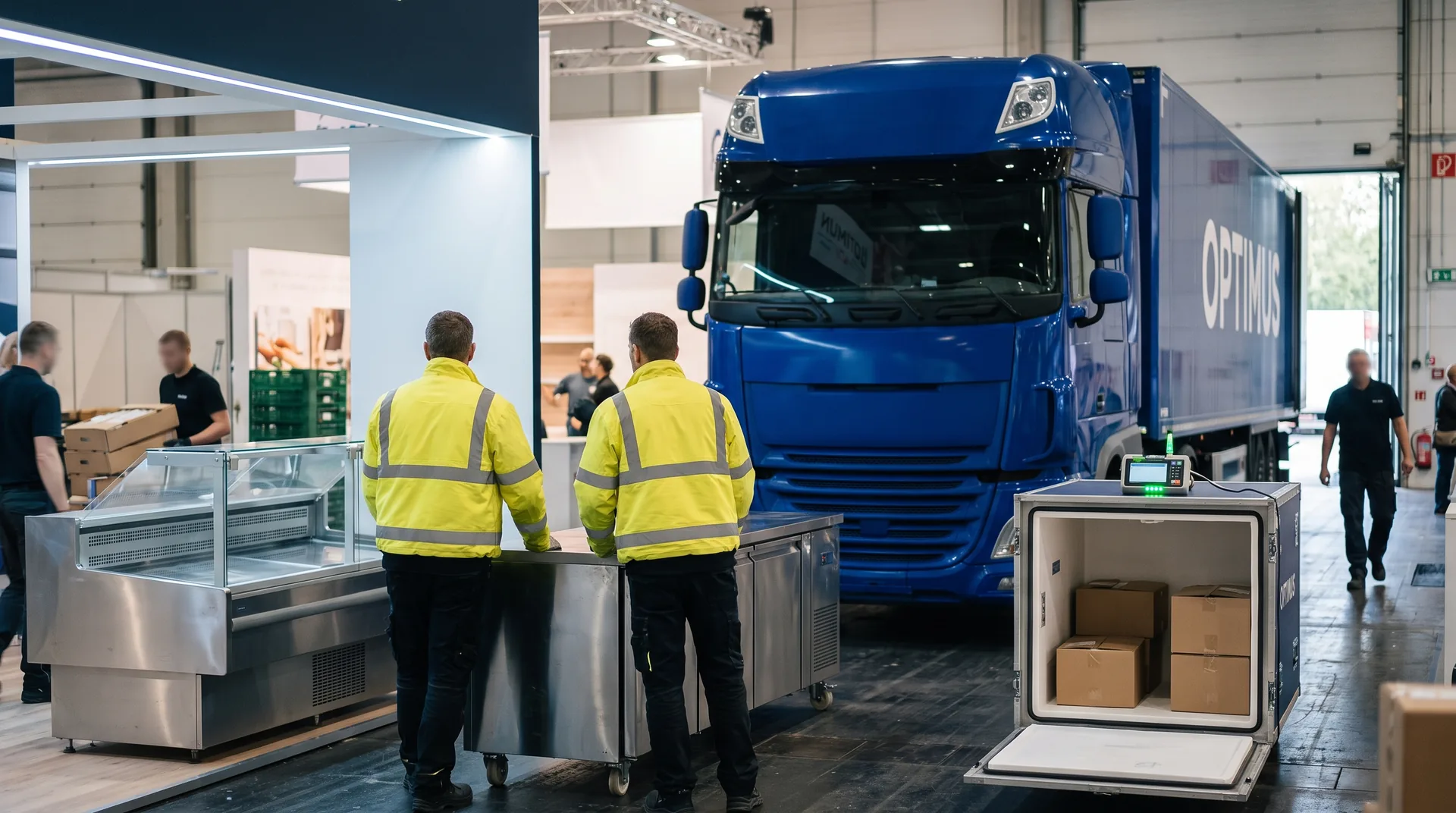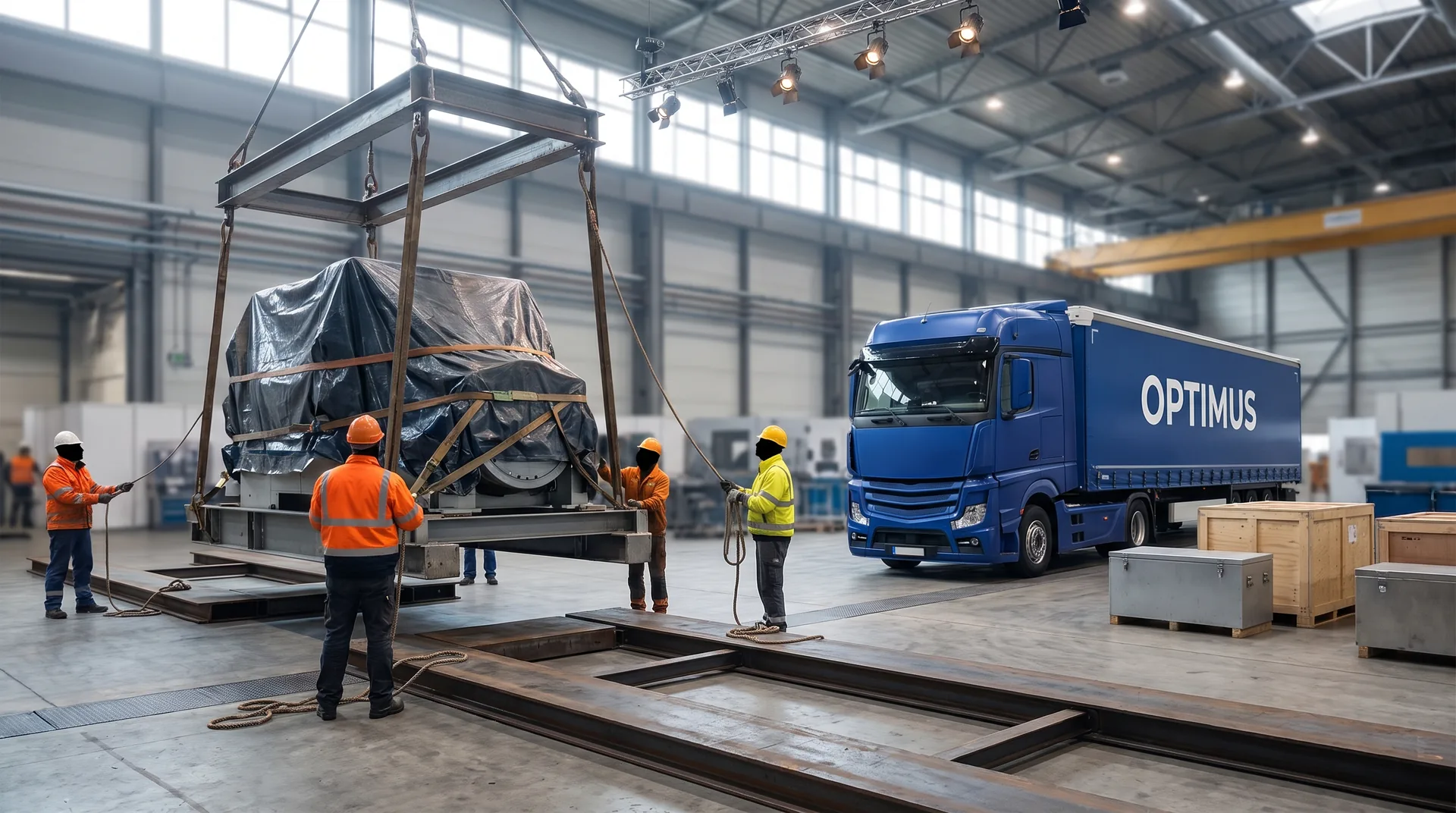
A heavy exhibit on a stand presents two separate problems: whether the floor will take the pressure where the machine will stand, and what will move it from the unloading point to the stand. The first is solved with figures from the technical regulations and load-spreading plates, the second by choosing equipment that fits down the aisle. Both have to be solved before the load leaves Poland.
The calculation you do on paper
Take the mass of the exhibit, divide by the total contact area of all its supports, and compare with the permitted point load published by the venue. If the result is too high there are two routes: increase the contact area or reduce the load at the point. Contact area is increased with spreader plates under the supports, a frame beneath the machine, or by leaving the exhibit on its own transport pallet where the display allows it.
The same calculation has to be done for the route the exhibit takes inside the hall, not only for its final position. Handling equipment adds its own mass, and the wheels of a truck have a small contact patch. Hall and gate parameters are collected in unloading an oversized exhibit inside a hall, and the full set of access limits in venue access limits.
The last thirty metres
From the unloading point to the stand runs an aisle of a width fixed by the organiser, flanked on both sides by other stands under construction. A high-capacity forklift needs room to manoeuvre that is not there, and at many venues it may not run over carpet once laid. So a different set of equipment works on that stretch: heavy-duty pallet trucks, machinery skates placed under the machine, air skates for loads sensitive to vibration, winches and track systems.
The choice depends on three things: the aisle width, the hall surface, and whether the exhibit can be lifted at defined points. That last item comes from the machine's manufacturer and should be marked on the machine itself. Without it the lifting equipment works by feel, and on a machine with an off-centre mass that is a direct route to damage.
Sequence is part of the plan
A heavy exhibit goes onto the stand before the walls go up, not after. That sounds obvious and it is the commonest mistake on own builds: the crew erects the structure on day one, the machine arrives on day three and there is no way in. Where the build has an element that cannot be dismantled, entry sequence stops being a matter of convenience. Build sequence is planned together with the transport schedule, as described in the build-up and breakdown calendar.
The same problem returns at breakdown, in worse conditions. The machine has to leave the stand before the crew strips the structure completely, and everyone around is doing the same thing at the same time.
Positioning on the stand: what the contract says
Two services are worth separating. Delivery to the handover point is the carrier's work and that is what we quote. Positioning the machine in its final place, levelling, connecting and securing it is somebody else's work: the venue's team, the appointed operator or the manufacturer's service engineers. If you do not separate them in the order, you will find the machine standing in the aisle with nobody authorised to move it. Who may operate equipment in the hall is set out in unloading inside a venue.
The risk a transport policy does not close
A carrier's liability ends at delivery. Moving the exhibit inside the hall, positioning it and working on the stand all fall outside that period, and on machines of high value and low mass a limit calculated from weight can be nominal. So on heavy, valuable exhibits separate insurance for the duration of the show costs less than a dispute. The limits of cover are set out in exhibit insurance at fairs.
What to prepare before anyone orders equipment
The mass of the exhibit from the manufacturer's documentation, not from memory. Overall dimensions in transport position. The number and size of support points. The lifting points indicated by the manufacturer. Whether the machine holds operating fluids and whether they must be drained. Plus two figures from the venue regulations: distributed load and permitted point load. With that set the equipment can be selected and the spreader plates calculated before the load leaves the works. The same figures decide whether the exhibit can be lifted off the trailer at the base before the show at all, which we cover in a heavy exhibit waiting for a Kielce fair.
Sources
Taking a machine to a stand? Send its mass, dimensions and support points through the quotation form and we will check the hall parameters and propose equipment for the final stretch. The scope is on our exhibition logistics page.