As of August 2026: for every person hidden in a vehicle (a clandestine entrant) Border Force can impose a penalty of up to 10,000 GBP, separately on the operator and on the driver. Failing to secure the vehicle carries up to 6,000 GBP even if nobody is found. Protection comes from a documented secure-and-check system, kept up at every stop.
How the penalty system works
- The penalty applies per person found and per responsible person: with two stowaways, the operator and the driver can each receive two penalties.
- The increased levels have applied since February 2023; the 10,000 GBP maximum is for repeat incidents, with a lower ceiling for a first incident.
- A separate penalty, up to 6,000 GBP, applies for an inadequately secured vehicle, regardless of whether anyone got in.
- The amount can be reduced by demonstrating an effective security system; its absence works the other way.
What Border Force accepts as an effective system
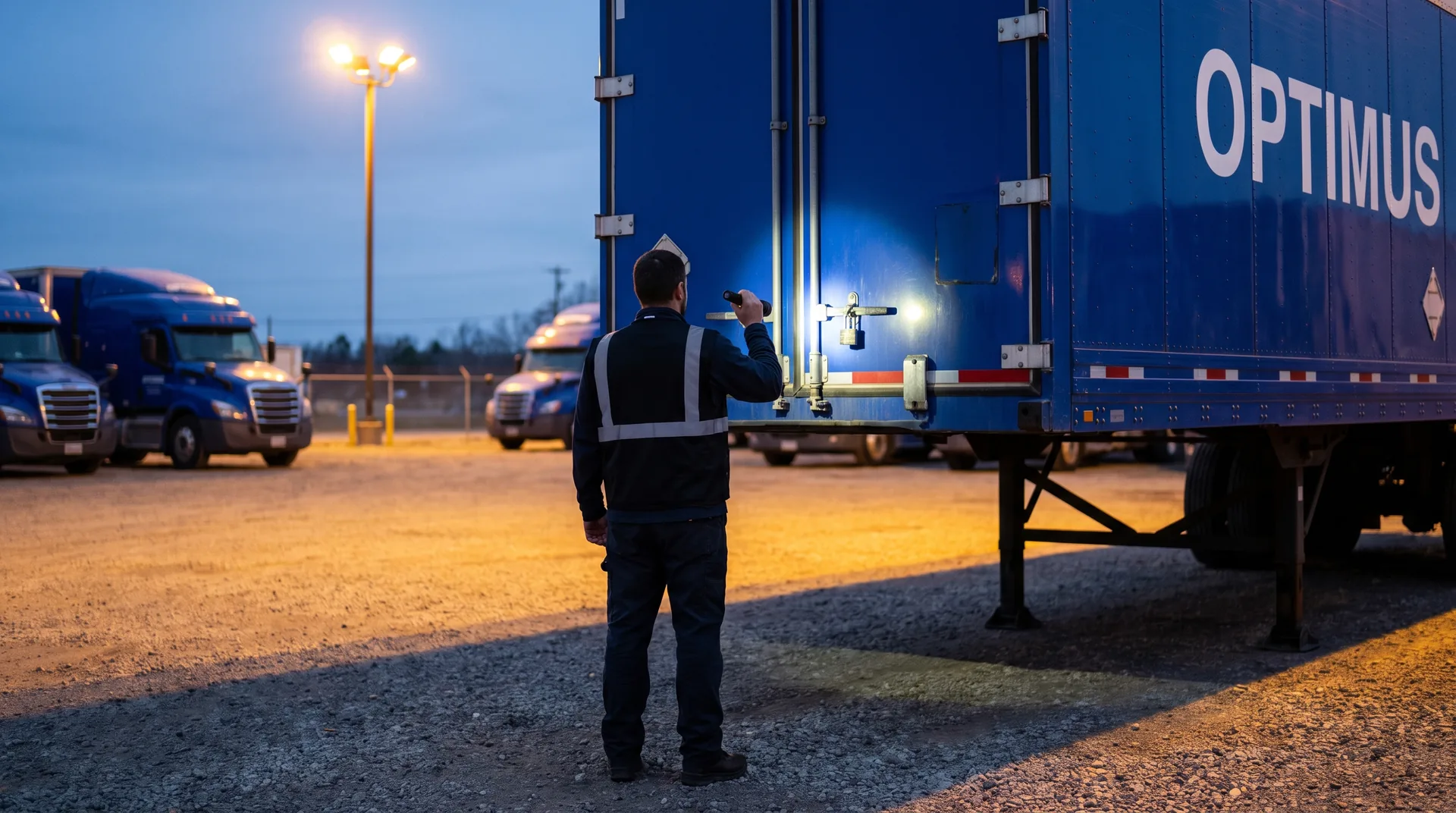
Not a single lock, but a repeatable procedure with a written record. The British guidance says it plainly: secure, check and record. In practice that means sealing the load space after loading, a TIR cord in good condition, checking seals, cord, roof and underside after every stop, and a vehicle security checklist filled in as you go, which the driver can show at a control. GOV.UK publishes a checklist template. There is also a Home Office accreditation scheme for hauliers, which counts in the operator's favour if an incident happens.
Where the risk is highest
The critical stretch is the coastal corridor of France and Belgium before the crossing: motorway parking areas around Calais and Dunkirk are where attempts to enter trailers happen most often. The minimum rule: plan the last long break well away from the ports and drive the final leg to the terminal without stopping. The crossing itself is covered in our article on the Dunkirk and Dover route.
What to do if you suspect someone is inside
Do not open the trailer yourself in a car park and do not intervene on your own: report it to the local police or the port authorities and follow their instructions. Trying to resolve the matter quietly before the crossing is the worst possible move, legally too. What happens to the cargo after such an incident is described in our articles on stowaways in the trailer and on cargo inspection after trailer tampering.
What happens to the cargo after a trailer is breached
The incident does not end at the border. Goods someone had access to stop being trusted goods: retail chains and industrial consignees usually refuse the whole batch, even when the marks are visible on a single pallet. That is when the second part of the work begins, the inspection and the recovery. The load goes into a warehouse, where units are unpacked, examined item by item and split into those cleared for onward trade and those destined for disposal with a certificate of destruction. Our recovery rate on such jobs exceeds 92 percent, counted in items of goods put through the filtering. That is the difference between a partial loss and writing off the whole delivery.
Groupage: one incident, many affected
On a consolidated load a breached trailer touches every consignment on the vehicle, including the ones nobody went near. The consignee has no way of verifying which pallet was within reach, so the questions cover everything. That is why the record of vehicle checks at every stop is worth more than its value towards the authorities: it lets you show the consignee when the seal was last checked and where the vehicle stood. Without that record the conversation comes down to one word against another.
Sources
- GOV.UK: secure your vehicle, guidance and checklist (clandestine entrant penalties)
- legislation.gov.uk: the 2023 order on clandestine entrant penalty levels
Trailer security and documented checks are part of every crossing we run. If you are looking for a carrier that takes this seriously, see our services and write through the contact form.