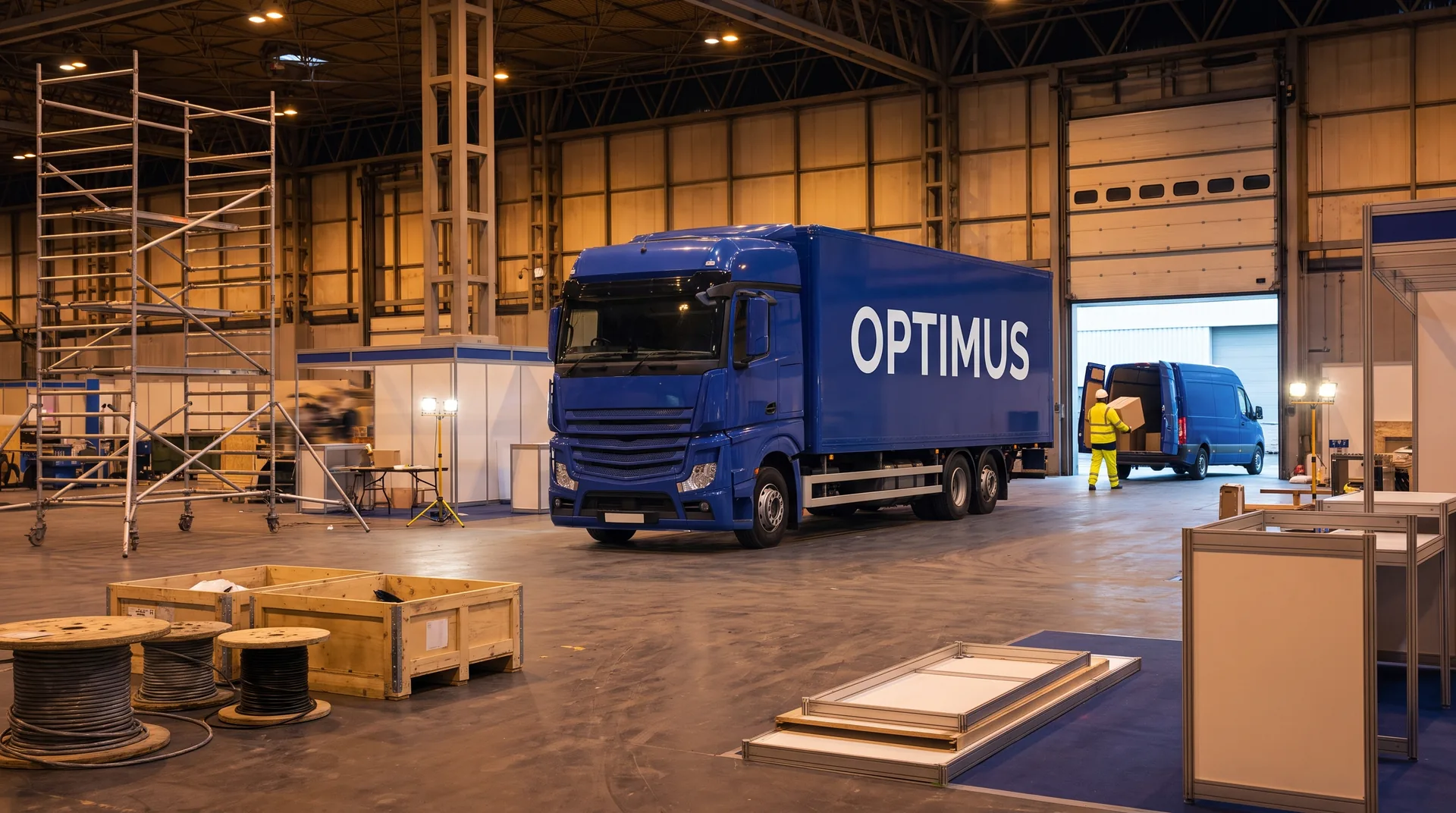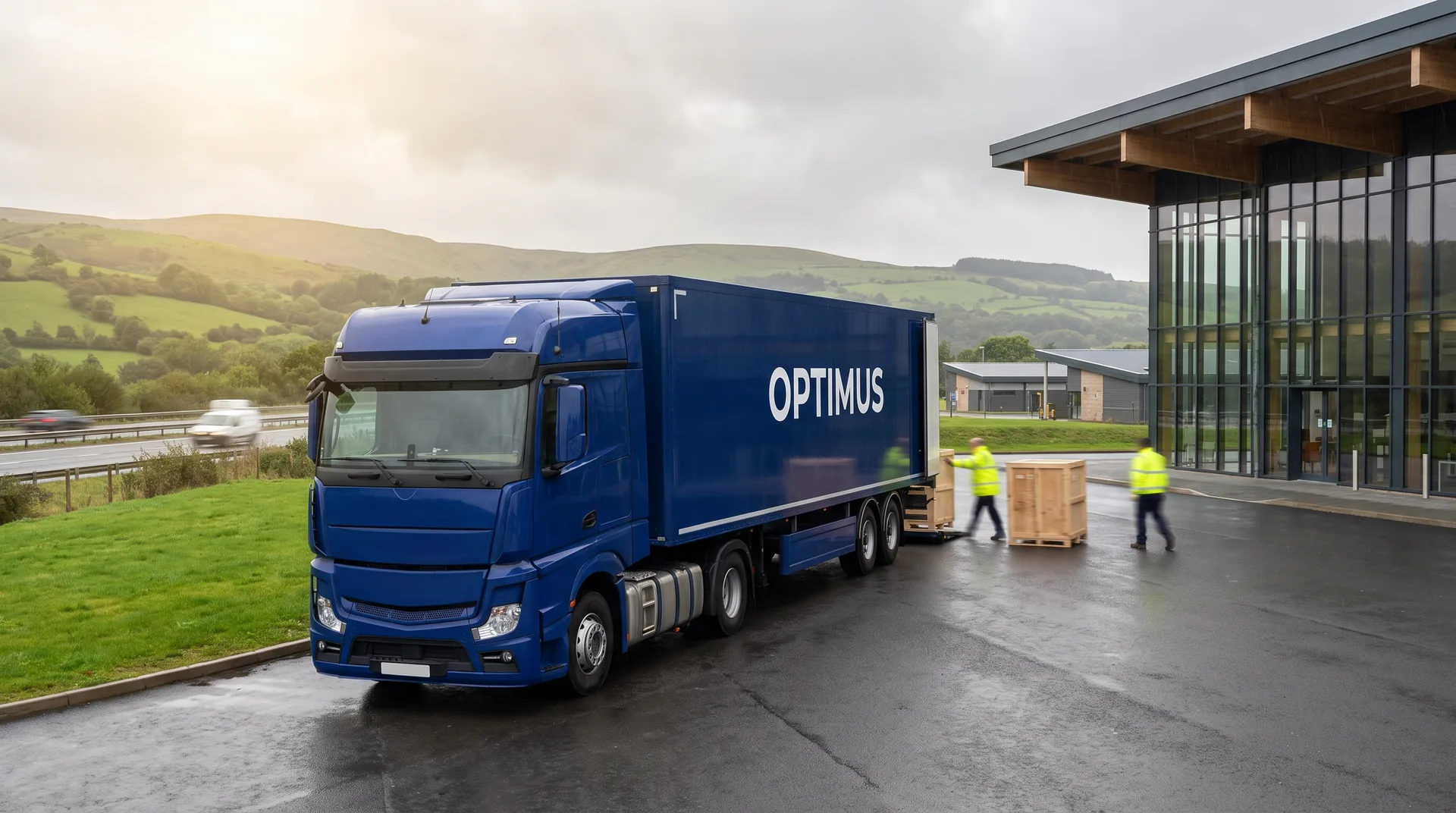
ICC Wales lies at Coldra Woods near Newport in South Wales, directly at junction 24 of the M4, so it is a few minutes from the slip road to the venue. The main hall has four thousand pillar-free square metres, a nine metre ceiling and sits at ground level, and the venue publishes two points of vehicle entry plus loading bays given as separate locations. We carry stands and exhibits here from Poland and collect them after breakdown.
Who runs the venue
ICC Wales was created as a joint venture between the Welsh Government and the Celtic Manor group, with the shares split equally, and opened in September 2019. The Welsh Government confirms its fifty per cent stake in published documents. For a Polish exhibitor this is background, but useful when checking a counterparty: the venue is neither a private conference centre without backing nor a local authority operation.
An approach that is hard to miss
The venue states that it sits just off junction 24 of the M4, known as Coldra, some fourteen miles from Cardiff and around thirty from Bristol. From the continent the route runs over the Channel crossing, then the M25, the M4 westbound, across the Severn and on to junction 24. Entering through the east coast ports, the route runs through the Midlands and then onto the M4 or M5. We describe the region more fully in the article on transport to Wales, and corridor choice in the piece on the east coast ports.
The restriction that really applies on this route
Wales has no charging clean air zone at all; the British charging zones are Bath, Birmingham, Bradford, Bristol, Portsmouth, Sheffield and Tyneside. That does not mean this route is free of restrictions, only that they are of a different kind.
The main one is this: the stretch of the M4 between junction 24 and junction 28, about thirteen kilometres long, carries a permanent, mandatory fifty mile per hour limit with average speed enforcement, in force since November 2022 and operating around the clock. The venue sits exactly at one end of that section, so every vehicle approaching from the west drives through it. It goes into the schedule as a fixed time cost rather than as a risk.
The second point concerns local roads: since September 2023 Wales has applied a default twenty mile per hour limit on restricted roads. That does not touch the motorway, but it does affect approaches to urban addresses if the run covers further points in Wales.
The Brynglas tunnels: a myth that comes back every season
Drivers commonly believe that the Brynglas tunnels on the M4 at Newport carry a dangerous goods tunnel category or a ban on carrying such goods. We checked, and it does not hold up. The government list of tunnel categories for the carriage of dangerous goods in Great Britain names ten tunnels, and no Welsh tunnel is among them, Brynglas included. Nor is a height restriction published there.
The real problem at that spot is different and purely about traffic: the tunnels carry two lanes each way while the adjoining stretches of the M4 have three, so a bottleneck forms, and the whole thing sits inside the fifty mile per hour section described above. That is a timing constraint, not a prohibition. Carriage of dangerous goods on this route is planned normally under the general rules, described in the article on border procedures.
What the venue publishes about unloading
The main hall is at ground level, has four thousand pillar-free square metres and a nine metre ceiling, and divides into six. The venue publishes two points of vehicle entry for it plus a loading bay holding several lorries at once. Beyond that it publishes separate locations for three loading bays and a kitchen bay, each as its own point on the map. That is rare and very practical: the driver gets not the venue address but the address of a specific bay. The visitor car park, by contrast, has a height limit just over two metres, so it is not for deliveries. Whether a vehicle may stand on the hall floor at a particular stand is confirmed by the organiser, because the venue does not settle it in its general materials.
What to settle before arrival, and what we do
To the organiser: stand number and hall section, the designated loading bay, how vehicles are booked in, who supplies the forklift, and where the vehicle goes after unloading. We do not quote hours, because the organiser sets them separately for each edition. At our end: collection in Poland, consolidation through the hub including exhibitors from Czechia, Slovakia, Austria and Hungary, and a buffer at the Kielce base, which sits about 4 km from the fairground, a few minutes away, and works around the clock. A groupage vehicle waits for the next scheduled line departure. On the British side, usually a cross-dock in Milton Keynes, giving two transhipments across the route. At the venue we deliver to the handover point, the venue equipment takes over, and we commit to an hour at the gate. We count the schedule backwards using the method in the article on the build-up and breakdown calendar.
Groupage or a dedicated vehicle
The threshold runs at roughly a third of a trailer, about twelve pallets. At ICC Wales an argument of distance is added: the venue lies far west of our Milton Keynes warehouse, so the run from the buffer is longer here than for venues in the Midlands. With larger loads a dedicated vehicle going straight to the bay pays off more often than elsewhere. We break the arithmetic down in the article on choosing between FTL and groupage.
The other Welsh venues
Newport does not exhaust the destination. On the coast, beside the A55, there is a venue whose arena takes vehicles through a single point of entry, described in the article on Venue Cymru in Llandudno. In mid Wales, where the A470 and A483 cross, sits the largest agricultural ground in the country, which we unpack in the piece on the Royal Welsh Showground near Builth Wells. Neither is reached by motorway, so transit time is calculated differently from Newport.
Sources
- ICC Wales: main hall, loading bays and directions
- Traffic Wales: permanent 50 mph average speed section on the M4 between junctions 24 and 28
- GOV.UK: list of ADR tunnel categories in Great Britain
Exhibiting in Newport? Send the stand number and item list through the quotation form and we will set the delivery to the designated bay. See also the exhibition logistics page.