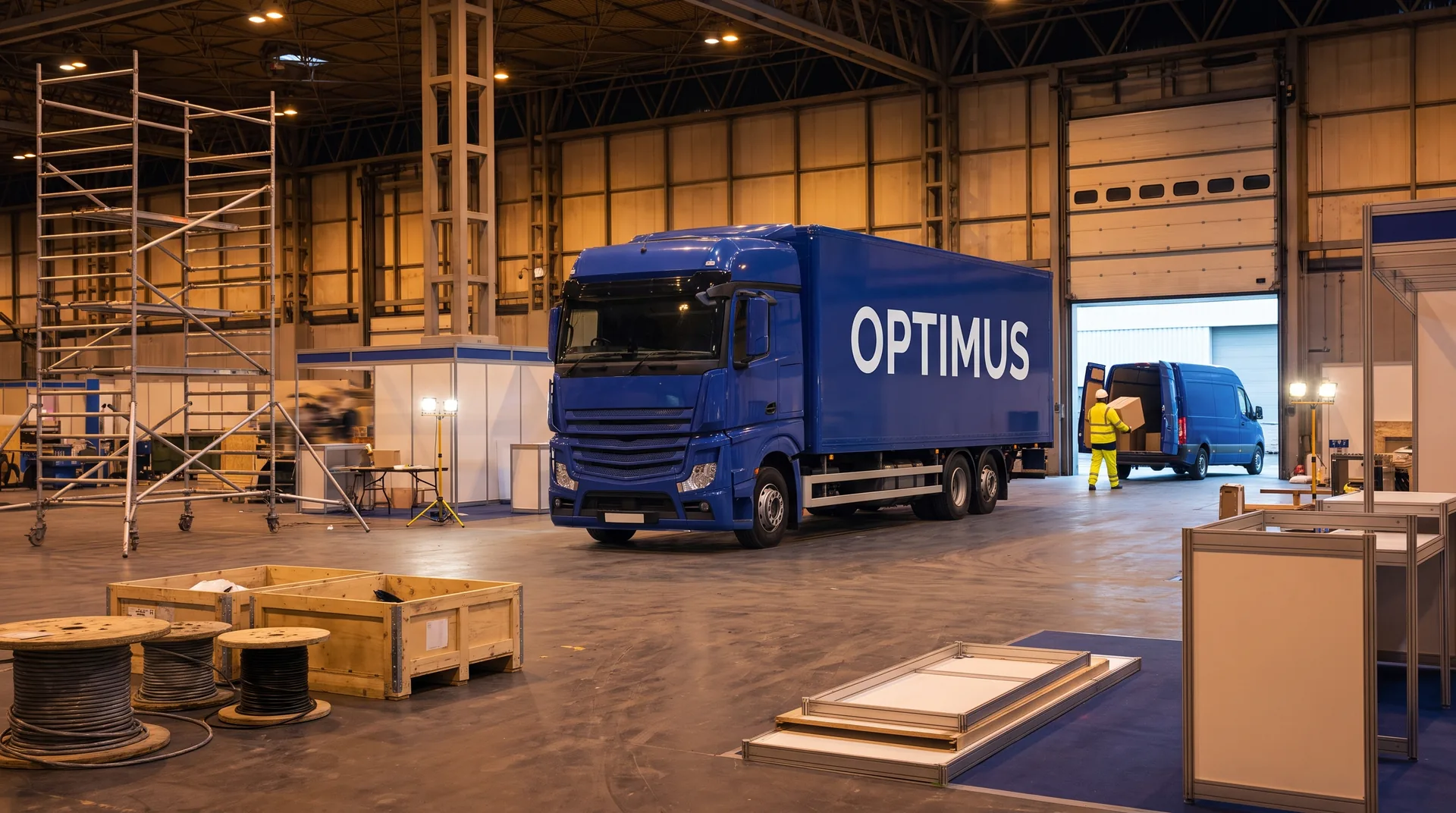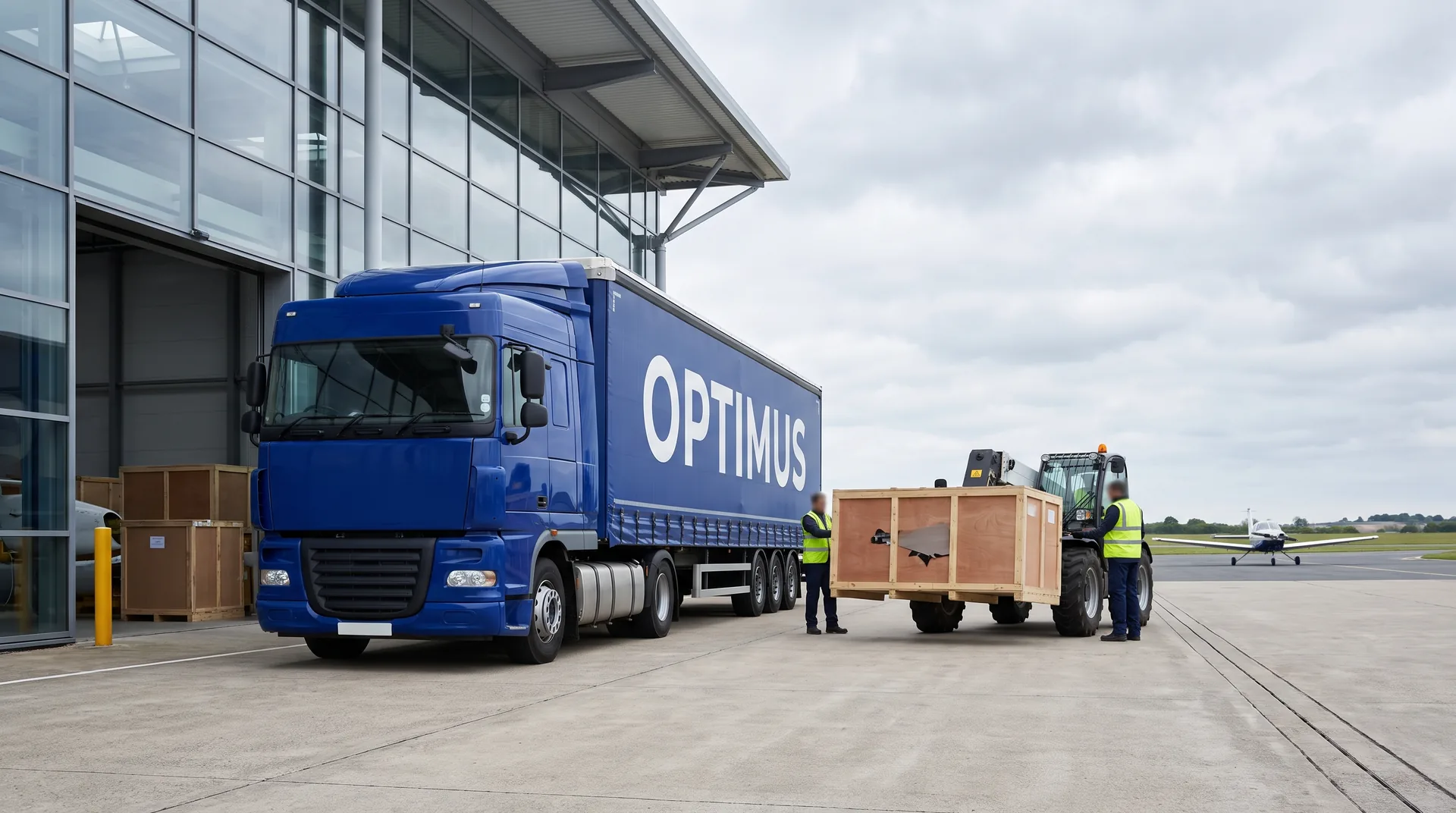
The Farnborough International Exhibition and Conference Centre lies in Hampshire on the A325, reached from junction four of the M3 and from the A31. Both exhibition halls have vehicle access, but the biggest difference from other venues is organisational: the venue has an exclusive appointed freight agent to which build traffic reports for vehicle permits. We carry stands and exhibits here from Poland and hand them over at the point designated on site.
Gates instead of an address
The venue does not publish one postal address for everybody; it publishes codes and locations for individual gates, and exhibitors and contractors have their own gate, marked with the letter I, entered from Fleet Road and Laffan's Road. Separate gates serve visitor vehicles and pedestrians, and one gate is out of use.
The venue also gives an instruction you rarely meet elsewhere: when a driver sees brown directional signs to the exhibition centre or yellow event signage, he is to ignore the satnav and follow the gate given in the event materials. The reason is mundane: satnav leads to the centre of gravity of the site rather than to the correct gate, and a former airfield is a large place. So the transport order carries the gate and its location rather than the venue address alone.
Driving into the halls, and the difference between them
The venue states that both exhibition halls have vehicle access, used both for unloading and for displaying vehicles themselves. It publishes roller shutter dimensions, and the difference between the halls is clear. The door into hall one, opened in 2018, is wide and tall enough to take large vehicles and structures. The doors into hall five are noticeably smaller in both dimensions, so an exhibit that enters hall one will not necessarily enter hall five. There is also a goods lift in hall one, with capacity suited to crates rather than machinery.
The practical conclusion is the same as at other multi-hall venues: the hall number has to be known before the vehicle is chosen, not after. The venue also has outdoor display space, used among other things for large objects, and an internal road network with a speed limit. How door clearance and the method of feeding a load in translate into an unloading plan is covered in the article on unloading an oversized exhibit.
What the freight exclusivity changes in practice
The venue names one logistics partner as its exclusive supplier of freight, lifting and storage services on site, and its guidance for the exhibitor gate says plainly that build and breakdown traffic reports to that operator for vehicle permits. This is not unusual in the British exhibition trade, but among the venues covered in this series it is the clearest case.
For a Polish exhibitor that means a division of tasks worth settling before dispatch, so that nobody pays twice for the same work. We handle the run from Poland, the transport and customs paperwork, delivery to the designated point on site and collection after breakdown. The appointed operator handles bringing the load onto the stand, lifting and any storage on site. We describe the boundary between those scopes in the article on the official fair forwarder and your own carrier, and liability for the cargo in the piece on insuring an exhibit and where carrier liability ends.
Waiting, overnight stays and site rules
The venue has a large free car park on a secure site and a speed limit on its internal roads. It sets out two points that matter to a driver on an international run: a vehicle may stay on site overnight only with prior approval from the event manager, and nobody may stay on site overnight. On a delivery from Poland that has to be planned, because after unloading the driver has his own rest requirements.
Clean air zones: none here
Farnborough is in Hampshire, some fifty kilometres south-west of London and outside all the London zones. No charging clean air zone applies here either: the British list covers Bath, Birmingham, Bradford, Bristol, Portsmouth, Sheffield and Tyneside. The caution concerns the route. If a run passes through London, the London systems apply, including the direct vision requirement and the overnight lorry movement restrictions; if through Portsmouth, then its charging zone. We gather the rules in the article on UK clean air zones.
What to settle before arrival, and what we do
To the organiser and the appointed operator: hall and stand number, entry gate, how the vehicle permit is obtained, the handover point for the load, who does the lifting and whether equipment has to be ordered in advance. We do not quote hours, because the organiser sets them separately for each edition. At our end: collection in Poland, consolidation through the hub including exhibitors from Czechia, Slovakia, Austria and Hungary, and a buffer at the Kielce base, which sits about 4 km from the fairground, a few minutes away, and works around the clock. A groupage vehicle waits for the next scheduled line departure. On the British side, usually a cross-dock in Milton Keynes, giving two transhipments across the route. We commit to an hour at the gate. The customs path and the venue itself are covered separately in the article on transport to Farnborough International.
Groupage or a dedicated vehicle
The threshold runs at roughly a third of a trailer, about twelve pallets. At Farnborough a specific argument is added: since an appointed operator works on site in any case, the benefit of bringing your own large vehicle right up to the stand is smaller than elsewhere. For smaller loads, groupage with a run from the buffer therefore performs particularly well here, and we keep a dedicated vehicle for exhibits that do not tolerate transhipment. We break the arithmetic down in the article on choosing between FTL and groupage. At consumer shows part of the load is stock meant to be sold from the stand, so alongside the vehicle choice its customs status has to be settled; we show that on the example of transport to The Big One fishing show in Farnborough.
Sources
- Farnborough International: logistics, unloading and roller shutter dimensions
- Farnborough International: directions, gates and site movement rules
- GOV.UK: list of British charging clean air zones
Exhibiting at Farnborough? Send the hall number, designated gate and item list through the quotation form and we will set up the delivery and the handover on site. See also the exhibition logistics page.