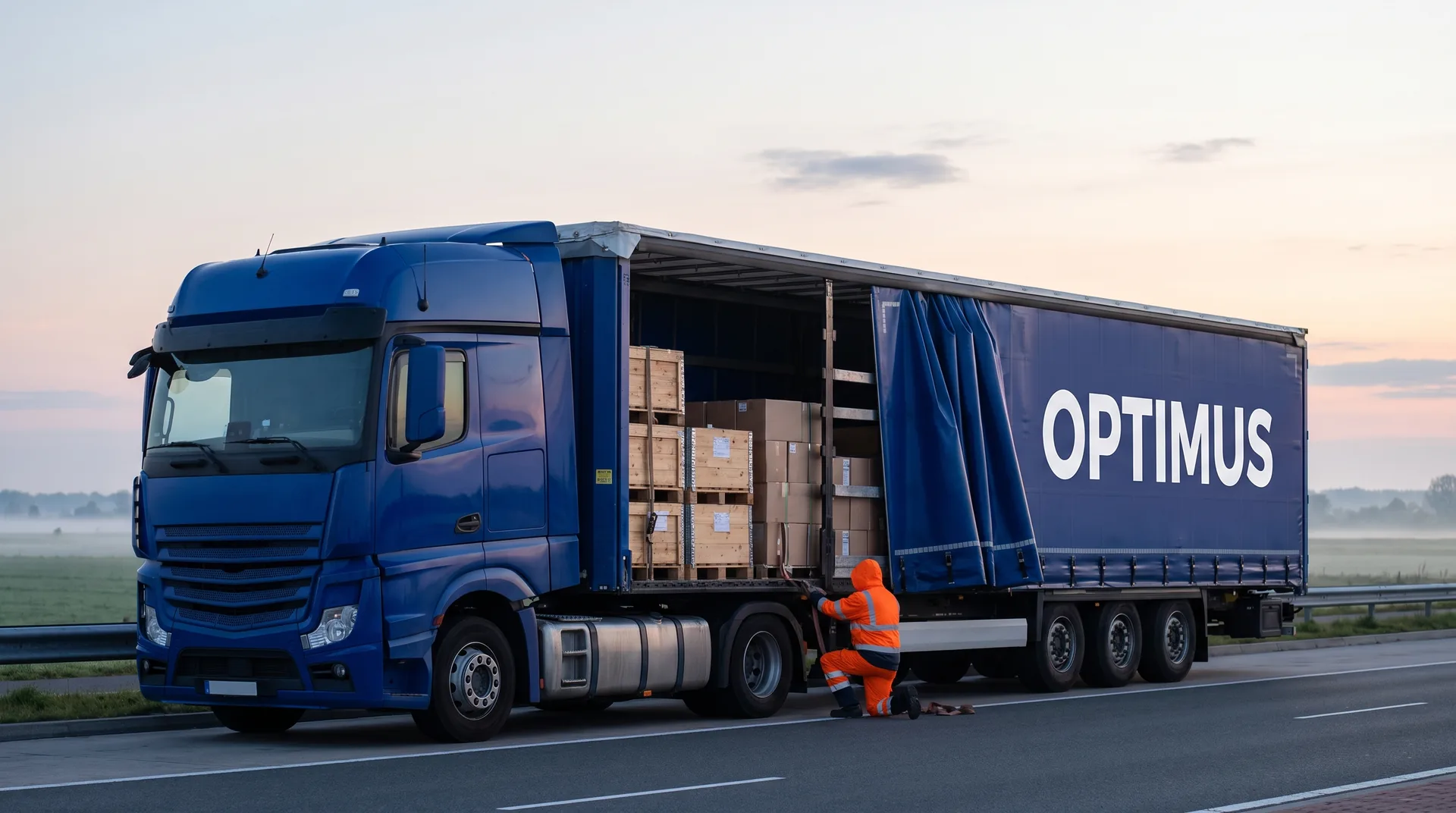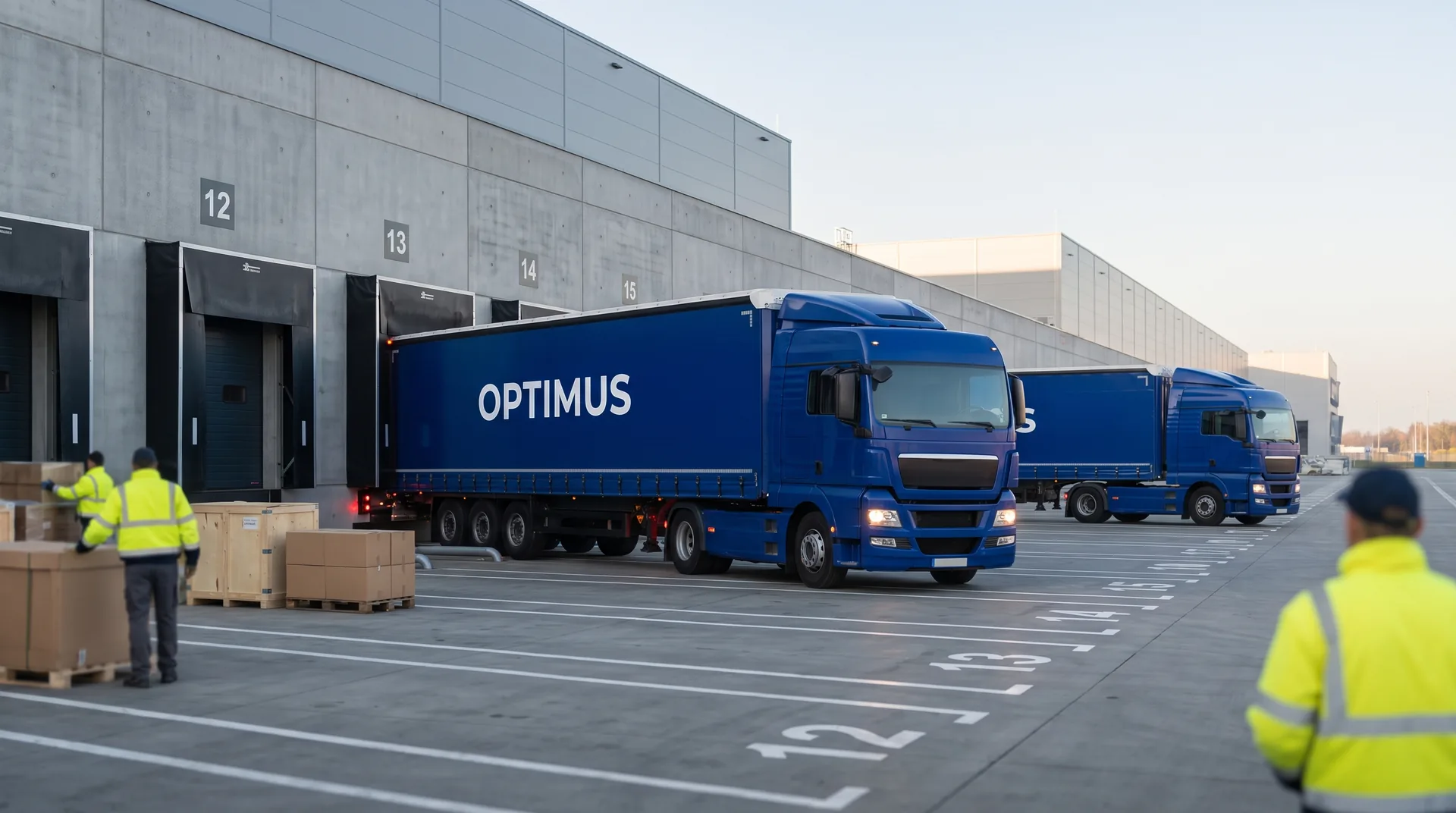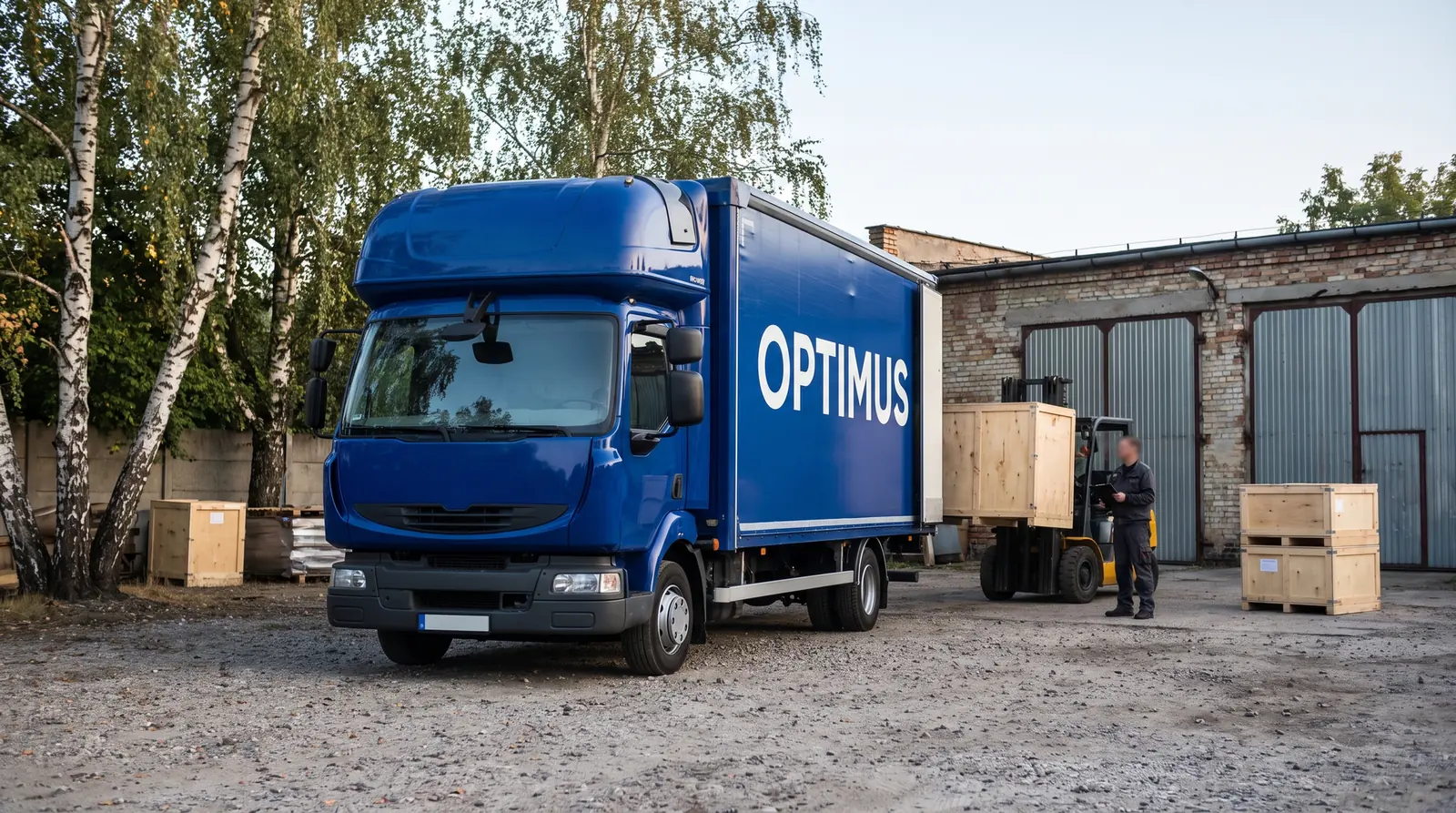
Collecting from an exhibitor based in Kielce and the surrounding region rarely means a single address. The stand sits at the contractor, the printed panels wait at the printer, and the exhibits are at the production plant. We pick those elements up with one vehicle in the reverse of the build sequence, consolidate them at our base minutes from the fairground, and bring the load to the venue gate in the window set by the organiser.
Why being close does not make it simpler
Intuition says an exhibitor whose factory is twenty kilometres from the venue has the problem solved. In practice the opposite happens. A distant exhibitor packs everything in one place because there is no alternative: the load travels hundreds of kilometres and nobody collects brochures along the way. A local exhibitor is tempted to bring each element separately, because it is close. The result is three or four vehicles at the gate, each needing notification, each queuing, each taking build crew time to receive.
Then there is sequence. Elements delivered independently arrive in random order, while a stand is built in a fixed one: structure and flooring first, then walls and graphics, exhibits and small materials last. Graphics arriving first sit on the stand and get in the way; a structure arriving last blocks everything.
The collection route planned backwards from the build sequence
The rule is simple and follows from the geometry of a trailer: whatever goes in last comes off first. If the structure must come off first, then the structure is the last stop on the collection route. The printer with the graphics and the plant with the exhibits come earlier. On a stand with several stages of assembly it is worth writing that sequence down with the build crew before the vehicle sets off for the first item.
The same logic governs how goods are laid out at the base when elements arrive on different days. We do not stack them in order of arrival but in the order in which they must leave the vehicle at the venue. The basics of moving the structure itself are covered in our article on transport of exhibition stands, and the difference between fair freight and ordinary groupage in the piece on exhibit transport.
Who is the consignor when we collect from a subcontractor
The question looks like a formality until something goes wrong. When we collect a stand at the premises of its builder, three different parties appear around the consignment note: the builder as place of loading, the exhibitor as principal and owner of the goods, the venue as place of delivery. If a component has a manufacturing defect and it is noticed on the stand, telling transit damage from a build fault decides who pays for the repair.
So at a subcontractor collection we record the number of units and the visible condition of packaging, and for unpacked items, panels on a transport trolley for instance, we ask for the releasing person to be named in writing. This is not bureaucracy: it is the only moment at which those two worlds can still be separated. The boundaries of liability are set out in our piece on insuring an exhibit at a trade fair.
The hour at the gate, not the hour of unloading
This distinction is worth repeating because it causes misunderstandings. We promise the hour at which the vehicle will stand at the venue gate with a complete set of entry documents. We do not promise the hour at which the load will be on the stand, because the order of entry onto the site and movement inside the hall belong to the organiser and the venue staff. A base minutes from the ground makes the first of those hours certain, and that is all anyone can honestly guarantee. Entry rules and documents are covered in our article on vehicle booking and site passes at Targi Kielce.
Where the carrier role ends on the stand
We deliver to the handover point indicated by venue staff. Moving goods deeper into the hall and onto the stand itself happens with venue equipment and under venue rules, because the venue is responsible for internal traffic, floors and the safety of people in the hall. An exhibitor who counts on the driver carrying crates onto the stand is planning the build on an assumption that regulations usually do not support. The division of rights between the official fair forwarder and an outside carrier is described in our article on the official fair forwarder versus your own carrier.
After the show the route runs the other way
Breakdown creates the same problem in reverse: the structure goes back to the builder, exhibits to the plant, and single-use material usually nowhere. One vehicle takes everything off the stand, splits the load at the base and delivers to the right addresses when the recipients are actually working, instead of hammering on a closed production hall at ten in the evening. What can happen to a stand after closing is collected in our article on post-show logistics and the return of exhibits.
What to prepare before the vehicle leaves
- A list of collection addresses with contacts and the working hours of each one.
- The build sequence, even in three bullet points, because the order of collections follows from it.
- Hall and stand number plus the build-up window from the regulations of that particular show.
- A note on which items need a forklift or a crane at the subcontractor.
- The name of the person who will be on the stand at delivery and sign for the goods.
For small displays the whole list fits into one email, as described in our piece on a small stand at a Kielce fair. The full picture of exhibitor service in Kielce is in the article on Kielce trade fairs.
Sources
- Targi Kielce: event calendar and exhibitor information
- Targi Kielce: site entry regulations (PDF, Polish)
Is your stand being made in several places around the city? Send the list of addresses and the build date through the quote form and we will plan the collection route around the build sequence. See also our trade fair logistics page.