Metal products and steel are loads where mass, not trailer space, sets the limit. Three things decide: axle load distribution, securing calculated from forces rather than habit, and whether the item fits within the dimensions allowed without a permit. Long products are planned separately, because there every centimetre counts.
Weight fills a vehicle before volume does
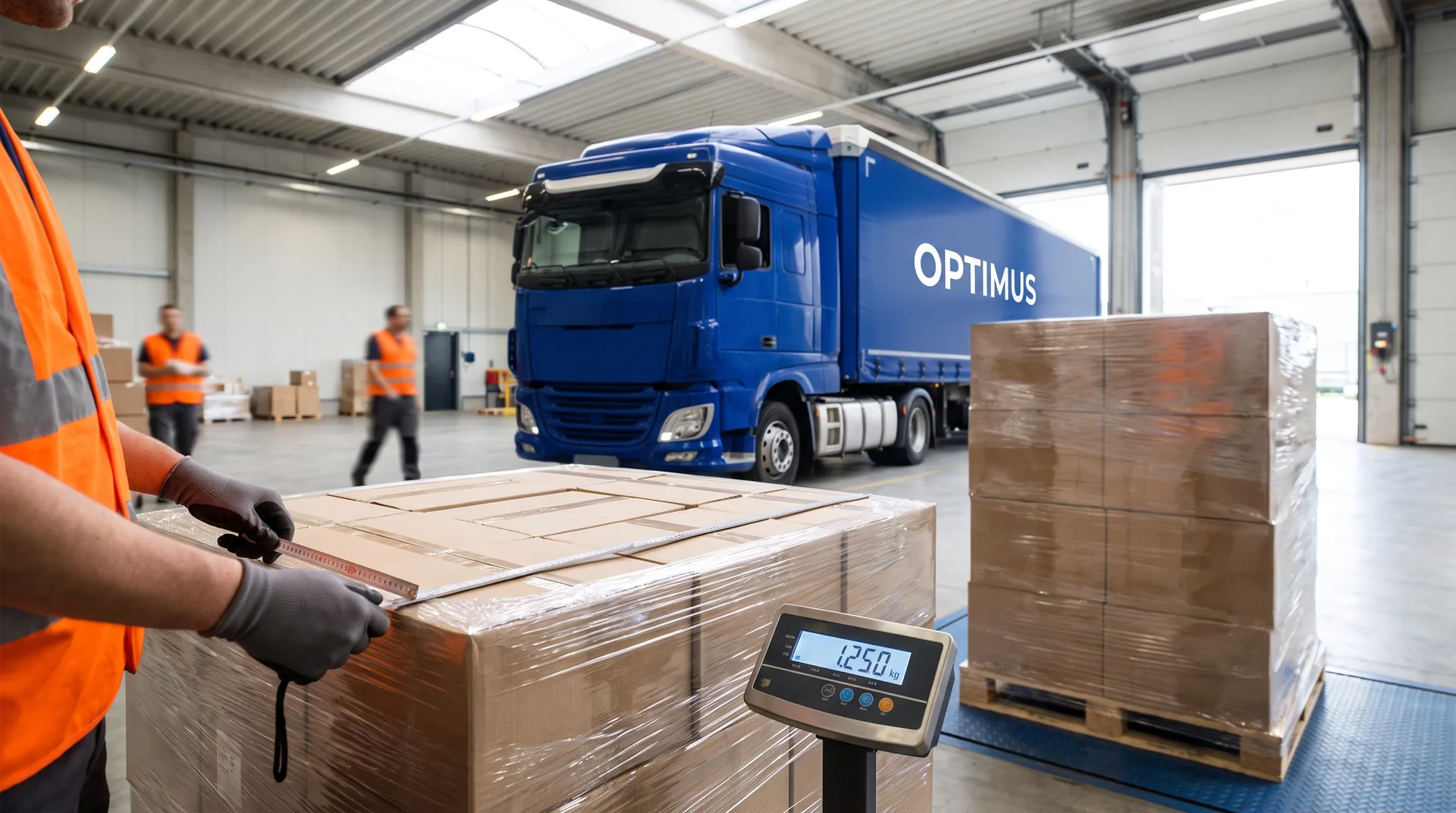
With steel and metal products a trailer usually reaches its permissible mass before the floor is full. Twenty pallets of sheet take less than half the space and the vehicle is already loaded out. That changes pricing and planning: we count tonnes rather than loading metres, and on mixed loads we treat steel as the base and build the rest around it. Distribution along the trailer matters just as much, because a load concentrated on one section of floor overloads an axle even when total mass is within the limit. The consequences are covered in our text on misdeclared weight and axle overload.
Securing: why straps alone are not enough
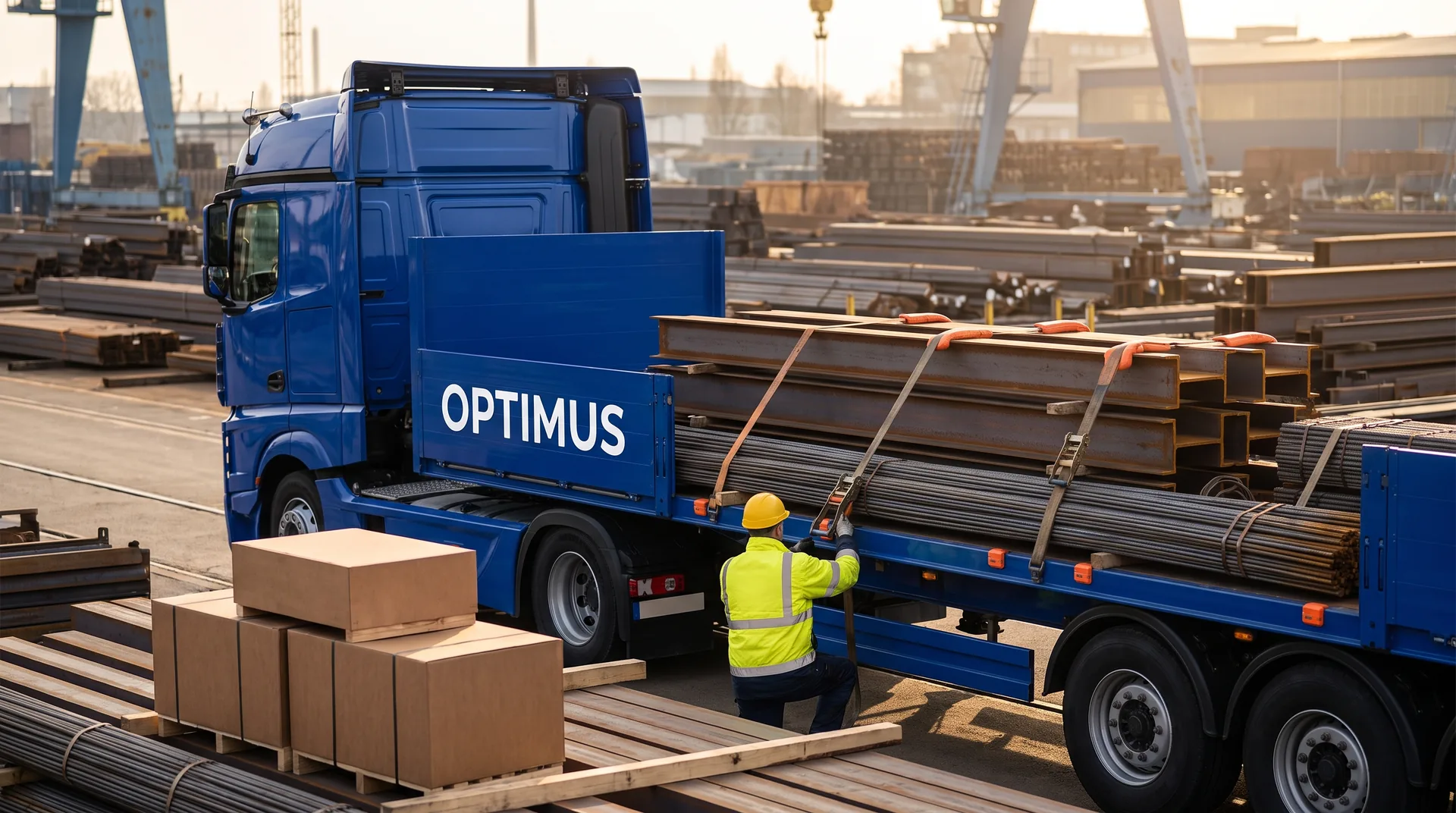
Steel is smooth, heavy and unforgiving under braking. Lashing over the top alone is often insufficient, because with low friction the load can move along the floor. In practice we combine methods: anti-slip mats to raise friction, blocking against the headboard or against stanchions, securing against lateral movement, and straps matched to mass and angle. Sharp edges need corner protection so a strap is not cut through on the first heavy brake. The rules and the standard are covered in our text on cargo securing under EN 12195.
Matching the trailer to the product
- Standard curtainsider: pallets of smaller products, short sections, items packed in crates.
- Reinforced floor trailer: loads with high point pressure, for example steel coils.
- Mega trailer: tall items where internal height rather than mass is the constraint.
- Low loader: structures and machines exceeding the height available on a standard chassis.
- Long load trailer: profiles, tubes and items longer than the standard load space.
The differences between types are broken down in our text on choosing a trailer type, and exceeding dimensions in the article on oversized transport to the UK.
Loading and unloading: equipment at both ends
With steel the bottleneck is rarely the carriage; it is what will take the goods off the vehicle. A forklift rated for pallets will not lift a steel coil or a structural beam. So on every job we establish what equipment the sender and the consignee have, and whether side loading or a crane is needed. Our base in Kielce has a ramp, forklifts and a vehicle-mounted crane, so it handles loads no pallet truck will lift. On British sites a tail lift often helps, covered in our text on tail lift deliveries.
Protection against corrosion and surface damage
Stainless products, powder-coated components and coated sheet need surface protection, because a scratch on a finished product means a complaint regardless of the fact that structurally nothing happened. We use separators, film and corner protection, and on longer movements we shield the load from moisture, because ports and ferries rarely offer dry conditions. It also pays to plan the loading order so delicate items do not sit under heavy ones. How goods are packed feeds directly into whether the consignee accepts them without reservation.
Customs and documents for metal products
Steel and metal products follow the normal export and import procedure, but they have two features worth checking early. First, tariff classification can be granular and depends on grade, form and processing, covered in our text on the customs tariff code. Second, some product categories carry additional documentary requirements or trade measures, so before a first shipment we confirm the scope with a customs agent. The statement on origin matters in practice here, because it decides the rate; we cover it in our text on rules of origin.
What to include in your enquiry
Dimensions and mass of every item separately, the packing method, whether the load can be stacked, the handling equipment available at both ends, and postcodes. For long products give the exact length, because it determines the trailer. For items with high point pressure add how they are supported. On that basis we will pick the vehicle, plan the securing and price the movement. Cargo types are collected on the metals and fabrications page.
Shipping steel, structures or metal products to the UK? Send the item list with masses through the quote form and we will match the trailer and the securing method. Full loads are described on the full truckload page.