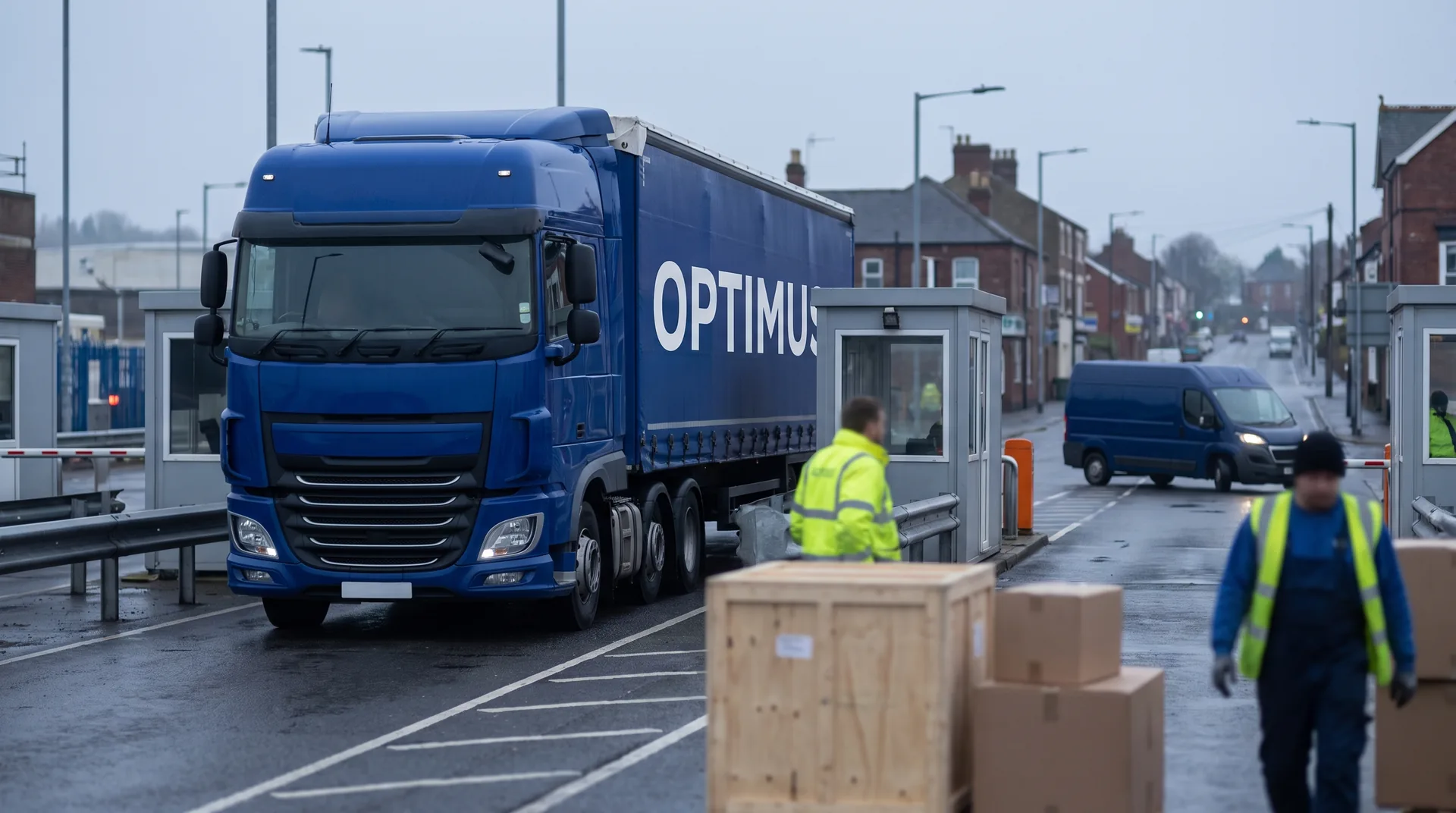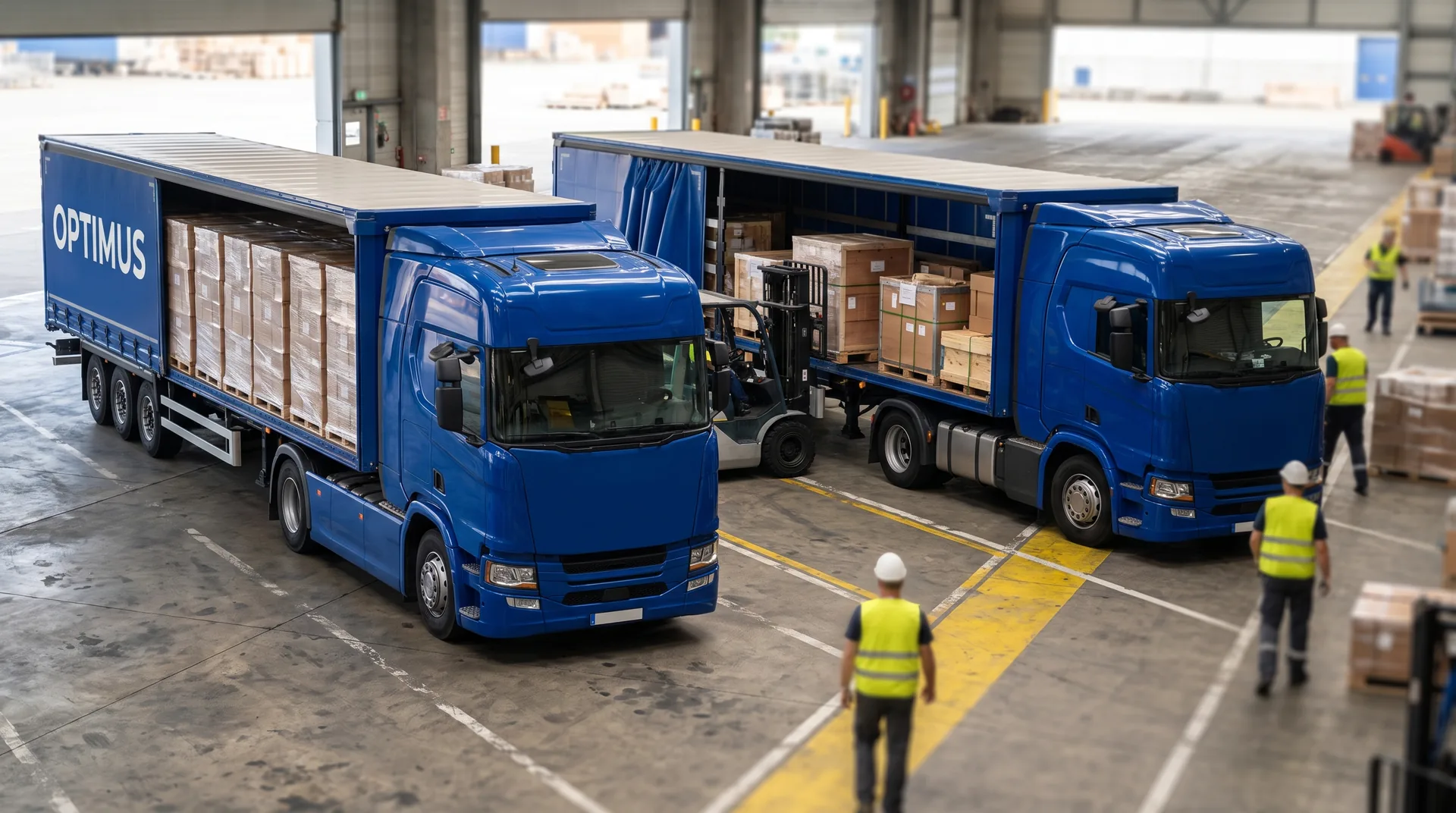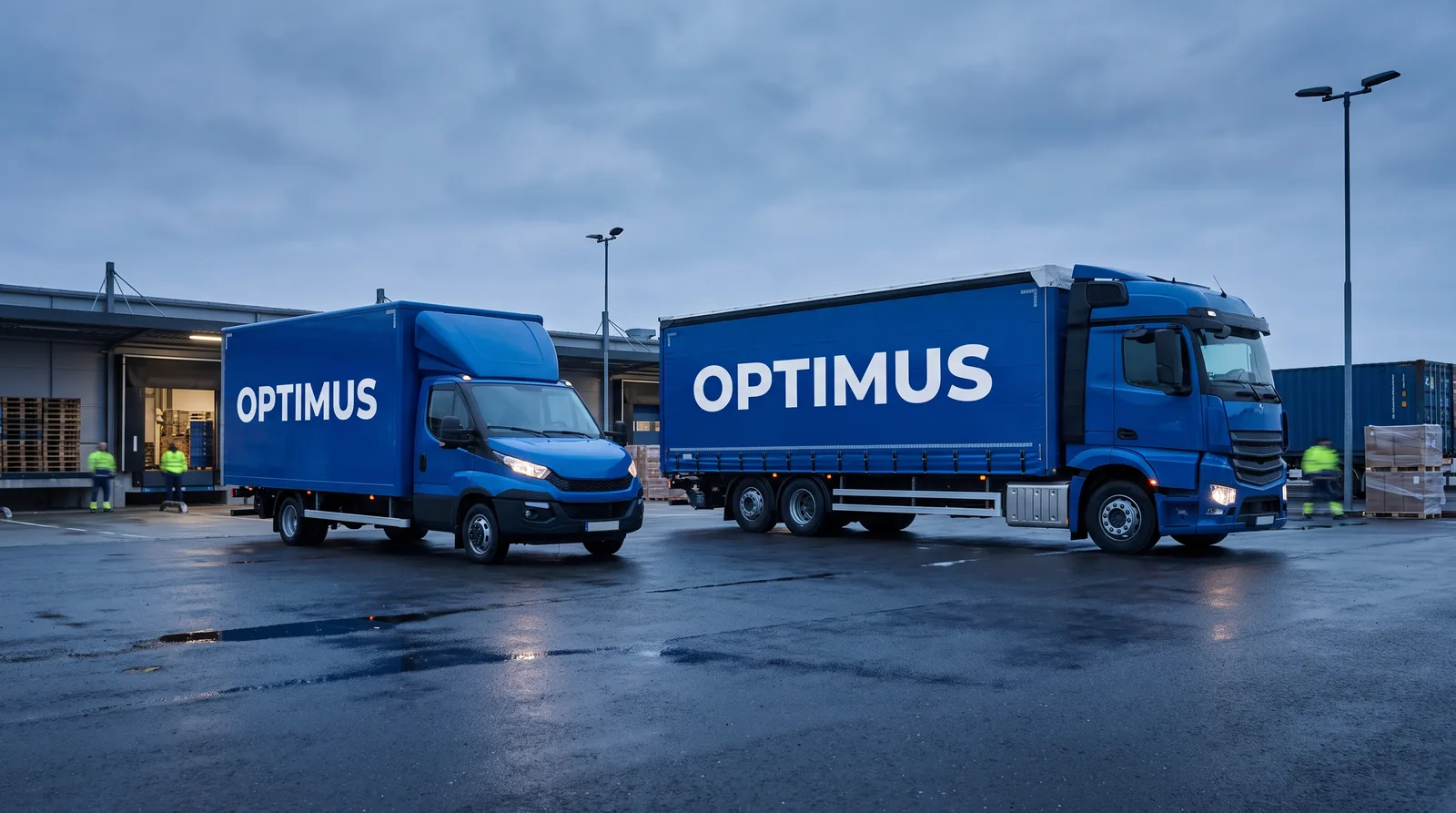
On the Poland to United Kingdom route we run three types of our own vehicles: tractor units with reinforced curtainsider trailers, vans up to 2.5 tonnes GVW, which remain outside the tachograph obligation in international transport, and 3.5 tonne vans fitted with Smart Tacho G2V2 intelligent tachographs. We match the vehicle to the cargo and the deadline, not the other way round: that is the difference between transit from 24 hours and a slot on a scheduled truck.
When does the tractor and trailer go?
When capacity matters: full loads and consolidated groupage from a single pallet. A curtainsider takes the standard 33 euro pallets, long items and goods that need side or top loading. The reinforced curtain plus a TIR customs cord under seal is our standard for the crossing, because the curtain is the most attacked part of any trailer. Groupage runs to a consolidation schedule, full loads run to the client's date; the differences are described in our article FTL or LTL.
What does the van under 2.5 tonnes give you?
Speed. Vehicles up to 2.5 tonnes GVW stay outside the EU tachograph obligation in international transport, also after 1 July 2026, so the van can drive with practically no breaks imposed by the rules, and with a two-driver crew it barely stops at all. This is our fastest option: transit from 24 hours after loading, for consignments up to about a tonne, typically a few pallets. The details are in our article on the van under 2.5 t with no tachograph.
Why do we run 3.5 tonne vans with tachographs?
Because from 1 July 2026 vans above 2.5 and up to 3.5 tonnes GVW in international commercial transport fall under the intelligent tachograph obligation and driving time rules. Our 3.5 tonne vans carry Smart Tacho G2V2 units, so the rule change did not stop a single order. This vehicle takes more weight and volume than the smaller van and still fits where a trailer has no business going: city centres, exhibition halls, warehouses without a ramp. How we prepared for the change is described in our article on tachographs in vans from July 2026.
What about temperature-sensitive goods?
We handle temperature-sensitive cargo together with our warehouse in Milton Keynes, which offers temperature control, a chilled room and cargo inspection on arrival. Food or cosmetic goods get a measured buffer on the British side, not just a ramp. For regular chilled flows we combine this with our refrigerated transport service.
How does the vehicle type translate into the deadline?
- Van up to 2.5 t: transit from 24 hours, minimal road formalities, loads up to about a tonne.
- Van 3.5 t with Smart Tacho: fast, compliant with driving time rules, more space than the smaller van.
- Tractor with reinforced trailer: full loads on the client's date, groupage to schedule, the largest capacity.
All three formats are run by the same team and covered by the same insurance: carrier liability up to EUR 1 million plus CARGO. We do not add strangers' trucks from exchanges; the reasons are in our article on why we do not buy loads on freight exchanges. Running our own fleet on one lane has a legal consequence too: how many movements may be performed on the British side after unloading is fixed by hard cabotage limits, described in cabotage and cross-trade after Brexit.
What do we check before every departure to the Isles?
The pre-departure routine is boring by design, because its job is to strip the route of surprises. Driver and dispatcher walk through a fixed list: curtain and closure condition, straps, bars and anti-slip mats matched to the cargo, seal and customs cord fitted after loading, photos of the pallet layout before the trailer closes. Documents are closed off separately: a CMR matching the order, clearance references and the GMR for the crossing, booking details at the consignee. In tachograph vans we check the driver's remaining driving time against the delivery window before the vehicle moves, not on the ferry. The same routine runs on the return leg from the UK, because imports carry identical requirements in the other direction. The result is prosaic, which is the point: a truck that leaves with no open items rarely calls from the road about anything except delivery confirmation.
Sources
Not sure which vehicle type fits your consignment? Write via the contact form: we match the vehicle to the cargo and the deadline, not the other way round.