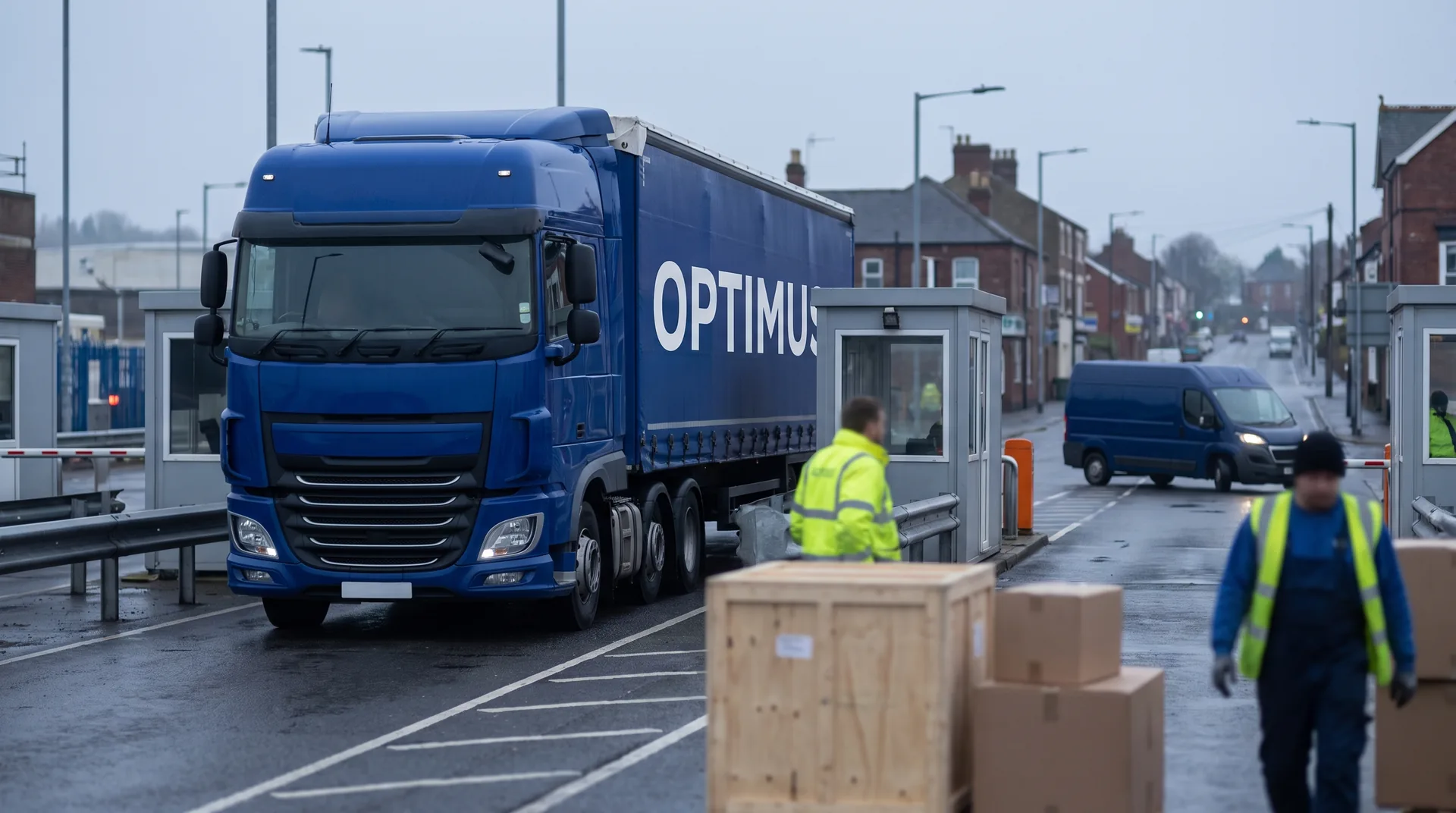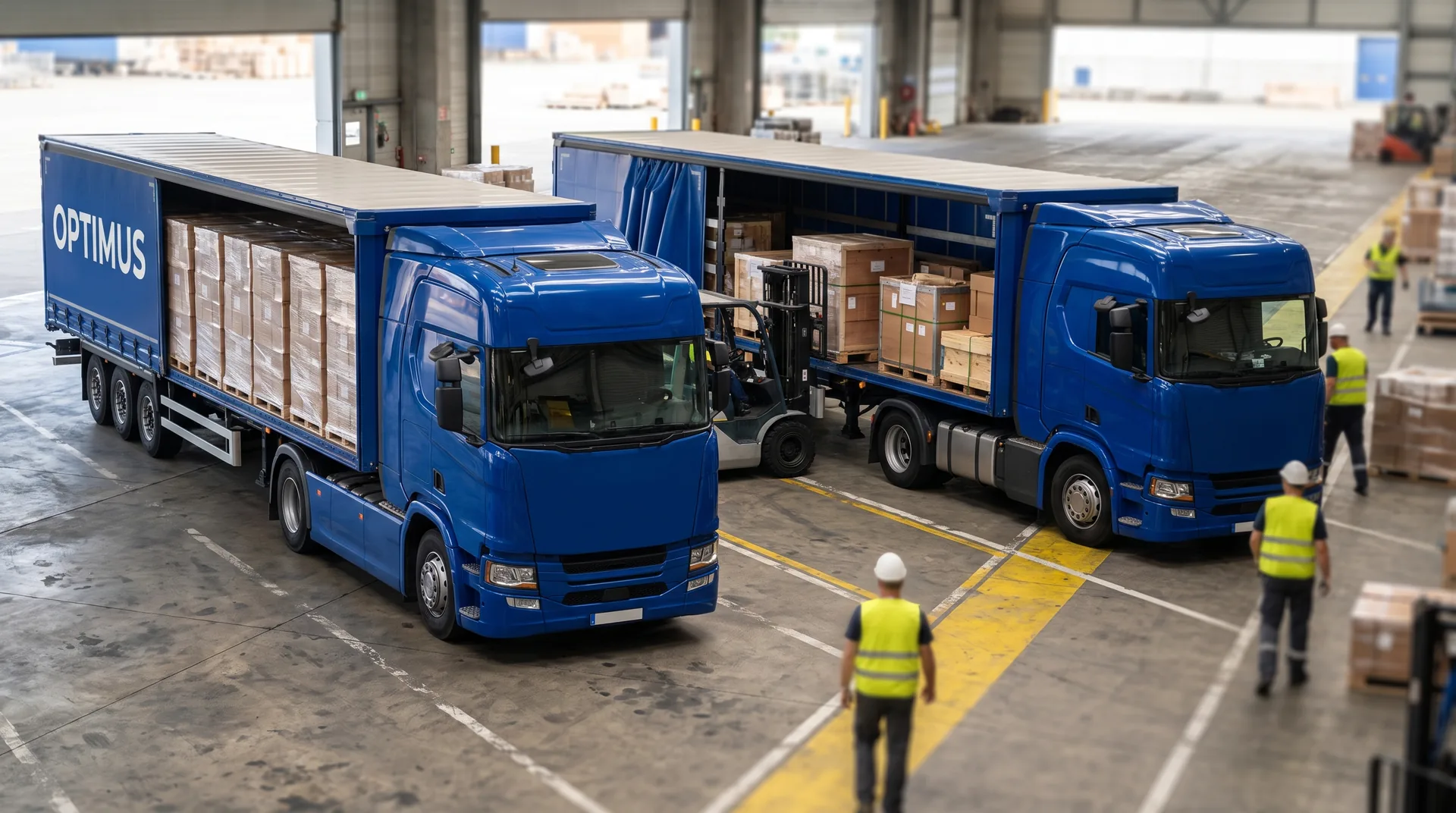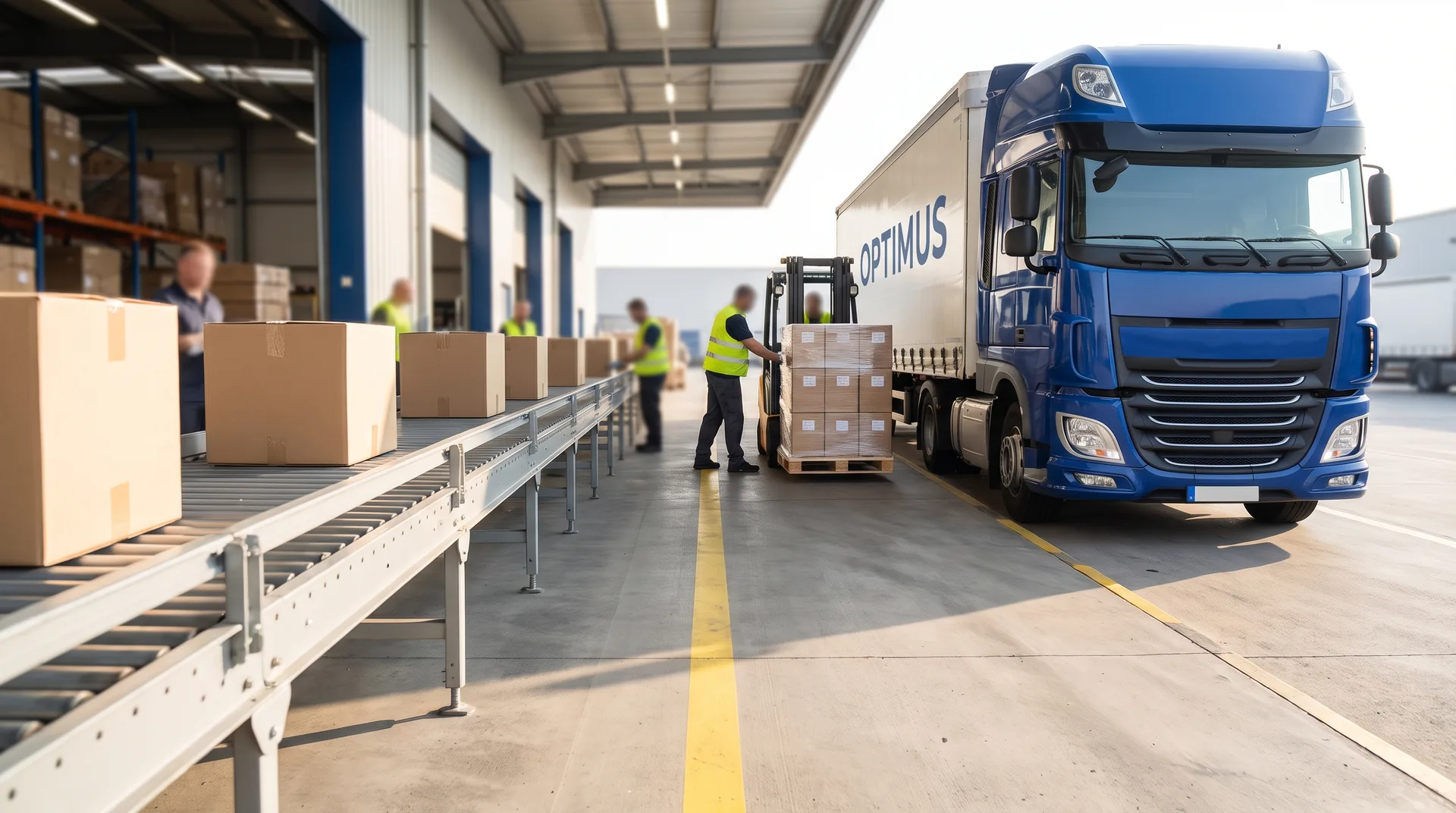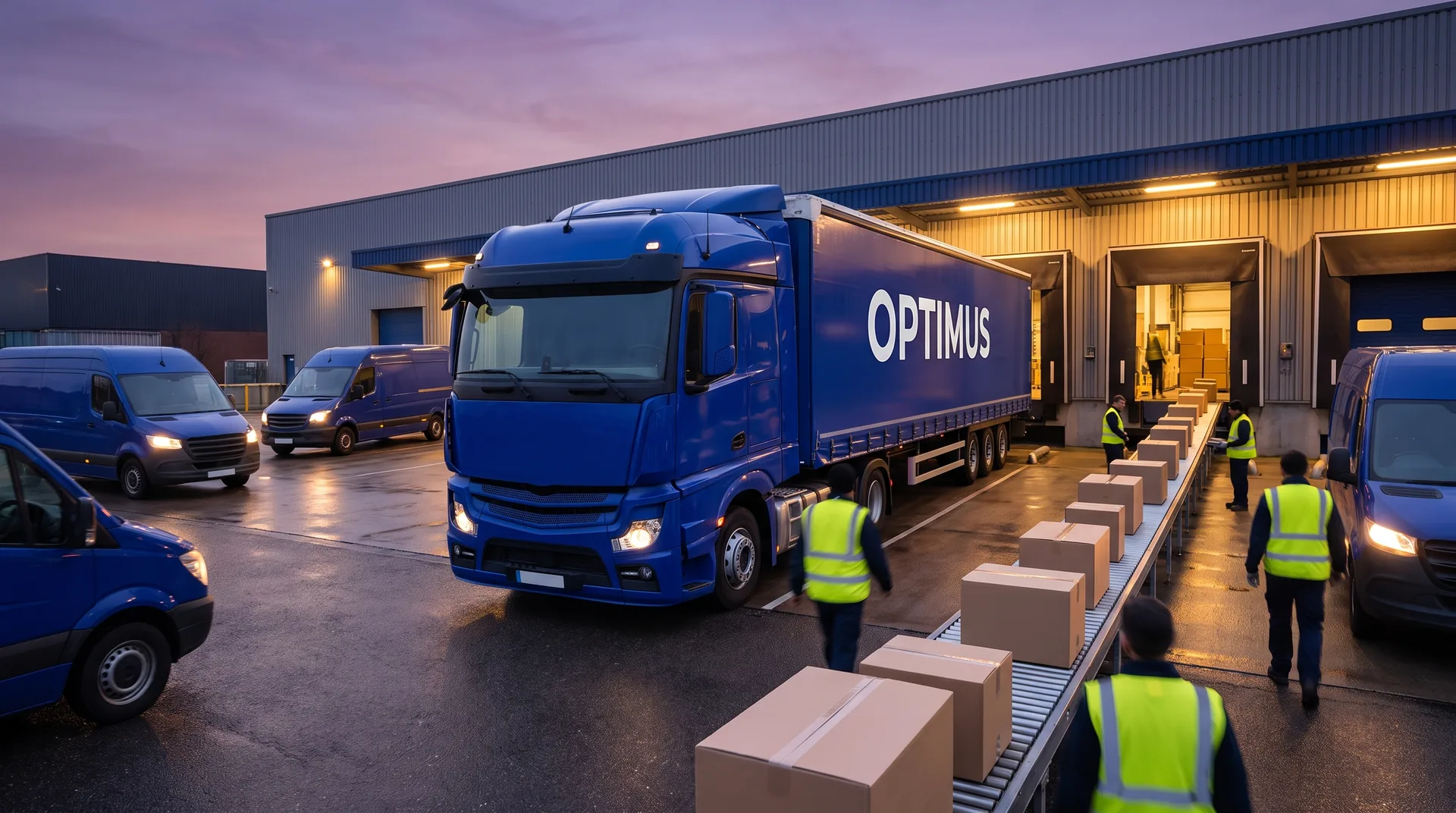
Carriage to the United Kingdom carries high fixed costs, independent of how many pallets stand in the trailer: the crossing, border formalities, driving time and the run itself. Consolidation at a Polish hub spreads them across many shippers instead of loading them onto one shipment. We confirm the terms for your route at quoting.
What really costs money on a UK run?
Not kilometres but events. On the route from Central Europe to the United Kingdom the largest part of the cost comes from items identical for a full and an empty trailer: the booked crossing, border handling on both sides, customs declarations, driving time across the whole route and the run of the vehicle combination. A shipper of one pallet arranging direct dispatch pays for that whole set alone. The shipper of the same pallet in a groupage vehicle shares it with the others. That is the entire secret, and there is no pricing magic in it.
Why the detour through Poland is often shorter than it looks
Because what counts is not route length on the map but the number of transhipments and the wait for a departure. A shipment from Czechia, Slovakia, Hungary or Austria handed into a local groupage system usually passes through several terminals, each adding a day and one more handling. In the Polish hub model the cargo reaches one point and travels on to the UK with no intermediate terminals. Cargo moved fewer times means lower damage risk and a shorter journey in terms of dates, even when the odometer says otherwise. We describe the same mechanism per direction in the articles on LTL from Austria via the Polish hub and on groupage from Lithuania, Latvia and Estonia.
Flow density, or why regularity beats opportunism
A carrier running to the UK irregularly has to price into every trip the risk of not filling the vehicle and not finding a return load. A carrier with a dense, repeatable flow barely carries that risk, because successive departures complete each other. Regularity is therefore not only a convenience for shippers but a real cost factor. That is why a fixed schedule, described in the article on groupage LTL with regular departures, is the foundation of this model rather than a marketing extra.
Return loads: the other side of the same account
A vehicle that brought goods to the United Kingdom has to come back. If it returns empty, someone still pays for the return - usually the shipper on the outbound leg. If it returns loaded, the account splits across two directions. That is why the import direction from the UK to Central Europe is not an add-on for us but part of the same puzzle; we describe it in import from the UK to Czechia, Slovakia, Austria and Hungary. A shipper who both sends and receives on the same route should mention both streams at once, because two separate orders usually make one loop.
What else leaves the shipper account under consolidation
- One point of handling instead of negotiating with a local carrier, a terminal and a sea leg operator.
- Shared document preparation for the whole vehicle instead of a separate procedure per shipment.
- Cargo handling at the hub where it is needed: palletisation, repacking, replacing a damaged carrier - with no separate service to arrange.
- One responsibility for the whole route instead of a chain of subcontractors in which a claim travels from company to company.
When consolidation via the hub is not the best choice
- The deadline is very tight - express transport running without transhipment often makes more sense.
- The consignment is large - close to a full vehicle the benefit of sharing disappears and full truckload carriage becomes the sensible answer; the comparison is in FTL or LTL.
- The cargo is highly unusual - a shipment that cannot be stowed beside others blocks space and loses the cost advantage of groupage.
- The goods do not tolerate transhipment - with exceptionally delicate cargo every extra lift is a risk to weigh.
Which directions suit this model best
Those whose road to the UK runs through Poland or near it anyway: Czechia, Slovakia, Hungary, Austria and eastern Germany, plus the northern direction of Finland and Scandinavia, where the Baltic leg forces advance planning in any case. Details per market are gathered in the articles on consolidation from Czechia, Slovakia, Austria and Hungary, on consolidation from eastern Germany, on Finland to the UK by road and on Sweden and Denmark to the UK.
How to check whether it pays in your case
The simplest way is to compare two things for the same shipment: cost and date under direct dispatch, and cost and date under groupage via the hub. For that comparison we need the loading address and country, the pallet count with dimensions and weights, the delivery postcode in the United Kingdom and the readiness date. We give the answer plainly, including when it goes against consolidation - a client advised honestly once tends to stay for years.
Want to check whether consolidation via the Polish hub lowers the cost of your shipment? Send the details through the quote form and we will compare the options. The whole model is described on the consolidation via Poland page.