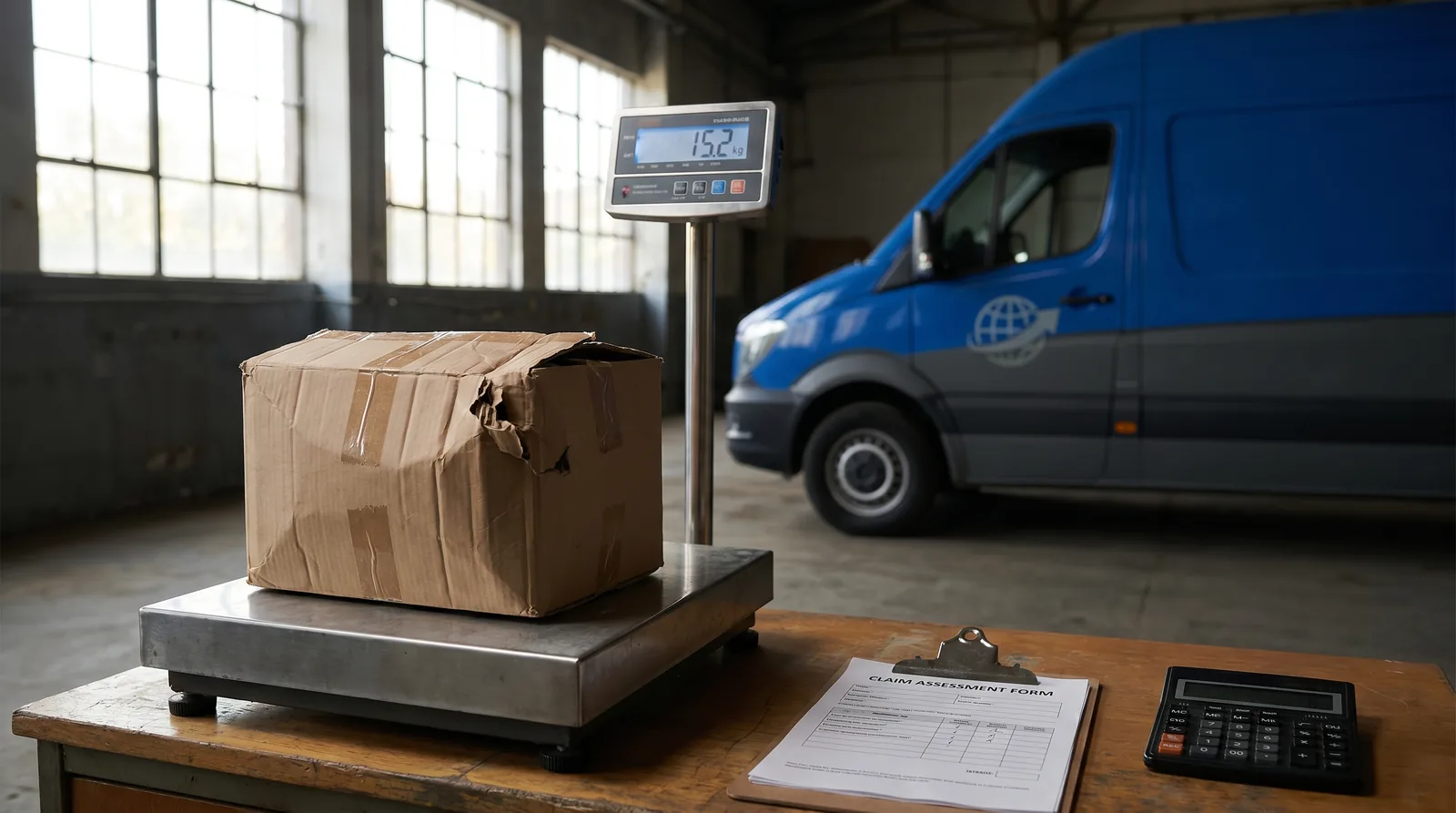
The CMR Convention caps compensation for loss of or shortage in goods at 8.33 SDR per kilogram of gross weight short. Beyond compensation the carrier refunds the carriage charges, customs duties and other charges incurred in respect of the carriage. The cap can be raised by declaring value, and it falls away in cases of wilful misconduct or equivalent default.
What the limit means in practice
Compensation does not follow the value of the goods, it follows their weight. A pallet weighing 400 kilograms gives a limit of 400 times 8.33 SDR, whether it carries cement or electronics. For heavy, inexpensive goods the limit usually covers the loss comfortably. For light, expensive goods, say electronics, cosmetics, pharmaceuticals or branded clothing, the gap between the limit and the invoice value can be several times over. That is the only reason cargo insurance keeps coming up in conversations with senders. We break it down in our text on cargo insurance.
What else the carrier refunds beyond compensation
The Convention provides that in addition to compensation for the goods the carrier refunds the carriage charges, customs duties and other charges incurred in respect of the carriage: in full in the case of total loss and in proportion in the case of partial loss. This is often left out of calculations, yet it forms a real part of a claim, particularly where duties were high. Other losses, notably lost profit and contractual penalties imposed by the buyer, are not provided for.
Damage is settled differently from shortage
Where goods are damaged the carrier is liable for the amount by which the goods have diminished in value, calculated by reference to their value at the place and time of acceptance for carriage. That compensation may not exceed what would be payable on total loss of the consignment, or of the damaged part of it. The practical consequence: with damage you have to show how much value was lost, not simply produce an invoice. Solid damage documentation and inspection therefore feed directly into the outcome. How we run it is described in our texts on the inspection report and on inspection after trailer tampering.
When the limit stops applying
There are two ways past the limit. The first is a declaration of the value of the goods, or of a special interest in delivery, entered on the consignment note against a surcharge agreed with the carrier. That is a contractual, deliberate and paid-for arrangement, not an automatic one. The second is where the damage results from the carrier's wilful misconduct, or from default which under the law of the court seised is considered equivalent to wilful misconduct. The carrier then cannot rely on the provisions excluding or limiting liability. An ordinary operational error does not cross that threshold; what is required is a qualified breach.
Delay is a separate category
The Convention treats delay under its own regime: compensation is due only where the claimant proves that loss resulted from the delay, and it is capped at the carriage charges. That matters, because in practice delay disputes are often run as though the full commercial loss were recoverable. Separate deadlines also apply to notifying delay claims. Circumstances excluding liability, including events the carrier could not avoid, are covered in our text on force majeure under CMR.
The deadlines that decide a claim
Loss or damage apparent at delivery is notified to the carrier at the moment of taking delivery, with a reservation on the consignment note. Damage not apparent requires written reservation within seven days of delivery, Sundays and public holidays excluded. Delay claims require written reservation within twenty-one days of the goods being placed at the consignee's disposal. Actions arising out of carriage are as a rule time-barred after one year, and after three years in cases of wilful misconduct or equivalent default. Notification practice is covered in our text on the claim and damage report, and the full text sits on our CMR Convention page.
How to use this when planning a shipment
Work out the value per kilogram of your load. If it comes out clearly above the Convention limit, you have your answer on whether you need additional cover. If it comes out below, the subject closes itself. It also pays to keep clean documentation at loading: packing list, pallet photographs, actual weight. That material works in your favour when a claim arises. This text is general and is not legal advice.
Sources
Carrying goods where the Convention limit will not cover the value? Describe the goods and weight through the quote form and we will arrange the carriage and show where carrier liability ends. More on route risks on the transport risks page.