We move electronics and domestic appliances to the United Kingdom as groupage and as full loads, focusing on three things: rigid packing with no stacking where that matters, a dry chain free of condensation, and additional cargo cover where values exceed the liability cap under the CMR convention. Customs on both sides is handled within the job.
Packaging: the box is part of the product
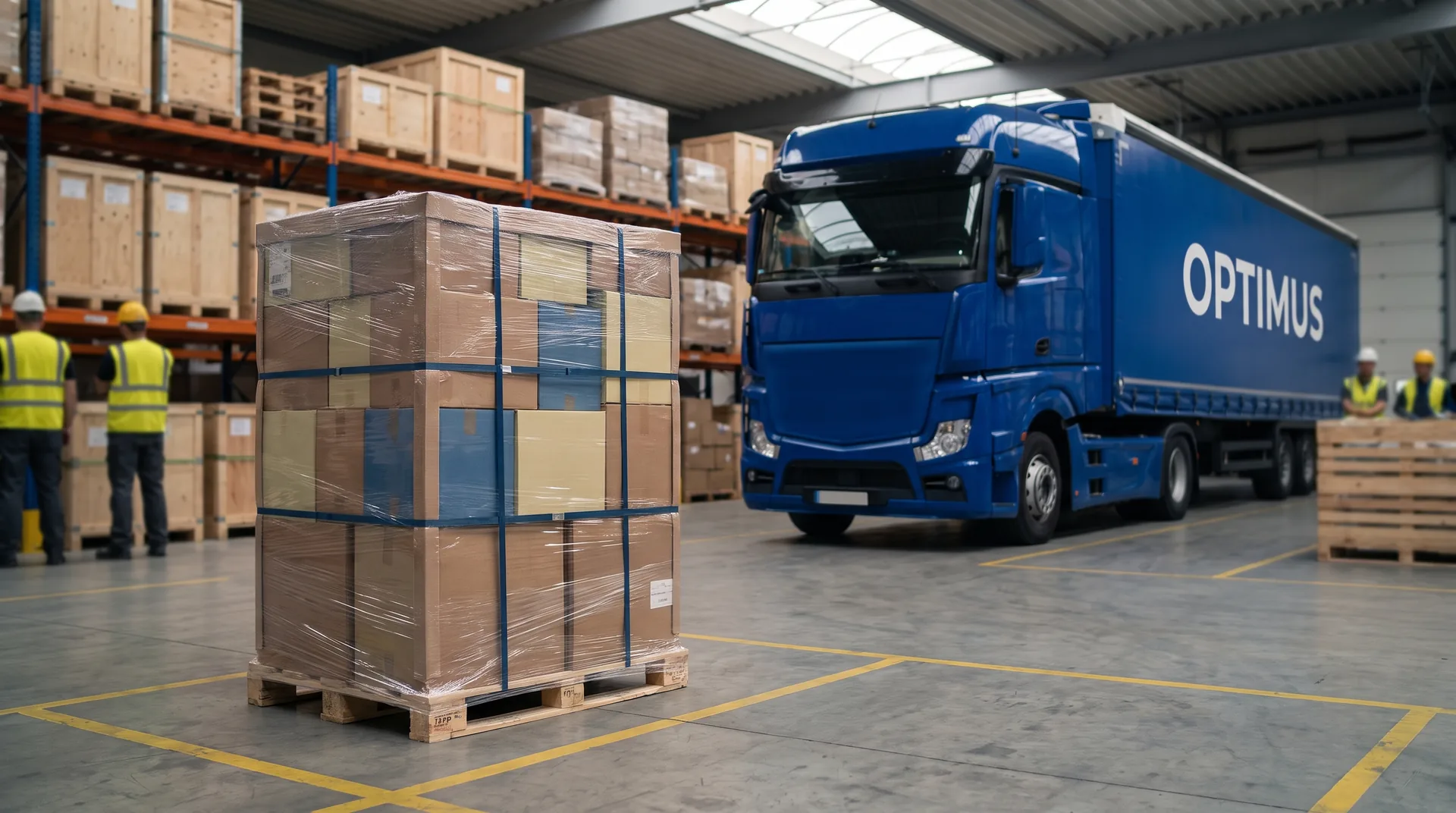
In this trade the retail carton sells the goods. A television in a scuffed box gets rejected by a retailer even when the set itself works perfectly. So we watch the basics: no overhang, corner protection and layer boards under heavy items, film applied evenly and densely, and for screen products an orientation mark and a no-stacking instruction. Large appliances travel best in factory cages or on the manufacturer own pallets. How to prepare a pallet is collected in how to secure a pallet for export.
Damp and temperature: the quiet cause of claims
The biggest invisible threat to electronics is condensation: goods move from a warm warehouse into a cold trailer and then back into a warm room. Moisture condenses inside the outer packaging and only shows up at the receiver. On winter runs we recommend desiccant sachets in outer cases and keeping handling to a minimum. Our route pattern allows electronics to travel without transhipment from hub to delivery, and our own warehouse in Milton Keynes acts as a dry buffer when a receiver cannot take the goods straight away.
Value against the liability cap
For electronics we almost always recommend cargo cover on the specific movement. The reason is arithmetic: with a pallet weighing hundreds of kilograms and worth tens of thousands, the convention cap will not cover even half the loss. When the cap is enough and when it is not is set out with figures in when to add cargo insurance on the UK lane, and the difference between the policy types in liability cover against cargo insurance.
Documents and clearance
- An invoice with correct tariff codes: electronics has a detailed classification and a wrong code spoils the duty rate and delays clearance.
- A packing list with carton numbers, which speeds up inspection and checking in at delivery.
- Serial numbers for high-value equipment, which make claims for shortages far easier to pursue.
- A declaration of conformity and correct product marking, covered in UKCA or CE marking.
Batteries: a separate category with separate rules
Equipment with lithium batteries, which covers much of consumer electronics, falls under dangerous goods rules. What matters is whether the battery travels loose, installed in the equipment or packed with it, because that drives marking and documentation. We set it out in shipping lithium batteries to the UK. We raise it before accepting a job, because it affects vehicle choice and whether consolidation is possible.
Theft risk and security en route
Electronics is a high theft-risk commodity. So on these loads we avoid stopping in unsuitable places, plan routes around secured parking and do not advertise the contents on the outside of the packaging. The risk of subcontracting to unvetted operators is covered in the fake carrier from a freight exchange. We run our own fleet, which on this category is a practical point rather than a marketing one.
How we carry it
Single pallets travel as groupage on our regular departures to the islands; larger consignments go on a dedicated vehicle without transhipment. Deliveries into retail bring booking windows and labelling requirements, described in delivering into a retail distribution centre. The wider category view is on our electronics page.
Returns and damaged equipment
In electronics and appliances returns are part of the sales model rather than an exception. A consumer sends a product back, a retailer returns a batch with incomplete paperwork, and the seller is left with stock that cannot simply go straight back on sale. The key point is that a return should not head immediately for Poland but go first to one place where it can be examined: completeness checked, packaging condition assessed, resaleable units separated from those needing repair or disposal. Only after that triage does a decision on return transport make sense, because hauling goods across Europe that will be scrapped anyway is pure cost. We provide that handling at our warehouse in Milton Keynes, with photographic documentation. The routes for returns are described in reverse logistics in the UK and in unsold stock in the UK.
Sources
Shipping electronics or appliances to the islands? Describe the goods, the value and the packing in our quote form and we will advise on protection, price the movement and set out a cover option.