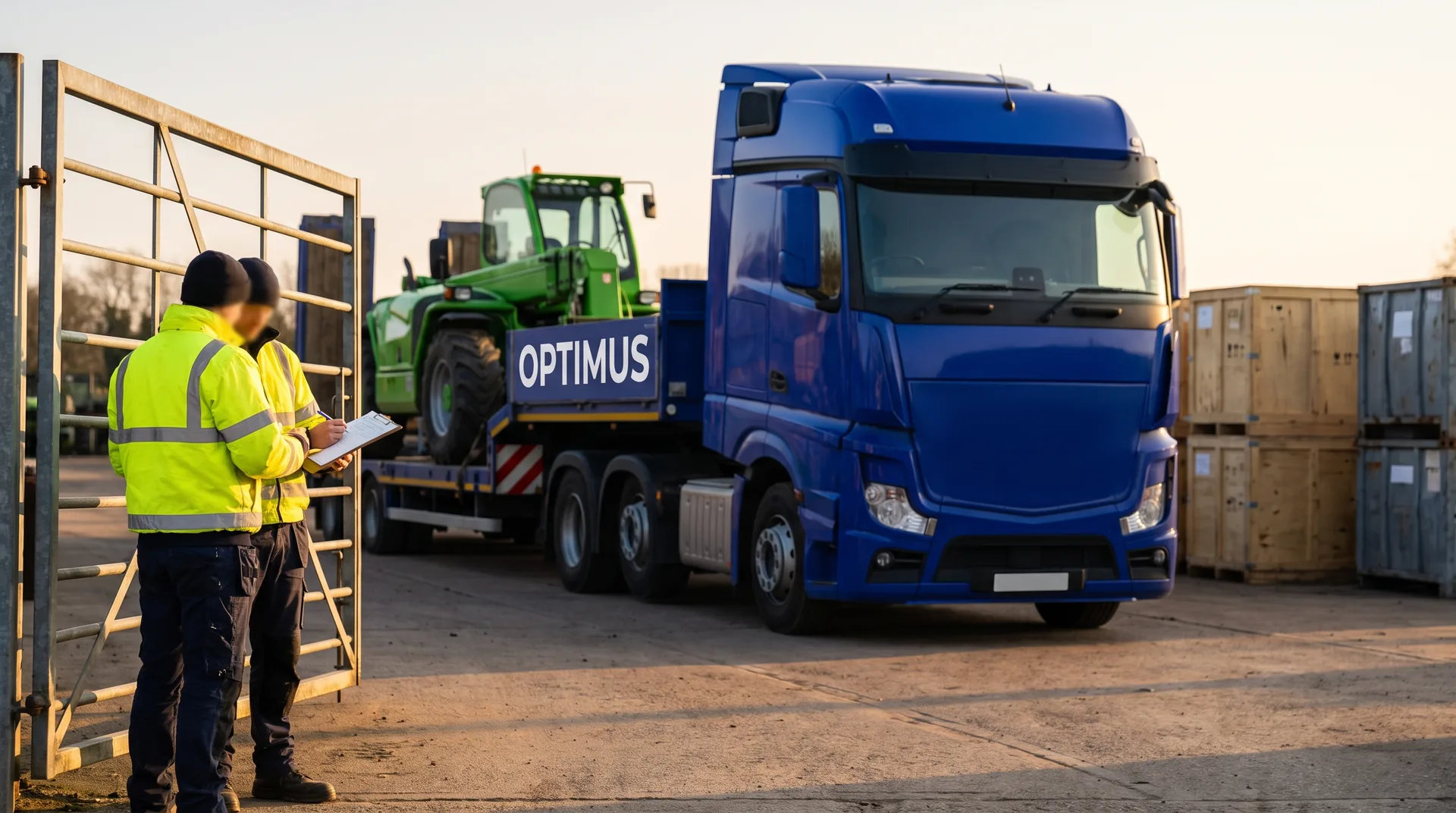
Importing from the United Kingdom to Poland mirrors the export flow: the British sender files an export declaration, and on the EU side an import declaration is filed with a commodity code, a customs value and proof of origin where zero duty is claimed. Safety data and import VAT follow. We carry loads both ways, so vehicles do not run back empty.
Who declares, and where clearance happens
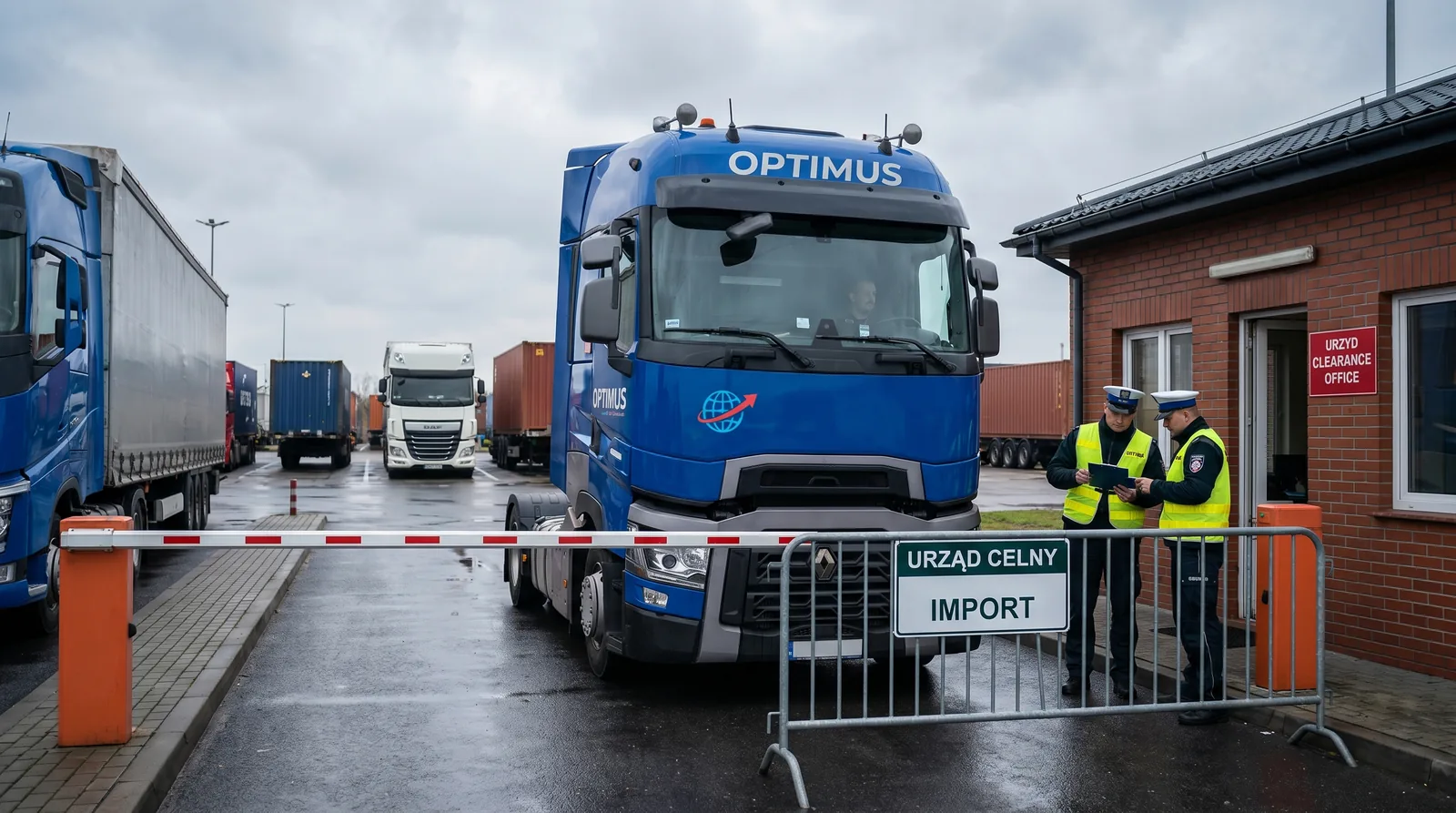
On the British side the sender is responsible for the export declaration and for making sure the goods may leave. On the EU side the import declaration is filed by the importer or by a customs agent acting for them. Where import clearance happens depends on the procedure: goods can be released for free circulation on entry into the EU, or travel under transit to an office in Poland, which is often more convenient for a single consignee. Transit is covered in our texts on the T1 procedure and on transit documents.
The document set on the EU side
- The importer's EU EORI number, active and assigned to the right entity.
- A commercial invoice with description, quantities, values and currency.
- A packing list with gross and net weights and package counts.
- A commodity code for every line, set by the nature and function of the goods.
- The customs value, including any elements added to the price.
- Proof of origin where tariff preference is claimed.
- Sector documents: certificates, approvals, health documents for controlled goods.
Zero duty is not automatic
The Trade and Cooperation Agreement between the EU and the United Kingdom provides zero duty, but only for goods meeting the rules of origin. Goods made in Asia, brought into the United Kingdom and resold to Poland do not become British goods, so on import into the EU they may attract duty at the standard rate. The statement on origin must use the correct wording, and the British exporter must hold evidence supporting it. The rules are broken down in our text on rules of origin under the TCA and in the article on the certificate of origin.
Import VAT and how it is settled
Releasing goods for free circulation in Poland triggers import VAT. Depending on the importer's status and the chosen procedure, the tax is paid at clearance or accounted for in the VAT return. A separate route, used where goods are imported for onward supply to another EU member state, defers the tax, described in our text on the customs procedure 42. The documentary practice on imports from the UK is set out in our article on VAT and duty on imports from the UK.
Safety data and the operational side of the border
Movements from the United Kingdom into the EU require safety data on the EU side, filed in the import control system. A missing declaration or a vague goods description is the simplest way to have a vehicle stopped and a delivery extended by many hours. The mechanics are described in our text on ICS2 and safety declarations. On the British side the vehicle needs its exit set, including a GMR, covered in our article on the GVMS.
What we bring back most often
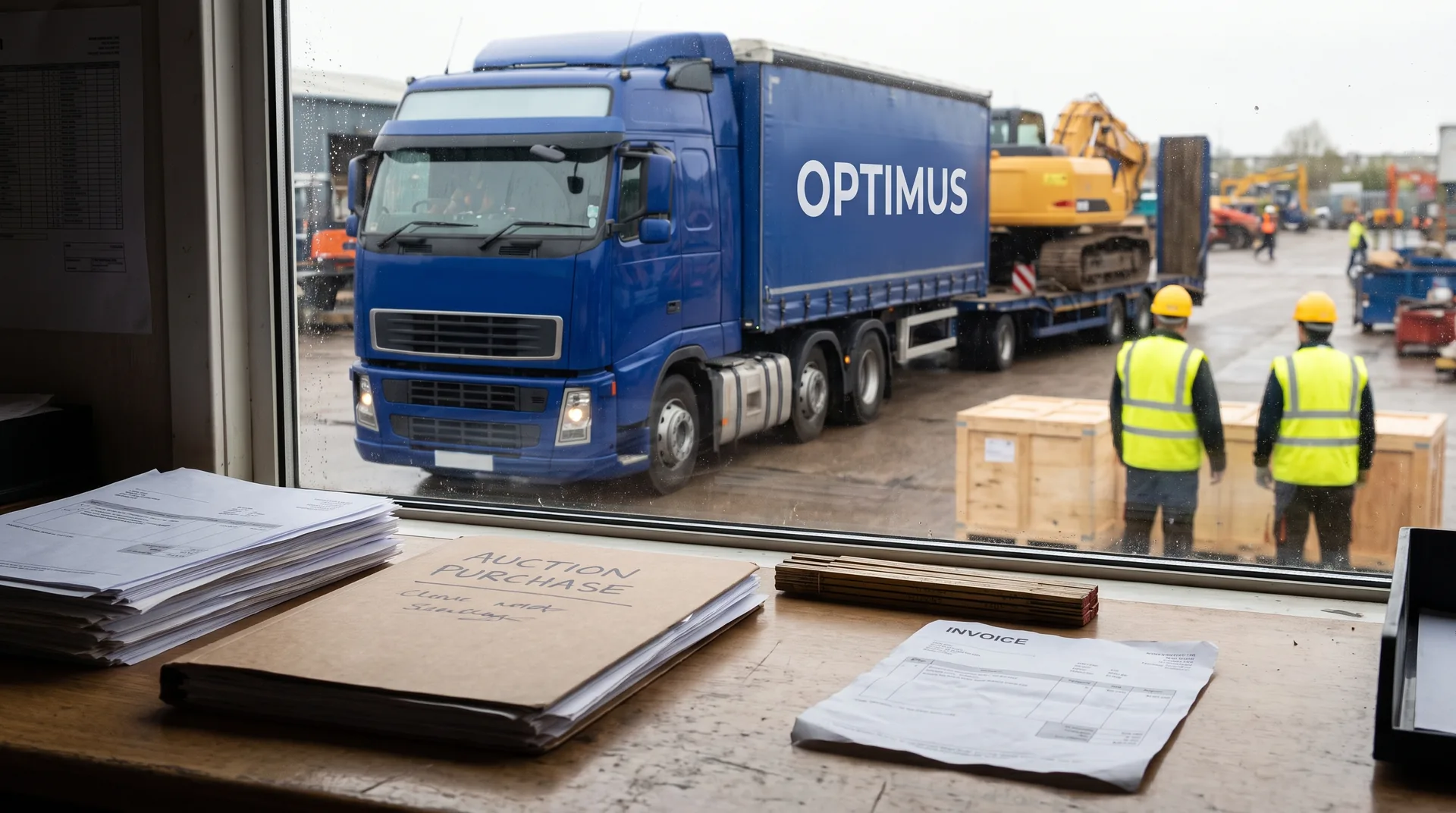
The return direction is a real market, not an afterthought to exports. We bring industrial components and sub-assemblies from British manufacturers, used machinery and equipment bought at auction and from dealers, trade goods for Polish distributors, returns and goods under complaint from UK warehouses, and exhibits and equipment coming back from trade fairs. Importing used machinery has its own documentary profile, covered in our text on importing used machinery from the UK, and returns logistics in the article on returns of goods from the UK to the EU.
How we organise the return leg
The vehicle that brought a load from Poland can take goods on the way back, which shortens waiting and tidies up costs in both directions. We collect from across the United Kingdom, including single addresses, and for smaller volumes we consolidate through our warehouse in Milton Keynes and ship together. For senders in Czechia, Slovakia, Austria and Hungary we run onward distribution through Poland, covered in our text on imports from the UK to CZ, SK, AT and HU. Collection mechanics are described in the article on collection from the UK.
What to prepare before your first import
Before you book transport, make sure you have an active EORI number, a settled commodity code, clarity on delivery terms and a full data set from the British seller: invoice, packing list, origin information. Establish who acts as importer, because that decides responsibility for the declaration. The rest, the declarations and the carriage, we run together so documents and vehicle move to the same rhythm.
Sources
- European Commission: duty, tariff and import procedures
- GOV.UK: exporting goods from the United Kingdom
- Polish Ministry of Finance: customs information
Buying goods in the United Kingdom? Send the shipment details through the quote form and we will arrange collection, carriage and clearance. Formalities are on the customs clearance page, and the route on transport to the United Kingdom.