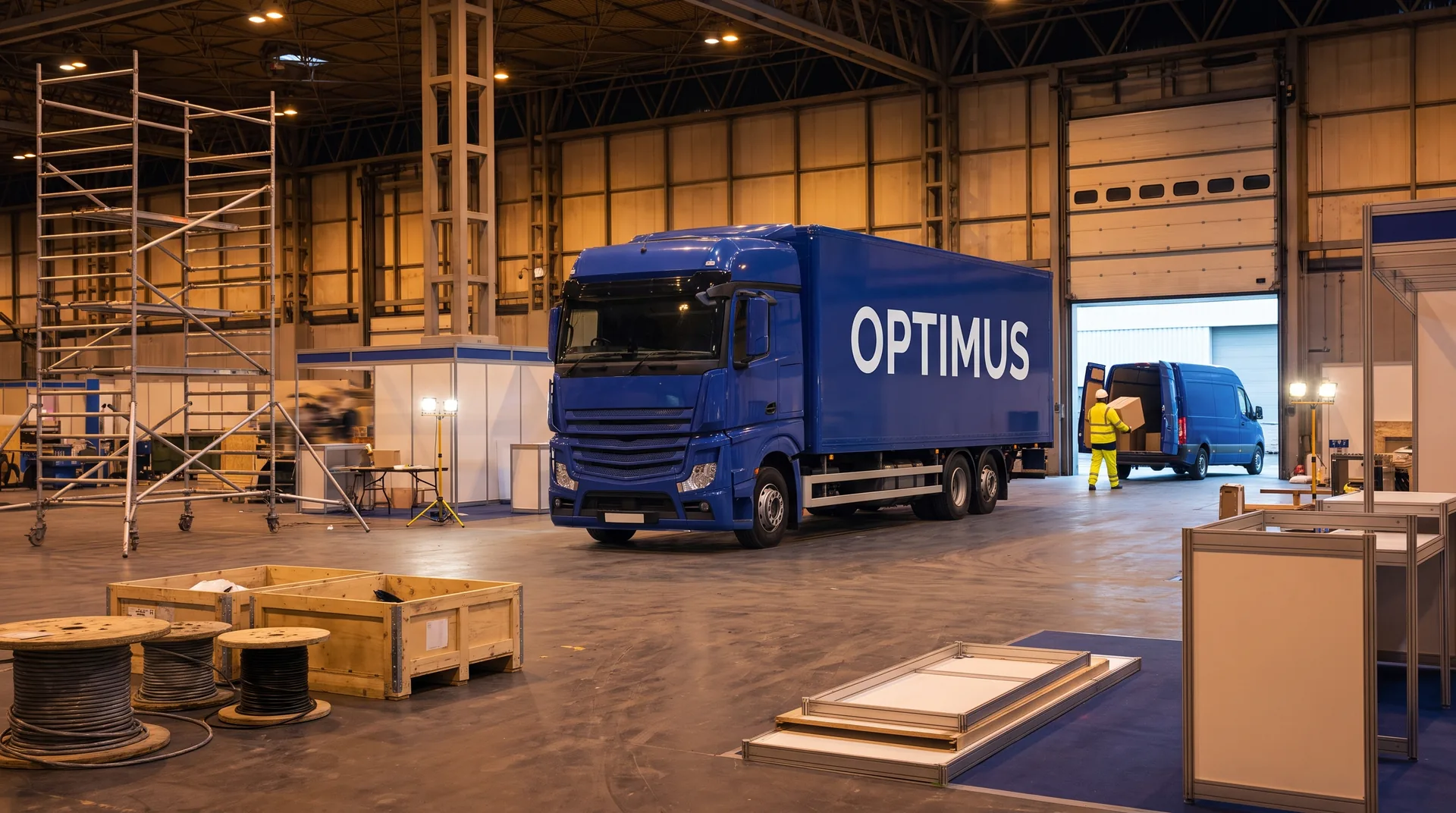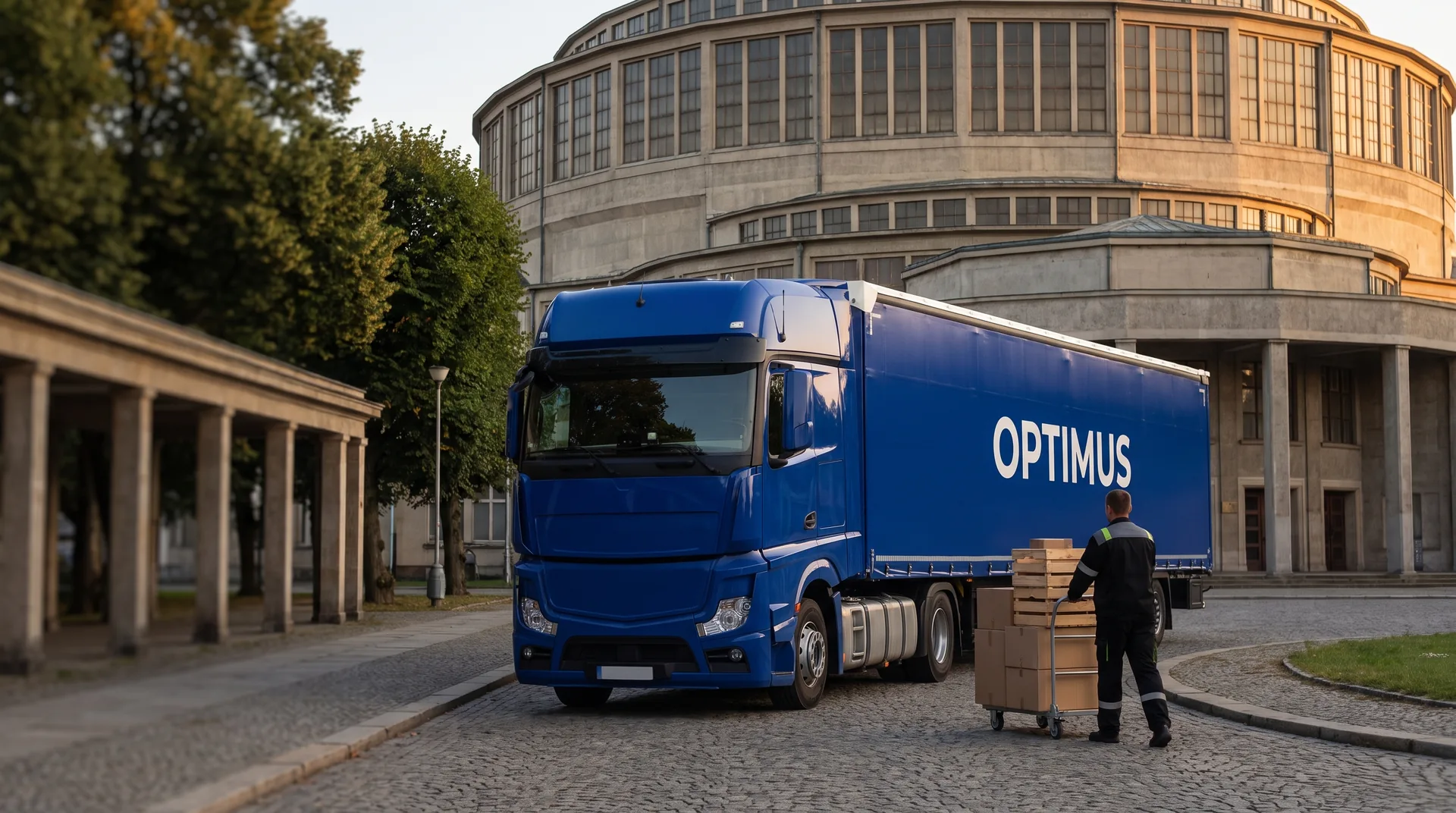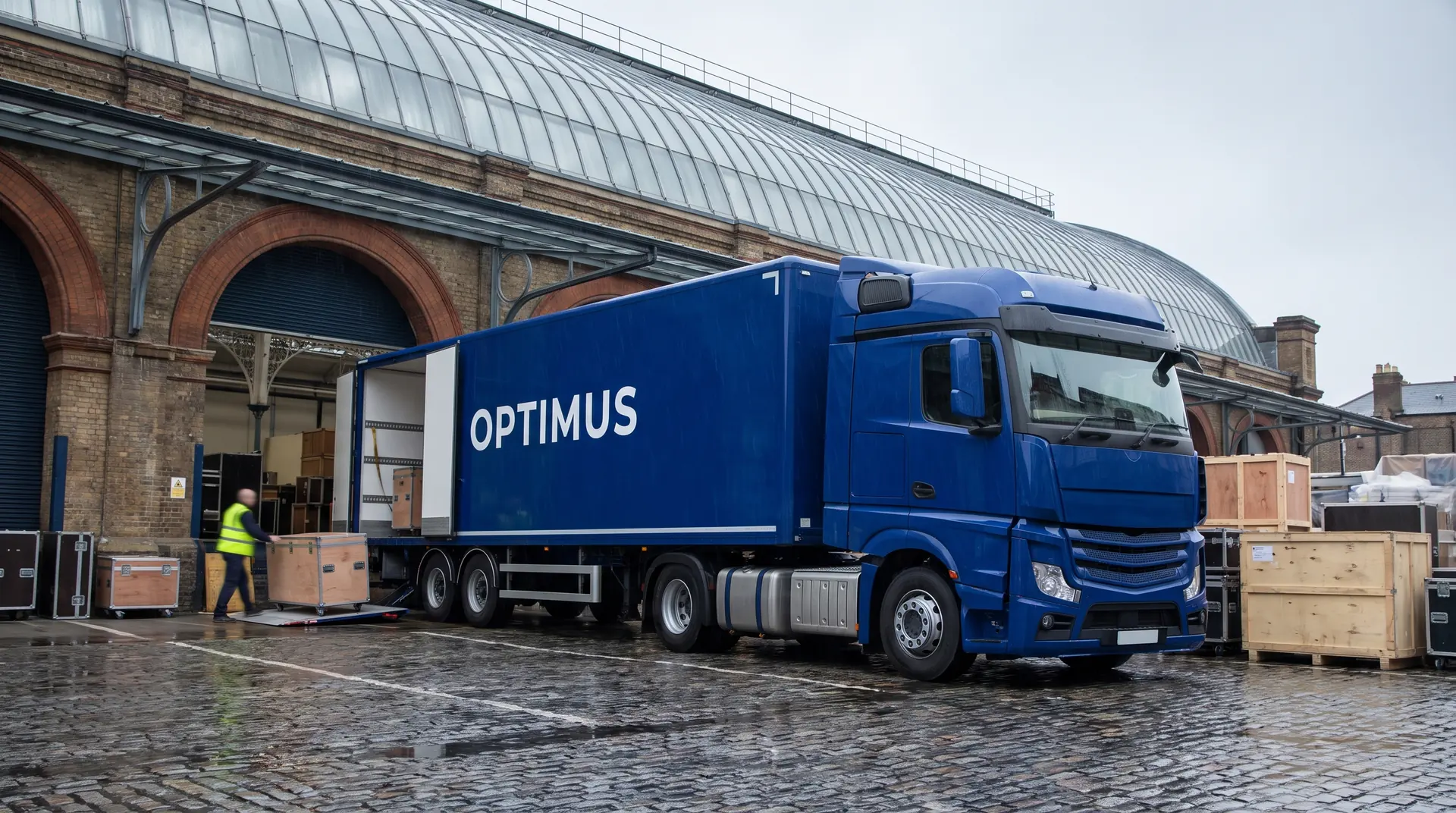
Olympia stands on Hammersmith Road in west London, and goods vehicles enter the site from Blythe Road, approached from the Hammersmith direction. The main difference from an out-of-town venue is not the streets, though, but the procedure: every vehicle must have a slot booked in advance in the venue booking system, and the vehicle type and registration must match the booking, or it will not be admitted. We carry stands and exhibits here from Poland.
A venue mid-redevelopment: what that changes
Olympia has for several years been undergoing an extensive redevelopment of the whole block, run by investors who announced a refinancing of the project in 2026. When complete, the site is to hold hotels, a theatre, a music venue and a hospitality quarter alongside the exhibition halls. The venue brand has been simplified to Olympia alone, and its web address moved to a domain under that name.
For an exhibitor and a carrier this means three things. First, materials from a few seasons back may describe an entrance and hall layout that no longer exists. Second, throughout this period the site remains a construction area adjoining working halls, so internal access routes can change between events. Third, the exhibition halls trade normally: the venue offers, among others, the Grand Hall, the National Hall, two levels of the West Hall and a convention centre. We take the hall name and level from the stand confirmation, because the West Hall has a ground floor and an upper level, and those are not the same thing for unloading.
The goods entrance is Blythe Road, not Hammersmith Road
The venue directs vehicles to enter from Blythe Road, reached from Hammersmith Road, and recommends approaching from the Hammersmith direction. The venue publishes no motorway routing or junction numbers, so we will not invent any: the approach is planned from west London rather than from the centre. The venue also warns that very strict parking restrictions apply on the surrounding streets, and that the few on-site vehicle spaces need booking in advance and suit smaller vehicles rather than articulated units. The practical conclusion: a driver has nowhere to wait nearby, so he either enters within his window or waits outside London. The reverse happens too: some venues publish nothing at all about goods gates or permitted heights and settle them case by case, as at Alexandra Palace in north London.
Vehicle height and the goods entrances
The venue publishes a goods access map with site rules, setting a maximum vehicle height for the site of four metres forty. The individual goods entrances, each with its own name, have differing heights and widths, and some halls are served by goods lifts. What binds is always the figure attached to the entrance designated for your hall in the current document, not the general one. So at enquiry stage we ask for the hall name and the designated entrance before choosing a vehicle. The height limit is only half the answer, though: the other half is how the load is fed in, because an item that fits a goods lift is a different shape from one that fits a shutter. Not every London venue publishes such figures, but there are exceptions: the Business Design Centre gives the permitted heights of both its loading bays, which we cover in delivery to the Business Design Centre.
London zones: four systems at once
A vehicle heading to Olympia can be caught by four different systems simultaneously. The ULEZ covers every London borough and applies to vehicles up to three and a half tonnes plus minibuses. Heavier vehicles do not pay the ULEZ but fall under the low emission zone for heavy vehicles. On top of that comes the direct vision requirement and safety permit for vehicles over twelve tonnes, required across almost all of London around the clock. The congestion charge operates separately in the central zone. We break the detail down in the articles on UK clean air zones and on the direct vision requirement in London.
A fifth restriction few people remember
Beyond the emission zones, London runs a separate lorry control scheme covering vehicles over eighteen tonnes maximum gross weight. It restricts use of parts of the road network overnight and for most of the weekend, and travelling outside the excluded route network at those times requires a separate permission. The consequence for exhibition logistics is direct: an overnight or early-morning approach to a London venue with a heavy combination is not only a matter of the booking, but of being allowed on those roads at that hour. We plan the two together rather than one after the other.
What to settle before arrival
To the show organiser: hall name and level, stand number, the designated goods entrance, how to obtain a booking in the venue system, who supplies the forklift, and whether the stand is served from ground level or by lift. We do not quote hours or dates, because the organiser sets them separately for each edition and they change from year to year. The backwards planning method is in the article on the build-up and breakdown calendar. The venue itself and the customs path for exhibits are covered separately in the article on transport to Olympia London.
What we do at our end
We collect stands and exhibits in Poland, and from exhibitors in Czechia, Slovakia, Austria and Hungary we gather the load through our hub. The Kielce base sits about 4 km from the fairground, a few minutes away, and works around the clock. A groupage vehicle waits for the next scheduled line departure. For London it is particularly worth splitting the route into two stages: a large vehicle from Poland to our warehouse in Milton Keynes, then a final run in a vehicle matched to the entrance and to the zones, exactly within the booked window. That gives two transhipments across the route and lets us commit to an hour at the gate. At the venue we deliver to the handover point and the venue equipment takes over.
Groupage or a dedicated vehicle
The threshold runs at roughly a third of a trailer, about twelve pallets, but in London volume is rarely the only criterion. At Olympia the decisive question is more often which vehicle fits the window, the entrance and the zone at all. So a load the size of half a trailer may still travel the last leg in a smaller vehicle from the buffer, over two runs. We break that arithmetic down in the articles on choosing between FTL and groupage and on transport from Poland to London.
Sources
- Olympia: loading and unloading rules, vehicle booking and the goods access map
- Transport for London: the low emission zone for heavy vehicles
- London Councils: the London Lorry Control Scheme
Exhibiting at Olympia? Send the hall name, stand number and item list through the quotation form and we will match the vehicle to the entrance and set the delivery inside the booked window. See also the exhibition logistics page.