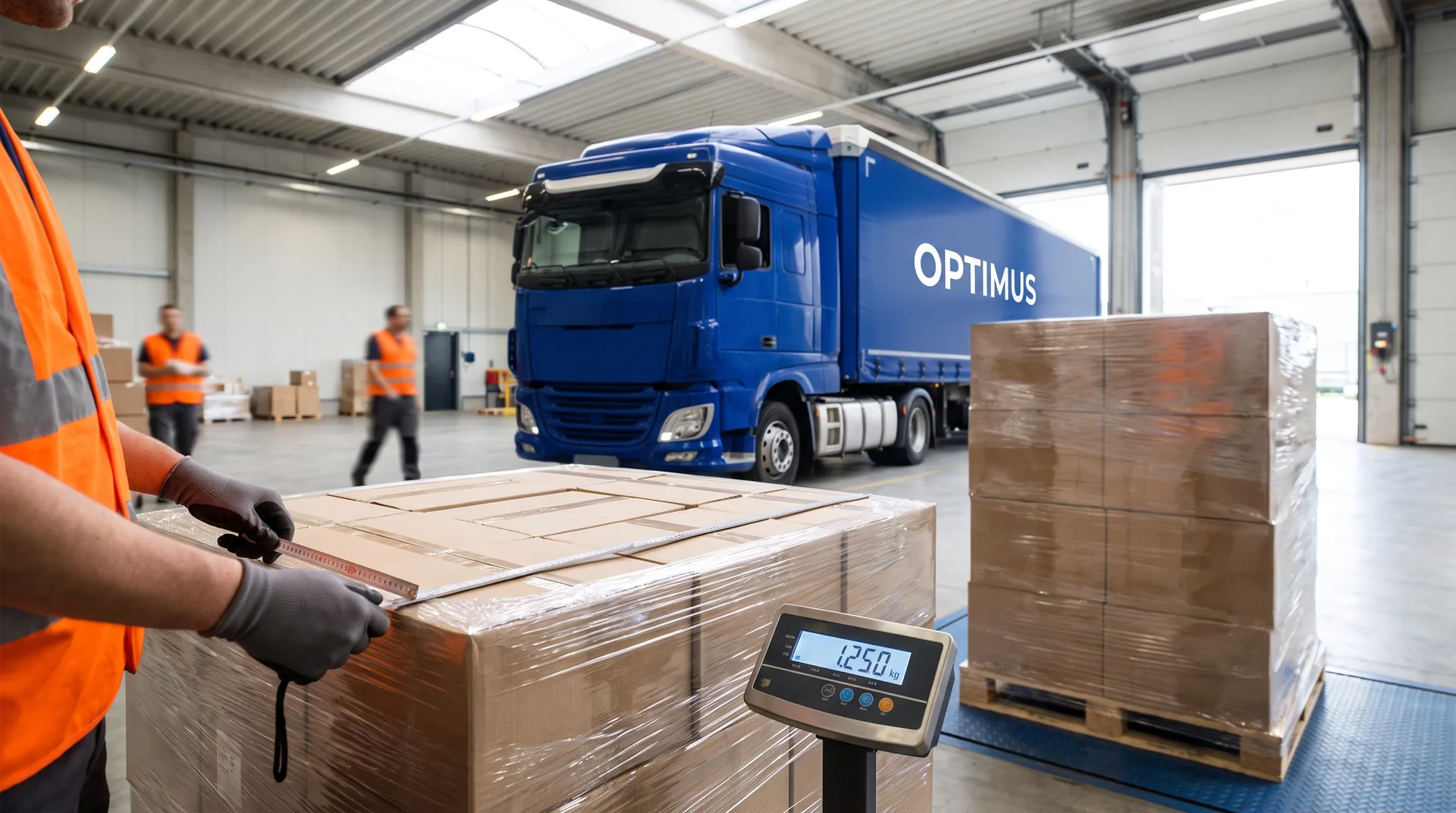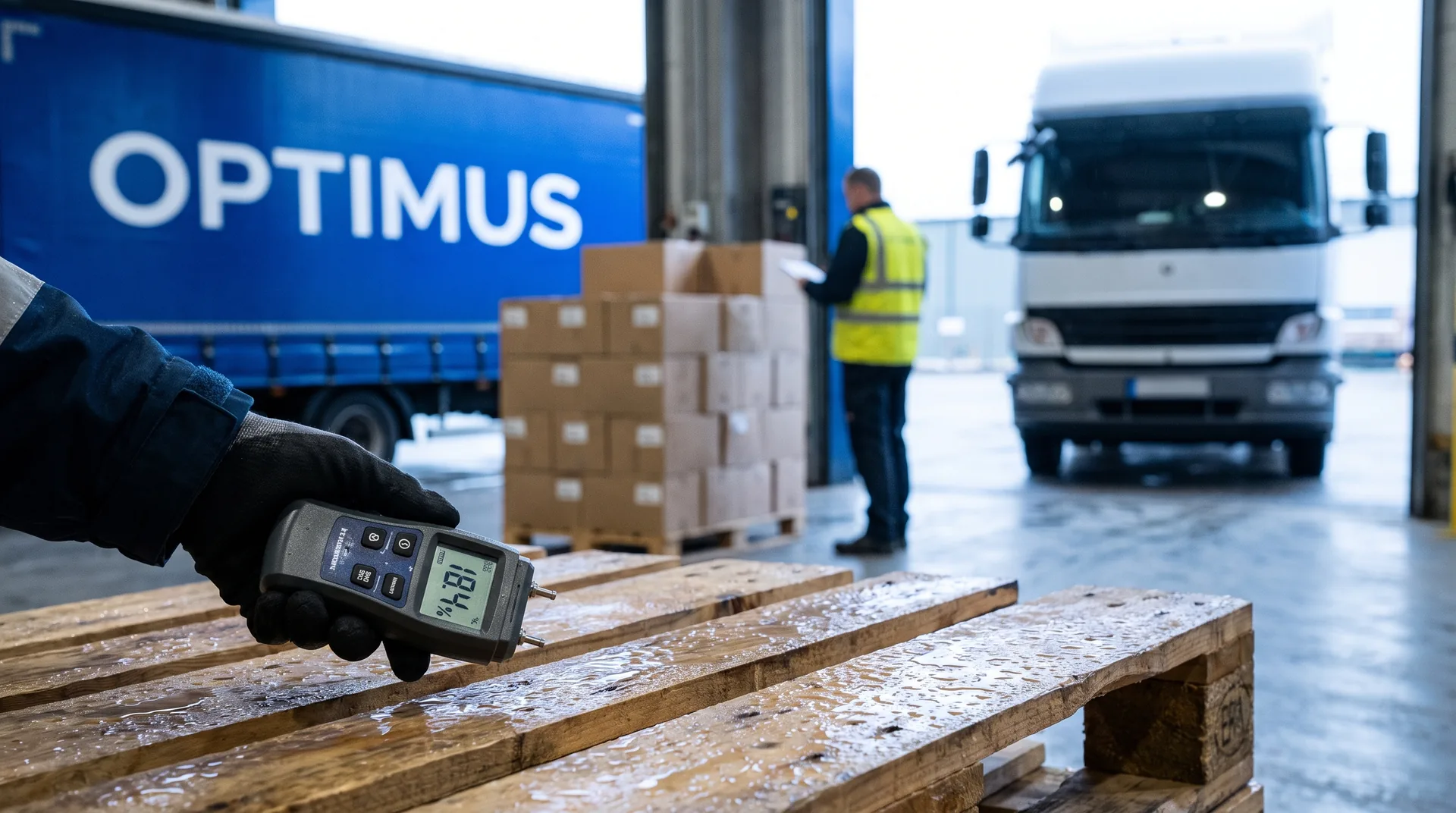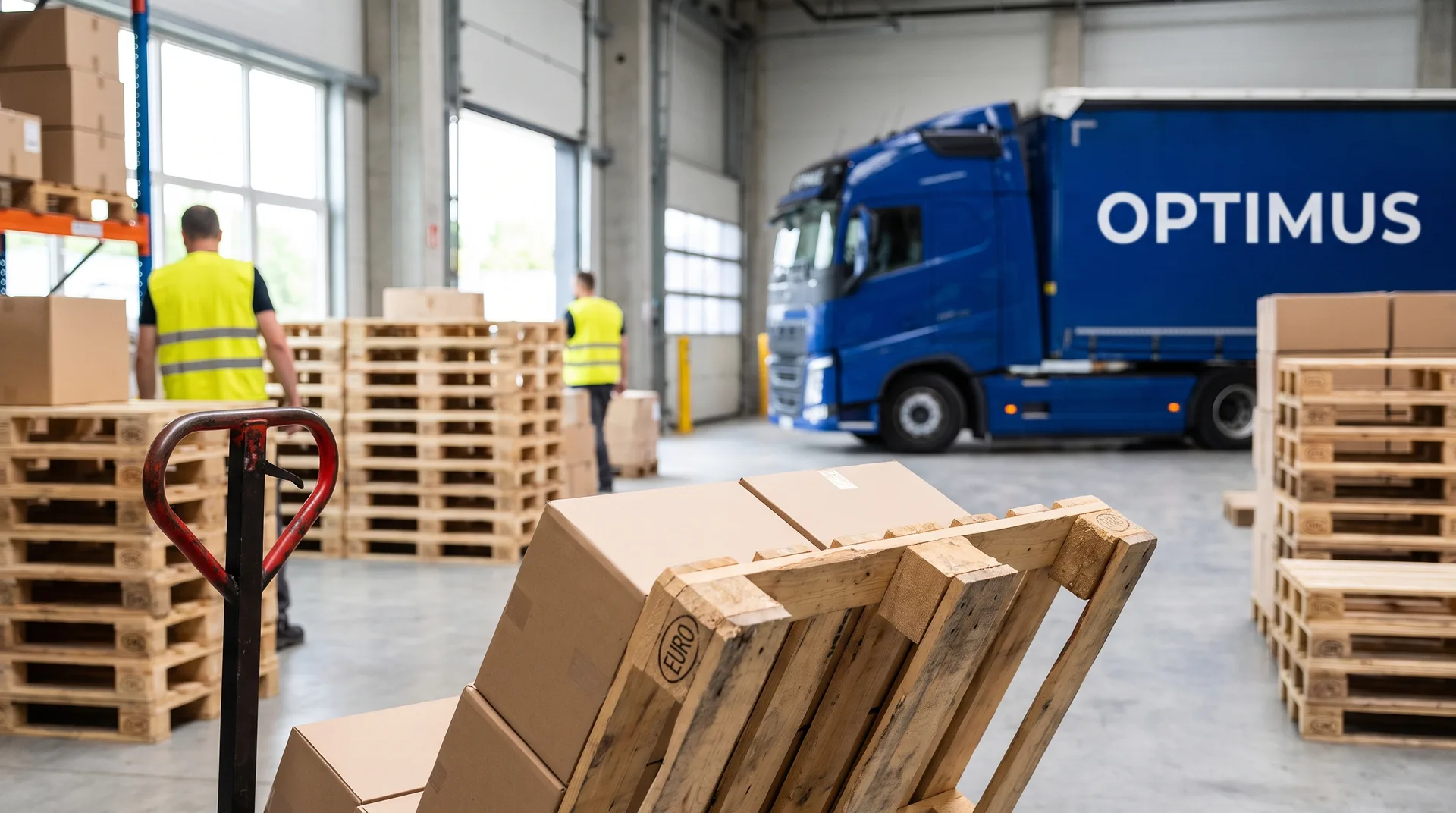
You may export a pooled pallet to the United Kingdom, but the carrier unit stays the operator's property: CHEP, LPR and IPP hire pallets out, they do not sell them. After unloading, someone has to take it onto their own account or return it to a collection point. If the British consignee has no account, the pallet stays on the Polish sender's.
How does pooling differ from the EUR/EPAL exchange loop?
A euro pallet in the exchange loop is goods: you buy it, sell it, swap it one for one at the ramp. A pooled pallet is a service. The operator marks and colours it — blue at CHEP, red at LPR — and the legal relationship is a hire agreement between the operator and the account holder. One difference, but a fundamental one: a pooled pallet must not be swapped at the ramp, because it is not yours, and an EPAL handed over in return closes nobody's balance with the operator. Do it and you have two problems: no return in the operator's system and unbacked surplus EPAL.
The second difference is quality. A pooled unit goes back to a depot, gets sorted and repaired, so what enters circulation has a repeatable condition. In the exchange loop you argue about pallet grade at every unloading, as covered in our piece on EPAL pallets, dimensions and exchange. Repeatability has real operational value: pooled pallets crack in racking less often and come back less often as units for repair.
What happens to a pooled pallet after unloading in England?
Three scenarios, in order of likelihood. First: the consignee has an account with the same operator, accepts the transfer, and the balance closes — that is how a delivery works into a large retail distribution centre that handles pooled units daily anyway. Second: the consignee has no account, but there is an operator collection point nearby and the units can be dropped there — which takes a booking and somebody to physically drive them over. Third, and the most common in groupage: the pallet stays with the consignee and nobody ever declares it. The unit then remains on the sender's account and the operator charges according to its own tariff, up to a non-return fee.
CHEP describes the mechanism plainly: a pallet stays on the user's account until a transfer is declared and accepted by the next party in the chain. Which means handing goods to a carrier closes nothing. The carrier is not a pool participant and cannot take the unit onto itself — we move the pallet, but we do not buy it and we do not inherit its accounting.
Who actually settles the carrier unit?
A pooling agreement has two sides: the operator and the account holder. The carrier sits outside it. In practice that means one thing — the sender who releases goods on a pooled pallet remains answerable for where it ends up, unless they arrange the transfer on the British side themselves. So before a first shipment to a new consignee we always ask one question: does the consignee hold an account with the operator and will they accept the transfer. The answer "we take any pallet" does not answer that question.
Operator terms differ in detail, and export outside the country of the account is often regulated separately — check the export conditions and non-return charges in your own contract. There is no single market standard here and it is not worth relying on what is "usually done".
When pooling simply does not fit a UK lane
Pooling works beautifully in a closed, high-frequency loop: food producer, retail central warehouse, unit back to a depot in the same country. Exporting to the United Kingdom cuts that loop. The smaller and rarer the shipment, the worse the ratio of carrier cost to cargo value — and with a single pallet of LTL groupage to a consignee who has never heard of the operator, non-return is close to a certainty.
In those cases there are three sensible exits. A one-way unit priced into the goods and described in the order as non-returnable — the simplest and usually cheapest maths for irregular senders. An owned unit in an exchange loop, if the consignee practises exchange, which on the islands is rare and which we cover in the article on pallet exchange and pallet notes. Or dropping wood altogether: a slip-sheet or a plastic unit in a closed loop.
How to ship on a pooled pallet without keeping the balance
The sequence we use with regular clients. Before the first delivery: establish whether the consignee has an operator account and under what number, then put that number in the order. At loading: count the units separately from the goods and record the quantity and type in the remarks box of the consignment note — how to do that properly is in our piece on completing a CMR. After unloading: declare the transfer in the operator's system the same day, not at month end, because by then nobody remembers which pallet went where.
If the load travels through consolidation and changes carrier unit on the way, it gets more complicated: moving goods off a pooled pallet has to be documented so you can show where the operator's unit left circulation. We do that inside the repacking record, with a separate line for the type and numbers of incoming and outgoing units.
What not to do with a pooled pallet
Do not swap it for an EPAL at the ramp. Do not hand it to another carrier "against the balance". Do not cut or repair it yourself — repairing an operator's unit outside its network is normally not permitted. Do not assume that arrival closes the matter: in pooling only the system entry closes it. And do not mix one operator's units with another's on the same vehicle without separating them in the paperwork, because reconciling the balance a month later becomes impossible.
Sources
- CHEP: how share and reuse works and how responsibility transfers
- LPR — La Palette Rouge: pooling versus pallet exchange
- IPP Pooling: FAQ on how hire and billing run
- EPAL: euro pallet data sheet, 1200×800×144 mm
Planning a shipment on a pooled unit to England and unsure how to set up the settlement? Send it through the quote form — we will tell you which carrier option works out cheaper at your volume. The whole lane is described on our transport to the United Kingdom page.