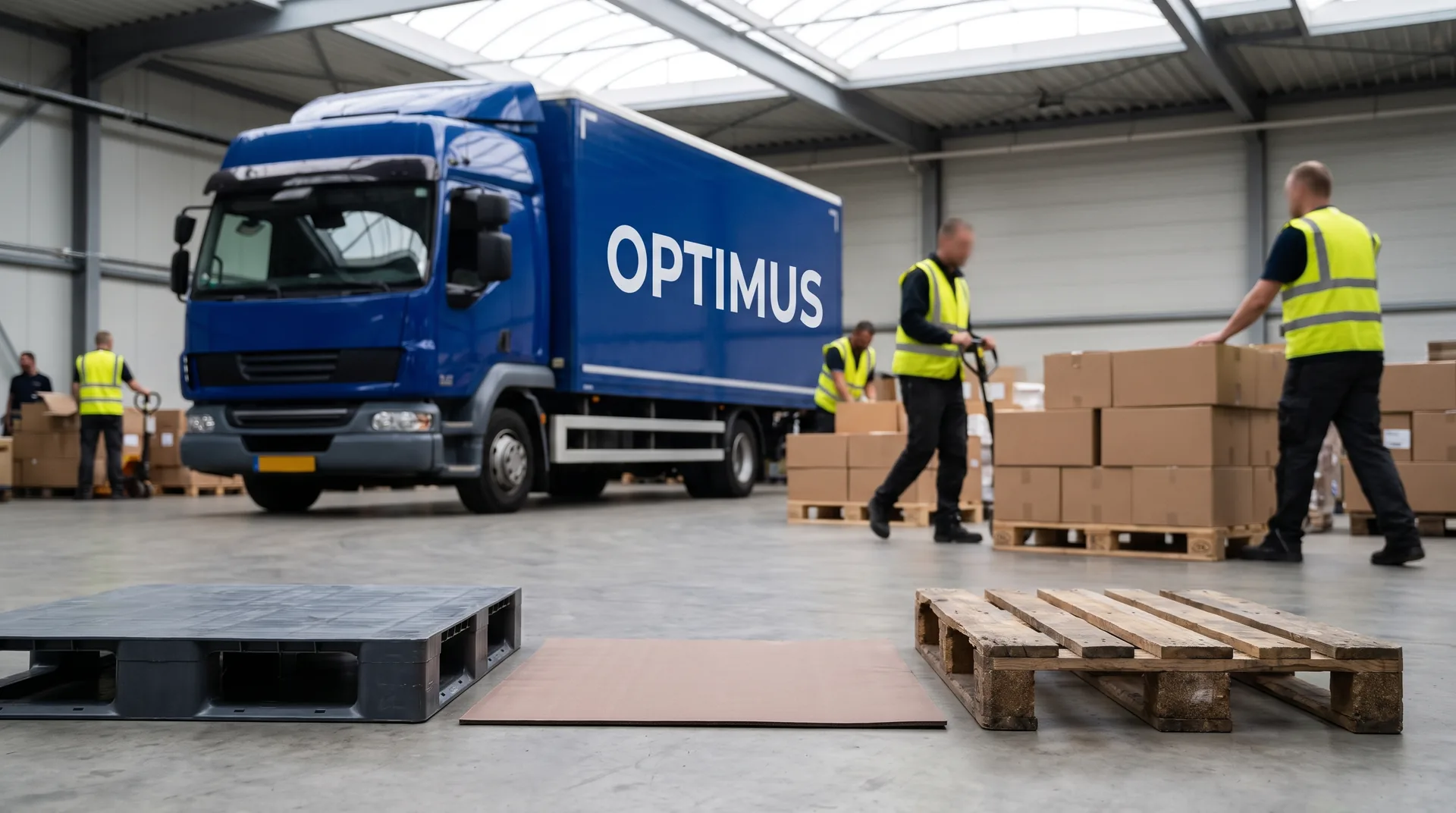
A plastic or metal pallet makes sense where timber is the problem: phytosanitary requirements, food and pharma, moisture-sensitive loads, and closed loops where the unit returns. On one-way shipments where the unit never comes back, wood almost always wins on price.
Problem one: phytosanitary
Wood packaging exported to the United Kingdom must meet ISPM 15: debarked timber, heat treated or fumigated, and marked with a country code and producer identifier. In practice not every pallet in the yard is fit for export, and a check can hold a load over its carrier rather than its goods. We cover this in ISPM 15 and wooden pallets to the UK. A plastic carrier removes the problem entirely — and it is the one argument that works whatever you are carrying.
Problem two: hygiene
Timber is porous: it absorbs moisture, odours and liquids, and repairing it means nails and splinters. In food and cosmetics that can be disqualifying, particularly where the carrier enters a production area or a chiller. A plastic pallet can be washed, does not shed dust and has no parts that can detach into product. Warehouse-side requirements are covered in food-grade storage in the UK.
Where a consignee demands plastic for food, that is normally their internal specification rather than a general legal requirement — check with them before you replace an entire pallet fleet.
Problem three: moisture and mass
A wooden pallet changes weight with its moisture content: a unit stored outdoors after rain weighs noticeably more than a dry one, and across dozens of units on a full vehicle that stops being a detail. EPAL puts euro pallet own weight at approximately 25 kg, but that figure is for a dry unit. A plastic pallet has constant mass regardless of weather, which makes payload planning easier — the arithmetic is in pallet tare in payload maths.
Beware a simplification doing the rounds: "plastic is lighter" is not universally true. Light one-way plastic units really do weigh less than a euro pallet, but heavy reusable pallets can be comparable or heavier. Before deciding, take the data sheet for the specific model rather than a line from a brochure.
When a plastic carrier pays for itself
When, and only when, it comes back. The maths runs on cycle count: unit cost divided by the number of trips in its life, plus the cost of return transport and losses on units that never return. In a closed loop between two fixed locations — typically automotive, or deliveries into a single central warehouse — a plastic unit pays back quickly. Selling to changing consignees on the islands, it never does, because the unit stays with the consignee and becomes one-way packaging at many times the price of timber.
Returnable packaging models in automotive are covered in returnable KLT and Gitterbox packaging, and the settlement rules in losing pallets and who pays.
Where plastic loses to timber
Three situations. First: friction. A plastic surface is smoother than wood, so loads slide on it more readily — at identical securing, a unit on a plastic pallet needs more attention and often an anti-slip interlayer. Friction coefficient is an input to securing calculations, as covered in cargo securing to EN 12195. Second: rigidity under point load. A heavy machine set on a plastic pallet can deform it where timber would only flex and recover. Third: fire conditions in racking — some warehouses restrict plastic pallet storage because of fire protection requirements and sprinkler design, so check with the consignee before switching.
Metal pallets: a narrow niche with a definite use
Steel and aluminium enter where point load capacity and repeated use in harsh conditions matter: heavy castings, industrial components, closed loops with a wash bay. They are expensive, heavy, and make sense only as part of a system, never as a one-way carrier. On UK exports they appear almost solely in contract relationships with an agreed return loop and a settlement model written into the contract.
Can plastic pallets be stacked the same way?
Not automatically. Stacking parameters come from the manufacturer of the specific model and differ between light and reusable versions — do not carry across values known from the euro pallet, for which EPAL states a safe working load of 1,500 kg and a maximum of 5,500 kg on the bottom pallet of a stack. General stacking rules on UK lanes are in pallet stacking in the UK. A comparison of the timber formats themselves is in euro versus industrial pallets.
A third road: no carrier at all
If the problem is timber and phytosanitary rules rather than a need for a durable carrier, a sheet instead of a pallet is often cheaper. What the consignee has to have is set out in slip-sheets instead of pallets. It will not replace a carrier in a closed loop, but on one-way shipments it frequently beats plastic on cost.
Sources
- GOV.UK: ISPM 15 for solid wood and the exclusion of processed materials
- EPAL: own weight, safe working load and stack limit for the euro pallet
Thinking about changing carrier on your UK lane? Describe the loop and the consignee in the quote form and we will work out after how many cycles the switch pays. The lane is described on our transport to the United Kingdom page.