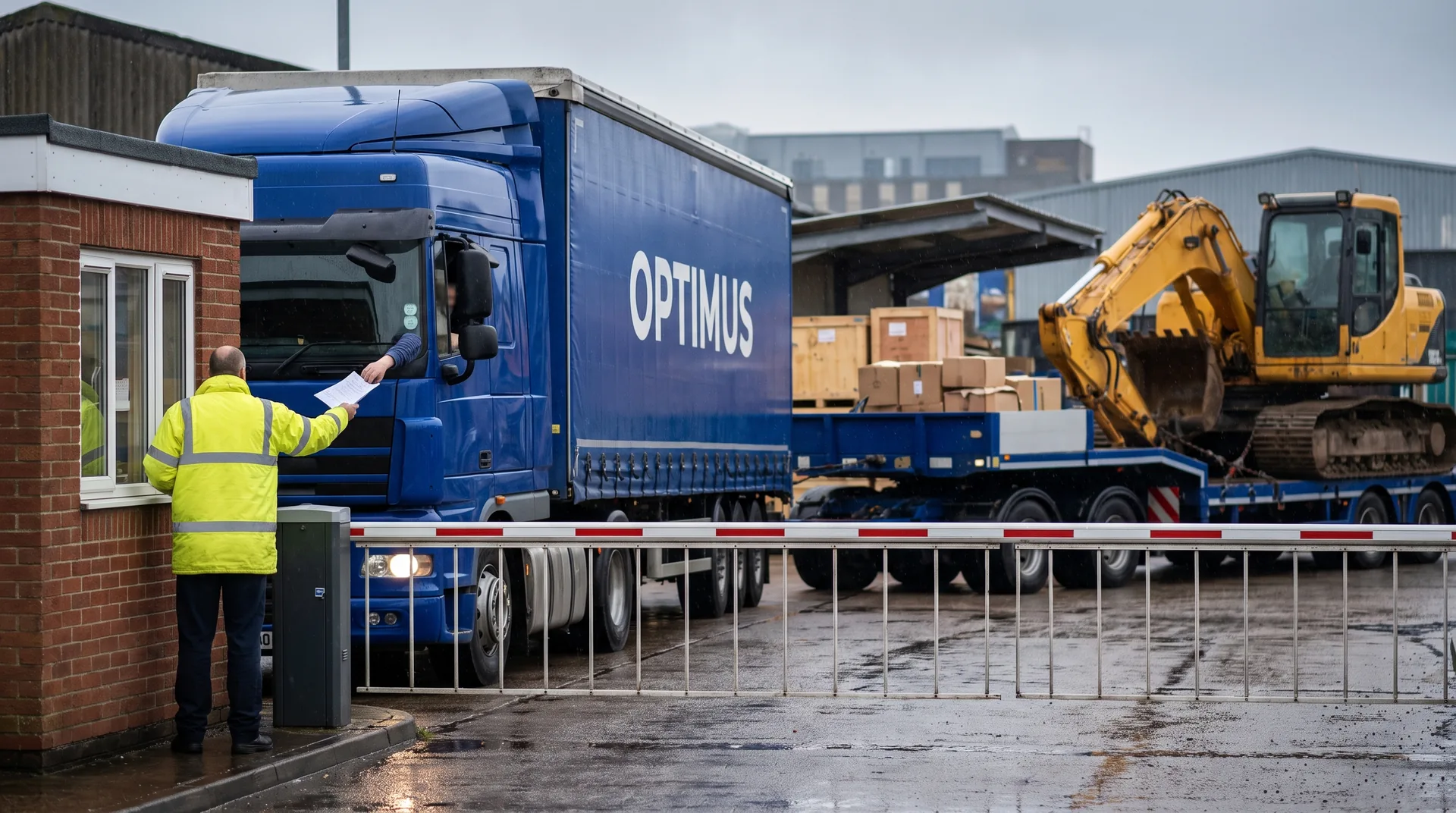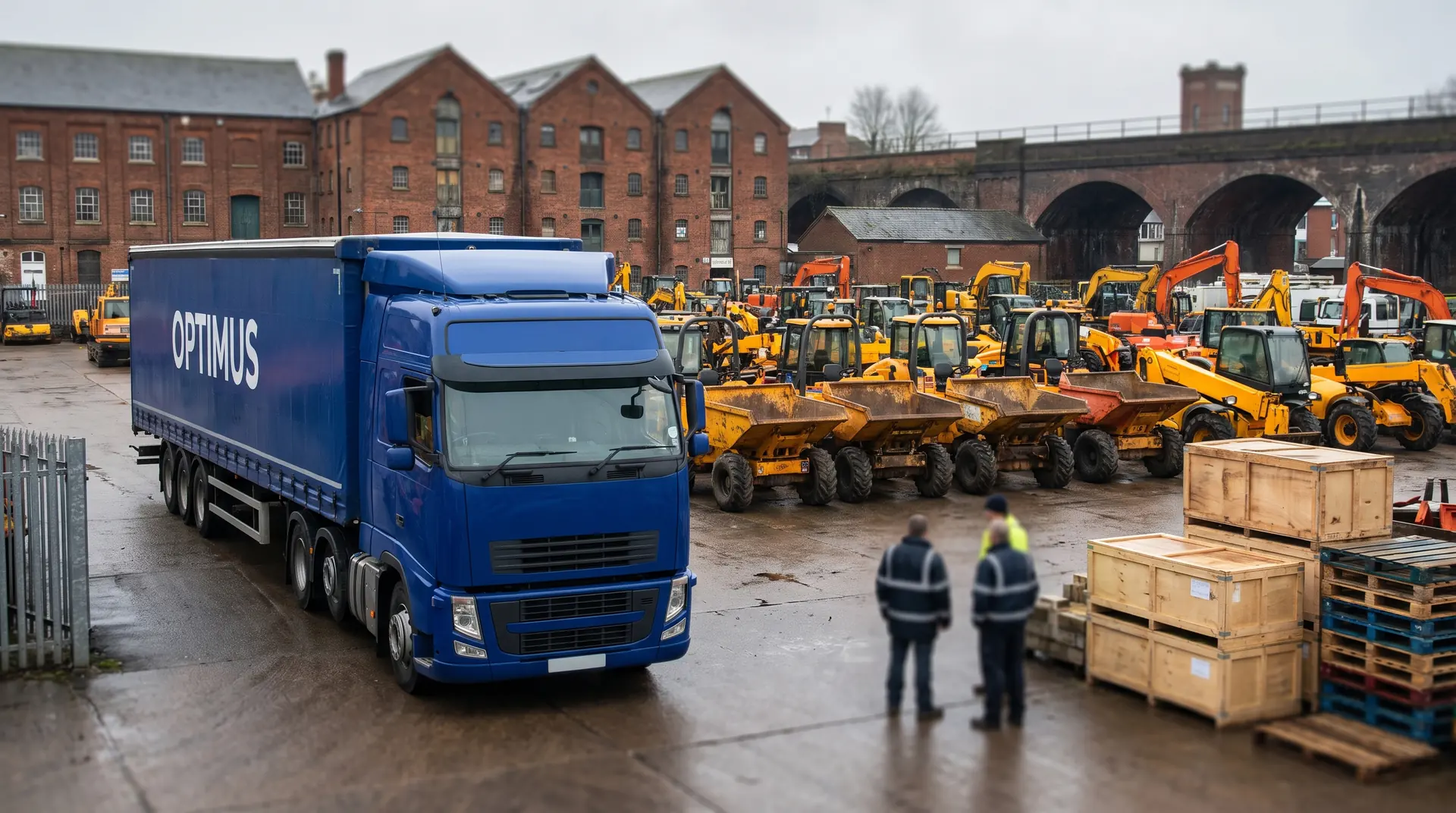
An excavator or loader bought at a British auction normally travels on a low loader, and whether the move stays within legal limits is decided by the transport configuration, not by the manufacturer brochure. Three figures matter: the height of the combination once the machine is folded down, the width once attachments come off, and the actual mass including whatever stays on the deck. We take them from the machine sheet and from a measurement in the yard.
Three figures that start the job
The first is mass. A machine sheet usually separates operating mass from transport mass, and the gap between them is the attachment, the counterweight and a full tank. For the quote we use the mass of that specific unit with the attachment that will actually travel, because a ditching bucket removed and laid on the deck weighs exactly what it weighed bolted to the boom. The second is height. A low loader exists to bring the machine down, yet a cab with a protective structure, an exhaust stack and a guard can add enough to push the combination over the clearance. The third is width: track shoes on wide plates, loader arms and outside mirrors are often wider than the body and it is they that define the outline.
Those three figures are measured on the machine standing in the yard, in the state in which it will be released. A dimension copied from a catalogue describes a factory unit, not one after ten years of work, with a different bucket, an added breaker and replacement tracks. Measuring costs less than a truck sent back.
When the move stops being a standard one
Exceeding permitted axle loads, dimensions or actual gross mass makes the move an abnormal one, requiring a permit of the appropriate category. Categories, issuing authorities and processing times are published by the Polish national roads authority and we check them for every job rather than quoting numbers from memory. One practical rule holds: the higher the category, the longer the paperwork, so a decision about an oversize machine has to be taken with weeks in hand.
On the British side the same load falls under a separate notification regime, with notice to the police and to highway and bridge authorities. Thresholds, STGO categories and the way notifications are filed are set out in our article on oversized transport to the UK, so we do not repeat them here. Something else matters: the British notifications and the Polish permit are two independent processes with their own deadlines, and the truck moves only once both are closed.
Machines also drop out of the oversize bracket for free surprisingly often. Removing the bucket, fitting narrower track plates, laying the attachment beside the machine on the deck or parking the boom differently can bring a dimension back within limits. That is why we ask about permits after the measurement, not before it.
How an excavator gets onto the trailer
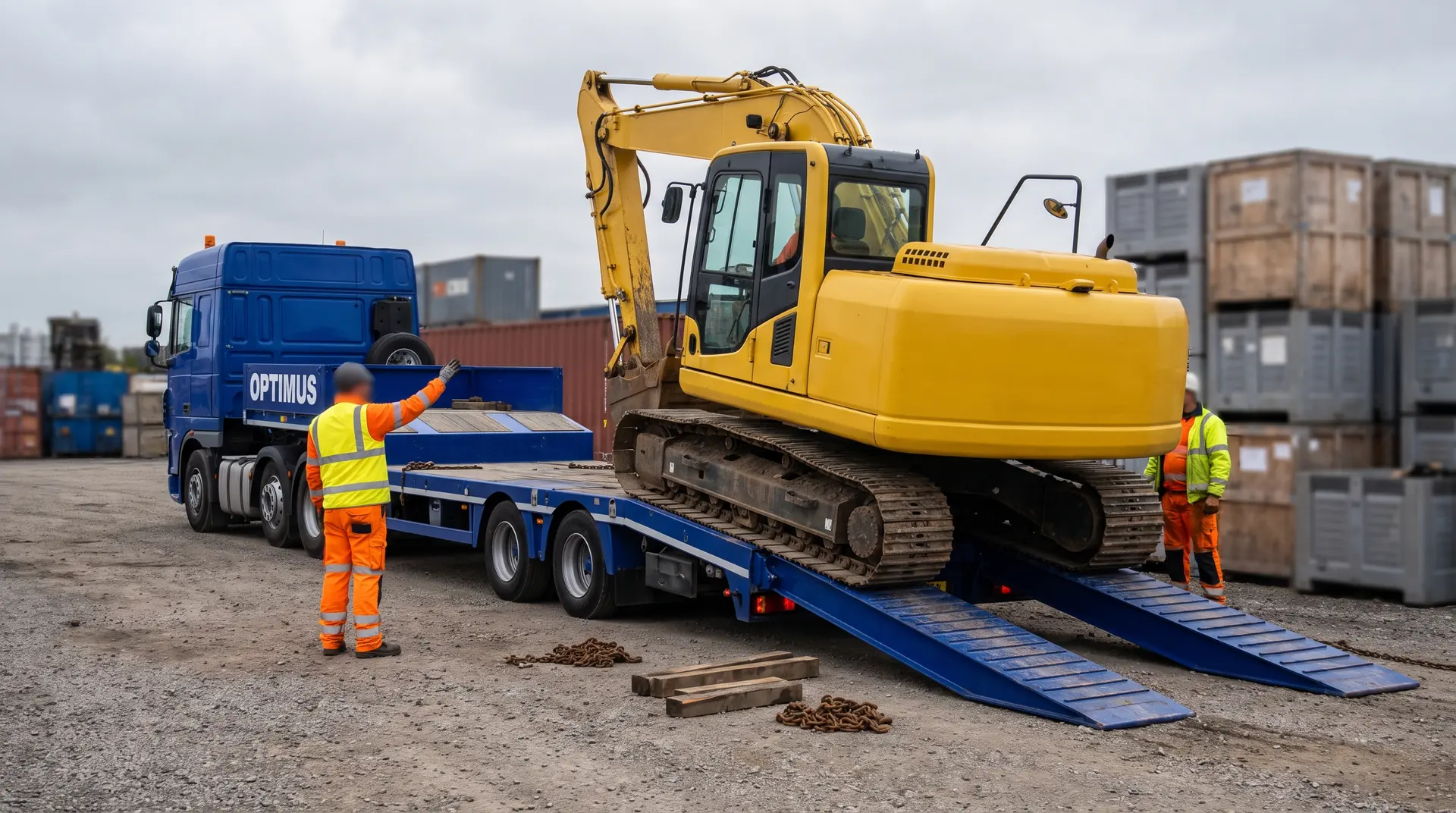
There are three ways and each assumes something different about the yard. A working machine drives up the ramps under its own power, which needs firm level ground in front of the trailer and someone qualified to operate it; the driver answers for the vehicle, not for the machine. A machine that does not run, or has no keys, comes aboard on a winch, slowly and under supervision, which takes time and needs space behind the trailer. The third route is lifting by crane from the points the manufacturer specifies, and that is how equipment that will not roll up ramps is loaded. Which option applies is settled before the truck is dispatched, because it decides both the type of combination and the length of the slot in the yard.
Ground conditions are a separate matter. A steel track on block paving leaves a permanent mark, and a ramp resting on unmade ground settles under load. Auction yards are often uneven and wet, so we ask about the surface as routinely as we ask about dimensions. Choosing equipment for a specific situation is covered in our piece on loading a machine at the auction yard.
Securing, attachments and hydraulics
- Attachments come down onto the deck and get supported, rather than riding in the air on the rams: road shocks then travel straight into the hydraulic circuit.
- The slew is locked mechanically wherever the machine has such a lock. A slew brake on its own is not a transport restraint.
- Straps go only into the lashing points marked by the manufacturer. Hooking onto a ram, a handrail or a loader arm destroys a component built to work, not to hold a machine down.
- Chocks go under tracks and wheels, not straps alone: friction and mechanical blocking work together, not as alternatives.
- The way forces and lashings are calculated is set out in our article on cargo securing under EN 12195.
Fuel, fluids and the battery
A machine bought at auction usually arrives with fuel in the tank, oil in the circuits and a battery under the cover. Whether the movement falls under dangerous goods rules depends on the type of fuel, the construction of the tank and what is left in it; the mere fact that we are talking about a machine rather than a tanker exempts nothing automatically. We ask about the fuel level before loading and take the answer from the ADR rules, not from assumption. Leak-tightness is checked separately, because hydraulic oil on the trailer deck is damage to somebody else goods if the machine travels alongside anything.
The battery is disconnected and the terminals protected, unless the machine has to be ready to come off under its own power. Keys travel with the paperwork, not in the ignition.
Soil in the undercarriage and the border
A used machine off a construction site carries soil in its tracks, behind its guards and inside its fenders. The EU plant health requirement, with a certificate and a border check, applies to machinery and vehicles that have been operated for agricultural or forestry purposes rather than to every piece of construction plant; the full procedure is described in our article on farm machinery auctions in the UK. That does not mean an excavator may travel caked in mud. A dirty undercarriage makes inspection harder, soils the trailer and the load beside it, and at a check raises questions best answered in advance. Washing the machine in the yard before loading costs less than standing still.
Paperwork and clearance
On the British side the machine needs an export declaration, on the EU side an import one, and the customs value rests on the price actually paid. Technical requirements, CE against UKCA marking and how value is established for an auction purchase are broken down in our article on importing used machinery from the UK. We arrange clearance working with our regular customs agencies on both sides of the Channel and it is they who file the declarations; we supply the full transport data and make sure it matches what is actually standing on the trailer.
Separate articles for individual machines
Every class of equipment gets aboard differently, has different dimensions in transport configuration and different formalities, so we describe them separately:
- Wheeled excavator from a UK auction: height decides the trailer
- Mini excavator from the UK: groupage instead of a whole truck
- Backhoe loader from a UK auction: what to fold before loading
- Wheel loader transport from the UK: the bucket travels separately
- Telehandler transport from the UK: length, not weight, decides
- Skid steer loader from a UK auction: machine and attachments apart
- Crawler dozer from the UK: blade off, permits booked early
- Motor grader from a UK auction: length decides the trailer
- Site dumper from the UK: transport and tariff classification
- Crusher from a UK auction: an abnormal load from day one
- Screener from the UK: why it travels as a load of its own
- Hydraulic breaker and excavator attachments from the UK: on a pallet
- Road roller from a UK auction: short load, awkward axle loads
- Plate compactor and rammer from the UK: added to a bigger load
- Road milling machine from the UK: conveyor and drum before pickup
- Asphalt paver from the UK: the screed reaches beyond the machine
- Dewatering pump from a UK auction: water and fuel before loading
Sources
- GDDKiA: abnormal transport, permit categories and deadlines
- GOV.UK: ESDAL and notifying abnormal loads
- GOV.UK: securing loads on HGVs and goods vehicles
Won an excavator and unsure whether it stays within limits? Send the model, serial number and yard address through the quote form and we will come back with the type of combination and the formalities. See also oversized loads and customs clearance.