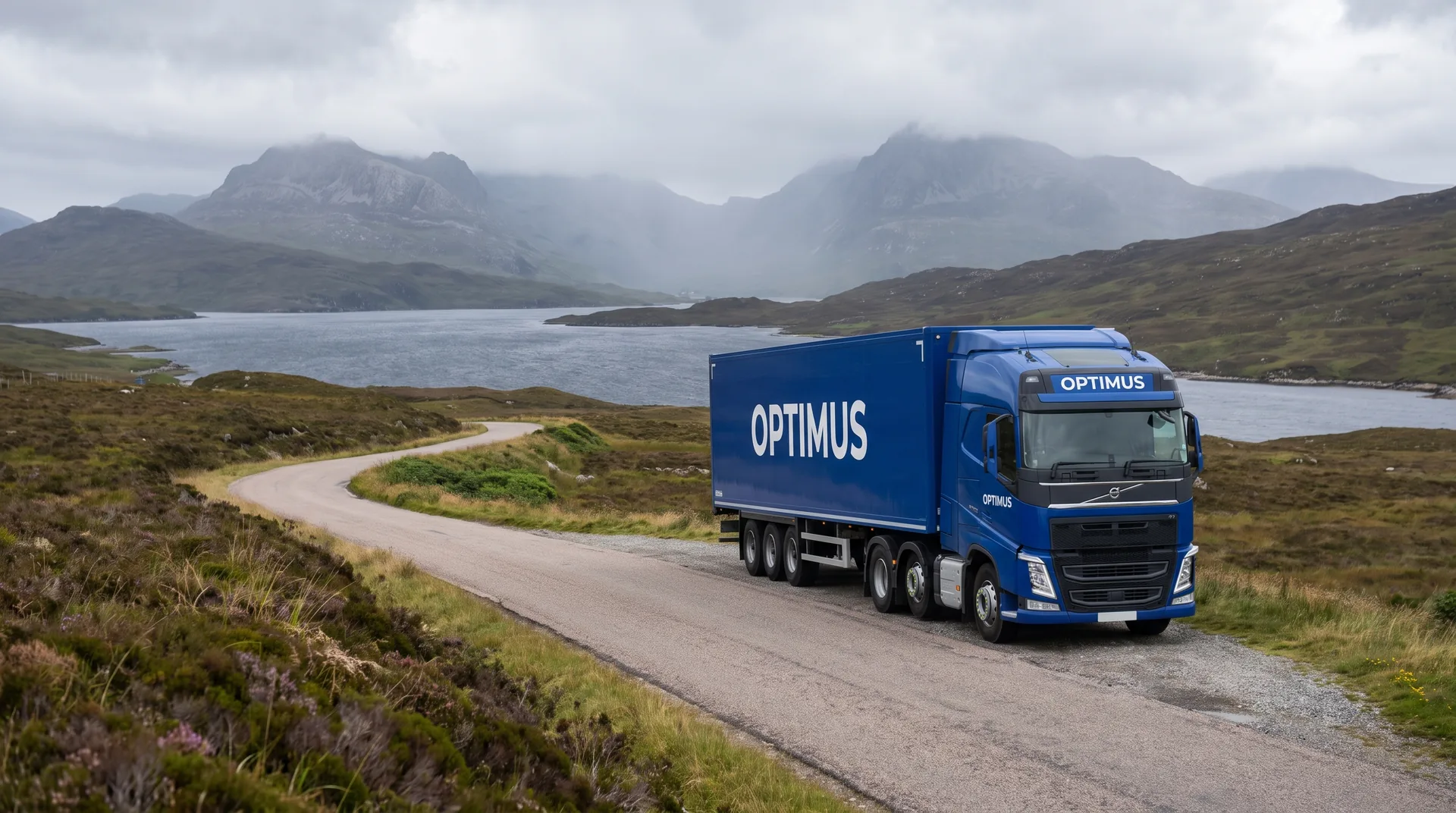
The Outer and Inner Hebrides are part of Scotland and therefore of the United Kingdom: in customs terms no different from England. Clearance happens on entry to the country, and after that it is a logistics exercise: road haulage to the west coast of Scotland and a ferry crossing to the specific island, planned around the sailing.
Customs status: no surprises
The islands have no separate customs or tax status. From Poland there is a single clearance on entry to the United Kingdom: EU export declaration, safety declaration, import declaration and a border reference for the driver. There is no further clearance for the ferry to the island, because that is a domestic movement. This sets them apart from the Channel Islands and the Isle of Man, which run their own regimes and which we cover in the Channel Islands and the Isle of Man.
How the freight gets there
A vehicle from Poland normally runs to Glasgow or further north, and from there to one of the west coast ferry ports. Sailings to the Outer Hebrides run from Uig on Skye and from Oban among others, and to the Small Isles including Rum from Mallaig. Skye has a road bridge, so some deliveries reach it without a crossing at all. The northern route and what the drive is actually like are described in transport to Glasgow and transport to Scotland.
The sailing is the bottleneck, not the border
Island ferries run to a timetable and space for heavy vehicles is limited. The timetable is also weather-dependent, particularly in autumn and winter when sailings can be cancelled. So we plan the delivery around a specific sailing with slack for a shift, and for sensitive loads we agree a contingency before anything is loaded in Poland. It is the same logic we apply to cancelled Channel crossings, described in a storm and a cancelled crossing.
What we carry to the islands
The mix differs from the mainland. It runs to building materials and equipment for contractors, machinery and parts for farms and crofts, fit-out for shops, hotels and hospitality, furniture, and trade stock for local distributors. Smaller consignments are consolidated as groupage; complete sets travel on a dedicated vehicle. Unusual loads such as machinery and structures need the unloading arrangements agreed in advance.
Island unloading: what to settle up front
- Whether the delivery point has a bay and a forklift, or whether a tail-lift vehicle is needed.
- The width and weight capacity of the access roads, since many stretches are single track with passing places.
- Whether the receiver is available on the day the ferry docks, because a second attempt means another sailing.
- Whether the goods can be left at the harbour for collection if the address cannot be reached by a large vehicle.
Other islands and the wider picture
The northern destinations are covered in transport to Shetland and Orkney, and an overview of the island network in transport to the British islands. The islands off England and Wales are collected in Wight, Anglesey and Scilly. The lane as a whole sits under our islands page, with border formalities on our customs clearance page.
Return loads and seasonality
The island lane works in both directions. Western Scotland and the islands send out locally processed goods, craft production and output from businesses selling into the continent. A vehicle that brought a load then goes back loaded rather than empty, and that is a real mechanism for reducing cost in both directions. We plan return loads while setting the route, so it is worth mentioning them in the enquiry rather than after delivery. Seasonality is a separate matter: summer brings tourist traffic and with it demand for deliveries to hotels, shops and hospitality, while in autumn and winter the weather and the reliability of sailings become the deciding factor. Excise goods such as spirits bring their own document flow, covered in alcohol transport and the EMCS system. The mechanics of backhauls are set out in return loads from the UK.
Sources
- Caledonian MacBrayne: ferry services to the islands of western Scotland
- GOV.UK: Goods Movement Reference (GMR)
Sending goods to North Uist, Skye, Rum or another Hebridean island? Give us the island, the delivery address, the pallet count and the timing in our quote form and we will match the route, the sailing and the vehicle.