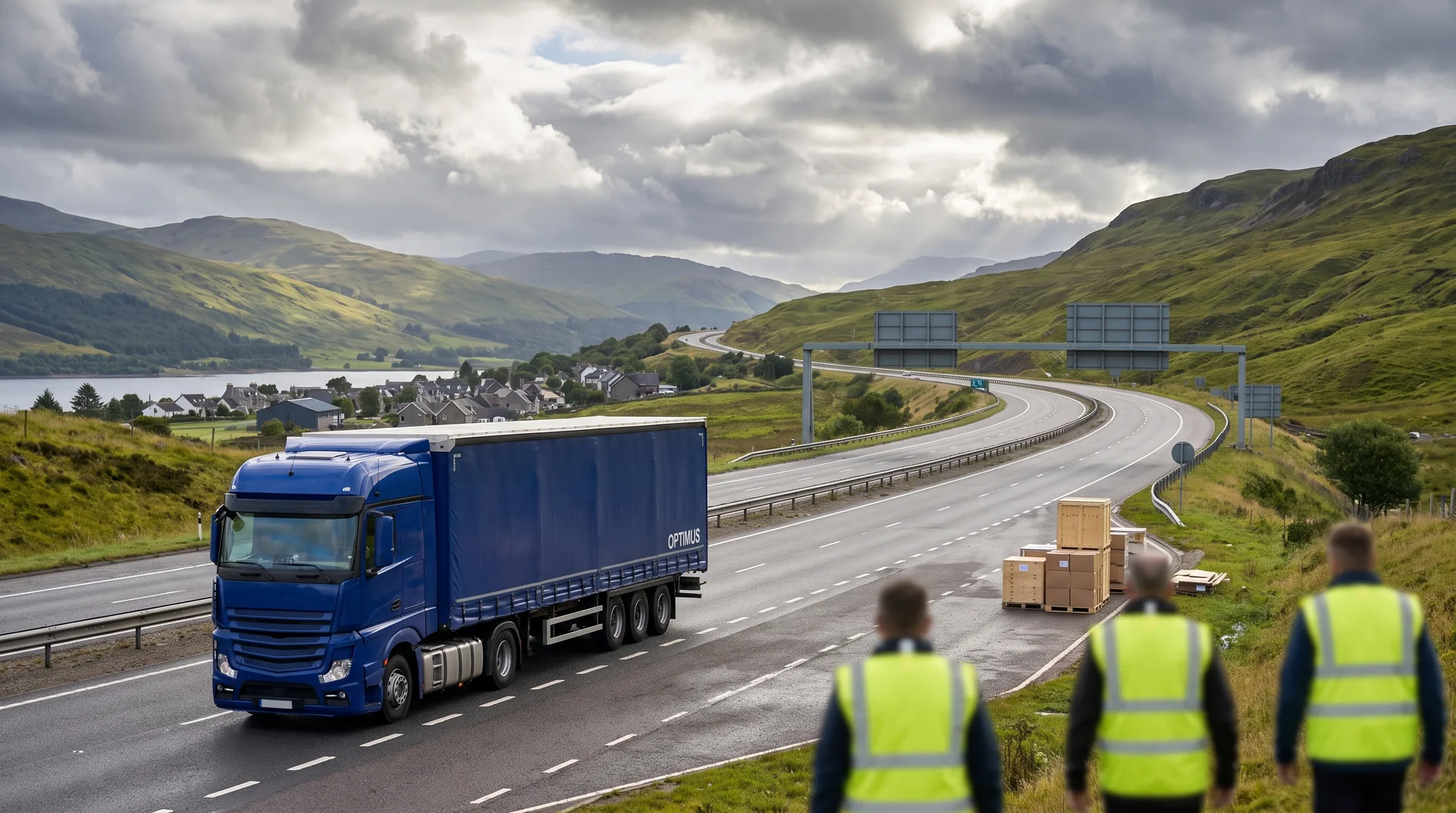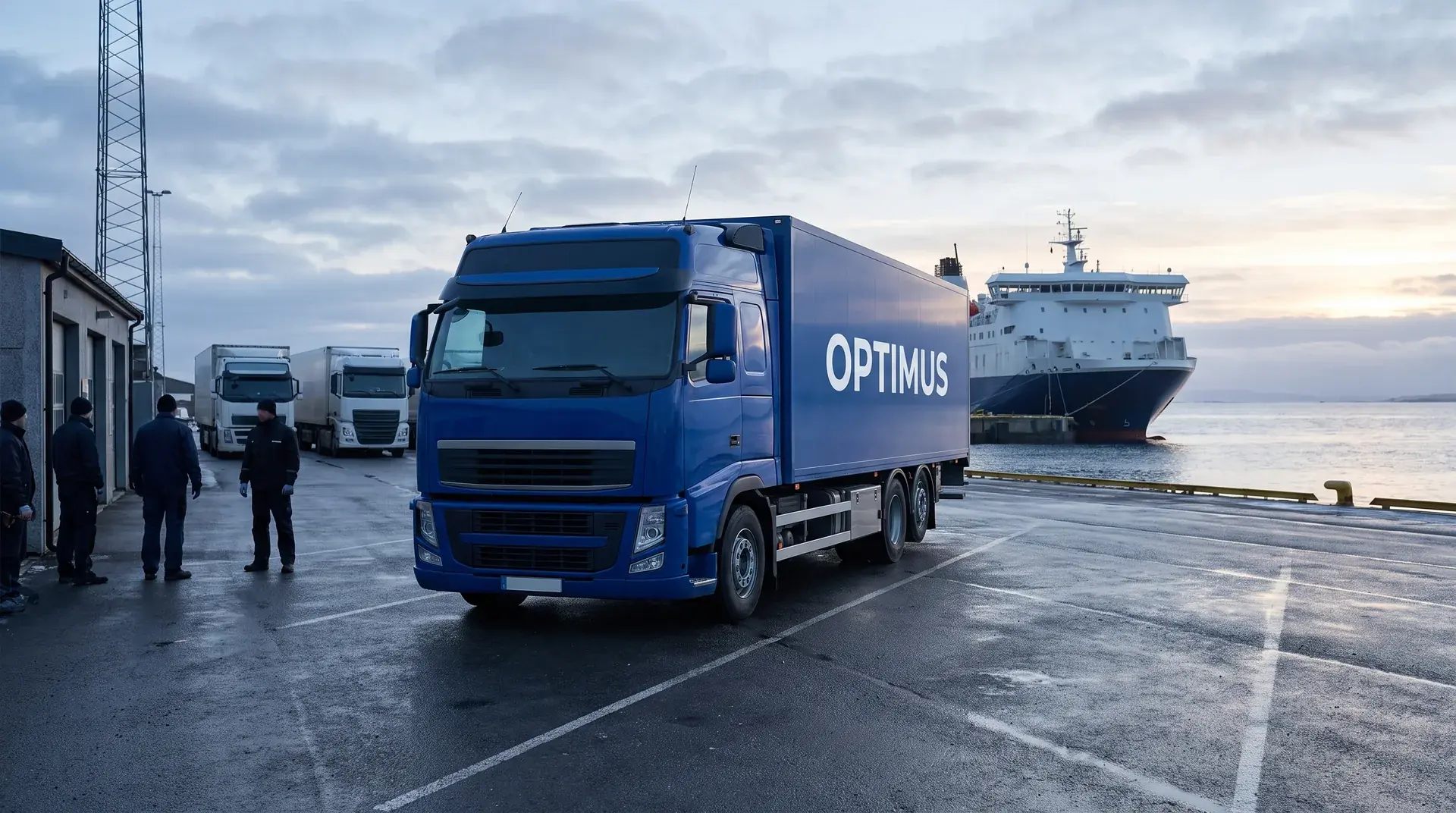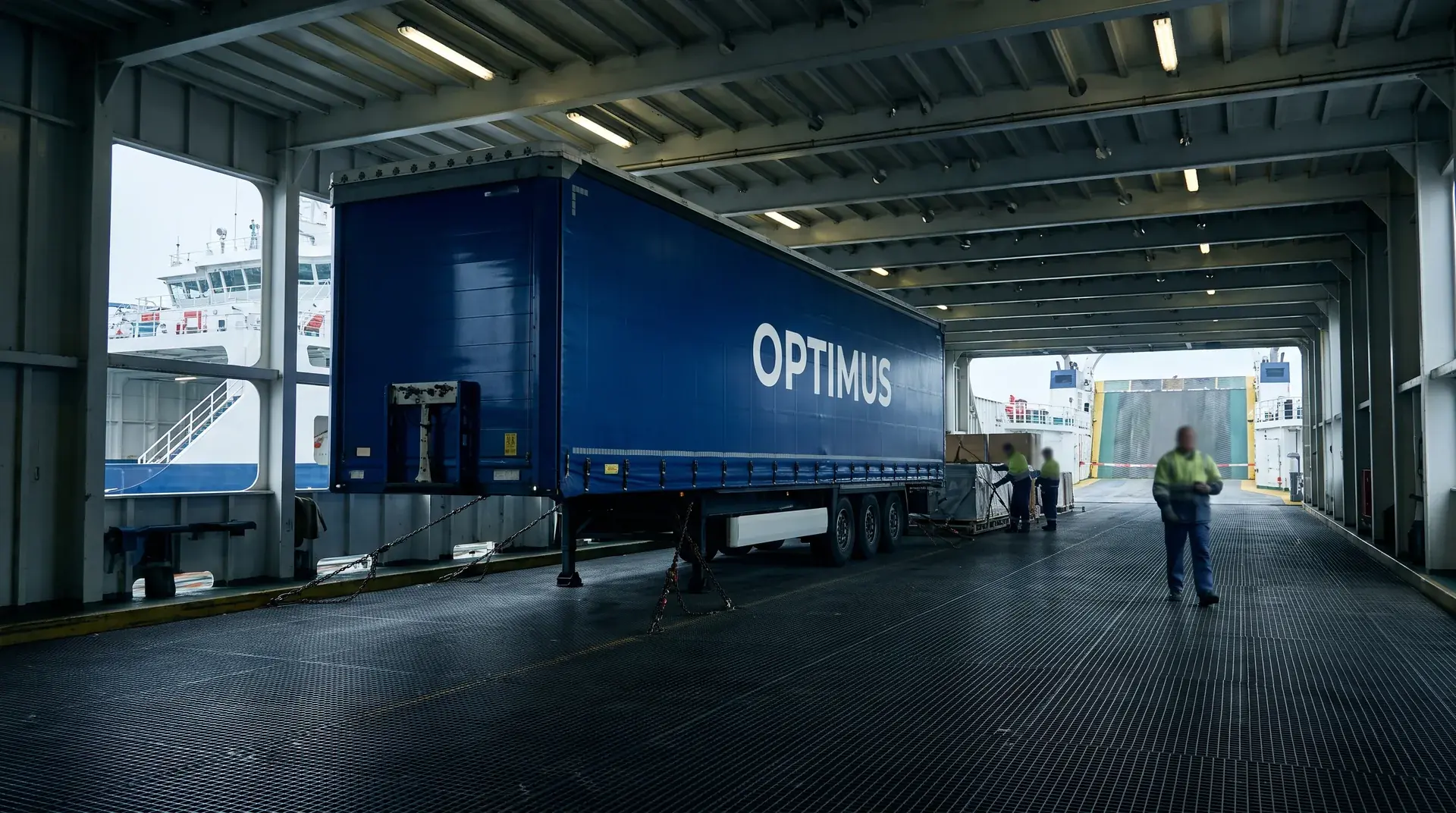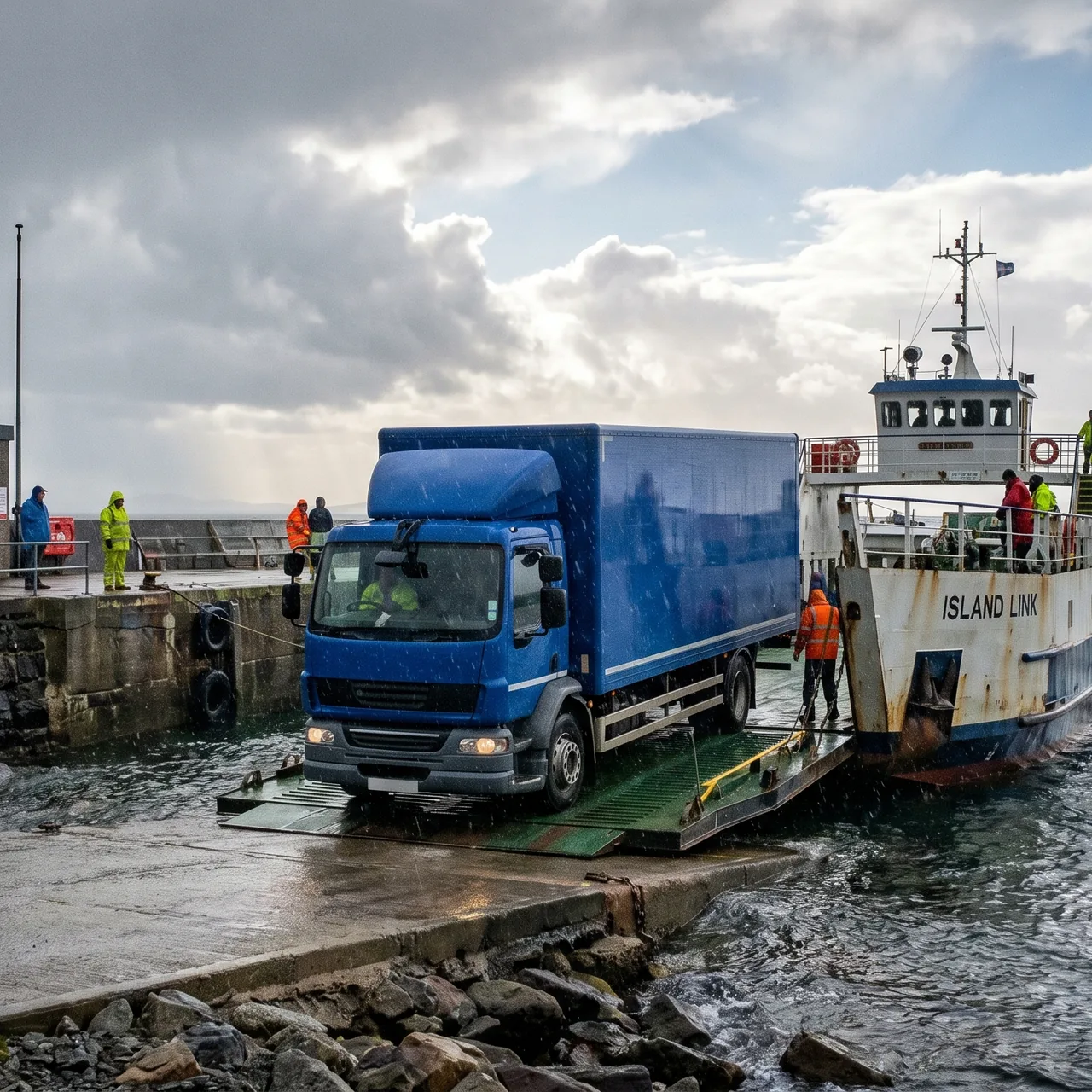
The islands connected with Britain fall into two groups. The Isle of Man is a Crown Dependency in a customs and tax union with the UK, so after clearance on entry into Great Britain there is no second border. Shetland, Orkney and the Hebrides are part of Scotland and therefore part of the UK; the only difference is the last leg, which a ferry covers.
Isle of Man: simple status, simple logistics
The Isle of Man is not part of the United Kingdom, but under a customs agreement it forms a common customs, excise and tax area with Britain. For haulage that means clearance happens once, on entry into the UK, and movement between Great Britain and the island is not treated as export and import. Delivery runs on freight sailings from north-west England. The route and delivery practice are described in transport to the Isle of Man.
Shetland and Orkney: northern Scotland across water
Both groups are administratively part of Scotland, so in customs terms they differ in nothing from Aberdeen or Glasgow. The practice differs, though: reaching the port takes a full driving day from central England, and sailings do not leave hourly. On hard-deadline cargo we book the sailing together with the road leg, so the vehicle does not sit on the quay longer than necessary. More in transport to Shetland and Orkney, and the run north itself in transport to Aberdeen.
The Hebrides: a scattered archipelago
The Outer and Inner Hebrides are dozens of inhabited islands served by a network of short crossings from Scotland's west coast. Cargo often changes ferry along the way, and timetables shift with the season. So for Hebridean deliveries we ask first about the exact island and the nearest port, and only then set a date. The subject is developed in transport to the Hebrides.
Three island groups, three regimes
- Domestic UK islands (Wight, Anglesey, Scilly, the Scottish islands): no clearance relative to Great Britain, only ferry or bridge logistics. Covered in domestic UK islands.
- Isle of Man: a Crown Dependency in a customs and tax union with the UK, handled in practice like a British destination.
- Channel Islands: Crown Dependencies outside the UK VAT area with their own local rules, described in transport to Jersey and Guernsey.
How we organise an island delivery
The pattern repeats: a full vehicle runs from Poland to Great Britain, the cargo goes into our Milton Keynes warehouse or straight onto a northbound route, and from there we deliver it to a specific sailing. For one or a few pallets groupage LTL makes most sense, and for larger volumes a dedicated FTL vehicle. The UK buffer has a practical purpose: it lets cargo wait for a sailing without tying up a trailer.
What not to assume
- That an island is "almost like the mainland"; a timetable can add two days to the date.
- That each island has one port; in archipelagos cargo is often transhipped en route.
- That winter weather is only a northern problem; storms close western crossings too.
- That the receiver has a dock; on smaller islands manual or tail-lift unloading is the norm.
Sources
- NorthLink Ferries: services to Shetland and Orkney
- Caledonian MacBrayne: Hebridean crossings
- Isle of Man Government: Customs and Excise
Have a delivery for one of the British islands? Send the island, address and date through the quote form and we will match the route and the sailing. The full picture is on the Islands page.