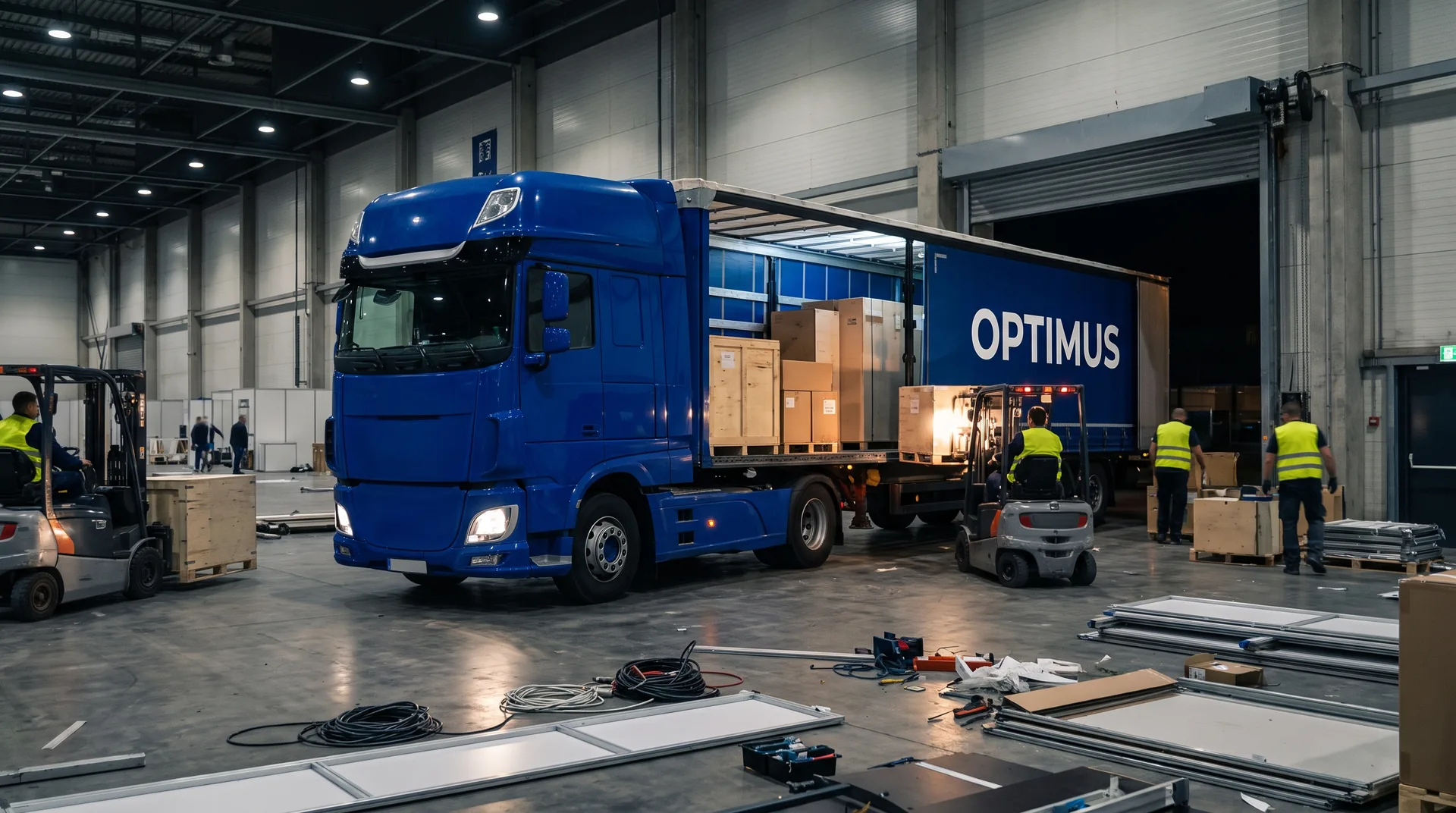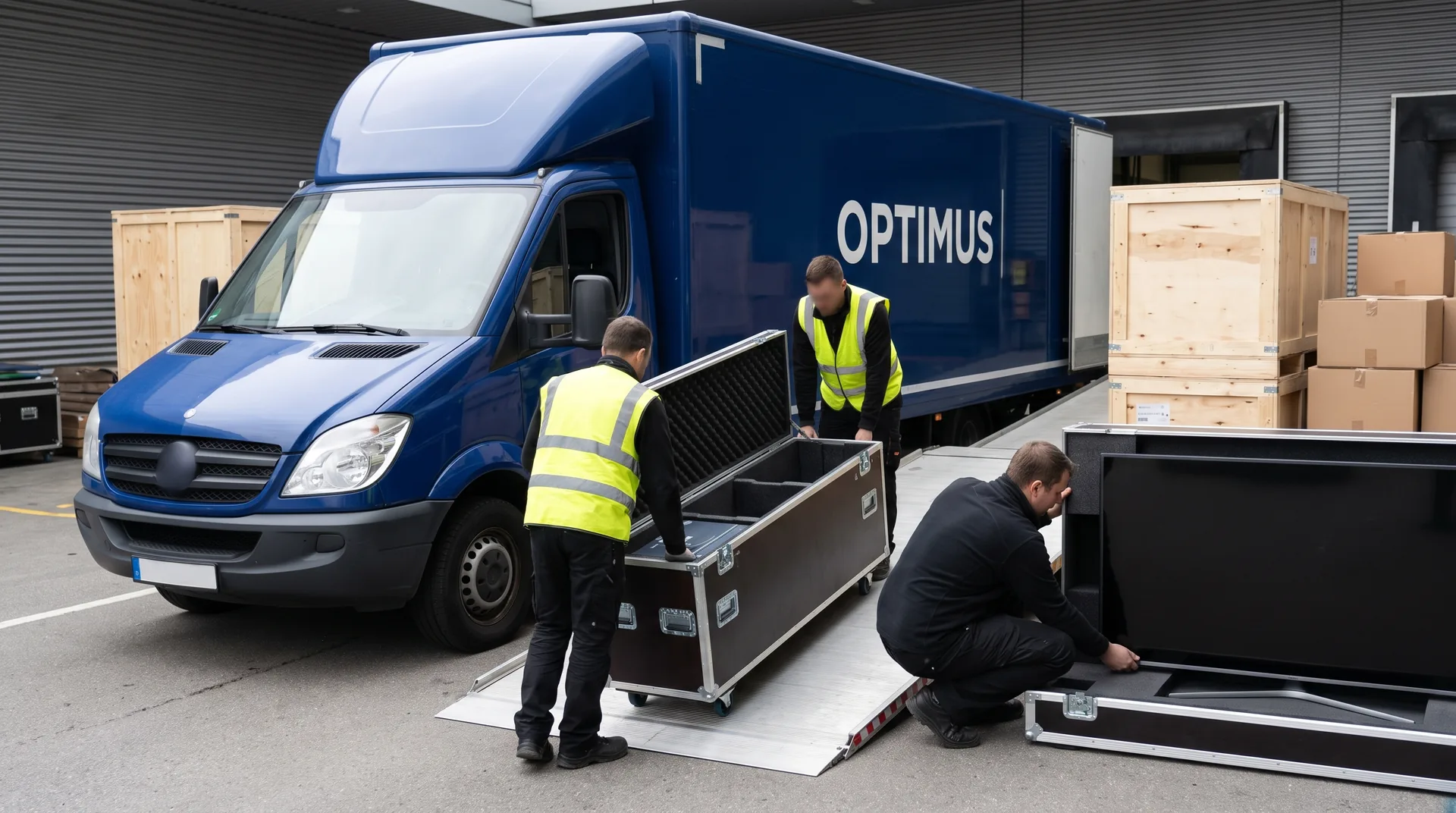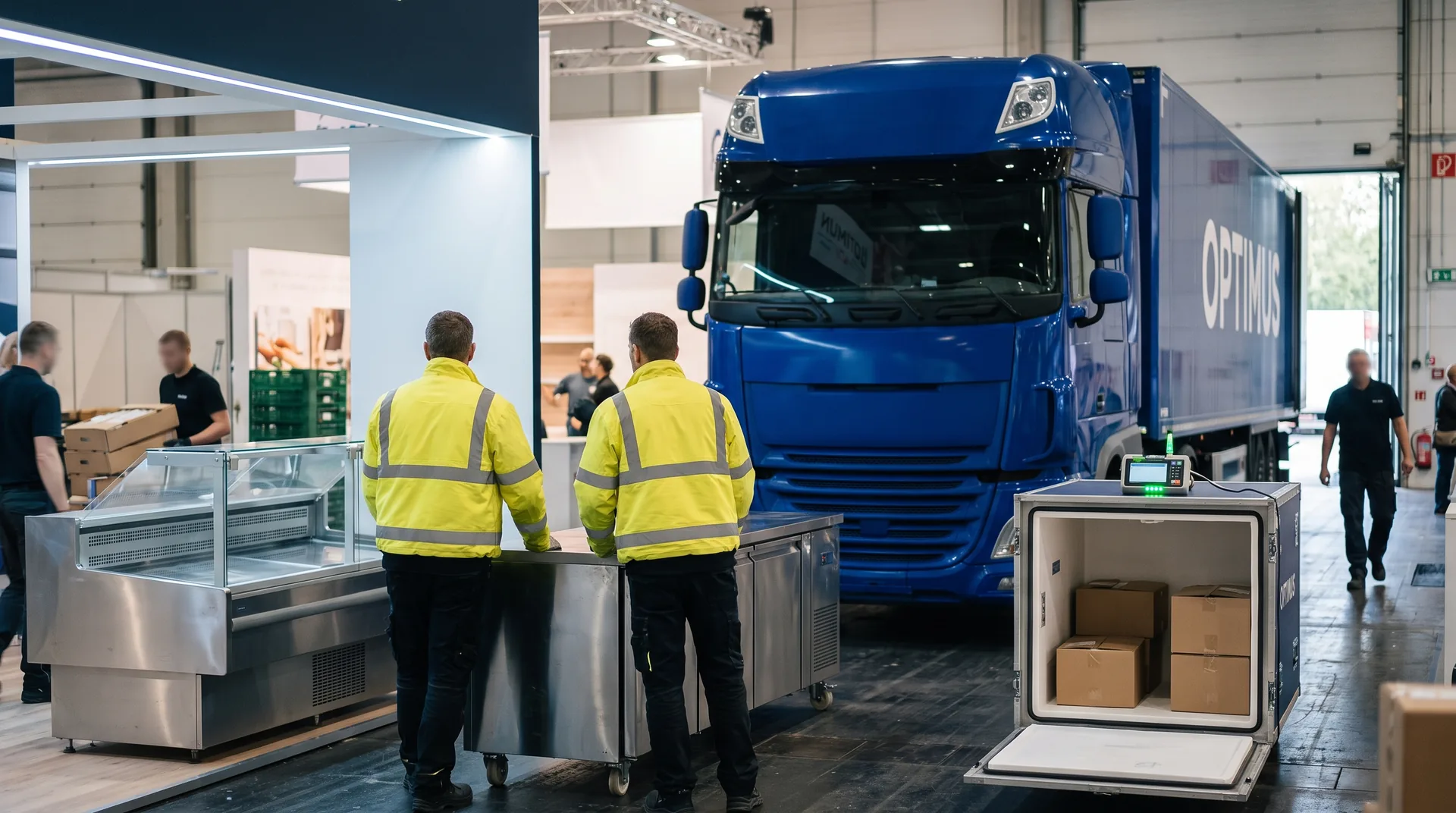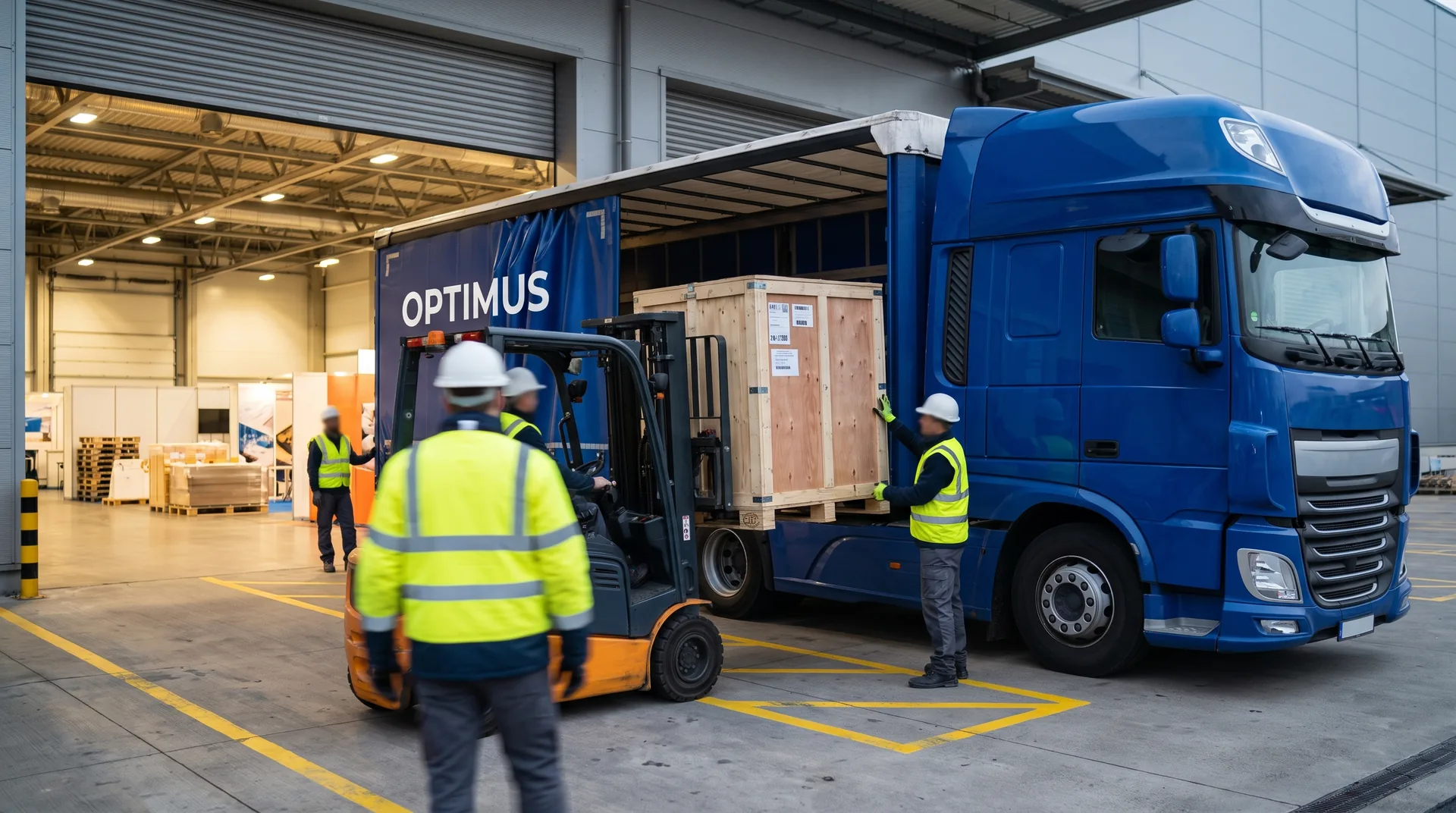
On a fairground, unloading is usually performed by the venue's equipment and staff, or by an operator appointed by the organiser, not by the driver. The carrier presents the vehicle, opens it and takes part in the handover, but does not drive a forklift into the hall, because it normally has no authorisation to work on that site. The rules, the equipment and the way it is charged come from the technical regulations of the specific event.
Three models you will meet most often
The first model reserves handling for an operator appointed by the organiser. Entry into the hall and work with equipment are closed to outside firms, and every load passes through the same point. The exhibitor orders handling separately, and the rates and the basis of charge are published by the operator in the event material.
The second model is exhibitor self-handling. The venue allows the exhibitor's build crew to take the load off and move it to the stand themselves, provided they hold the right equipment qualifications and the required safety paperwork. This model dominates on own builds, where the crew is on site anyway.
The third is a mixed model: light consignments that a pallet truck can move are taken by the exhibitor, while anything needing a forklift, a crane or work at height is done by the appointed operator. This is the most common arrangement in large halls.
Which model applies to your event is checked in one place: the technical regulations and the exhibitor manual. We set out the limits of these rights in official fair forwarder versus your own carrier.
What the load is moved with, and why it matters
A hand pallet truck copes with a pallet on a level floor, but will not come off a trailer without a dock and will not run easily over event carpet. A forklift takes the load off the side or the rear, but needs room to manoeuvre and firm ground. A tail lift allows unloading without a dock, but has its own capacity and platform length. A truck-mounted crane comes into play for items that forks cannot lift, and requires the working area to be fenced off.
Equipment is chosen for the heaviest and most awkward item, not for the average. If the load contains one two-tonne case and ten light ones, that single case governs the whole unloading arrangement. The hall parameters you need to know in advance are collected in unloading an oversized exhibit inside a hall.
Where the carrier's work ends
On a fair delivery we contract to bring the goods to the handover point, and that is where our custody ends. Beyond it the venue's equipment or the exhibitor's crew takes over. We therefore treat delivery to the stand as delivery to the handover point, not as placing the exhibit in its final position in the hall. That distinction causes misunderstandings, which is why we write it into the order.
The handover should leave a trace: the signature of the person receiving, the date and time, and for valuable loads photographs of the packaging. Without it, in a later claim nobody can say whose hands the goods were in at the critical moment. The claims procedure is described in CMR claims and damage reports, and the limits of cover in exhibit insurance at fairs.
At whose cost
Handling on the event site is a separate service and is not included in the freight. Who orders it and how it is charged depends on the model in force at the event. We will not quote rates, because they are set by the operator or the venue separately for each event, and the basis varies: per item, per weight, per equipment time. The only sensible order of work is to check the operator's tariff before shipping and to budget it alongside the freight. We break down the components of fair delivery cost in the cost of exhibition transport to the UK.
British and Polish venues: what differs
The mechanism is the same on both sides of the Channel: the venue controls who operates equipment on its ground. The differences are procedural. In Britain venues normally require firms working on site to produce risk assessments and method statements, and equipment operators to hold current qualifications. Poland has requirements too, but they are enforced in a different form and at a different moment. The practical conclusion is identical: if you plan to unload with your own people, confirm it in writing with the organiser before the vehicle leaves.
What to settle before shipping
The handling model in force at the event. The handover point, written into the transport order. Equipment matched to the heaviest item. The person who will receive the goods and is authorised to sign. The basis on which handling is charged. Those five points take a quarter of an hour before departure and resolve most of the disputes that otherwise start in the hall.
Sources
Want to know where our work actually ends at your event? Send the venue and stand number through the quotation form and we will identify the handover point and what has to be ordered from the venue side. The scope is described on our exhibition logistics page.