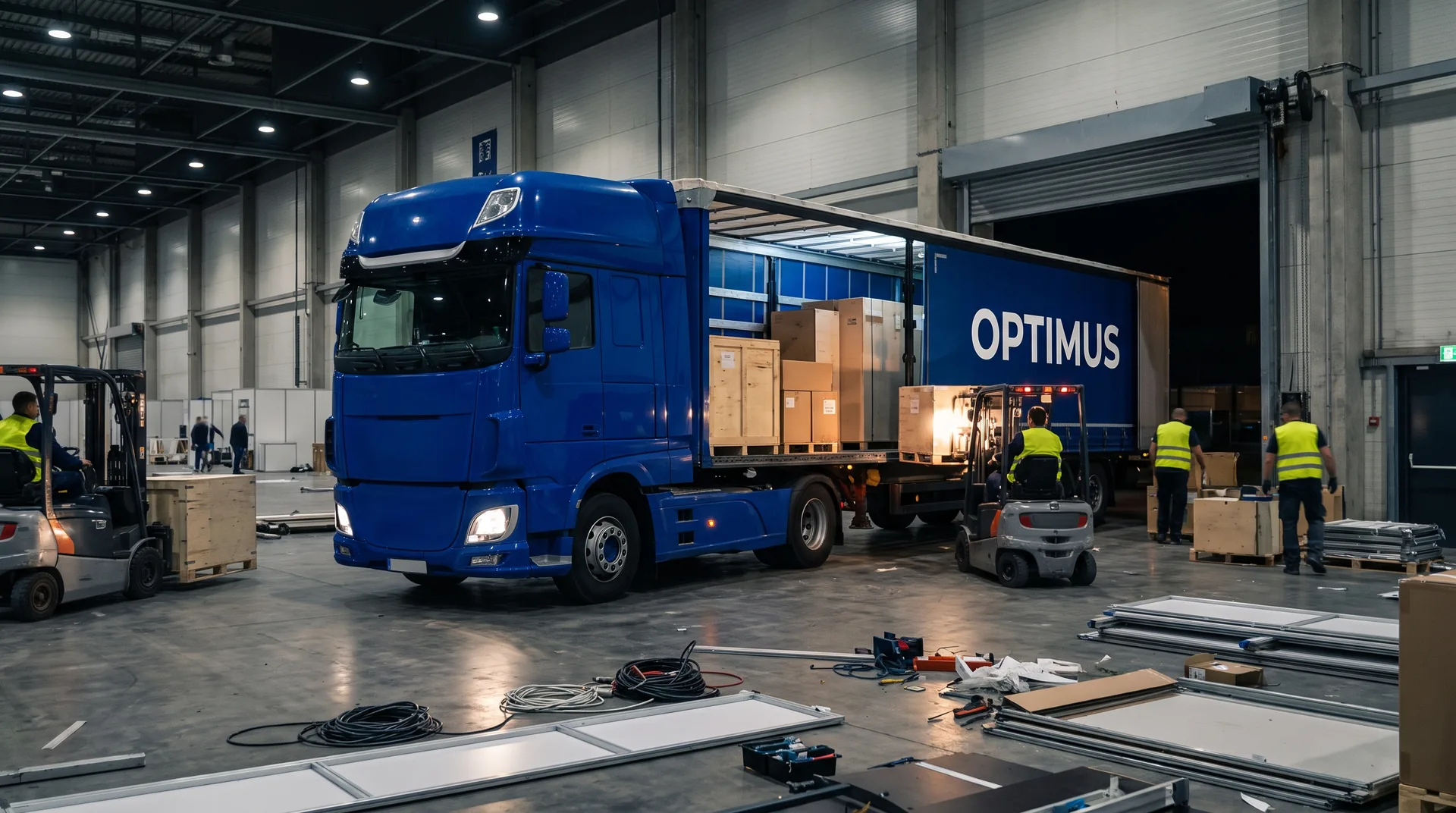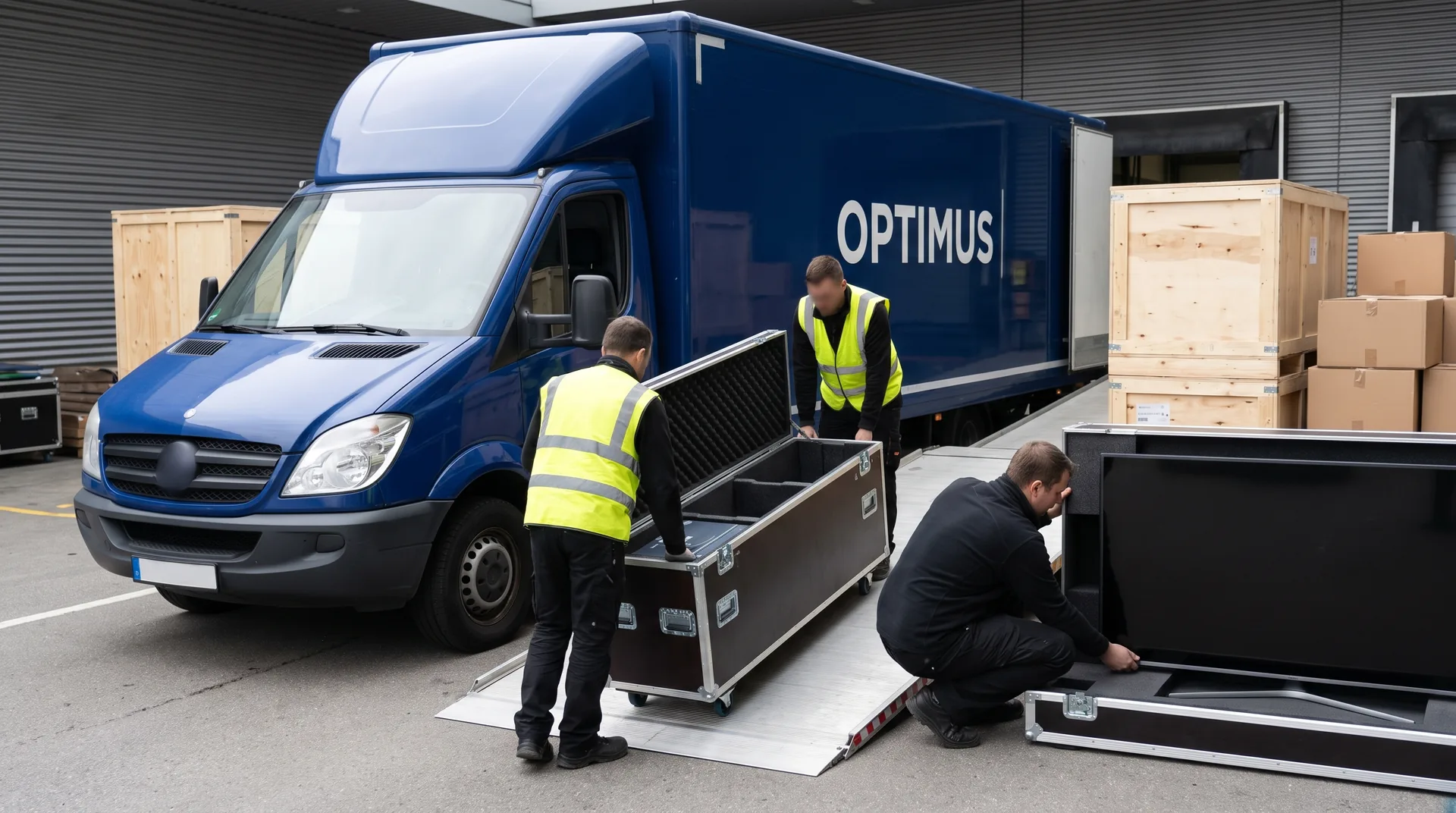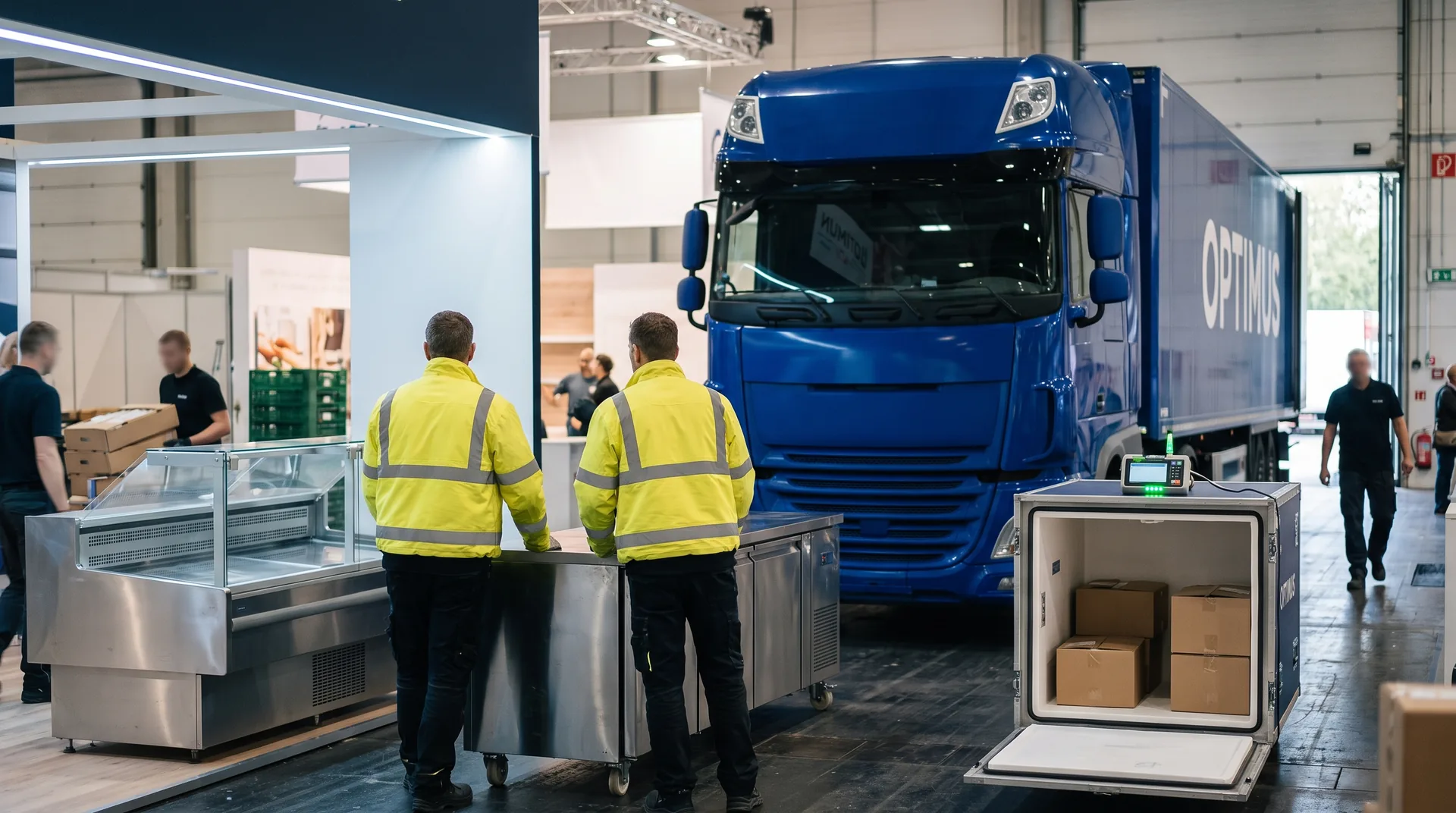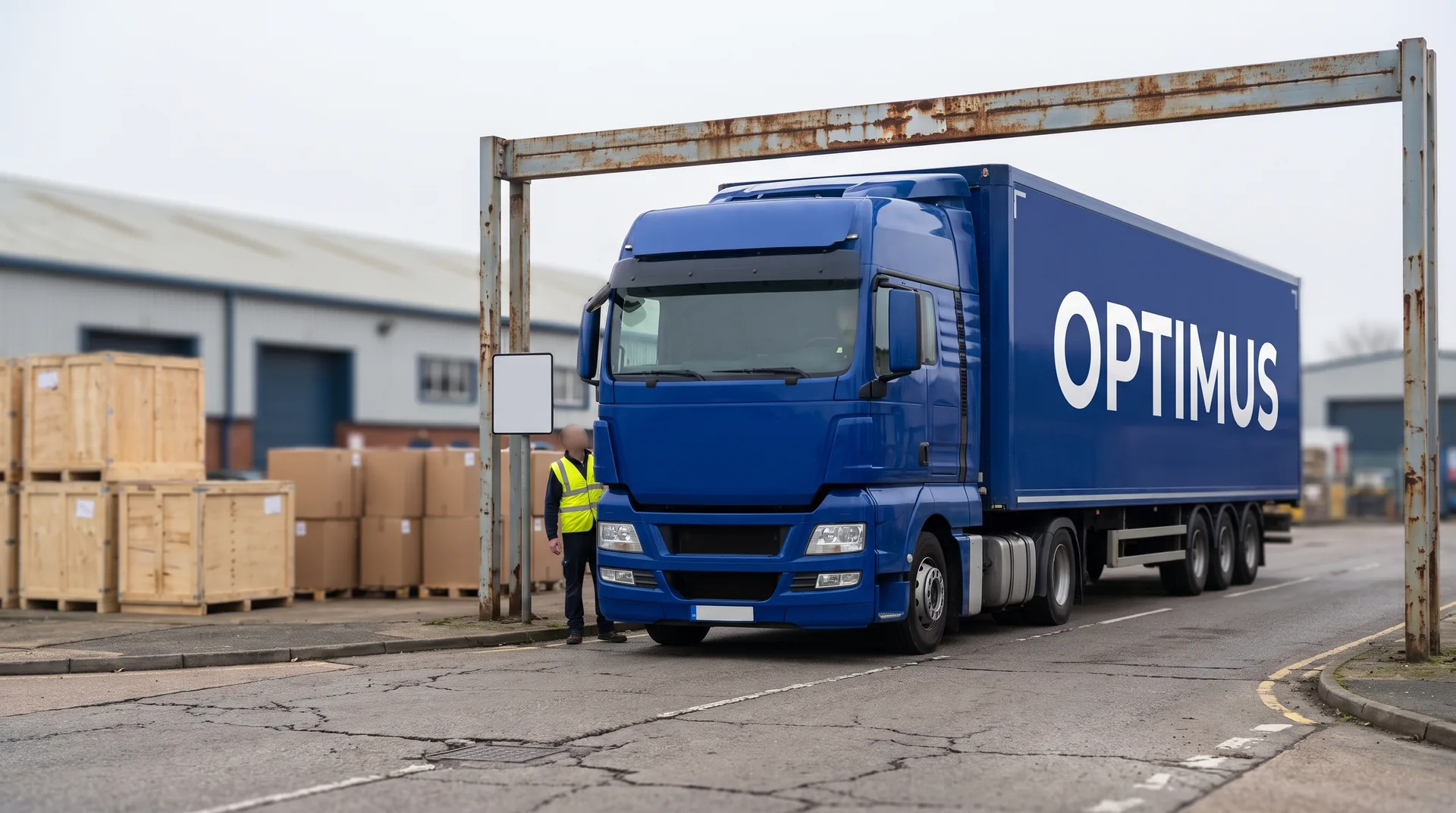
Whether a vehicle gets onto an event site is decided by four parameters: headroom on the access road and at the gate, the gross weight permitted on site, the type of unloading point, and the load capacity and surface of the ground. All four are published by the venue in its technical regulations. We check them before selecting a vehicle, because a truck turned back at the gate costs more than several smaller runs.
Height: the parameter that surprises most often
A curtainsider is normally around four metres high and fits wherever lorry traffic is anticipated. Trouble starts on sites with canopied entrances, at urban venues with underground parking beneath the hall, and anywhere the approach passes under a bridge or a link between buildings. Restrictions can also be temporary, for instance during construction work on site.
Inside the hall, headroom is further restricted by sprinkler installations, lighting and structures rigged by exhibitors. That is why driving a vehicle into a hall is always a separate decision by the venue, even when the gate is wide. At multi-hall venues that figure can differ sharply between halls on the same site, as at NAEC Stoneleigh, where the hall number decides the vehicle.
Weight and point load: two different figures
Regulations usually publish two things. The first is the gross weight permitted for a vehicle entering the site. The second is the permitted loading of the hall floor or the yard surface, given both as a distributed load per square metre and as a permitted point load. The second figure governs heavy exhibits, because a machine standing on four feet exerts a concentrated load the floor may not take, even where its distributed capacity is high. We develop that theme in a heavy exhibit on a stand.
Restrictions outside the site add another layer: bridges and approach roads with their own limits, and in cities zones that restrict lorry traffic. Those are checked when the route is planned, not on the day of delivery.
The type of unloading point
Venues work in three arrangements. A raised dock, level with a trailer floor, requires a vehicle of matching bed height and will not serve a van or a low-bed truck. Ground-level unloading requires a forklift, a crane or a tail lift on the vehicle. The third arrangement is driving into the hall and unloading at the stand, usually permitted only in set hours and for vehicles meeting the venue's conditions.
The same venue may use different arrangements for different halls. If the regulations speak of docks and your load is coming on a tail-lift van, agree it in advance, because at a raised dock a van is useless. How handling itself works is covered in unloading inside a venue.
Ground: the parameter ignored until the first rain
On open showgrounds, typical of agricultural, construction and outdoor events, part of the area is unsurfaced. A trailer on grass or on soft ground after rain can bog down, and recovering it blocks traffic for the duration. Venues normally indicate which routes are surfaced and which may take heavy vehicles. The practical rule is simple: at an outdoor event ask about the ground exactly as you would about gate height, and with an uncertain forecast plan the delivery for an earlier build-up day.
Inside halls the equivalent problem is floor protection. Aisle carpet, protection boards and bans on running certain equipment over finished carpet are often written into the regulations and change how goods are brought in during the final hours of build-up.
Where to find those four figures
In the technical regulations for the event and in the exhibitor manual, which the organiser issues after the space contract is signed. If something is missing, ask the organiser or the venue team, and keep the answer in writing. The parameters differ not only between venues but between events at the same venue, because they depend on the hall layout and on what else is running in parallel. There is no single table you can read them off for the whole market.
What to do when the vehicle does not fit
One of three solutions is normally used. Splitting the load across smaller vehicles, which adds runs but removes the problem. Transshipment at a facility near the venue onto a vehicle that meets the entry conditions, which makes sense when the load has travelled a long way on a large truck. Or moving to a different unloading point that does accept the vehicle, where the venue has more than one delivery entrance. We describe the role of a nearby facility in the buffer warehouse next to Targi Kielce, and our Kielce base sits about four kilometres from the fairground.
The list to confirm before ordering a vehicle
The lowest clearance along the whole route across the site. The gross weight permitted on site. The permitted distributed load and point load where the stand will sit. The type of unloading point assigned to your hall. The ground on the approach and at the standing position. Plus the hours in which entry is possible at all. Vehicle booking rules are covered in vehicle booking and site passes.
Sources
Have the technical regulations but no idea what vehicle they imply? Send them with your load list through the quotation form and we will match the vehicle to the venue parameters. The scope is described on our exhibition logistics page.