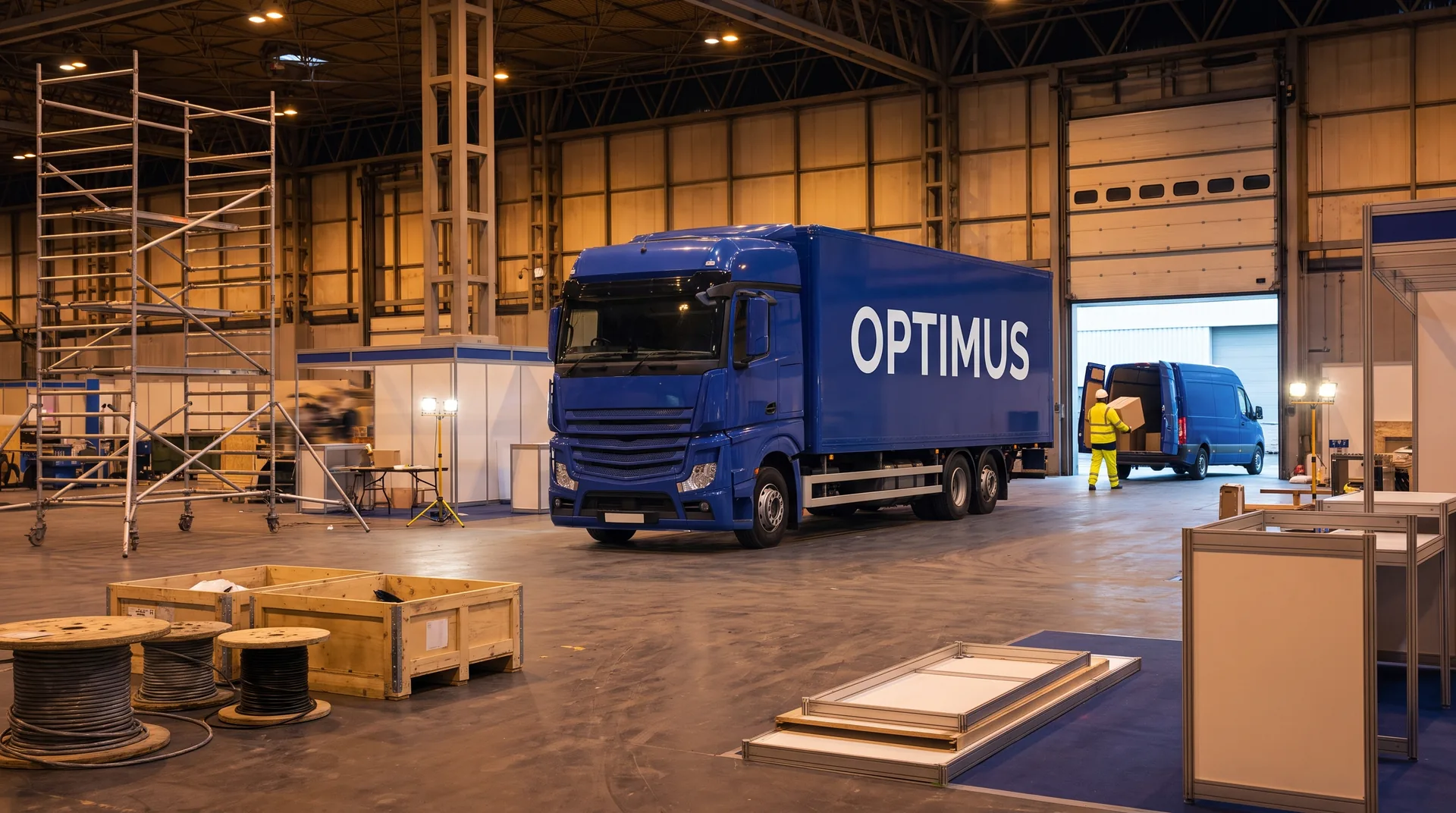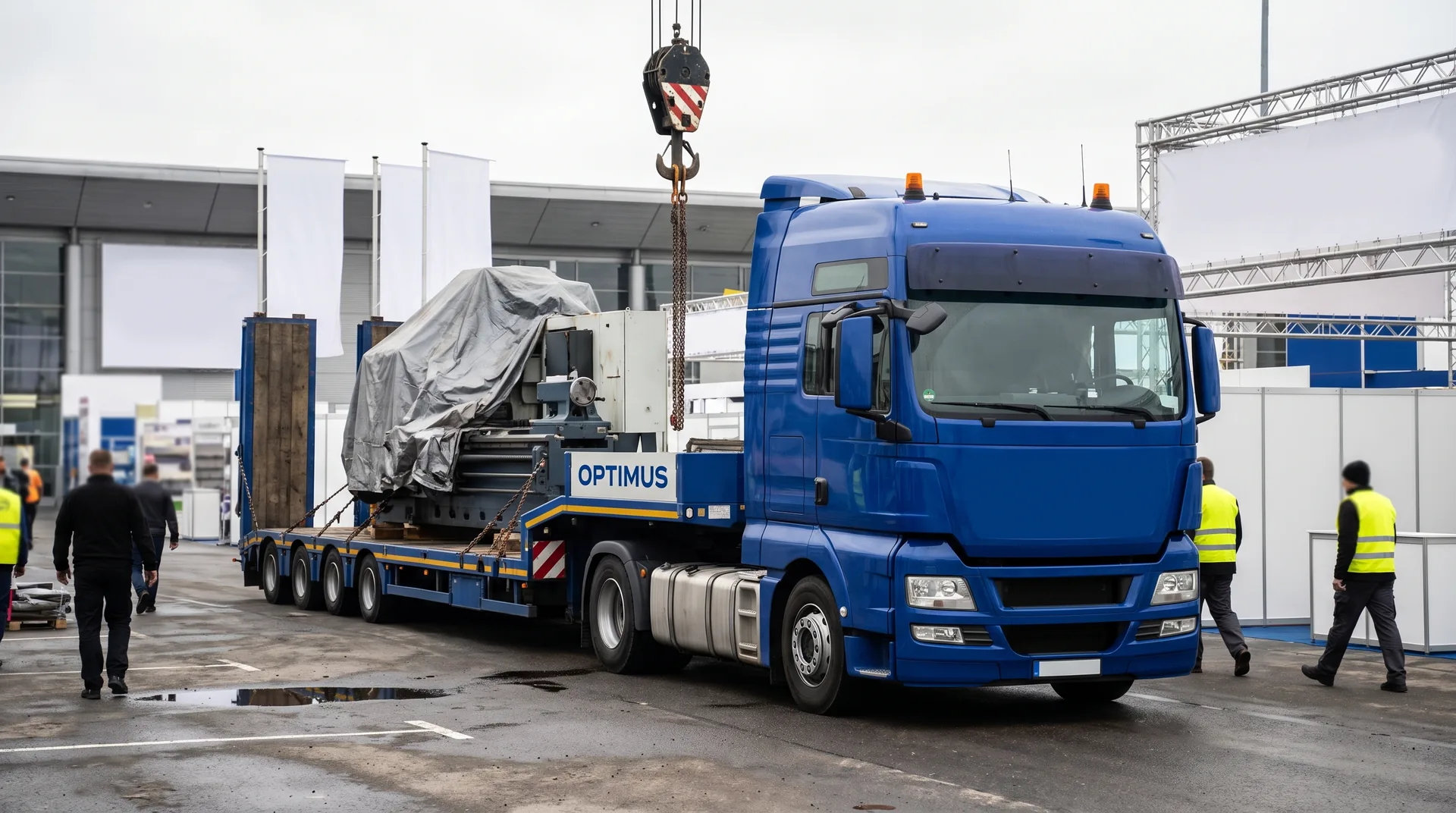
A machine tool bound for METAL or Przemysłowa Wiosna travels as production equipment, not as an exhibit: with the ways and spindle secured, on a base matched to its mass distribution and with the unloading method agreed before departure. Our Kielce base lets the machine arrive early and enter the hall exactly within its window.
What sets a machine tool apart from other heavy plant
Three things. First, mass distribution: the cast iron base of a machining centre concentrates most of the mass on a small foot area, so the pressure on the trailer floor and the hall floor is high even at moderate total mass. Second, sensitivity to vibration: linear ways, ball screws and spindle bearings are precision parts, and hours of transport with unlocked axes can leave a mark on them. Third, levelling: after placement the machine has to be levelled so its geometry returns to factory values, and that is service work, not driver work.
That sets the order of operations. First the maker or the service team prepares the machine for transport: locks the axes, secures the spindle, removes protruding parts, drains coolant tanks. Only then do we come in. Reversing that order ends with the vehicle waiting at the gate while the machine is not ready to load.
Securing ways, spindle and axes
Linear axes are mechanically locked in the position the maker specifies rather than left free; an unlocked axis travels under braking and strikes the end stops. Exposed ways get a protective coating and a cover, to avoid corrosion and dents. The spindle is secured as the manual states, often with a transport arbor. Protruding parts, meaning tool magazines, chip conveyors, operator panels and guards, are removed or additionally supported. All of this is described in the documentation for the specific model and we ask for it at order stage instead of improvising.
How the machine is then secured on the trailer is carrier work and follows the general rules we describe in the article on cargo securing under EN 12195. The machine sits on bearers that spread the load, is lashed through structural points rather than sheet metal guards, and is restrained against both sliding and tipping.
Getting the machine into the hall
This is the stretch where planning errors surface. Four venue parameters decide: clear door width and height, permitted floor loading, aisle width and turning radius, and the capacity of the equipment that will move the machine. All four are published by the organiser for the specific hall, because they differ between halls in one venue. How to gather them is described in the article on floor loading and door clearance.
Separately, check who operates forklifts and cranes inside the hall at that particular show. At many events in-hall equipment and crew are reserved for the operator appointed by the organiser, which changes the carrier scope of work. We take that up in the article on the official fair forwarder versus your own carrier.
A machine that is meant to be sold
A machine tool on display is trade stock. A strap mark in the paint, a dent in a guard or a scratched way reduces its value and can block a sale off the stand. So for this cargo the record of condition before and after matters as much as the lashing itself: photographs at loading, photographs after unloading, visible damage noted on the consignment note. It is the same evidential mechanism we describe in the article on CMR claims and damage reports.
If the machine sells during the show, the return route changes and sometimes the paperwork too. Anticipate the sale scenario in the order so that breakdown day does not start with looking for a vehicle from scratch. The options after a show closes are gathered in the piece on what to do with a stand after breakdown.
Who levels and commissions the machine on the stand
The carrier delivers the machine to the agreed position and takes part in placing it. Levelling, connecting power, start-up and preparing the demonstration is service or exhibitor technical work. Splitting those roles before arrival avoids arguments, because a machine placed by a driver without levelling is still not ready to demonstrate, and a machine waiting for the service team blocks a forklift and an aisle. Who answers for what on site is covered in the article on responsibilities at a trade fair.
When the fair is a stage in a larger relocation
Sometimes a machine goes to a show on its way to a new plant, or leaves the display straight for a customer in another country. Then fair transport is one leg of a larger operation rather than a closed job, and is planned together with the rest of the route. We describe that method in the article on machinery and production line relocation between Poland and the UK, and movements beyond legal limits on the oversized loads page.
What to include in your enquiry
The shortest route to a sound quotation is the machine datasheet: mass, dimensions in transport configuration, lifting and lashing points, mass distribution, maker requirements on tilt and axis locking. Add the loading address with dock and equipment details, plus the hall and stand number at the fair. With that set, the conversation about dates and vehicles takes minutes rather than days.
Sources
- Targi Kielce: METAL, foundry technology fair
- Targi Kielce: Przemysłowa Wiosna industrial spring events
Exhibiting a machine tool or a robot in Kielce or at a UK show? Send the datasheet through the quotation form and we will come back with a transport and unloading plan. See also exhibition logistics and machinery and relocations.