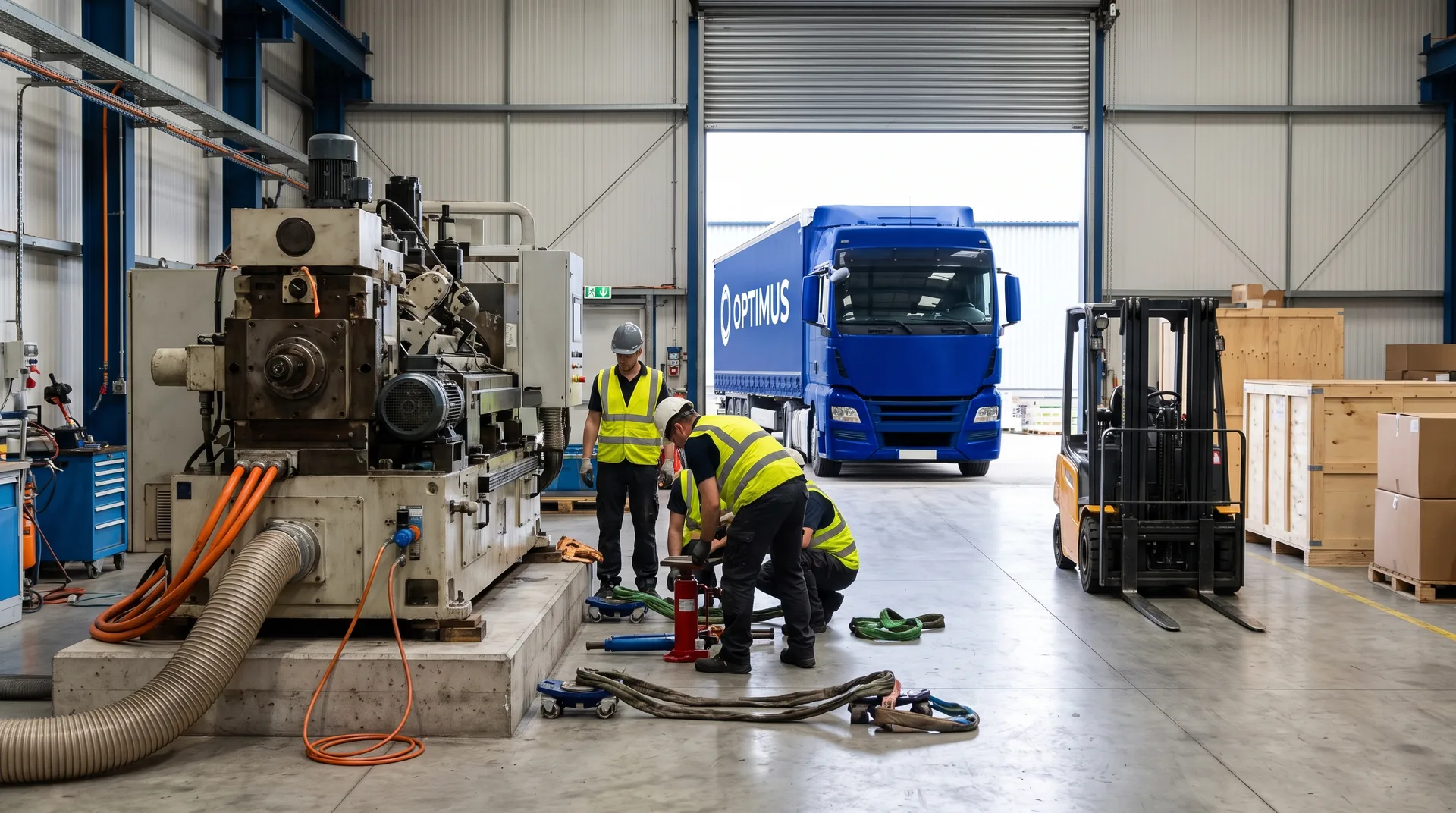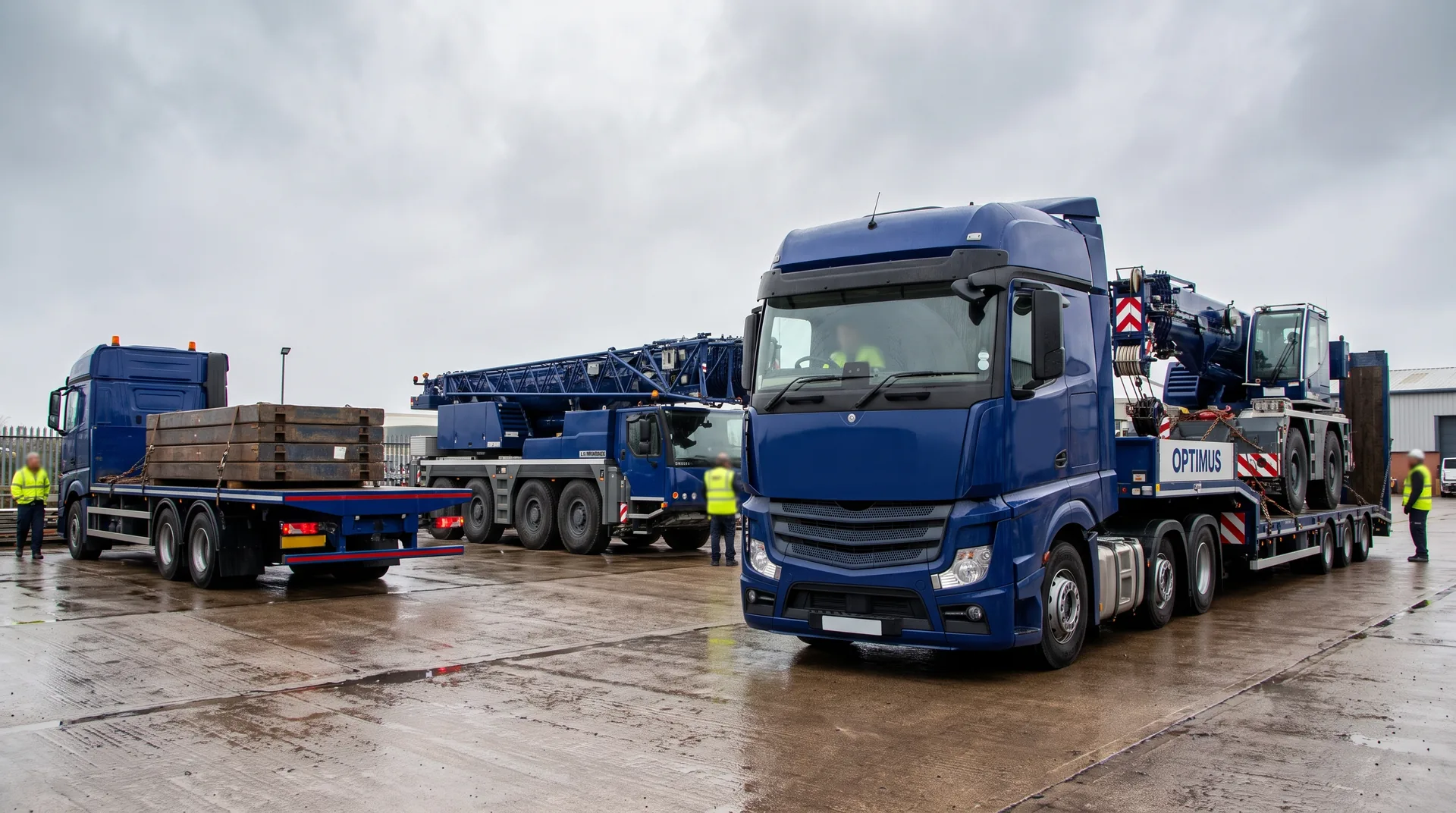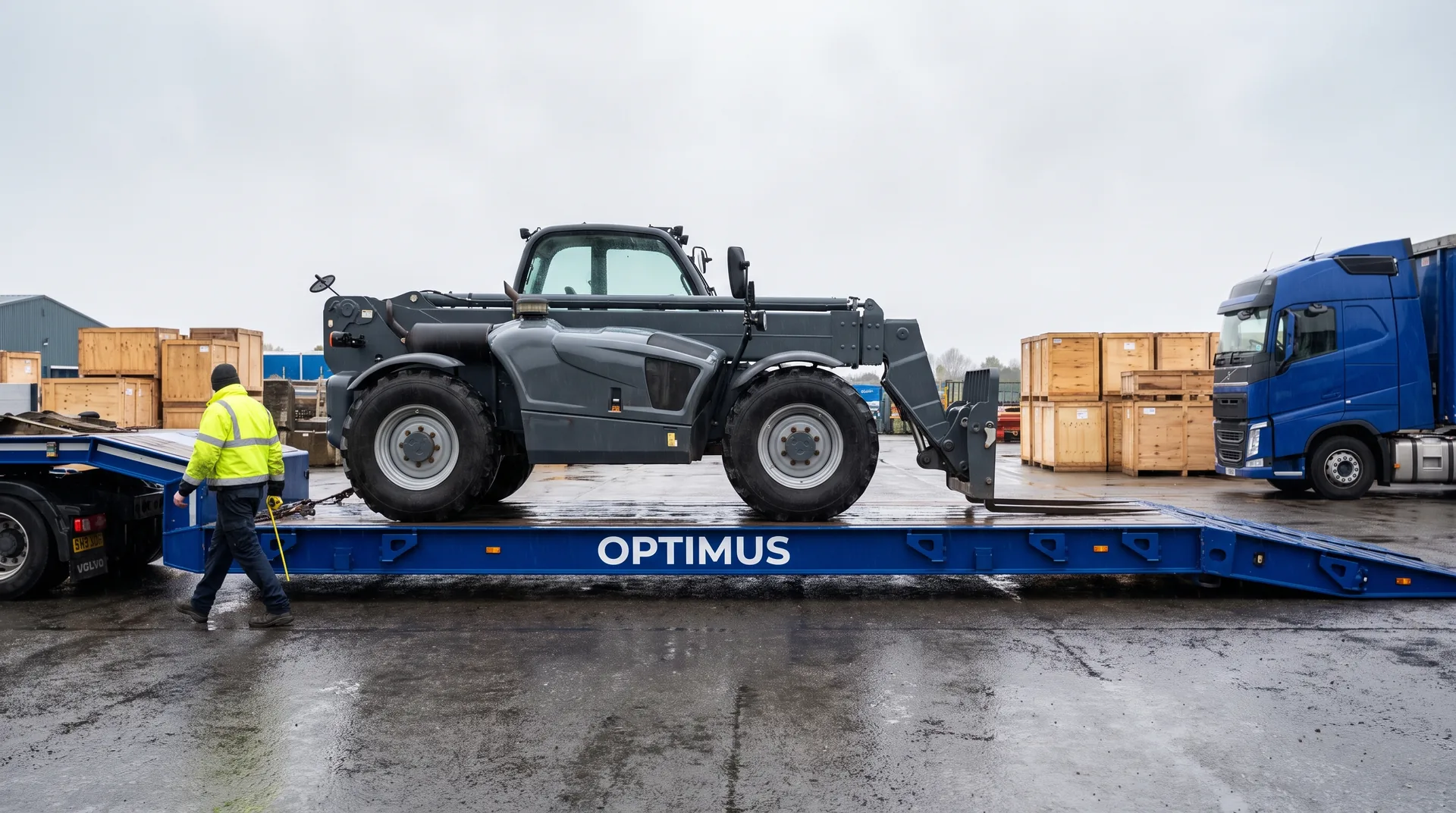
A telehandler is a long machine of moderate weight, so the trailer is chosen on its length in transport configuration, that is with the boom retracted and lowered and the attachment taken off the carriage. That figure differs from the working length in the brochure and from the length with forks fitted, and it is the only one that matters when planning carriage.
Length rules, not capacity
The plate gives lift capacity and lift height, because that is what interests a buyer looking for work. A buyer looking for transport cares about something else: how many centimetres the machine occupies on the deck from bumper to boom tip. A boom retracted fully and rested on its stop lies along the machine and projects past its rear or front depending on the design. Forks add to that if they stay in the carriage, and they usually add most. Removing the forks is the first thing we settle with the yard.
Height is secondary but not irrelevant: a machine with a cab and roof guard is often taller than the silhouette suggests, and on a raised deck it adds up exactly as on an excavator. We measure on the yard, in the state the machine will be released in.
What gets locked before the road
- The boom is retracted fully and lowered onto its rest. An extended telescope works on the ram and the wear pads for the whole run, and that is wear nobody will pay for.
- Stabilisers, where fitted, go up to their end position and are locked mechanically.
- The rear steer axle and the frame levelling mechanism have a transport setting on many machines, described in the manual; without it the machine rocks on the deck.
- A carriage with no attachment is secured against rotation, and hydraulic quick couplings are capped.
- Forks taken off the carriage are lashed separately and laid with the tines facing inboard, because that is the item which, if it shifts, damages everything beside it.
Lashing
A telehandler stands on four large tyres with a high centre of gravity, particularly when the boom lies over the rear of the machine. Axle loading for the vehicle is settled before the machine comes down onto the deck, not after. Chocks go under every axle, lashings into the points the maker specifies, and tension is checked after the first leg because tyres settle. The rules for calculating forces are collected in the piece on cargo securing under EN 12195, and the choice of how to get aboard in the article on loading a machine at the auction yard.
Fluids, fuel and battery
The hydraulic system runs hoses along the whole boom, so leaks happen here more often than on short-armed machines, and oil dripping from above spreads across the deck. We check hoses, wear pads and rams before loading. The fuel level is agreed before collection, because fuel type, tank construction and contents decide whether the movement falls under dangerous goods rules. The battery is disconnected, the terminals protected, the keys travel with the paperwork and the cab is locked.
A machine off a farm and the phytosanitary check
In the United Kingdom a telehandler is a universal machine: the same model reaches auction from a building site or from a farm. The second history changes the formalities. Machinery and vehicles used for agricultural or forestry purposes are subject on entry into the Union to the phytosanitary conditions, with a notification in TRACES NT and a CHED-PP certificate, and the importer must be entered in the register kept by the Polish plant health service. We describe the whole procedure and its order under farm machinery auctions in the UK; here one practical conclusion is enough: establish the history of the machine before you bid, because it drives not only the price but also the route by which the load enters the Union.
Groupage or a dedicated vehicle
Compact telehandlers are sometimes low and short enough to travel in groupage with other equipment from the same sale. High reach machines take the deck entirely and go on a dedicated vehicle. The boundary runs where a load starts to occupy about a third of the trailer, roughly twelve pallets. Consolidated equipment waits for the next scheduled line departure, while a dedicated run leaves against the collection deadline. What to supply so the rate is binding is listed in the piece on a transport quote before the auction.
Sources
- GOV.UK: securing loads on HGVs and goods vehicles
- GDDKiA: abnormal movements, permit categories and lead times
- PIORiN: phytosanitary conditions for machinery used for agricultural or forestry purposes
Found a machine at auction and want the delivered cost? Send the model, transport length and yard address through the quote form. See also forklifts and lifts from the UK and customs clearance. From the same category: a skid steer loader from a UK auction.