Exhibition transport to the UK runs on three parallel tracks: haulage timed to the venue build-up windows, post-Brexit customs with a GMR, and a temporary admission route for exhibits that come back unchanged, usually an ATA carnet. The delivery date is set by the organiser schedule, not by what suits the carrier.
Where planning starts
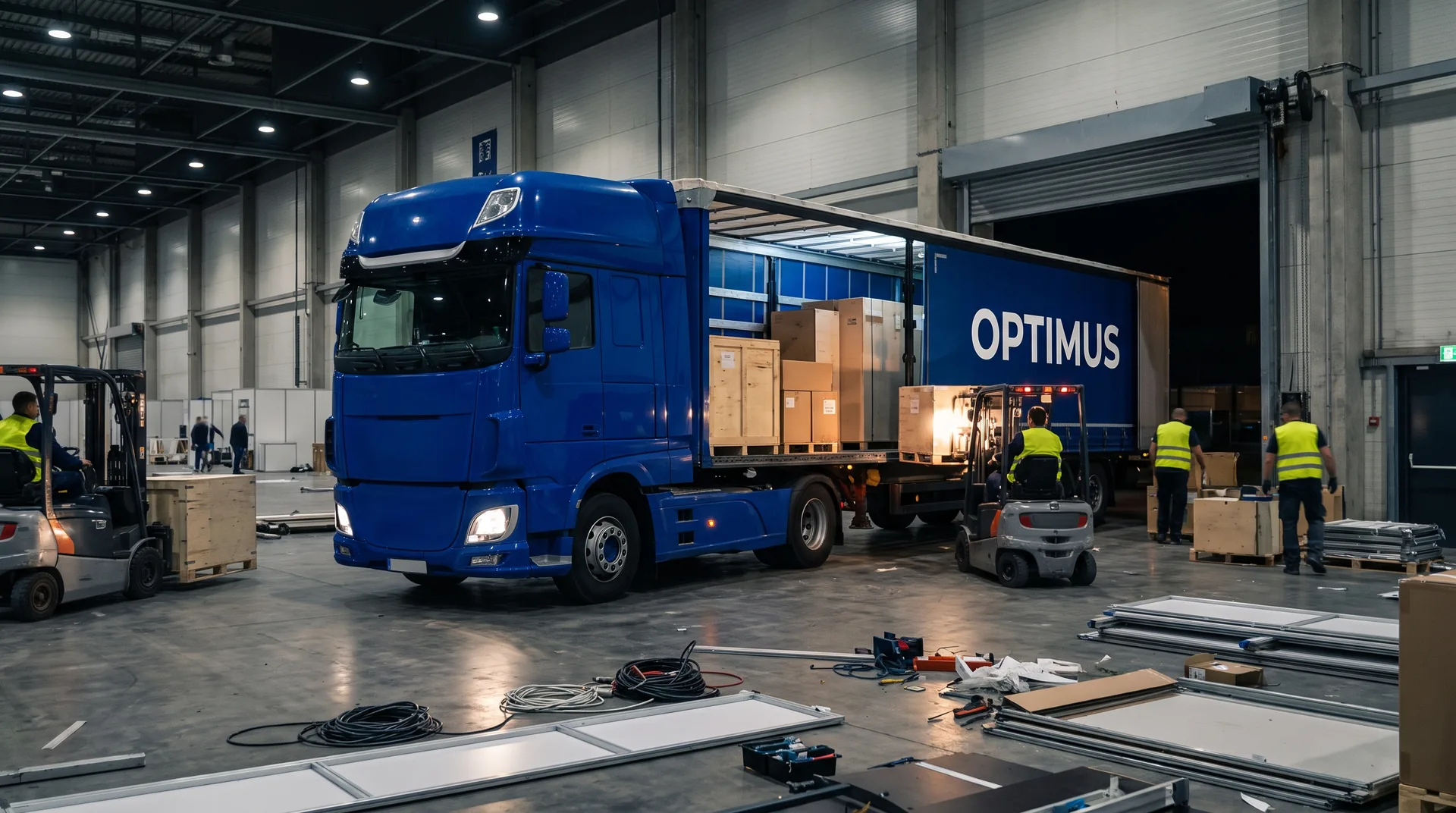
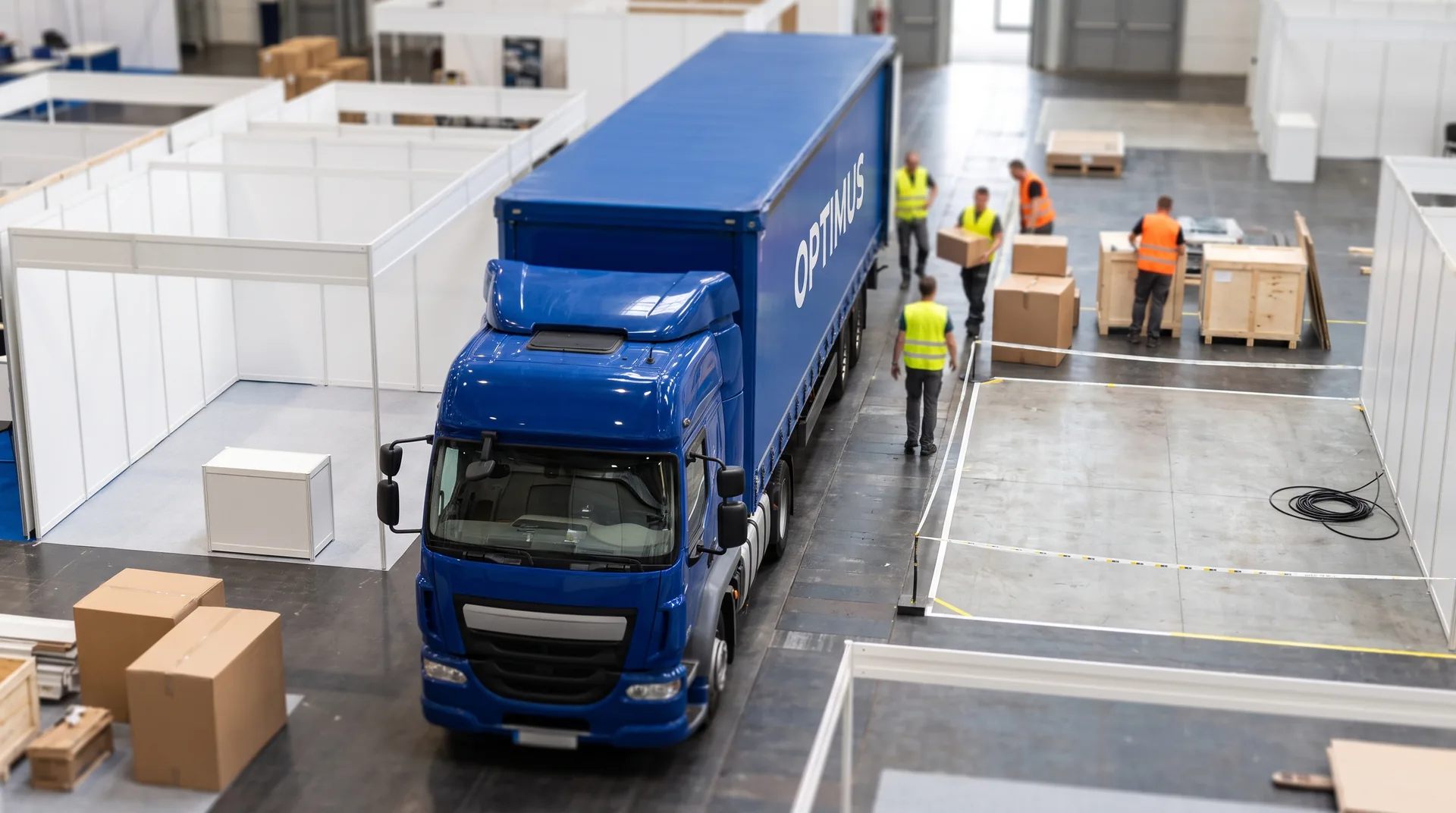
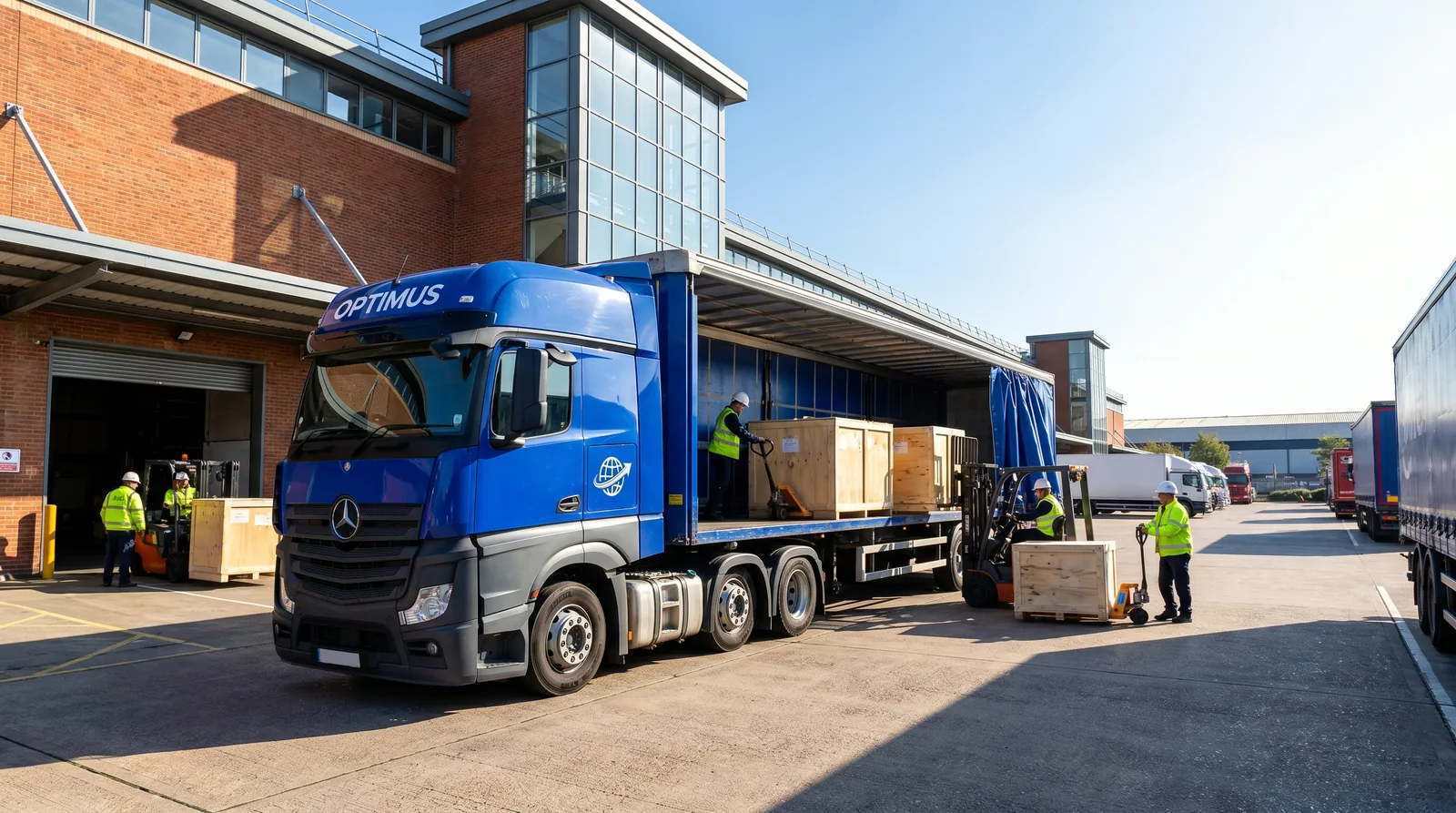
The starting point is not the opening date of the show but the venue regulations and the organiser schedule. They determine when a vehicle may enter, how long it can stand at the stand, whether a vehicle pass is needed and whether the venue insists on its own handling teams for heavier items. Only with that in hand do we work backwards: unloading time, crossing, customs, loading date in Poland. On the Poland lane you normally allow two to three working days for groupage and correspondingly less for a dedicated vehicle.
ATA carnet or ordinary clearance
An ATA carnet pays off when the whole load returns home unchanged: stand structure, demonstration equipment, machines, display furniture. It will not cover what stays in the UK: leaflets handed to visitors, giveaways, samples for consumption or goods sold on site. So the load is split before departure, with separate paperwork for each part. The document itself is explained in what an ATA carnet is, the application route in how to get an ATA carnet, and the closing formalities in carnet return and discharge.
Post-Brexit customs in an exhibition context
Whatever the carnet situation, the full border procedure applies: EU export declaration, safety declaration, UK import declaration and the GMR the driver uses to enter the terminal. A carnet does not remove those steps, it replaces payment of duty and import VAT for goods under temporary admission. In practice there is more paperwork than on a straightforward commercial delivery, and every document has to describe the same load using the same wording and the same numbers.
Stand structures and technical kit
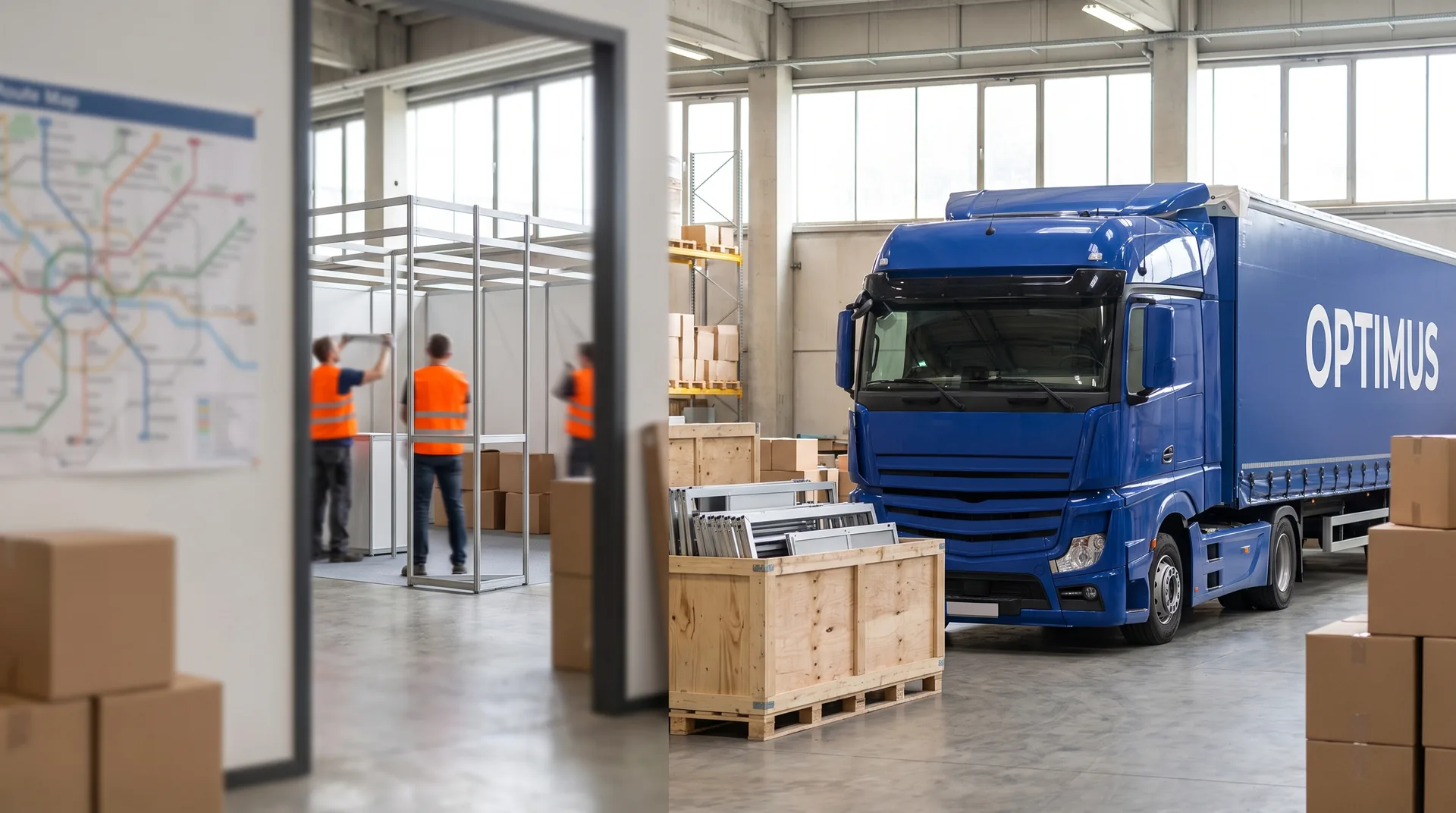
Exhibition builds rarely travel as a typical pallet. They are usually a set of crates, frames, long elements and high-value electronics. That kind of load goes in transport cases, numbered and itemised line by line in the packing list, because the same document is later used to discharge the carnet and to check the kit back in after dismantling. How we move stand structures is set out in transport of exhibition stands, and a broader view of vehicle types is in transport to UK fairs from vans to oversized.
The two most common venues
Most Polish exhibition traffic goes to one of two places. ExCeL London sits in east London, so the approach runs through the city and is subject to London rules for heavy vehicles; the detail is in our guide to transport to ExCeL London. The NEC Birmingham sits on the motorway network in the Midlands, which makes the approach easier without softening the build-up windows at all; we cover it in transport to NEC Birmingham. The venue is chosen by the organiser; the exhibitor fits the logistics around it.
Getting the exhibits home
Breakdown is when goods and money are most easily lost. The hall empties quickly and anything not collected ends up, at best, in venue storage at the exhibitor expense. So the return vehicle is booked together with the delivery, not after the show closes. With an ATA carnet there is one more condition: the goods must be presented for export and the carnet properly discharged, otherwise the guarantee is called. We cover the whole sequence in post-show logistics.
Insuring exhibits and the risks specific to trade fairs
Exhibition freight differs from commercial freight in that it is handled, unpacked and repacked repeatedly, often by people who do not do it for a living. Add to that a crowded hall, forklifts moving between stands and equipment left unattended during a break. Standard carrier liability is calculated from the weight of the goods, and exhibits tend to be light and expensive, so for demonstration equipment it is worth considering separate cover for the duration of the event, including time on the stand. The differences between types of cover are set out in liability cover against cargo insurance. It is also worth planning where empty cases and packaging sit during the show: a hall is not a warehouse, and their disappearance becomes a problem at packing time. We cover it in empty crate storage during UK fairs.
Sources
- ICC: the ATA carnet system
- GOV.UK: ATA carnets and UK entry
- Polish Chamber of Commerce: ATA carnets issued in Poland
Exhibiting at a UK show? Give us the venue, stand number, build-up dates and an exhibit list in the quote form and we will arrange delivery, paperwork and the return leg under one job. The full offer is on our exhibition logistics page.