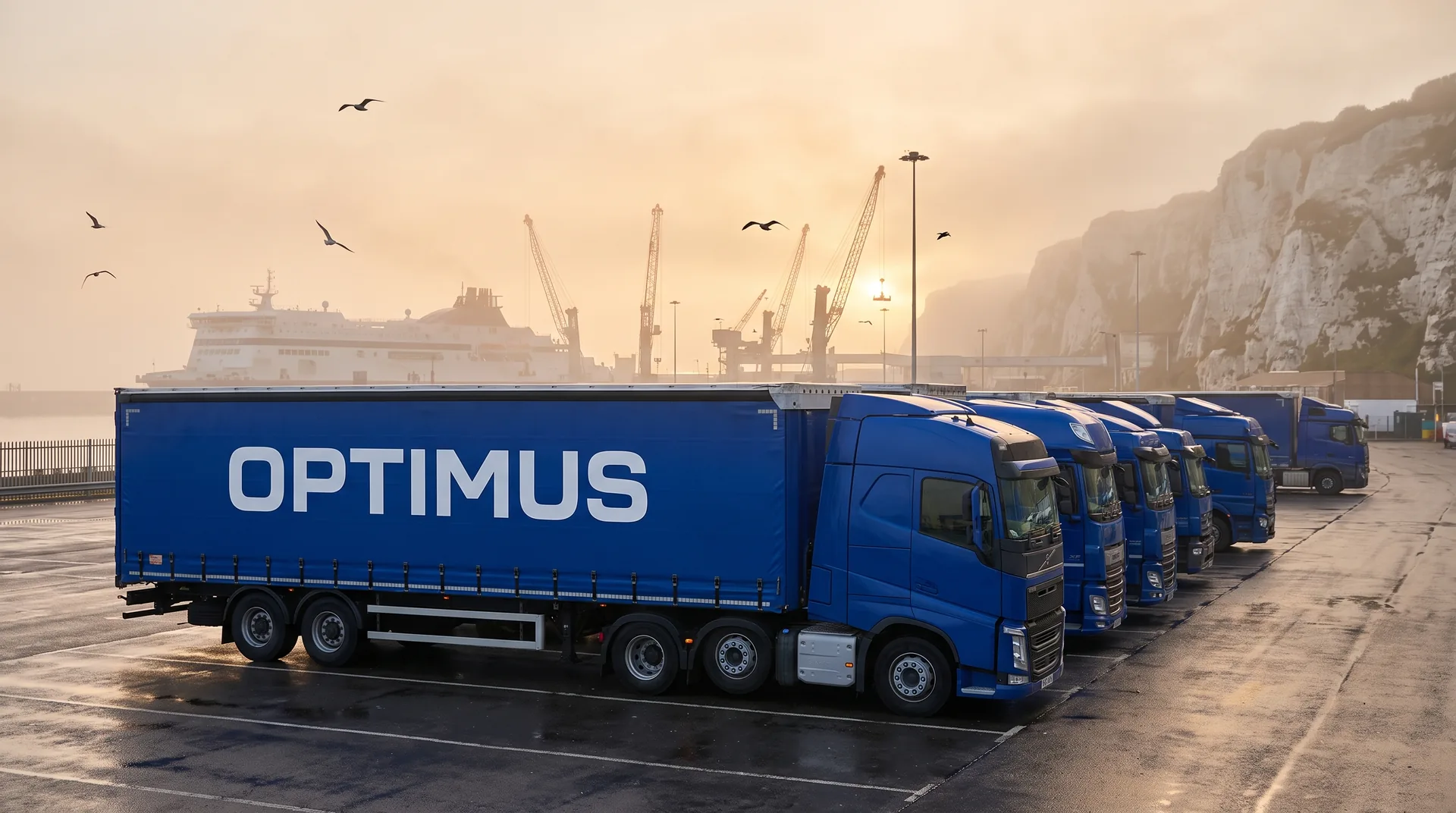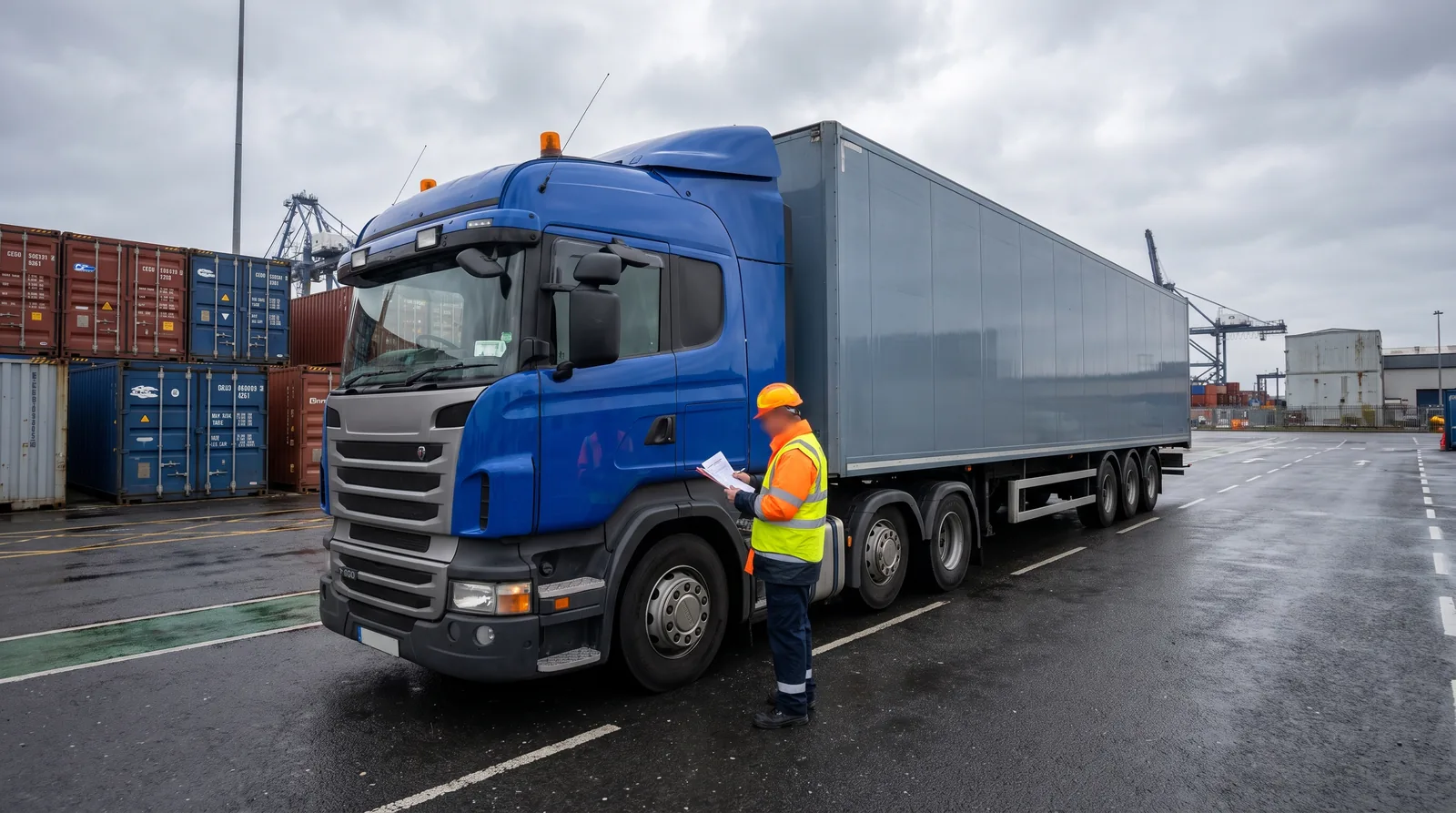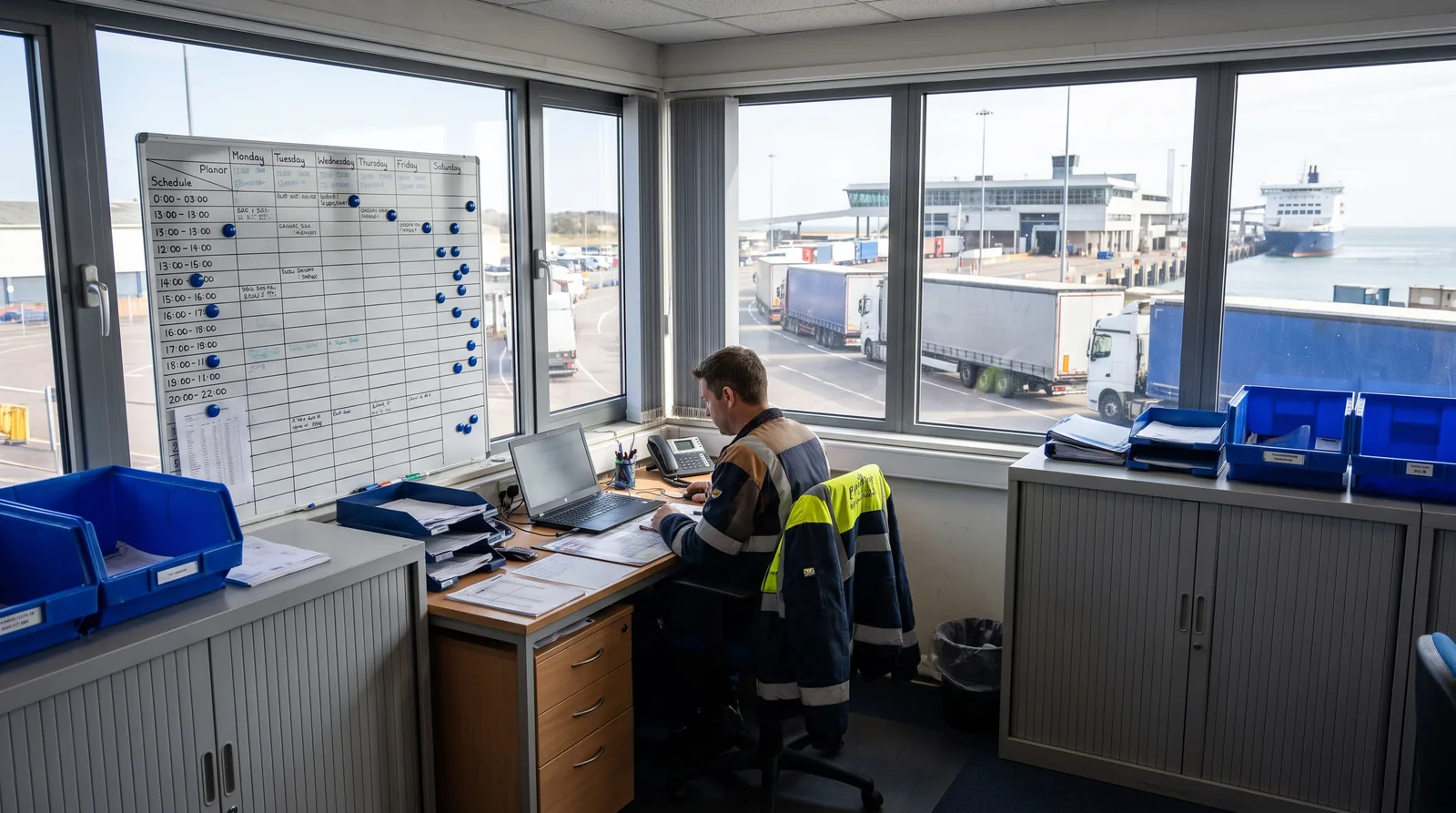
A freight booking reserves space for a truck and trailer on a specific sailing, made on a freight account with the crossing operator. It carries vehicle details and dimensions, driver details, a goods description with any dangerous goods declaration, and for the United Kingdom a movement reference tying the customs entries together. A driver cannot buy that at the gate.
What the booking actually contains
- Sailing and route: port of departure, destination port and scheduled departure, which the rest of the delivery is built around.
- Vehicle: registration numbers of unit and trailer plus the length and height of the outfit, which drive both deck space and the freight rate.
- Driver: details for check-in and document control at the port.
- Cargo: goods description and weight, and for dangerous goods a declaration lodged before the sailing rather than at the ramp.
- For the UK: the movement reference from the border system, which must tie together every customs entry for the freight on board.
Why the gate is not a ticket office
Operators sell freight on company accounts, not over a counter. A vehicle without an account is unrecognisable to the system, so at best it waits for spare space at a walk-up rate and at worst is not accepted at all. Then there is the border: without a movement reference the system will not admit the vehicle to a UK-bound terminal, however much cash the driver is carrying. We explain the mechanism in the GMR and in GVMS in practice.
Cut-off: the point after which nothing can be fixed
Every operator sets a check-in cut-off before departure and states it in the booking conditions. After that moment data cannot be corrected and a vehicle cannot be added: the booking goes with the sailing. In peak season operators advise allowing extra time for controls before check-in, because the queue for the terminal can be longer than the transit through the port itself. The exact figures depend on route and operator, so we check them on every booking rather than working from memory.
What happens when something is missing
A wrong registration number, an undeclared dangerous load or a missing border reference all have the same effect: the vehicle stands, the ferry leaves, and the delivery window at the far end goes with it. A lost crossing means at least a day of delay and a rebooked appointment, sometimes an amendment charge as well. That is why we verify the outfit data before the vehicle leaves base, not in the check-in queue. What to do when a sailing is cancelled by weather is covered in a storm and a cancelled crossing.
Choosing the crossing is an operational decision
Not every sailing suits every load. The tunnel and the ferry differ in transit time, departure rhythm and rules for dangerous goods, and east coast English ports can be the better choice for deliveries into the north. We set that out in ferry or Eurotunnel, in Dover or the east coast ports and in the Dunkirk to Dover crossing. Restrictions on ADR loads are collected in ADR by ferry and Eurotunnel.
How we work
We hold our own freight accounts with operators on the Channel and the North Sea, so the booking, the declarations and the border reference are created in one place, tied to the customs work and the transport. The driver leaves with a complete set of numbers and at the gate simply confirms what is already in the system. On Irish traffic there is a separate pre-boarding filing, covered in cargo stuck without a PBN. Customs formalities are handled within the job, as described on our customs clearance page.
Amending a booking and what remains after the sailing
A freight booking is not immutable, but every change has a cut-off. Moving to another sailing, changing a trailer number or changing the driver are normally possible until check-in closes; after that they require a new booking, and in peak season free space can be several sailings away. So changes are notified the moment it is clear the plan has slipped, not on arrival at the port. After the sailing there is a record: confirmation of carriage on board, which can be needed for settlement with the customer and for evidencing the movement, plus the entries in the border system. It is worth keeping them with the rest of the job file, because in a dispute about timing they show exactly where the delay arose. How we track a consignment en route is described in tracking a shipment.
Sources
Need a movement with the booking and paperwork closed before departure? Describe the load and the timing in our quote form and we will arrange route, crossing and clearance under one job.