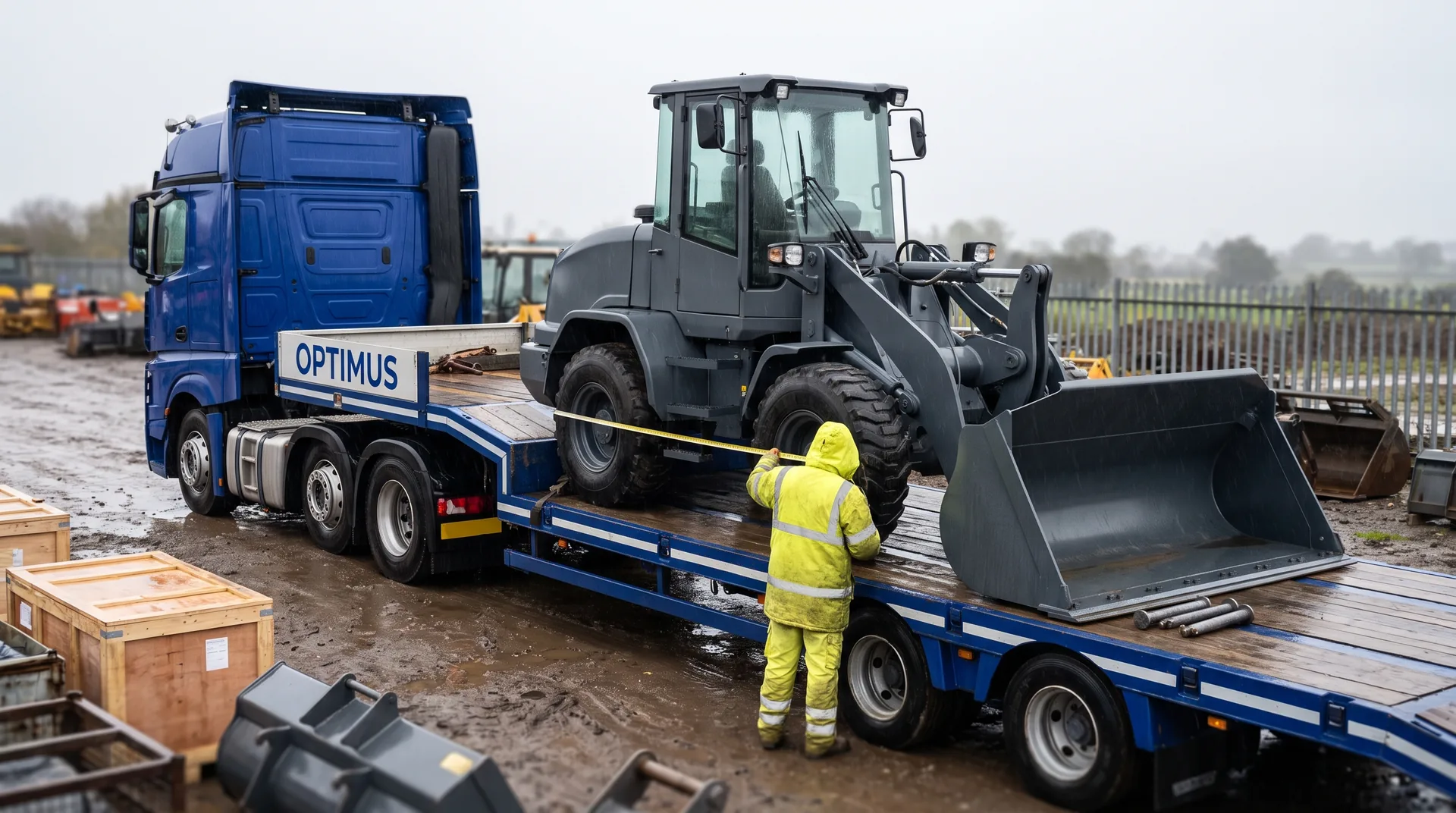
With a wheel loader it is width, not weight, that decides the type of movement. The bucket is often wide enough that the machine exceeds the limit with it and stays inside without it. So the standard is carriage with the bucket removed and laid beside the machine on the deck. The operation is cheap, is done on the yard, and changes both the dimensions of the load and the structure of the customs entry.
Width: why the bucket rules
The body of a loader is relatively narrow, because it has to work between stockpiles. The bucket is wide, because its width drives how much it picks up. The gap between those two figures is the whole transport problem of this machine. The maker publishes machine width and bucket width separately, and the auction listing usually does not distinguish them. For the quote we take both figures from the record of that unit, because a machine from auction often carries a bucket chosen by its last owner rather than the factory one.
Tyres are the second variable. Wide section industrial tyres make the machine broader than the same model on standard rubber, and protection chains, if still fitted, add a little more. Chains are worth taking off: they widen the outline, scuff the deck, and are a valuable item easier to move as separate cargo.
A removed bucket is a separate line
Taking the bucket off solves the road problem and creates a paperwork one. From that moment two things travel on the trailer: a machine and an attachment. Both have to appear on the loading list, on the transport document and on the customs declaration, each with its own description and value. Neglecting that after a package purchase is the commonest post auction error and surfaces at a check, when there is one more item on the trailer than the paperwork declares. How values are apportioned in an auction purchase is described in our piece on the customs value of a used auction machine.
Articulation, locks and lashing
- An articulated loader has a frame lock provided for transport and servicing. It always goes on, because without it the machine jack-knifes on the deck under braking and shifts the weight distribution.
- The lift arms come down fully, and if the bucket stays on the machine it rests on the deck with a support. Nothing hangs on rams.
- Chocks go under every axle. Large industrial tyres deflect heavily, so lashings lose tension faster than on a tracked machine and need retensioning after the first leg.
- Lashing points come from the manual. Strapping through the articulation joint or a lift ram damages a part built to carry working loads.
- The removed bucket gets its own set of lashings and chocks so it cannot slide across the deck, teeth facing inboard rather than out.
How restraint forces are calculated and lashings chosen is described in the article on cargo securing under EN 12195.
Fluids, fuel and battery
A loader has a large hydraulic system and a transmission with its own oil, so before loading we check rams, hoses and axles for tightness. The fuel level is agreed with the yard before collection, because the fuel type and tank construction decide whether the movement falls under dangerous goods rules. The battery is disconnected and the terminals protected, unless the machine is to drive off the trailer under its own power; in that case it is disconnected at the transhipment point. The keys travel with the paperwork.
Soil in the tread and entry into the Union
A loader working on aggregate stockpiles is usually cleaner than an excavator, but a machine from a farm or a timber yard brings soil and plant debris in the tread, in the bucket and behind the panels. Equipment used for agricultural or forestry purposes is subject on entry into the Union to the phytosanitary conditions: notification in TRACES NT, a CHED-PP certificate and the importer entered in the register kept by the Polish plant health service. We set the procedure out under farm machinery auctions in the UK. Washing the machine on the yard pays regardless, because a dirty bucket spills aggregate along the route.
Which trailer, and can anything else go on
A wheel loader is a dedicated load: it takes the deck entirely, and its height usually forces a low loader. Anything added is limited to attachments from the same sale, provided they fit beside the machine without reaching beyond the deck. Collection from the yard, carriage and release run through our Milton Keynes warehouse and the Kielce transhipment base with its ramp, lorry-mounted crane and forklifts rated to five tonnes. Clearances are handled in cooperation with our regular customs agencies on both sides of the Channel. The ways of getting a machine aboard are described in the piece on loading a machine at the auction yard.
Sources
- GDDKiA: abnormal movements, permit categories and lead times
- GOV.UK: securing loads on HGVs and goods vehicles
- European Commission: Union customs law and import declarations
Buying a loader and unsure whether it stays within limits with the bucket on? Send the model, machine width and bucket width through the quote form. See also oversized loads and documents for a machine bought at auction. Related topic: telehandler transport from the UK.