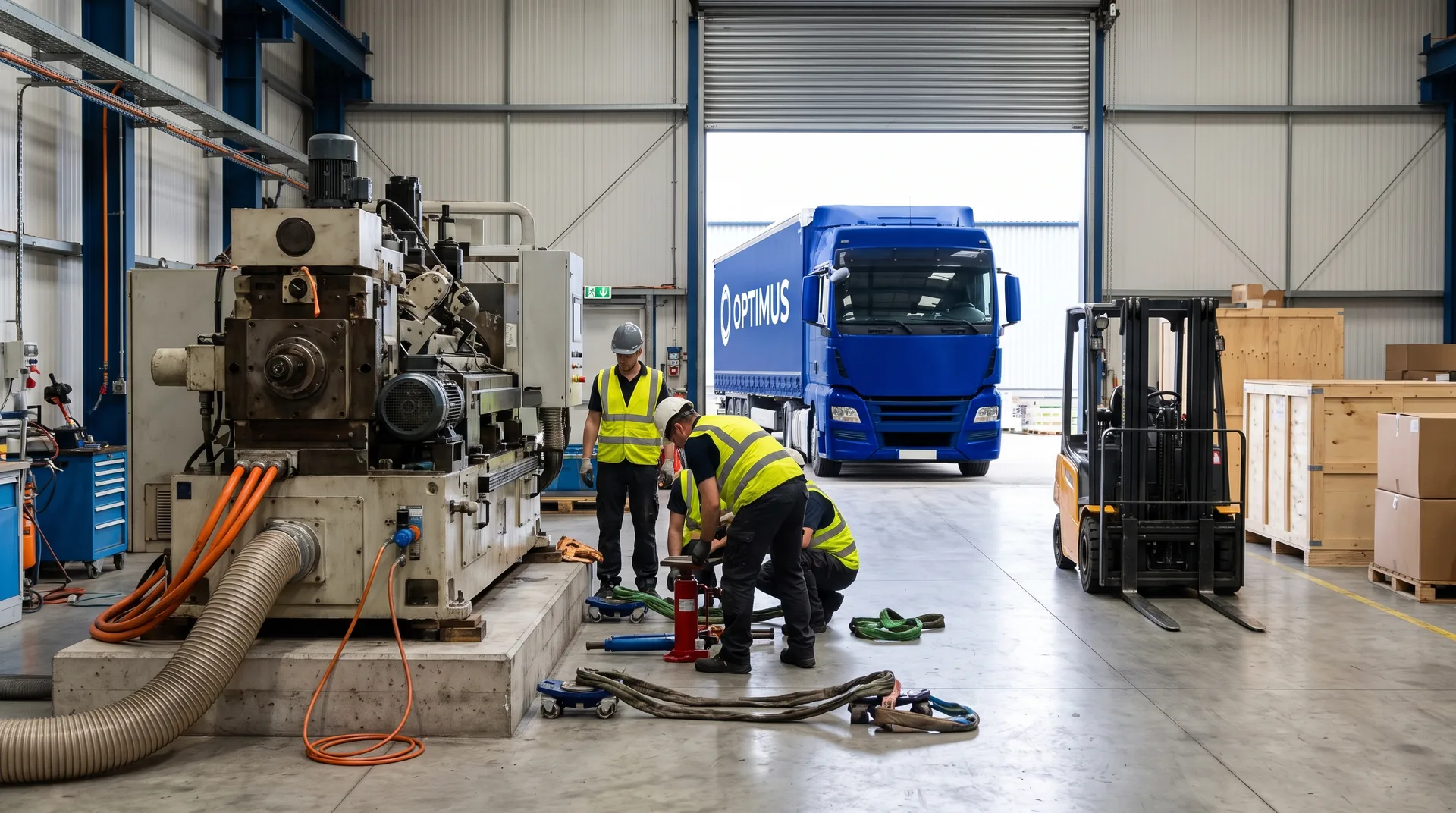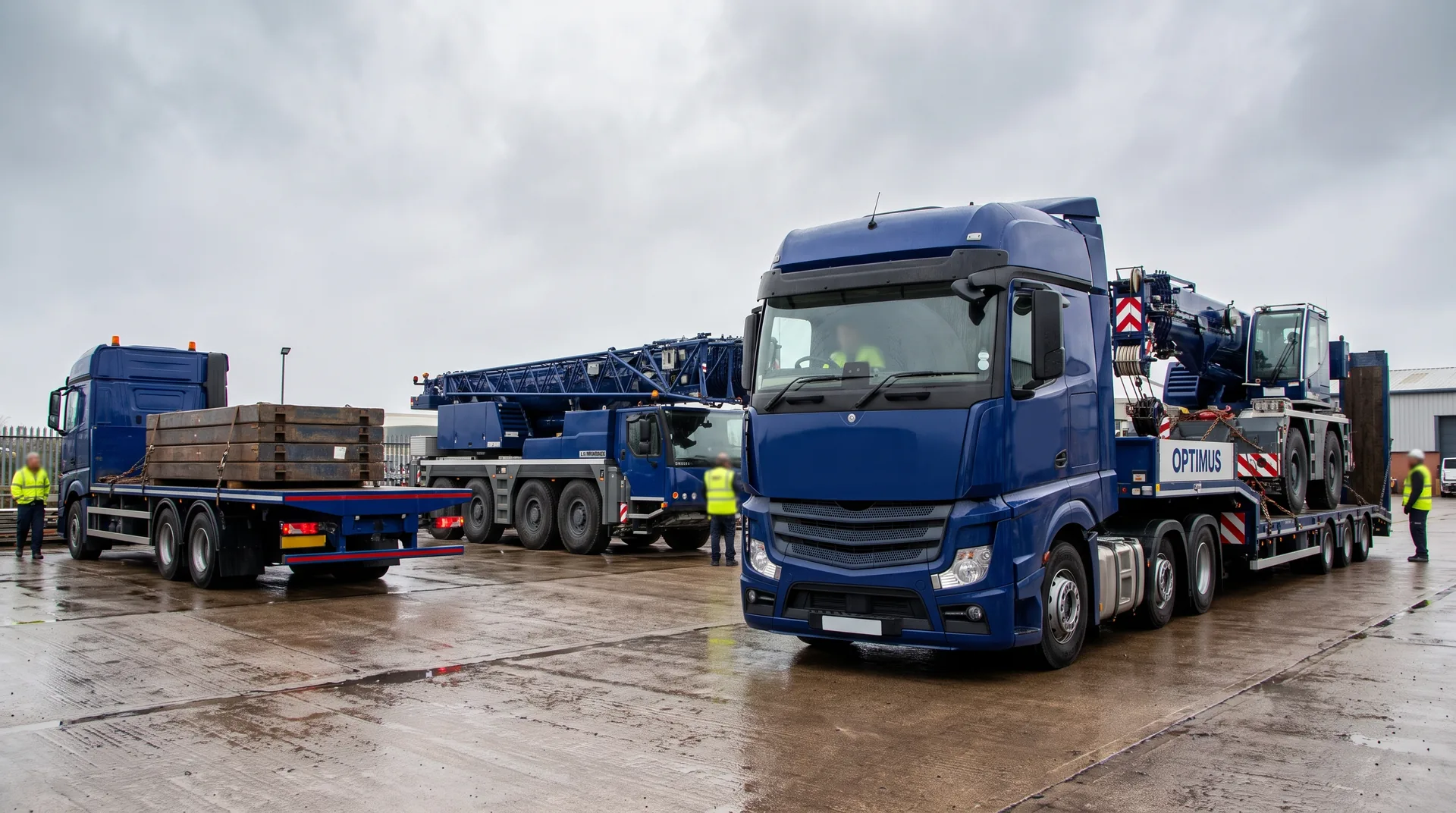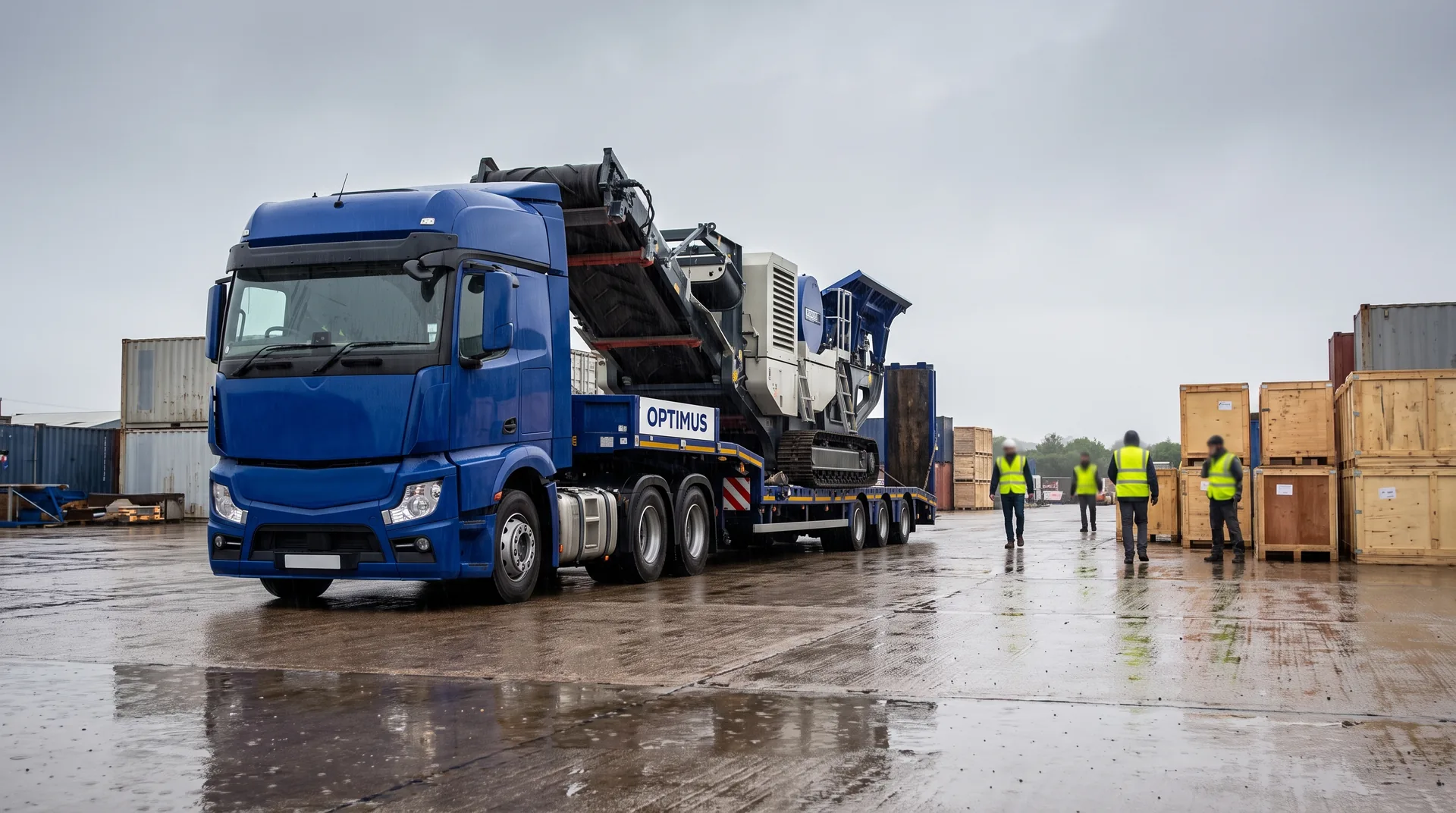
A crusher travels as an abnormal load practically without exception. The belt conveyors fold into a transport position, but the body with the crushing chamber and the feed hopper stays tall, and the weight of the machine is concentrated over a short stretch. So with this machine planning starts from permits and route, and only then is collection from the yard arranged.
What folds and what stays
A mobile crusher is designed with carriage in mind: the discharge belt lifts and lies along the machine, the side belts fold upward, and the legs retract inside the outline. All of that gives a real reduction, mostly in length and width. What cannot be reduced is the height of the body with the hopper, and the weight. Jaw, impact and cone crushers differ in proportion, but none of them comes down to a silhouette an ordinary trailer could carry.
The practical conclusion: transport dimensions come from the record of that unit and are verified by measurement on the yard, because used machines are often retrofitted with magnetic separators, extra belts and guards that appear in no factory record. How we handle dimensions is set out under excavators and loaders from UK auctions.
Permits and route as the first step
With an abnormal load the route is not obvious: passability is decided by structures, bridges and their capacity, not by distance. Permit categories, issuing authorities and processing times are published by GDDKiA, while the British side runs its own notification regime with warnings to highway and bridge authorities; we describe it in the article on oversized transport to the UK. The two processes run independently with their own timelines, and a machine waiting on the yard for a document runs up the charges we cover under collection deadlines at the yard.
Loading: crane, winch or its own power
- A tracked crusher with its own drive will climb the ramps, but slowly and only on hard, level ground; a steel track under that weight tears up the surface, so plates are mandatory.
- A skid mounted machine or one without drive goes on the winch or the crane, by the lifting points the maker specifies. An eye added by a previous owner is not a lifting point.
- The position on the deck is settled before the machine comes down, because with concentrated weight a handful of centimetres changes the axle loads of the vehicle.
- Hydraulic legs are retracted and locked, and the rams secured against creeping out.
- Hopper flaps, screens and guards are closed and latched; a loose flap on the road behaves like a sail.
Choosing how to get aboard is described in the piece on loading a machine at the auction yard, and the lashing rules in the article on cargo securing under EN 12195.
Fluids, fuel and battery
A crusher has an engine, a hydraulic pack and often a separate water spray system. The water is drained before the road, because in frost it splits the pipework, and a spill on the deck mixes with dust and turns the load into a problem. The fuel level is agreed with the yard before collection, because fuel type and tank construction decide whether the movement falls under dangerous goods rules. The battery is disconnected, the terminals protected, and the keys and remote controls travel with the paperwork.
Dust, aggregate and a clean machine
A machine taken off a recycling yard is full of dust and fine aggregate in the chamber, on the screens and in the belt channels. That material spills out en route, and on an abnormal load, watched more closely than an ordinary one, it is a problem in itself. The chamber and the belts are emptied and swept on the yard before loading. If the machine has worked on agricultural or forestry ground, the phytosanitary conditions apply on entry into the Union, with a notification in TRACES NT and a CHED-PP certificate and the importer entered in the register kept by the Polish plant health service; we describe the procedure under farm machinery auctions in the UK.
Sources
- GDDKiA: abnormal movements, permit categories and lead times
- GOV.UK: ESDAL and notifying abnormal loads
- HSE: workplace transport safety on yards and sites
Planning to buy aggregate processing equipment and want the cost and the timeline? Send the model, transport dimensions and yard address through the quote form. See also oversized loads and customs clearance. Related topic: a screener from the UK.