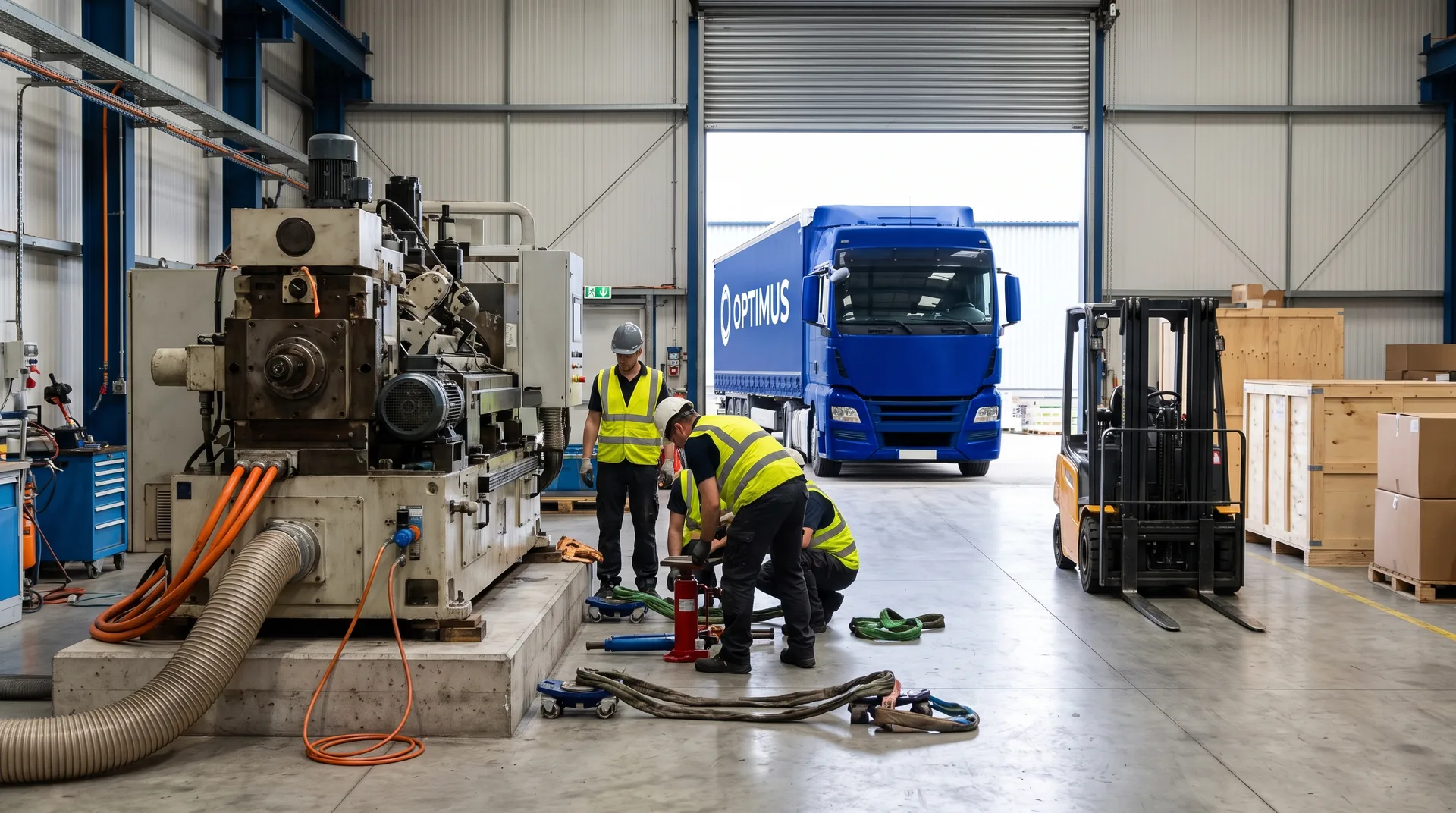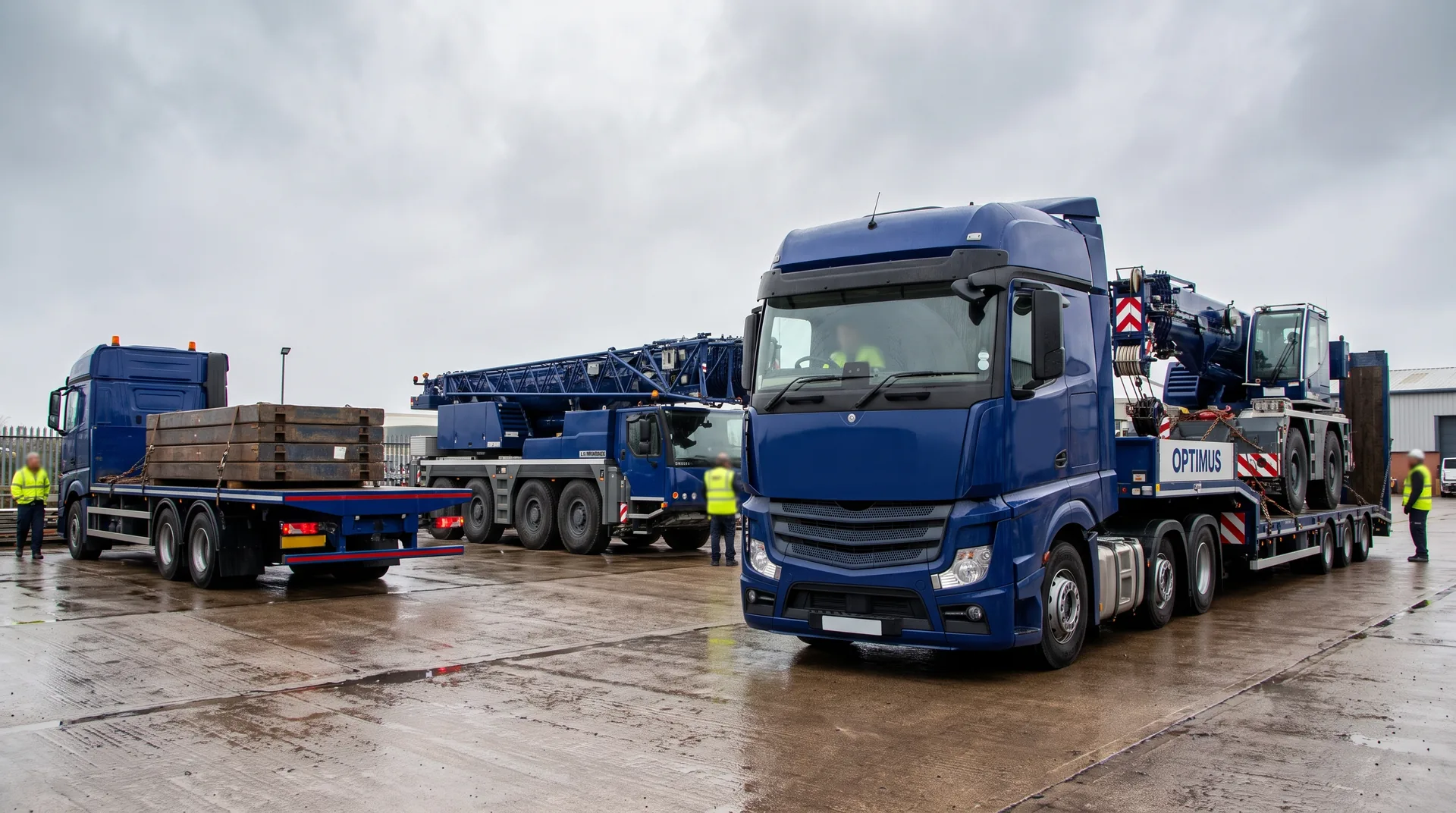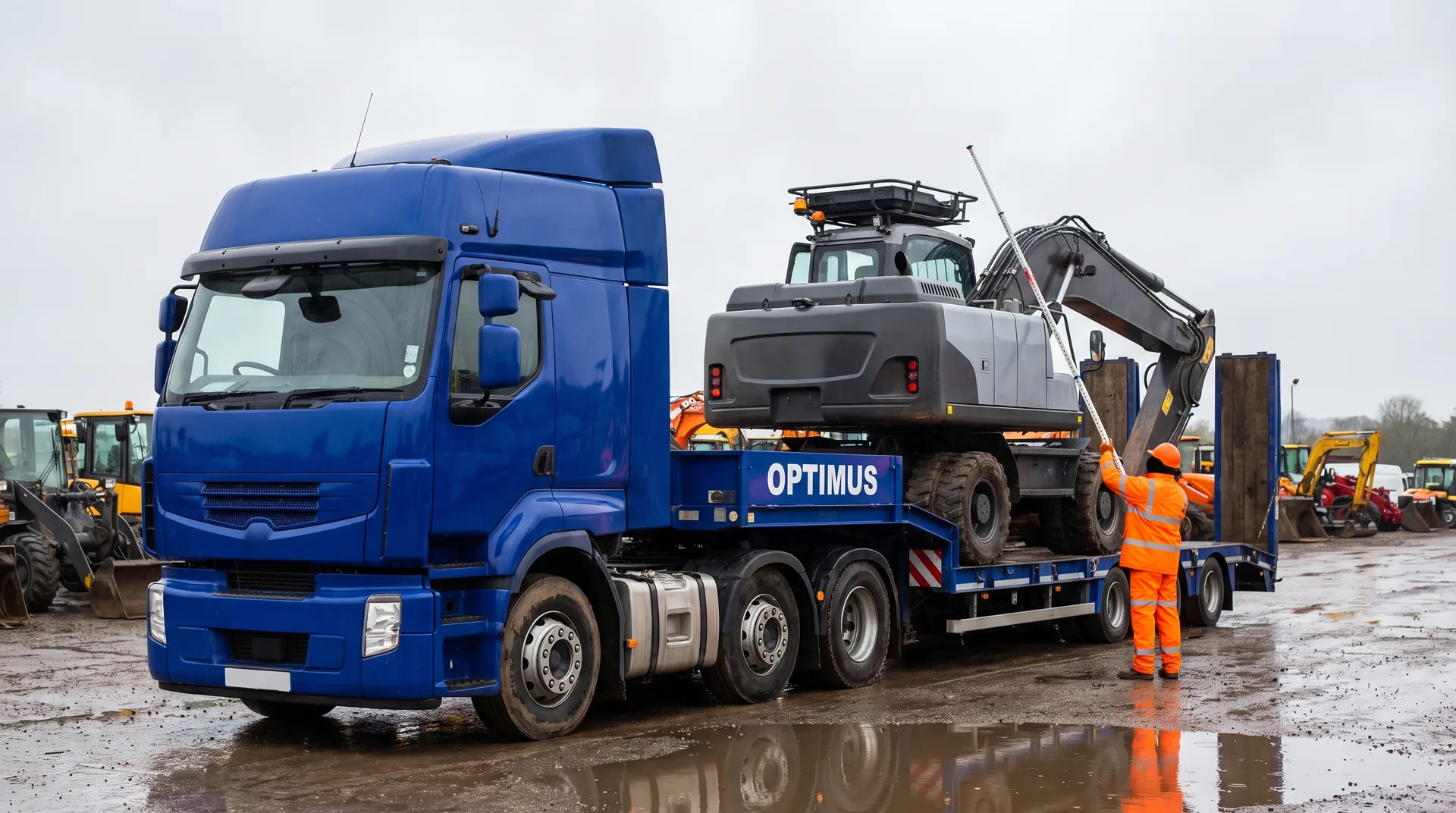
A wheeled excavator drives onto the trailer on its own tyres, so loading is simpler than with a tracked machine and needs no ground protection on the yard. The difficulty moves elsewhere: to the combined height. A cab with a protective structure standing on a trailer deck can take the load above the legal limit, and neither the auction listing nor the maker brochure shows it.
A wheeled machine drives on, but not always
On rubber tyres the machine climbs the ramps without a steel track tearing up the yard surface and without spreader plates under the ramps. That assumes a working drive, working brakes and someone qualified to operate it, because the driver answers for the vehicle, not for the machine you bought. A unit that has stood for months is sometimes held by a parking brake that will not release without pressure in the system, and the winch comes back into play. The loading options are set out in our piece on loading a machine at the auction yard.
The second wheeled-specific point is the outriggers. The machine usually carries stabilisers front, rear or a dozer blade, and on the ramps those parts can catch the deck edge before the wheels reach the trailer at all. Stabilisers go up to their end position and get locked, and the blade comes down only once the machine is on the deck.
Height is a figure to measure, not to copy
A wheeled excavator sits higher than a tracked one by whatever the tyres add, and the deck thickness comes on top. A low loader exists precisely to bring that point down, but with a tall cab and an exhaust stack the difference is not always enough. One measurement on the yard settles it: a tape from the ground to the highest point of the machine, then the deck height of the trailer that will actually arrive. A catalogue dimension describes a factory unit, not one that has worked for ten years with a different cab and extra work lights.
If the result exceeds the normal limit there are two routes: lower the load or apply for a permit. Lowering works surprisingly often, because the stack, the exhaust guard, the beacon and some mirrors are bolted on. When that is not enough the movement becomes abnormal and the procedures we describe under excavators and loaders from UK auctions and in the article on oversized transport to the UK come into force.
What folds, what comes off, what travels alongside
- The boom and dipper lie along the machine in the position the maker specifies, and the bucket rests on the deck with a support instead of hanging on the rams.
- A wide ditching bucket is often broader than the machine body. Taken off and laid beside it on the same trailer, it stops defining the outline of the load but becomes a separate line on the loading list and on the customs declaration.
- The slew is locked mechanically if the machine has that lock. The slew brake alone is not a transport restraint.
- The steering axle and the oscillating axle lock have a dedicated transport position on many machines, described in the manual. Without it the machine rocks on the deck and the straps go slack.
- Mirrors, chocks and access ladders go inside the cab or travel separately, and the cab is locked.
Lashing and the points a strap may go around
Rubber tyres behave differently from tracks: they deflect under load, and after the first stretch of road the straps lose tension. On a wheeled machine a tension check after the first leg is therefore not a formality but the condition for the load arriving still secured. Chocks always go under the wheels, because friction between rubber and deck without a mechanical block is not enough, and lashing points come only from the maker manual. How restraint forces are calculated and lashings chosen is set out in the article on cargo securing under EN 12195, so we do not repeat it here.
Fluids, fuel and battery
A machine from auction normally arrives with fuel in the tank and oil in the system. Whether the movement falls under dangerous goods rules depends on the fuel type, the tank construction and its contents, and the answer comes from the regulations, not from an assumption that a machine is not a tanker. Ram and hose tightness is checked separately, because hydraulic oil on the deck is damage to someone else cargo if anything travels alongside. The battery is disconnected and the terminals protected, and the keys travel with the paperwork, not in the ignition.
Soil in the mudguards and entry into the Union
A wheeled machine that has worked in soil carries it under the guards, in the tread and behind the undercarriage panels. For equipment used for agricultural or forestry purposes, entry into the Union requires the phytosanitary conditions to be met, with a notification in TRACES NT and a CHED-PP certificate; the whole procedure, together with the register kept by the Polish plant health service, is described under farm machinery auctions in the UK. Whatever role the machine played, washing the undercarriage before loading always pays: a clean machine can be inspected, does not soil the deck and raises no questions at a check.
Groupage or a dedicated truck
A wheeled excavator is not a groupage item: it takes the whole deck and needs a trailer chosen for its weight and height, so it travels as a dedicated load. At most you can add attachments from the same sale, provided they fit beside the machine and do not change the outline. If you buy a wheeled machine together with small plant, it is usually better to split it into two orders: the machine on a low loader, the rest on a consolidated vehicle waiting for the next scheduled line departure. What to supply so the quote is binding is listed in the piece on a transport quote before the auction.
Sources
- GDDKiA: abnormal movements, permit categories and lead times
- GOV.UK: securing loads on HGVs and goods vehicles
- PIORiN: phytosanitary conditions for machinery and vehicles used for agricultural or forestry purposes
Won a wheeled excavator and unsure whether it clears the height limit? Send the model, serial number and yard address through the quote form and we will come back with the trailer type and the list of formalities. See also oversized loads and customs clearance. Related topic: a mini excavator in groupage.