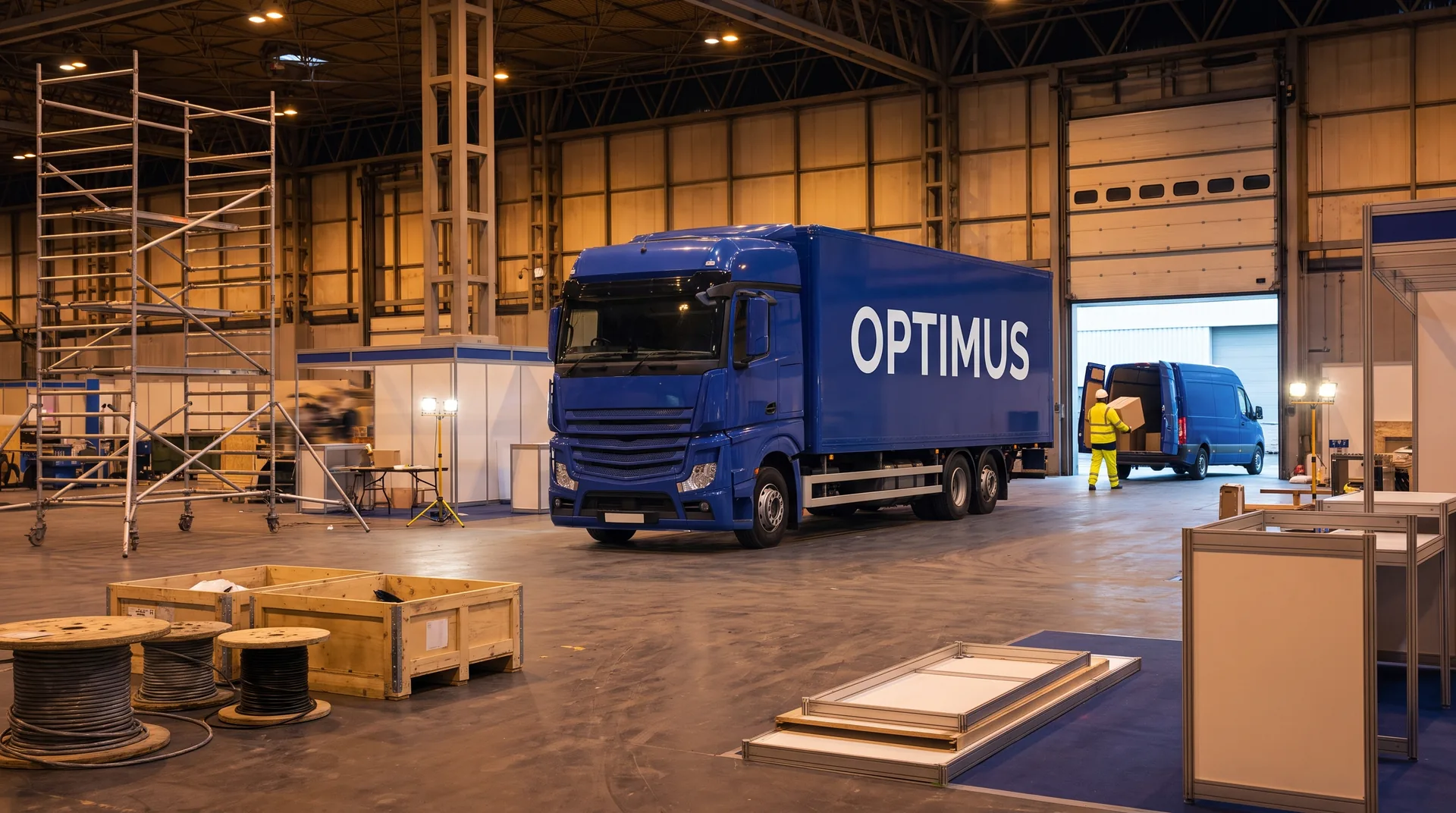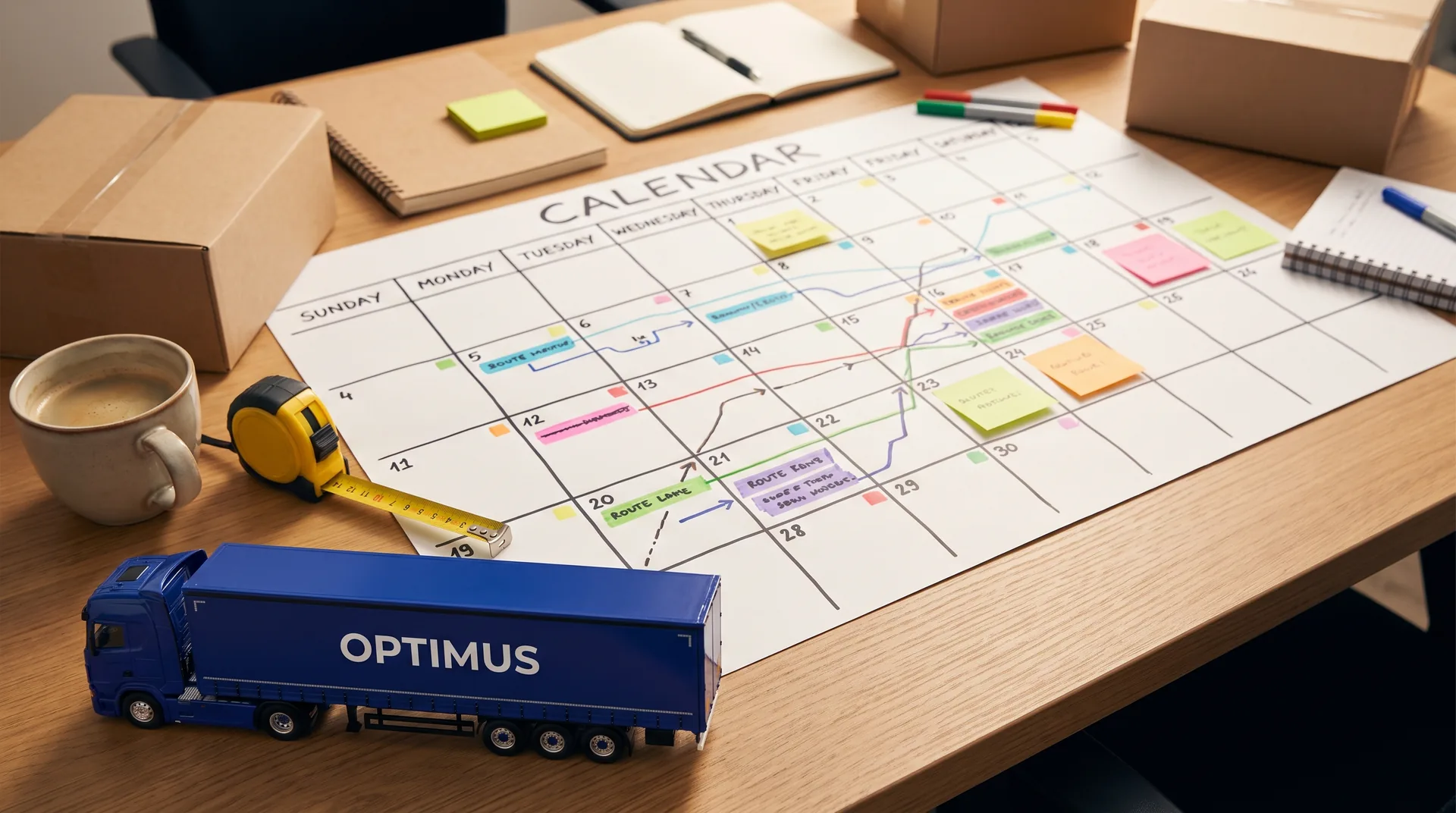
A company exhibiting in Kielce several times a year usually plans each show on its own. From a transport point of view it is one chain with gaps, and what decides it is not the opening date but the way build-up and breakdown windows sit in the calendar of the whole venue. A stand does not stay in the hall between events, so the real question is where it waits and whether hauling it home is worth it at all.
Why the venue calendar outranks your own dates
An exhibitor knows two dates, opening and closing. The regulations add a third and a fourth, the start of build-up and the end of breakdown. That is still not enough to predict what entry will look like. If the previous event finishes the day before your build-up starts, you are driving onto a site the predecessors are still driving off. If the next event starts straight after yours, breakdown happens under pressure, because the hall has to be cleared on time.
None of this can be guessed from an invitation. It can be checked: the event calendar of the centre is public, and venue staff will confirm what is happening in the neighbouring halls on your build days. That single piece of information changes the time buffer you plan more than any estimate about the road. The method of working a schedule backwards is described in our article on the build-up and breakdown calendar.
Same halls, completely different logistics
The Kielce centre hosts events with wildly different profiles, and treating them as one category is a mistake. The defence industry salon means tightened entry procedures and exhibits of unusual size, which we cover in the piece on exhibit transport to MSPO. The plastics processing fair means machines that have to be lifted and positioned, described in the article on machinery transport to PLASTPOL. The agricultural technology fair brings machines that move on their own wheels, which changes both securing and entry; we write about that under machinery at AGROTECH. A winter event adds one more risk, covered in our piece on freight that must not freeze.
The practical conclusion: a company present at two events in the same venue cannot carry over the arrangements from the first to the second. Unloading equipment, hours, entry documents and the way the load is secured have to be settled separately for each event.
Where the stand waits between shows
A hall is cleared after every event, so leaving the stand in place is not an option. Three variants remain. Return to the exhibitor: sensible when the gap is long or the stand needs rebuilding. Storage at a base minutes from the ground: sensible when the gap runs to weeks and the stand comes back unchanged. A direct move to another venue: a separate subject, because then the route matters rather than the Kielce calendar.
With two or three events a year at the same centre the second variant usually wins, and not because of freight cost but because of wear. Every loading and unloading is a chance of a scrape, a dent or a lost part, and a stand carted back and forth ages faster than one standing packed under a roof. The mechanics of storage next to the venue are described in our piece on the buffer warehouse next to Targi Kielce, and the decision after the last show of the season in the article on post-show logistics.
One framework arrangement instead of three enquiries
A company asking for a quote three times a year gets three answers built from the same data, retyped each time. It makes more sense to settle the parameters once: stand volume in loading metres, the list of items needing equipment, the packing method, the contact receiving goods on the stand and the preferred storage variant. At the next show only the event name, the hall number and the window dates change.
There is a second, less obvious advantage. Fair freight that travels all year is worth packing into reusable cases and marking permanently instead of being shrink-wrapped afresh every time. A case built for specific components lasts several seasons; a cardboard box falls apart after the second trip. A simple contents list on each case then saves hours of hunting for panels after the third event.
When the Kielce season meets the route to the British Isles
An exhibitor present both in Kielce and at British shows adds a customs border to the calendar and a choice between an ATA carnet and temporary admission. That is a separate thread, covered in the article on one stand across several shows on both sides of the Channel. One remark is enough here: if the season contains even a single British event, the customs document decision belongs at the start of the year rather than just before departure, because packing and the split between what returns and what stays both follow from it.
Where to start planning the year
- A list of events with build-up and breakdown dates, not opening dates.
- A check of the venue calendar for what happens in the hall before and after your event.
- Stand volume in loading metres and the weight of items that need equipment.
- A decision on the storage variant for each gap between events.
- A note on which items are consumable and will not return, because those are not worth storing.
The general picture of exhibitor service at this centre is in the article on Kielce trade fairs, and the entry rules in our piece on vehicle booking and site passes.
Sources
Several Kielce events in your calendar this year? Send the list of dates and the stand volume through the quote form and we will plan the whole year as one job. See also our trade fair logistics page and the Kielce base.