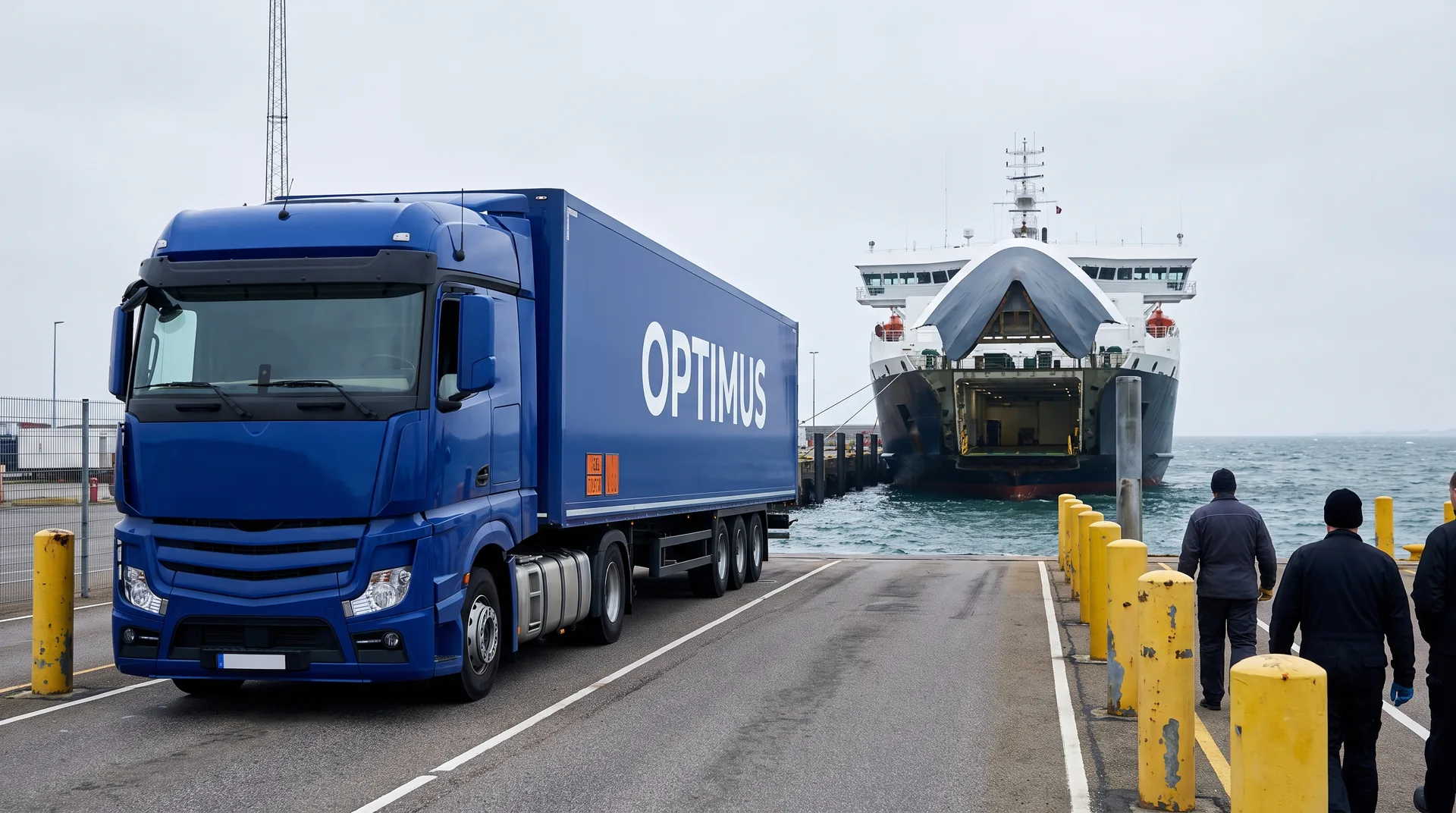
Carrying dangerous goods to the United Kingdom still rests on the ADR agreement, because the UK remains a party to it after leaving the EU. What changed is the customs layer: on top of ADR requirements come import declarations, safety data and a GMR, while the crossing itself is governed by the ferry operator's or the tunnel's own restrictions.
What Brexit changed, and what it did not
It did not change the carriage rules themselves: classification, marking, the transport document, vehicle equipment and driver requirements remain under ADR on both sides of the Channel. It did change the procedural surroundings. A dangerous load now travels as goods subject to full export and import clearance, with safety data and a GMR, exactly like any other. The effect is that preparing such a movement has two layers to close in parallel, the transport one and the customs one. Gaps in either stop the vehicle just as effectively.
Classification: the first step, and not the carrier's
The sender is responsible for correct classification, assigning the substance identification number, choosing packaging and preparing the packages. The carrier is responsible for accepting a properly prepared and marked load, and for the vehicle, its equipment and the documents. In practice arguments start when a sender treats a product as ordinary trade goods while the safety data sheet says otherwise. So at enquiry stage we ask for the safety data sheet, not for a commercial description. The basics are covered in our texts on ADR basics and on ADR classes.
Limited quantities and exemptions
Not every load containing a dangerous substance needs the full regime. The rules provide for carriage in limited quantities and other derogations under which some requirements do not apply, provided packaging, marking and quantities stay within the conditions. This is commonly used for household chemicals, cosmetics and paints. Qualifying, however, requires checking the actual product rather than assuming that because it sits on a shop shelf it falls outside the rules. We break it down in our text on exemptions and limited quantities.
The crossing: here the ferry operator or the tunnel decides
The most common trap when planning ADR movements to the UK lies not in the regulations but in the commercial conditions of the crossing operators. Each has its own policy on dangerous goods: some classes are accepted without restriction, some only on selected sailings, some not at all. Tunnel restriction codes add another layer. In practice that means choosing the crossing for an ADR load happens at the start of planning, not at the end. We cover it in our texts on ADR by ferry and Eurotunnel and on how we choose the crossing.
Documents: two sets in one folder
- An ADR transport document with the correct substance description, class, packing group and quantities.
- Instructions in writing for the driver and the required equipment on the vehicle.
- The driver's ADR training certificate and, where required, the vehicle approval certificate.
- An EU export declaration and a UK import declaration with the correct commodity code.
- A safety declaration and a GMR for the crossing.
- The product safety data sheet, useful in every conversation with enforcement and with the receiver.
Customs gaps hurt twice on an ADR load, because a vehicle carrying such goods cannot simply wait in a lay-by until someone sends an invoice. The customs side is covered in our texts on export documents and on GB import clearance.
ADR on groupage: what can travel together
Dangerous substances can move on a consolidated vehicle, but not freely. Rules govern mixed loading of classes, quantities per vehicle, stowage and marking. A practical layer sits on top: cargo adjacency, which food and cosmetics receivers will not accept regardless of what the rules allow. So on groupage we ask about the nature of the goods directly and plan the loading in advance. We develop this in texts on ADR in groupage and on cargo adjacency. Lithium batteries are a category of their own, covered in our text on shipping lithium batteries.
What to prepare for an enquiry
Send the product safety data sheet, the substance identification number and class, the packaging type and number of packages, the net mass of dangerous substance, loading and delivery addresses and the required date. Say whether the goods travel in limited quantities. On that basis we check acceptability on the crossing, choose the vehicle and a driver with the right qualifications, and prepare the documents. This is general information; the current ADR rules and the crossing operators' conditions are what binds.
Sources
Have an ADR load for the UK? Send the safety data sheet and consignment details through the quote form and we will check crossing conditions and plan the movement. The service is described on the ADR transport page, and cargo types on the ADR and chemicals page.