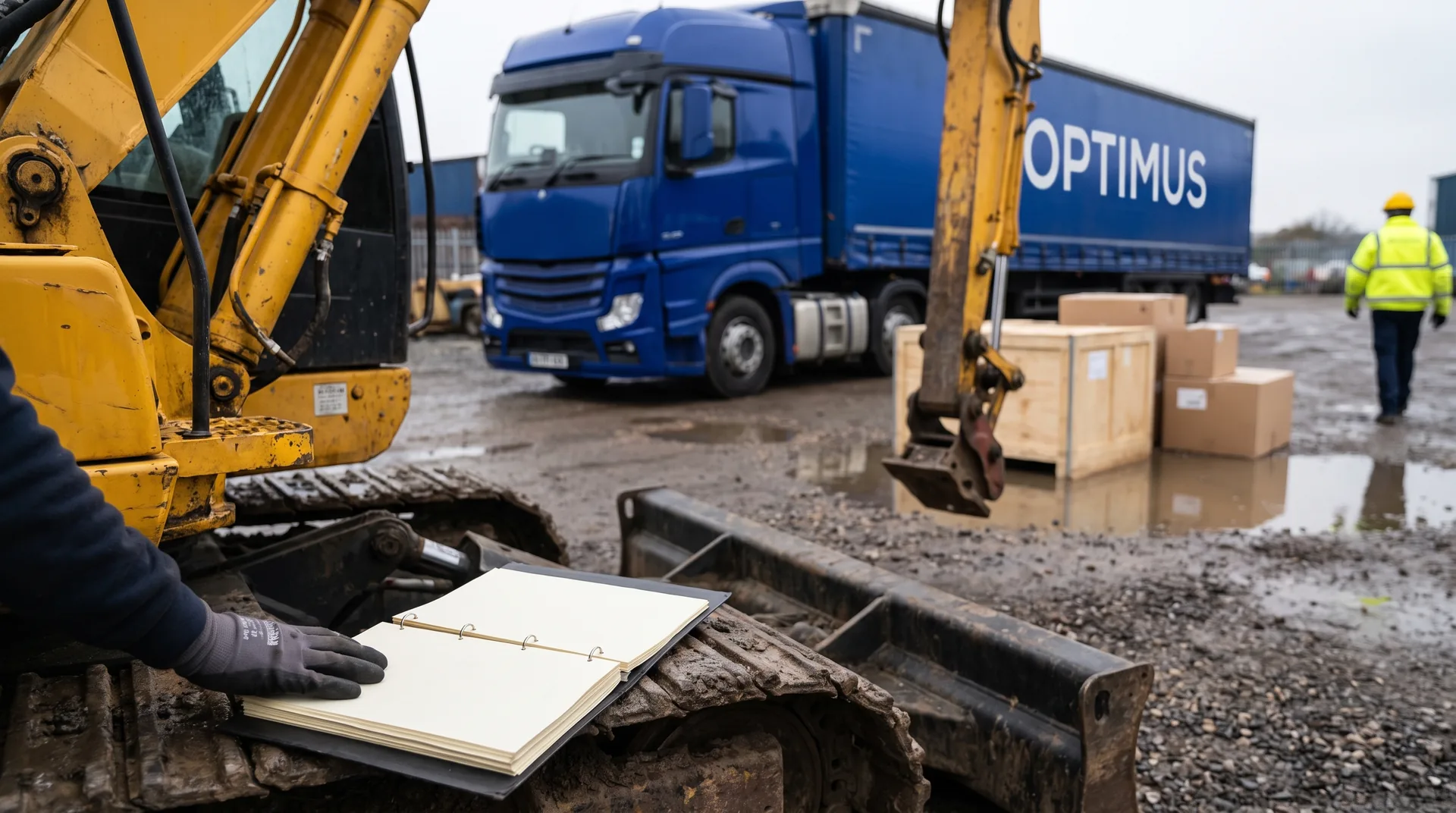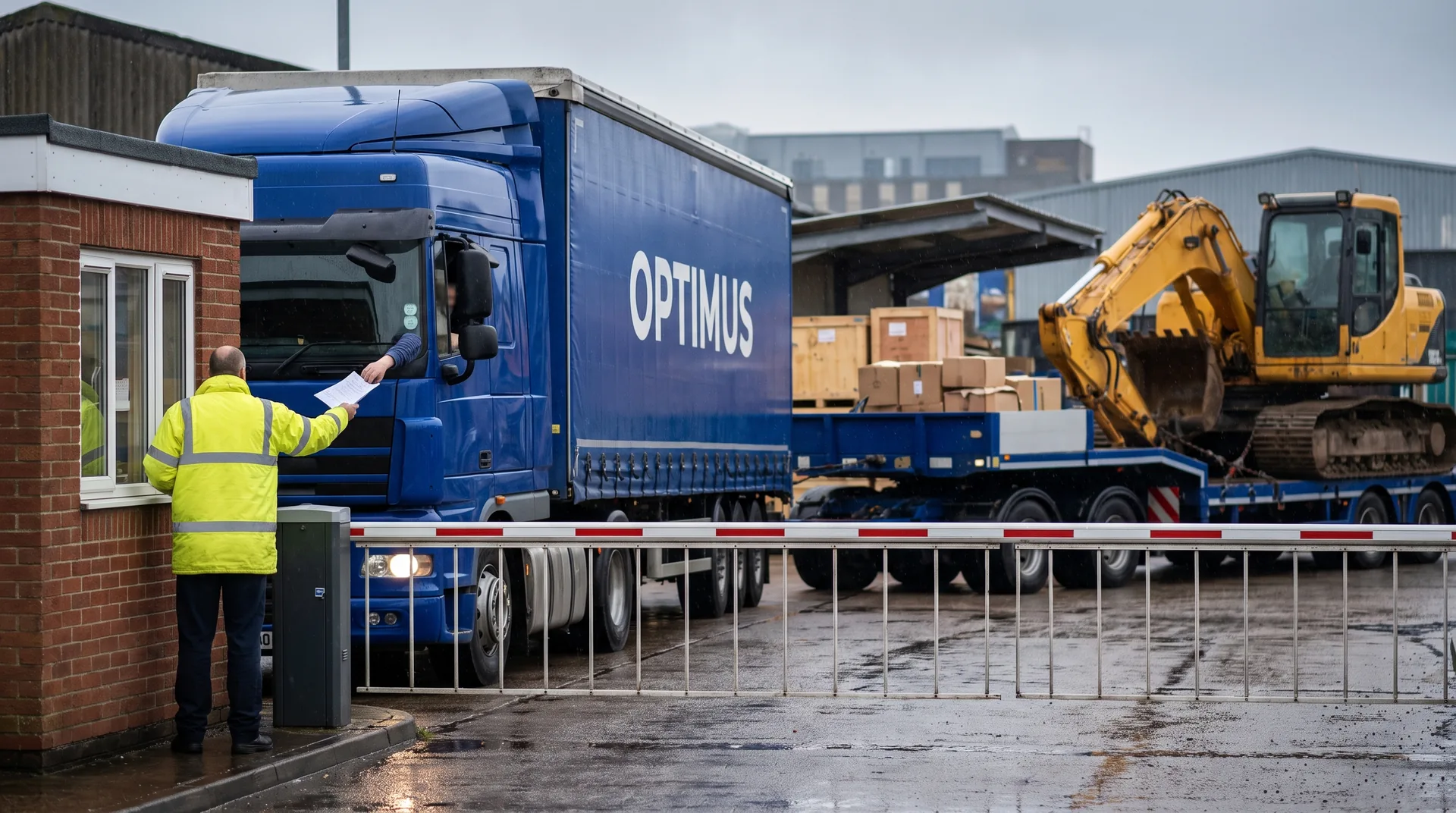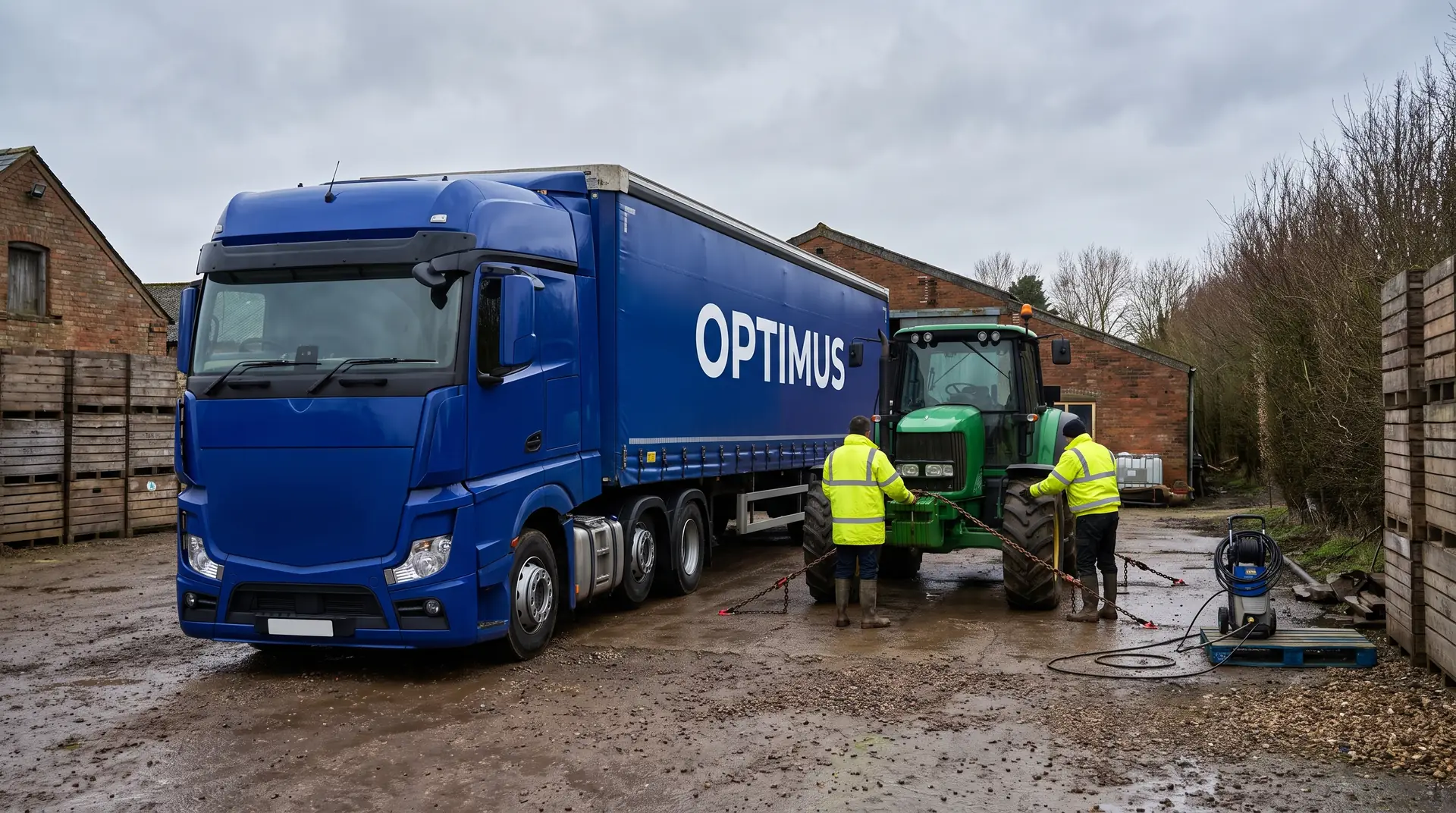
With a tractor or combine from a British auction, washing is not tidying up but a loading operation: a machine operated in agriculture or forestry has to reach the EU free of soil and plant debris, confirmed by a document issued before departure. The second problem is width, which hides in dual wheels and in the header. Both are solved in the yard, not after unloading.
Washing as a loading operation
The order never changes: wash first, then inspect and issue the document, and only then load. A machine washed after it has driven onto the trailer can no longer be inspected from underneath, and it is precisely the undercarriage that raises the questions. Washing is done with a pressure washer, with the guards open, and time is left for drying, because a wet machine coming aboard leaves water under the straps and under the chocks.
The official procedure itself, meaning importer registration, pre-notification of the consignment and the border check, is described separately in our article on farm machinery auctions in the UK. Here we deal with the execution side, because that is what decides whether the machine leaves the yard on time at all.
Where the soil actually sits
- Tractor: tyre tread and the inside of the rims, the underside of the fenders, the drawbar and the three-point linkage arms, the cab floor with its mats, the space above the front axle.
- Combine: the whole crop path, meaning the header, feeder house, concave, sieves and straw walkers, grain tank and chopper housing. Chaff and grain sit there, and for an inspection they count as plant debris just as soil does.
- Plough, harrow, cultivator: earth stuck to the bodies and frames, usually baked hard.
- Baler and wrapper: the bale chamber plus leftover twine and net with straw caught in it.
- Sprayer: tank, filters and boom, where residue from the spray mix stays behind.
The width that hides in the equipment
Farm machinery is rarely wide in itself; its configuration is. Dual wheels and flotation tyres can push a tractor beyond the standard outline, and taking the outer pair off to travel beside the machine is often cheaper than a permit. A combine header travels separately, usually on its own transport trolley, and a combine without its header is an entirely different consignment. A front loader comes off in the yard, because with it fitted both the length and the weight distribution on the trailer change. Hydraulically folding implements such as harrows, sprayers and spreaders have a transport position and locks that must be used: folding them just for the trip without securing them ends with them opening on the road.
Height is measured from the trailer deck to the highest point, and that is often not the cab but the exhaust, the beacon or the aerial. Those unbolt in minutes. Where oversize is unavoidable, permits and notifications on both sides come into play; we cover them in our pieces on excavators and loaders from UK auctions and on oversized transport to the UK.
Securing a machine that stands on tyres
A tractor differs from an excavator in one respect that changes the whole restraint plan: it stands on tyres, and a tyre flexes. The sidewall settles under strap tension, so lashing tension drops in the first few kilometres and has to be reset, which is why the driver checks the securing after a short run. Chocks under the wheels are mandatory, the parking brake is applied, a gear is engaged, the linkage arms are lowered and supported. Front weights are either removed and secured separately or blocked mechanically, because they are heavy, have their own lifting eyes and can shift independently of the machine. How forces and lashings are calculated is covered in our article on cargo securing under EN 12195.
Fuel, battery and the small things lost in the yard
Before departure we establish the fuel level in the tank and check the hydraulic circuit for leaks. Whether a residual quantity of fuel matters under dangerous goods rules depends on the type of fuel and the construction of the tank, so we check rather than assume. The battery is disconnected, and keys and paperwork travel together, not in the ignition. Separately we list everything that can go missing: the remote, the manual, jerry cans, spare wheels and removable attachment parts. A list written in the yard is the only proof that something existed at all; we return to this in our article on inspecting a machine before collection.
What we do not do here
We arrange collection, transport and clearance working with our regular customs agencies, we assist with bidding and we quote the haulage. We do not service or repair machines, do not issue opinions on technical condition, do not appraise market value and do not register a tractor in Poland. Conformity, marking and technical documentation are covered in our article on importing used machinery from the UK, and approval decisions rest with the competent authorities.
Individual farm machines from British auctions
Each of these machines loads differently, folds down to a different size and needs its own pre-bidding checklist. That is why we describe them one by one.
- Combine harvester: the header travels separately
- Baler: round versus square
- Crop sprayer: empty tank and folded boom
- Seed drill and planter: locking the sections
- Plough and cultivator as a part load
- Front loader bought without a tractor
- Agricultural trailer: empty or loaded
- Ride-on mower and groundcare machinery
- Wood chipper: on the deck, not towed
- Quad bike and utility vehicle
Sources
- PIORiN: phytosanitary conditions for importing used agricultural and forestry machinery
- EUR-Lex: Implementing Regulation (EU) 2019/2072, Annexes VII and XI
- IPPC: international standards for phytosanitary measures
Buying a tractor or combine at a British auction? Write through the contact form and we will establish what has to be washed and documented before collection, and send the right combination. Clearance is arranged as part of our customs service.